
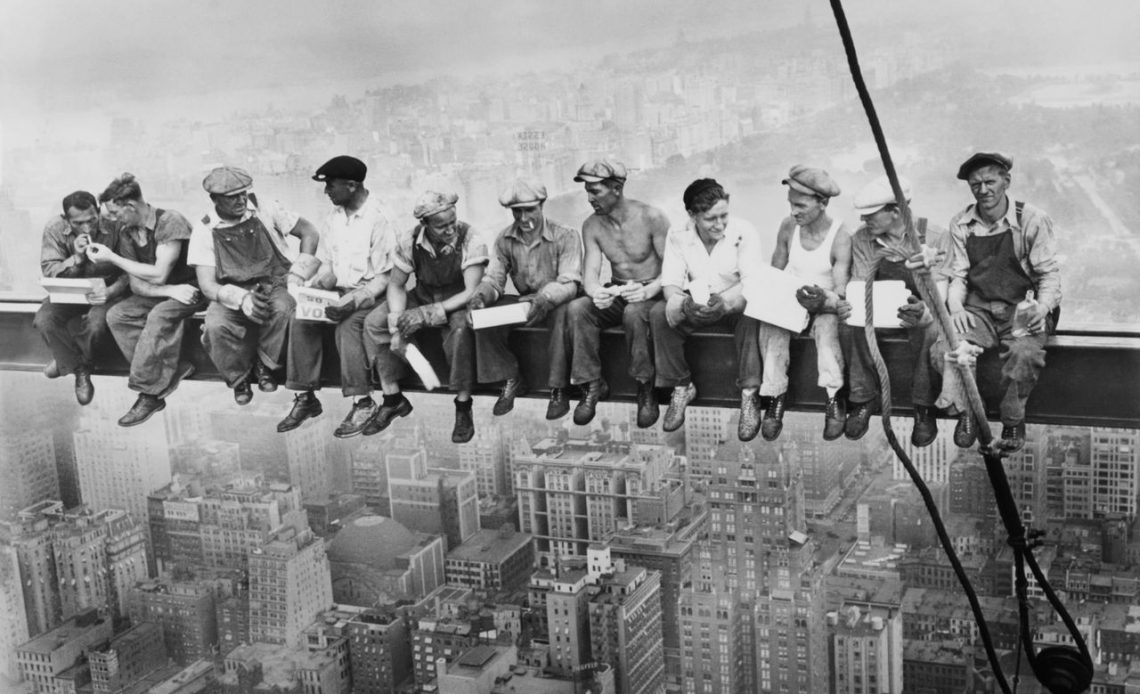
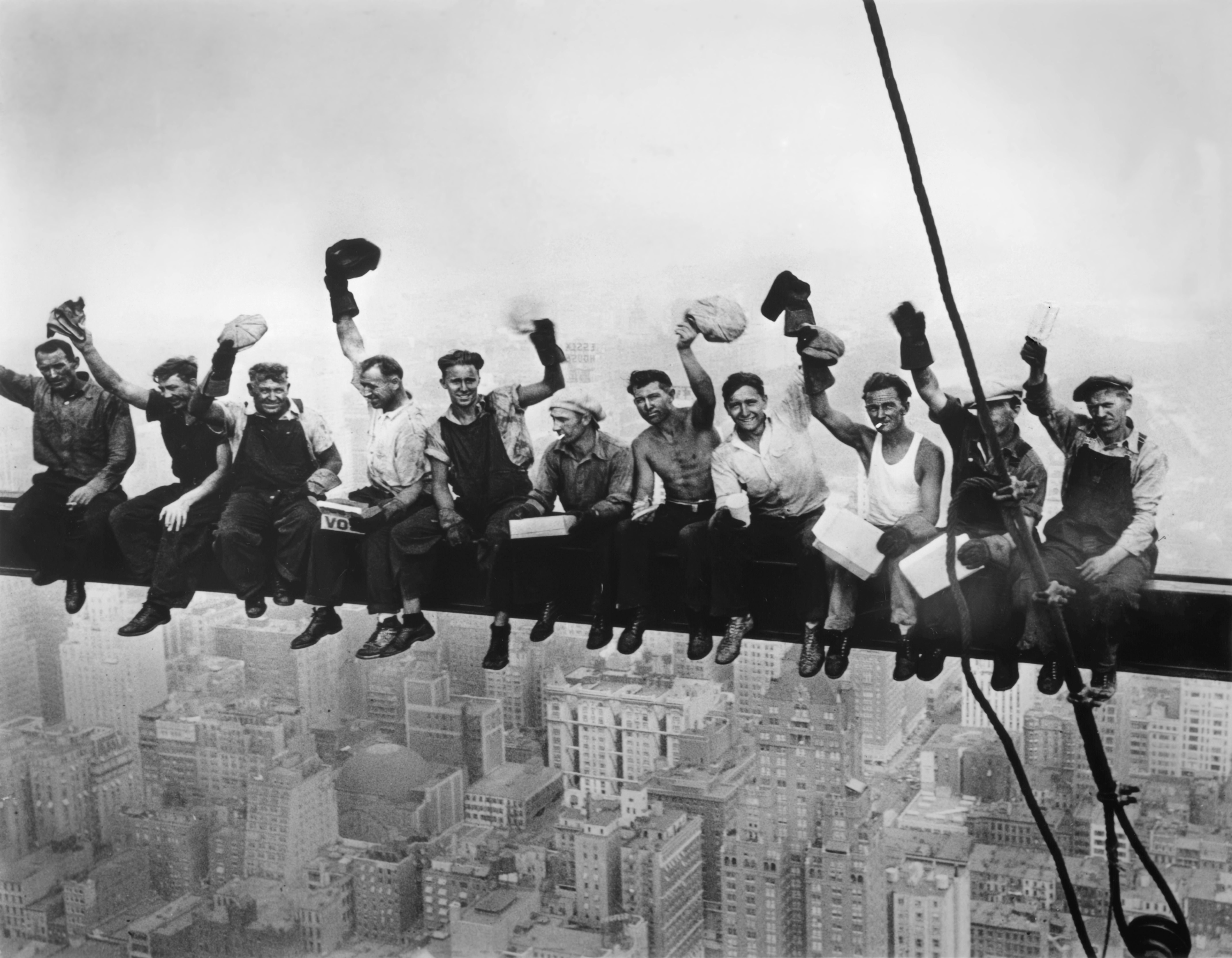
You’ve seen it a thousand times. Eleven ironworkers, sat side by side on a steel girder, eating their lunch 840 feet above Manhattan, the city spread out like a carpet below them. Lunch on a Beam (also known as Lunch Atop a Skyscraper) is one of the most reproduced photographs in history. It hangs in college dorms and union halls, corner pubs and corner offices. It’s been parodied, recreated and imitated endlessly. And yet, for nearly a century, no one could say with certainty who took it.
That’s the central mystery at the heart of Lunch on a Beam: The Making of an American Photograph (Brandeis University Press, £27), a new book by Christine Roussel, the longtime archivist at New York’s Rockefeller Center. Roussel spent more than seven years, dozens of interviews and a fair amount of luck piecing together the full story behind the image. What she found is fascinating not just as social history, but as a detective story for anyone who cares about photography.
The cameras that made it possible
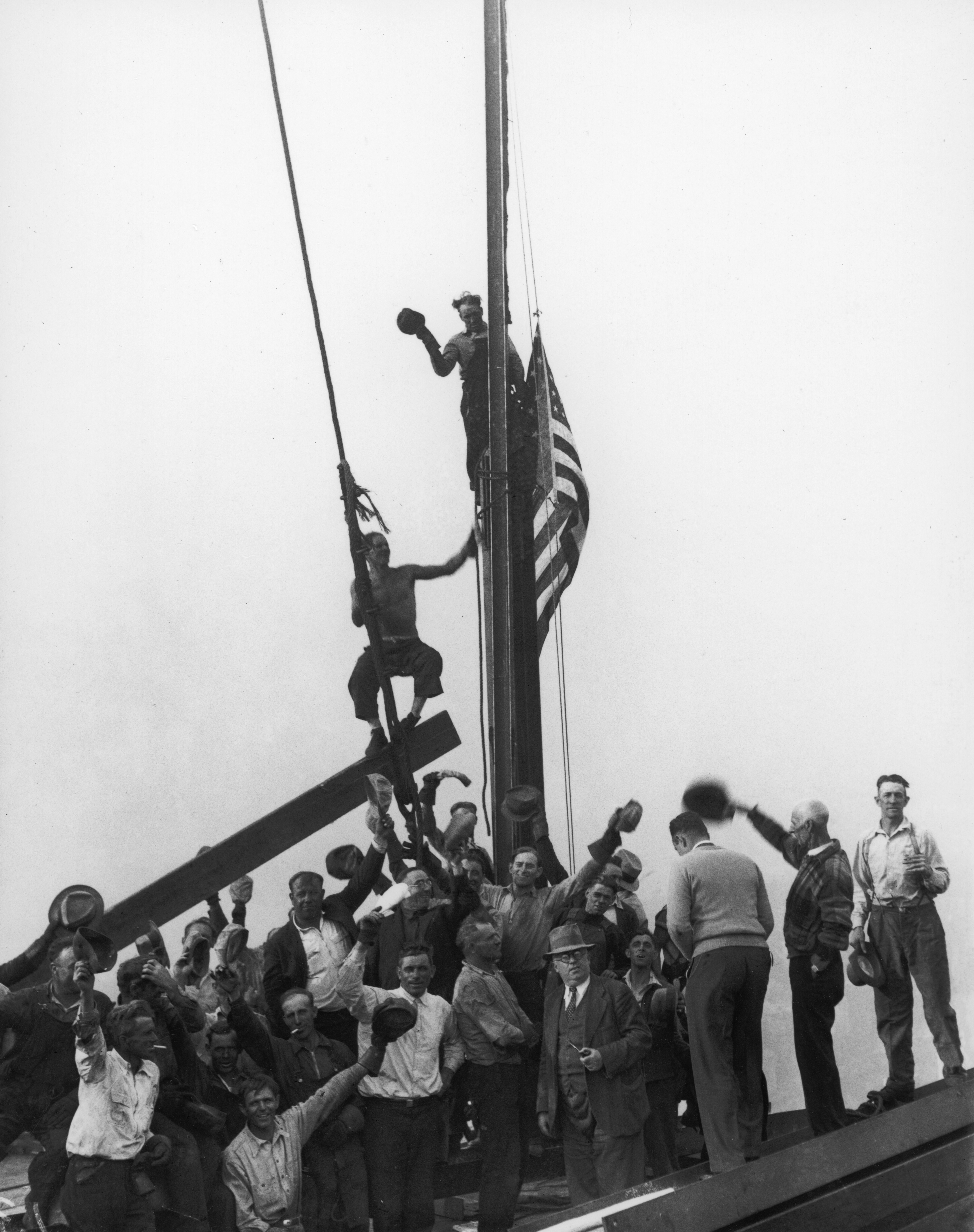
Here’s the first surprise. The photo wasn’t a spontaneous snapshot of workers on a lunch break. It was a staged publicity shoot, orchestrated by Merle Crowell, the director of public relations for Rockefeller Center, to promote the nearly complete RCA Building. Crowell dispatched a “platoon of photographers” to climb the skeletal steel structure and document the ironworkers at work. He even provided lunchboxes for the shoot. The workers, for their part, played along (probably, Roussel suggests, because they were getting paid).
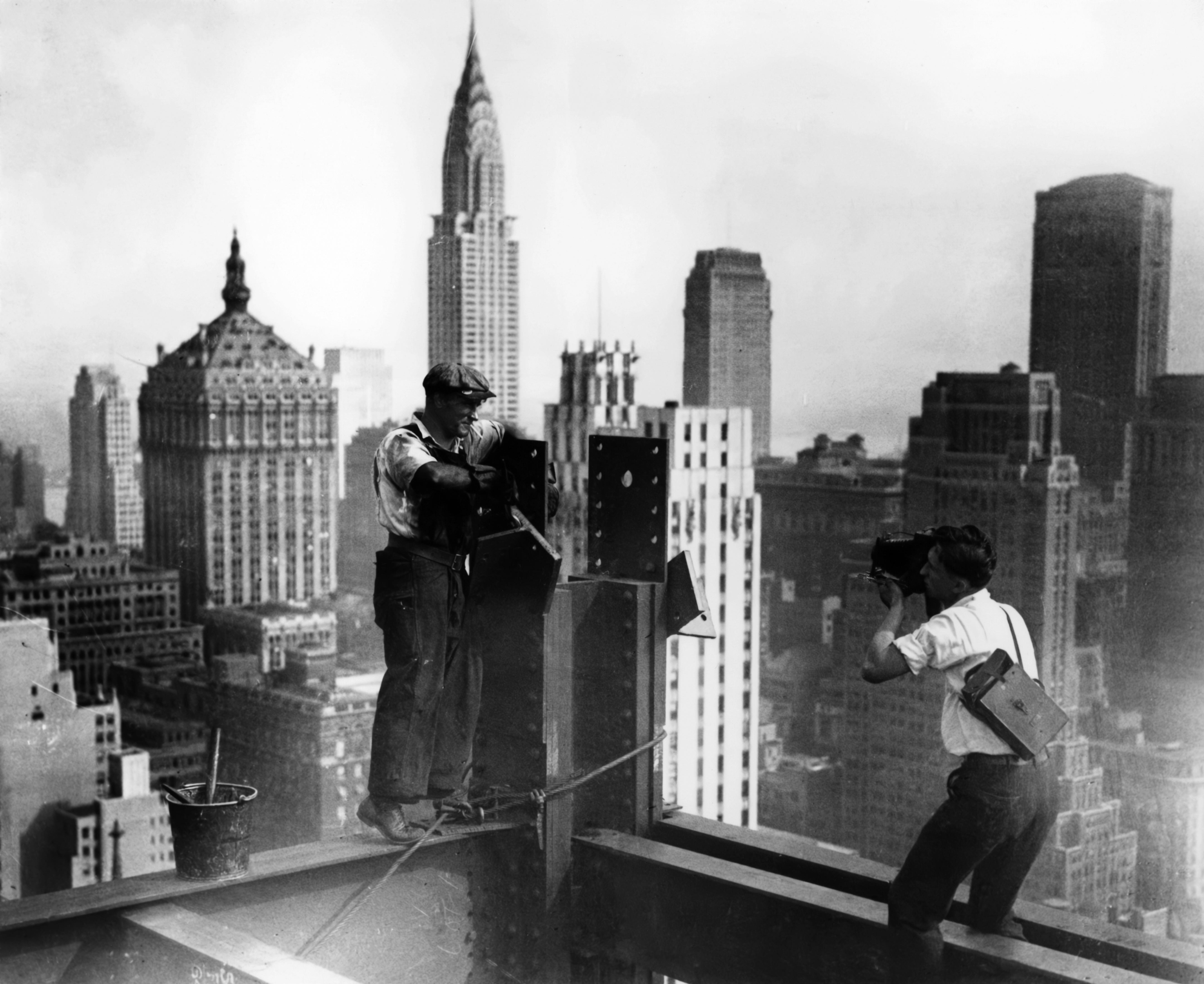
To appreciate just how remarkable the photographs are, you need to think about the equipment involved. The standard press camera of the era was the Graflex Speed Graphic 4×5, a hefty beast that used 4-by-5-inch glass plates or celluloid film. There were no zoom lenses, no autofocus, no image stabilisation. Getting sharp images in bright sunlight at altitude required setting up the shot carefully, managing the plate holders and not losing your nerve (or your footing) on a six-inch beam nearly a thousand feet above the street.
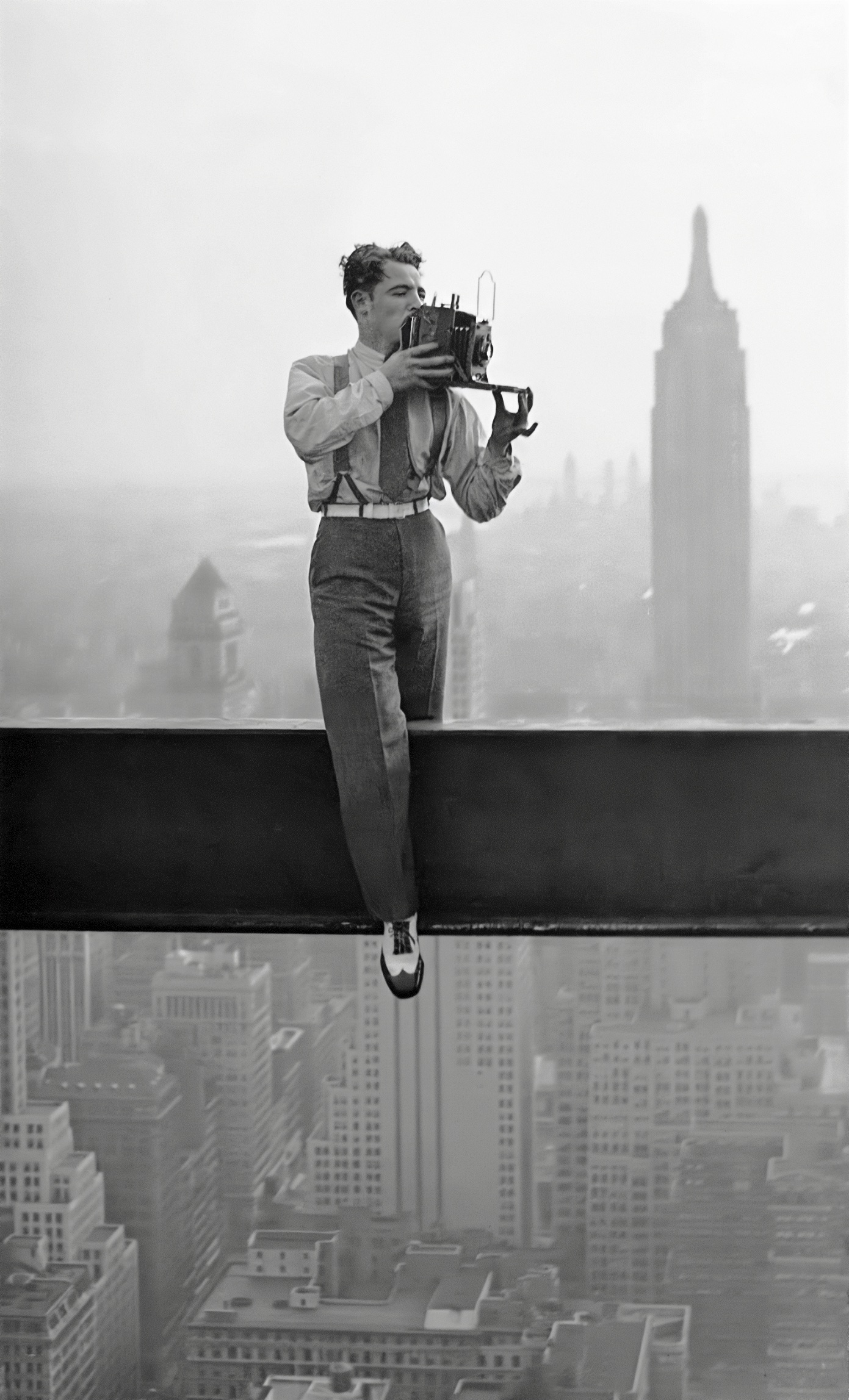
The photographers who did this weren’t just skilled: they were fearless. Three have been identified from that day: Charles Ebbets, Thomas Kelley and William “Lefty” Leftwich. We know they were there because photographs from the shoot include extraordinary pictures of the photographers themselves, perched and balancing on the ironwork with their cameras.
Daredevils with press cards
Ebbets had a habit of photographing himself at every location he worked, using a self-timer. He’d set the camera, then step into the frame. His daughter confirmed to Roussel that surviving files and contemporary accounts back this up. An invoice on his letterhead, billing Rockefeller Center directly in the autumn of 1932, and a glowing letter of recommendation from Crowell, suggest Ebbets was the most deeply embedded of the three.
Leftwich, meanwhile, ran his own photo agency, Newspictures Inc., operated out of an office on West 48th Street — directly across from the construction site. His portrait from that day shows him standing nonchalantly on top of a narrow beam in a dark suit, fedora and two-tone wingtips, camera raised. His son told Roussel he “had no fear of heights” and was frequently accompanied by Rockettes.
Kelley, just 18 at the time, is pictured straddling a beam while adjusting his camera, the Empire State Building looming behind him. He later moved to Hollywood and became famous for his 1949 nude portraits of Marilyn Monroe, published in the first issue of Playboy. Crucially, he never claimed credit for Lunch on a Beam: “My father never mentioned it,” his son told Roussel.
The mystery that remains
After all her research, Roussel concludes that either Ebbets or Leftwich most likely took the famous image, but she can’t rule out either one. The original work orders have never been found. The agencies they worked through rarely gave individual credits. And the photograph itself, for all its clarity and stillness, gives nothing away.
It’s a fittingly unresolved ending to a story rooted in paradox. A photograph celebrated for its apparent spontaneity that was actually staged. An image honoring ordinary working men that was also a monument to the ambitions of America’s richest family. And a picture recognised by virtually everyone on the planet whose maker remains, after 90 years, unknown.
Lunch on a Beam: The Making of an American Photograph by Christine Roussel is published by Brandeis University Press, distributed by University of Chicago Press. Cloth, $35.00/£27, 222 pages.
Author: Tom May
Source: DigitalCameraWorld
Reviewed By: Editorial Team