

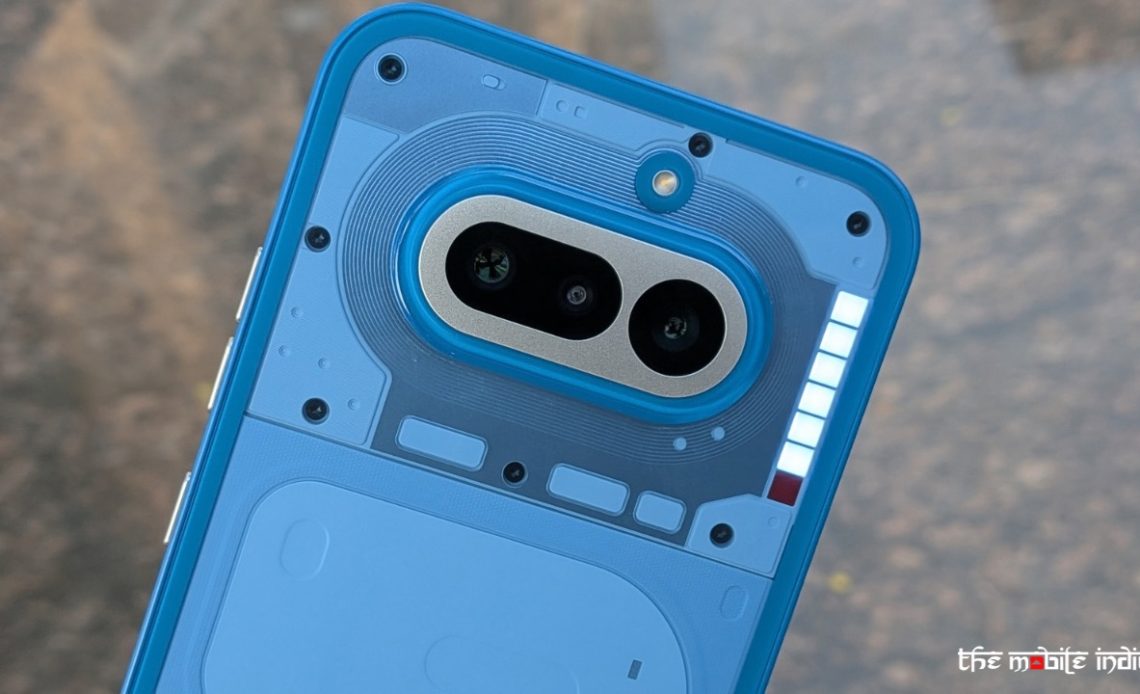
Notification LEDs were once a common smartphone feature back in the day, and they usually sat above or below the display and blinked in different colours when you received a message, missed a call or needed to charge the phone. I remember having the Galaxy S4 and phones from Lenovo which had this feature and they actually made life easier. As bezels became thinner and Always-On Displays became more common, dedicated notification LEDs largely disappeared. However, the idea has made an interesting comeback in the form of rear LED notification lights.
Instead of putting a tiny LED on the front, some smartphone brands have integrated larger LED systems into the rear panel. These can be used for notifications, calls, charging indicators and even more elaborate visual effects. Here are some notable smartphone brands and phones that have offered rear LED notification lights.
Nothing

Nothing is the brand most closely associated with rear notification lighting today and it kind of made its identity around these lights when it launched its first device in 2021. The company’s Glyph Interface puts LED lights directly into the rear panel and uses different patterns to indicate calls, notifications, charging and other events.
The feature debuted with the Nothing Phone (1), which had hundreds of LEDs arranged across several lighting zones. It allowed users to assign different Glyph patterns to contacts and notifications, while the Flip to Glyph feature could silence the phone while leaving the rear lights as a visual notification system.
Phones from Nothing that have used some form of rear LED notification system include:
- Nothing Phone (1)
- Nothing Phone (2)
- Nothing Phone (2a)
- Nothing Phone (2a) Plus
- Nothing Phone (3a)
- Nothing Phone (3a) Pro
- Nothing Phone (3a) Lite
- Nothing Phone (3)
- Nothing Phone (4a)
- Nothing Phone (4a) Pro
- Nothing Phone (4b)
The Nothing Phone (4a), for example, uses a newer Glyph Bar made up of 63 mini-LEDs across six lighting zones. It continues to provide visual alerts but takes a simpler approach than the earlier segmented Glyph designs which were much more flashy in a way.
The Nothing Phone (3) and (4a) Pro took the concept in a different direction. They replaced the traditional Glyph strips with the Glyph Matrix, a rear Monochrome LED display with 489 individually controllable pixels. It can handle notifications and other interactive functions rather than simply acting as a conventional notification light. This display increases the overall utility factor so you can go beyond than just using it for notifying you.

Google has also brought the rear notification light concept back with the Pixel 11 Pro, Pixel 11 Pro XL and the Pixel 11 Pro Fold.
The Pro models introduce a feature called HiLight, an LED built into the camera bar around the flashlight that can provide visual notifications even when the phone is placed face down. While the functionality is strictly limited for now, with it only working for two features, it still gives the Pixel 11 Pro models a more modern take on the traditional notification LED.
It is worth noting that the standard Pixel 11 does not have the same HiLight notification LED feature, with Google reserving it for the Pro models.
Infinix

Infinix has taken the rear notification concept further with the Note 60 Pro. The phone features an Active Matrix Display built into the rear camera island. It uses 288 LED pixels and can display notifications, calls, charging information, battery status, time, weather and animations without requiring the main display to be turned on.
The Note 60 Pro also has a separate rear RGB light on its back as well, that works as a visual status indicator. This combination makes it more than a simple notification LED, as the rear panel effectively becomes a small secondary interface.
The Infinix Note 60 Pro is therefore one of the more feature-rich examples of the rear LED notification light concept available in 2026.
Tecno

Tecno’s recent Pova 8 series phones come with an Alive Matrix display on the back, similar to Nothing’s glyph matrix implementation. The Alive Matrix turns the rear into a glanceable interface, notifications, time, battery, music, gaming, timers, rendered in a signature dot-matrix. It can be used for animated widgets, App icons denoting notifications from those apps, charging indicator, and much more.
OPPO

OPPO experimented with a rear notification light on the Reno 7 Pro 5G. The phone features an Orbit Breathing Light surrounding the camera module. OPPO used hot-bent optical fibre technology to create a circular light that gently illuminates when the phone receives incoming calls and notifications.
Unlike a traditional notification LED, the Orbit Breathing Light was designed to be a major part of the phone’s rear design. However, the company soon gave up on it, right from the Reno 8 Pro series and its phones no longer have any type of rear LED notification lights.
Realme

Realme also used rear LED notification lights on devices like the Realme 15 Pro 5G, called Pulse Light. It could light up in various colours to indicate that you have a notification from an app you corresponded that colour to.
iQOO

iQOO, Vivo’s sub-brand, has also incorporated the rear LED notification light in some of its phones, including its flagships like the iQOO 15. Instead of positioning it separately on the back panel, the company decided to wrap it around the camera module in its iQOO 15 so that gives it a much cleaner look compared to some other implementations we see in this list.
Ai+

Ai+ is a fairly new brand in the smartphone space but it didn’t want to give up on the rear LED notification light trend. As a result, some of its phones like the Ai+ Nova 2 Ultra 5G and the Nova 2 Pro 5G have such lights on the back and they are available for a bunch of actions, like when playing music or games, notifying for incoming calls, messages, low battery, charging, other notifications, and more.
Motorola

Motorola also experimented with a rear notification light in the Motorola One Zoom.
The phone’s iconic batwing Motorola logo on the rear was illuminated and could function as a notification LED. This meant the logo could light up when the phone received notifications, giving Motorola a distinctive alternative to the conventional front-facing notification light.
The Motorola One Zoom was launched in 2019, and the logo lighting up was definitely unique for that time but unfortunately, Motorola did not want it a part of its portfolio anymore, so it scrapped it.
ASUS

ASUS has used rear RGB lighting on several ROG gaming smartphones.
The original ROG Phone featured an illuminated ROG logo on the rear that could respond to phone events, including notifications. ASUS later continued the concept on devices such as the ROG Phone 3, whose rear ROG logo could flash for incoming notifications.
The ROG Phone 6 also featured a rear RGB ROG logo capable of lighting up for events such as calls and charging. Some later ROG models moved toward more elaborate rear lighting and secondary displays rather than using the lighting purely as a notification indicator, similar to how Nothing is handling it now with the Phone (3) and Phone (4a) Pro.
The ROG Phone 8 and ROG Phone 8 Pro continued ASUS’ rear RGB approach, with the phones featuring a customisable illuminated ROG logo.
REDMAGIC

Similar to Asus, REDMAGIC also uses rear LED notification lights to show off its design more than using it for utility. Because REDMAGIC primarily makes gaming phones, their dynamic RGB lighting on the back goes well with the gaming aesthetic. In fact, it not only has lights on the back but there’s also an RGB frame strip on the latest REDMAGIC 11S Pro.
Razer

Razer was another early adopter of rear notification lighting, particularly among gaming smartphones.
The Razer Phone 2 featured an RGB-lit Razer logo on its rear panel. The rear of the phone got a Razer triple-headed snake logo that used to glow in 16.8 million colours to provide app notifications (such as Facebook comments or WhatsApp messages). Razer Chroma also allowed for customising lighting effects such as Static, Spectrum Cycling and Breathing.
The Razer Phone 2 remains one of the clearest examples of a traditional smartphone logo being turned into a functional rear LED notification.
Xiaomi / Redmi

Xiaomi’s Redmi brand has also experimented with rear notification lighting on its gaming phones.
The Redmi K40 Gaming Edition and Redmi K50 Gaming Edition feature RGB lighting around the rear camera module. On the Redmi K50 Gaming Edition, the RGB lighting can illuminate when the phone receives a message or when it is charging, effectively functioning as a rear notification indicator. It was a 16 million-colour notification light built into the camera module.
The K50 Gaming Edition therefore combines the rear LED with the camera design instead of placing a separate illuminated logo on the back.
Why are rear notification lights making a comeback?
The idea is not entirely new, but the way manufacturers are implementing it has changed. Traditional notification LEDs were small, simple and primarily functional. Today’s rear lighting systems are much larger and can form part of the phone’s overall design. Nothing, Asus, and Infinix have turned its rear lighting into a mini display, while Google and Realme have integrated an RGB notification light into the camera array.
There is also a practical advantage. When a phone is placed face down, a rear notification light can tell you that something needs your attention without requiring you to pick up the device and turn on the display.
For users trying to reduce unnecessary screen interaction, this can be quite useful. Nothing explicitly positioned the Glyph Interface around this idea, using rear light patterns to communicate information without requiring users to look at the main display.
The latest implementations show how much the feature has evolved. What started as a small blinking indicator has turned into everything from Nothing’s programmable Glyph system and Google’s HiLight LED to Infinix’s rear Active Matrix Display.
While rear notification lights remain relatively uncommon compared with Always-On Displays, they offer something a standard notification banner cannot: a glanceable visual alert that remains visible when the phone is lying face down.
In my opinion, the rear of the smartphone can actually become an important place for notifications, and with brands such as Google, Nothing and Infinix continuing to experiment with the idea, that could finally happen.
Author: Abhishek Malhotra
Source: The Mobile Indian
Reviewed By: Editorial Team