

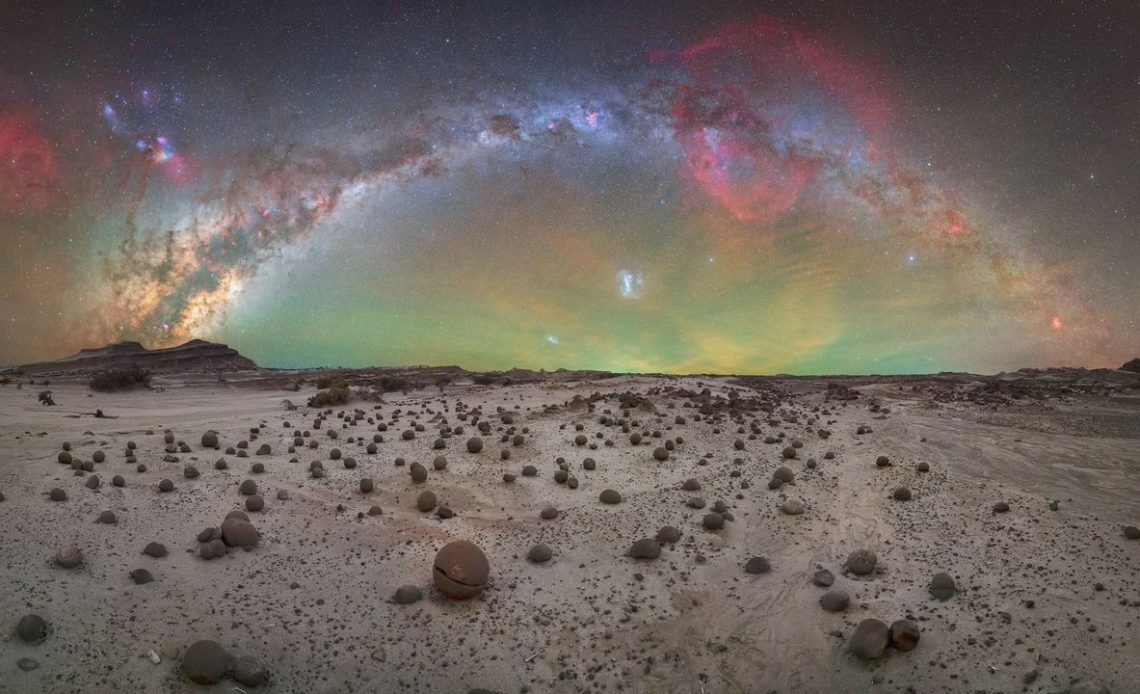
As a photographer, creating an image that has never been made before is a career-defining moment. For Gonzalo Javier Santile, Valle de la Luna, Universo Triasico Ischigualasto represents exactly that: the first photograph showing a complete Milky Way Arch above Parque Provincial Ischigualasto, known as Valle de la Luna, in San Juan, Argentina.
The landscape is one of the Earth’s most significant geological sites, shaped over 200 million years by ancient river systems and preserving the only complete sequence of the Triassic Period visible anywhere on the planet.
Santile’s achievement was recognized as his image was selected for Capture the Atlas’ 2026 Milky Way Photographer of the Year collection, which celebrates exceptional night-sky photography from around the world.
But creating the image required far more than technical skill. Working alongside a local guide, Santile used an astro-modified DSLR, a wide-angle lens and a star tracker to capture the sweeping Milky Way arch above Ischiqualasto’s unique landscape.
How ‘Valle de la Luna, Universo Triasico Ischigualasto’ was photographed
Tech info
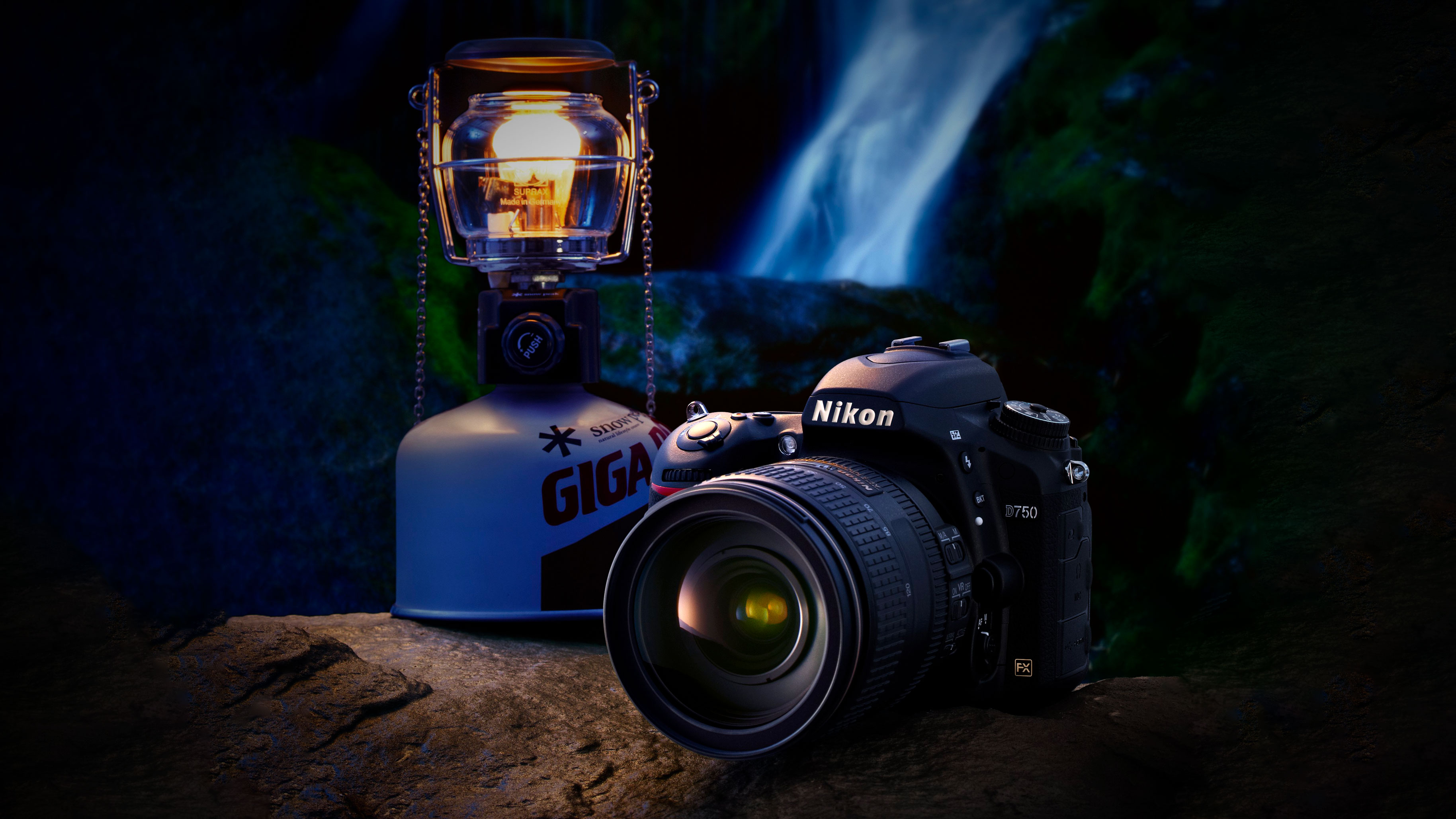
Gear: Nikon D750 (astro-modified) + Tamron SP 15-30mm f/2.8 Di VC USD G2
Accessories: No filters, iOptron SkyGuider Pro
Exposure: Sky: 90s, f/2.8, ISO 2000, foreground: 20s, f/2.8, ISO 6400
Frames: 20-frame panorama
Technique: Ground-based star tracker for sky exposures
The story behind the still
Santile explains, “This photograph captures the first full Milky Way arch ever taken at this location, a site of exceptional scientific and cultural significance.
“Recognized as a UNESCO World Heritage Site, its geological importance lies in being the only place on Earth where the complete sequence of the Triassic Period can be observed, preserving key fossils from the earliest dinosaurs and earning its place among the most valuable geological heritage sites in the world.
“Located in Valle Fértil, this landscape was shaped more than 200 million years ago by powerful river systems. Today, it continues to attract geologists and paleontologists from around the globe, further highlighting both its importance and its fragility.

“While photographing in the area known as Cancha de Bochas, I felt an unprecedented sense of responsibility. Guided by local experts, accessing the site required extreme care.
“Every movement had to be deliberate to avoid damaging this irreplaceable environment, turning the experience into a challenge that went far beyond the technical aspects of photography.
“In the end, this was not just about capturing an image, but about connecting with the deep past of our planet. Places like this remind us that beyond appreciating them, we also share the responsibility of preserving them.
“This photo is a reminder that magic often hides in the most unexpected places. All it takes is a little patience, planning, and passion.”
Author: Kim Bunermann
Source: DigitalCameraWorld
Reviewed By: Editorial Team