

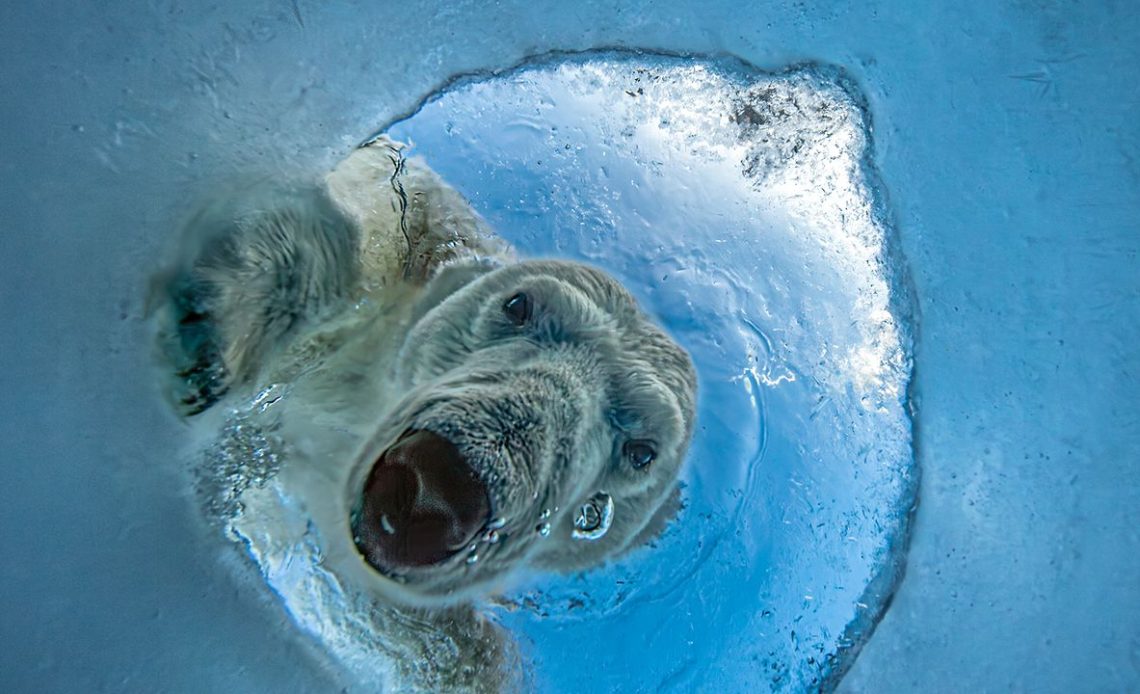
What’s the most work you’ve ever put in to getting the shot you desire? For Arctic photographer Audun Rikardsen, it took three years of planning, one motion sensor and a hole drilled through ice to get within touching distance of this dramatic, award-winning wildlife image.
A Seal’s Last Sight has won the Grand Prize at the California Academy of Sciences’ 13th annual BigPicture: Natural World Photography Competition. It was chosen from more than 7,400 entries submitted by photographers in 64 countries. And that’s no great surprise.
This dramatic shot shows a polar bear peering through a seal’s breathing hole in the drift ice north of Svalbard; a remote Norwegian archipelago that sits roughly midway between mainland Norway and the North Pole.
The effect is pretty startling: we’re seeing exactly what a seal would see in its final seconds of life. It’s a rare vantage point on one of nature’s most majestic beasts, and one built on a lifetime of Arctic experience.
How he shot it
Polar bears hunt seals by waiting motionless at their breathing holes. So Rikardsen needed to find a hole that was actually being watched, then getting a camera into position without disturbing anything.
He’d wanted such a picture for years. After repeated failed attempts, he finally located a breathing hole with fresh bear tracks nearby.
He drilled through the ice, rigged his camera directly beneath the hole, attached a motion sensor, then began to wait. Eight hours later, at 4am, a bear arrived. It pushed its head through the thin layer of ice covering the hole, blew its nose, and stared straight into the lens.
Instead of moving on, though, it simply lay down and went to sleep, right above the submerged rig. Rikardsen had to wait another nine hours – adding up to 17 in total – before the bear finally wandered off and he could retrieve his camera rig.
Technical approach
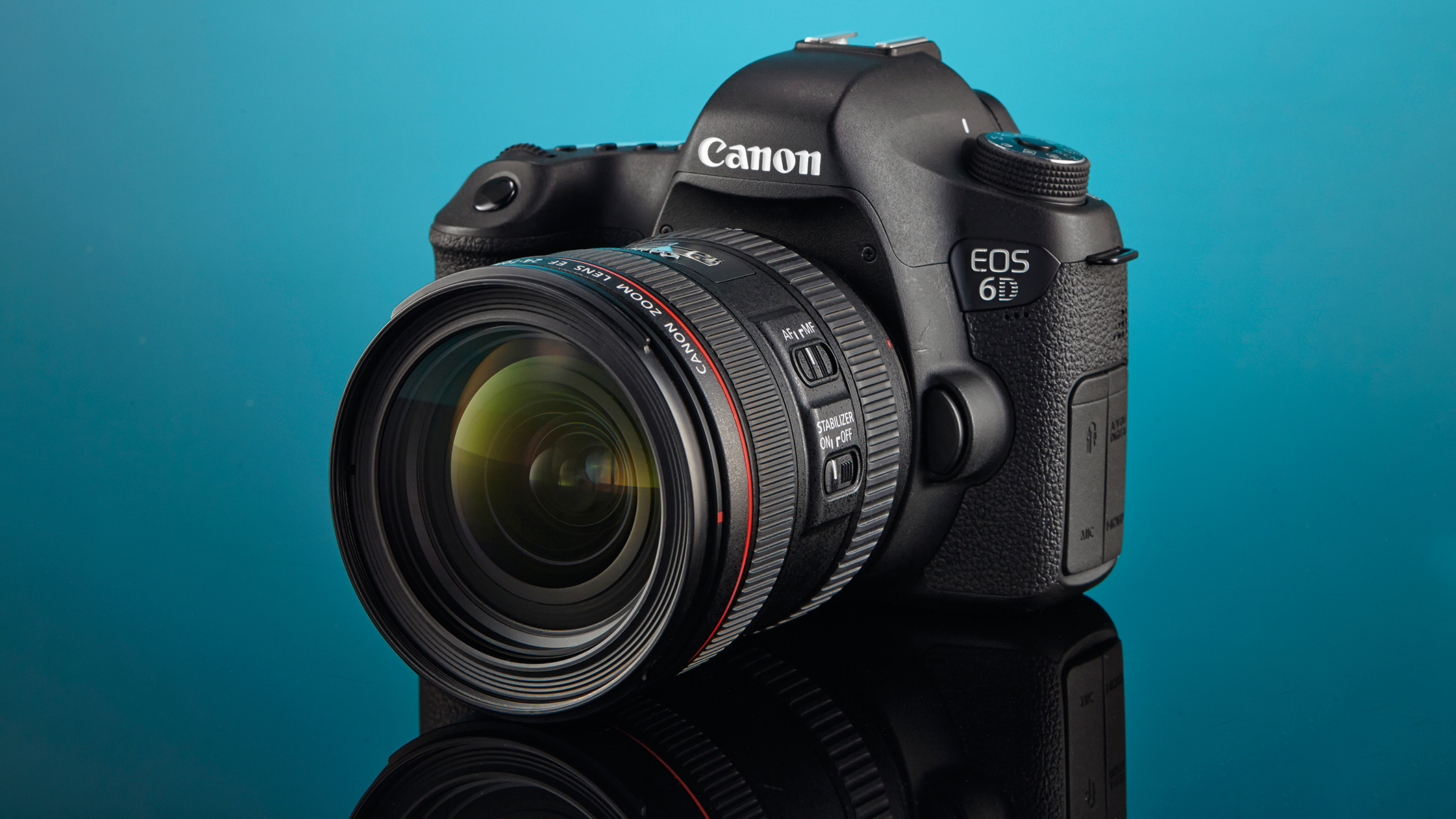
If you’re leaving a camera alone under Arctic ice for 17 hours, you want to keep things simple. Rikardsen employed a Canon EOS 6D, a full-frame DSLR that’s over a decade old now, paired with Canon’s EF 14mm f/2.8L II USM, a wide prime well suited to close-up, distortion-controlled encounters like this one.
He set it to f/9 with pattern metering and manual white balance, since there was nobody there to adjust anything once the bear turned up.
None of these technical details would have made a difference, of course, without his years of scouting and perseverance in some of the Earth’s most challenging weather and terrain. Not to mention the willingness to sit through an animal’s nine-hour Arctic nap.
So next time you’re getting a bit tired and cold on a shoot, and wondering whether to call it a day, maybe ask yourself: what would Rikardsen do?
BigPicture: Natural World Photography Competition is run by the California Academy of Sciences. The winning and finalist images go on display at Cal Academy in San Francisco from September 10.
Author: Tom May
Source: DigitalCameraWorld
Reviewed By: Editorial Team