


Tesla is now taking orders for the $29,990 Cybercab, with the first deliveries expected in Austin next month. But there’s a problem buyers should know about: they won’t be able to charge it at home.
The Cybercab has no onboard charger, so it only takes DC fast charging. And the wireless home charging pad Tesla has been teasing since 2023 still isn’t something you can buy.
A DC-only car
When Tesla unveiled the Cybercab in 2024, Elon Musk said it wouldn’t even have a plug. “It just goes over the inductive charger and charges,” he said on stage.
That plan didn’t survive production, or at least the current version in production. Cybercabs have a NACS charge port behind a panel in the rear bumper, and Tesla has been plugging Cybercabs into regular Superchargers in Austin since they joined the fleet.
The bigger issue is what sits behind that port. Tesla confirmed to attendees at Tesla’s Austin launch event in September that Cybercab has no onboard charger, the box that turns the AC power coming out of your wall into DC power the battery can store.
No onboard charger means no Wall Connector. No Mobile Connector on a 120V outlet, and no Level 2 station at the mall either. If it isn’t a DC fast charger, the Cybercab can’t use it.
For a robotaxi, deleting the onboard charger makes sense. It’s one less part to buy, cool, and carry around, and a fleet car spends its downtime at a depot, not in someone’s garage. Those little things help make the car more economical and efficient.
But Tesla is now selling the Cybercab to individuals.
The fine print makes it worse
As we reported last week, Tesla’s Cybercab autonomy agreement requires a $299 monthly subscription for the car to move at all. The same document puts charging squarely on the buyer: “You are responsible for registration, insurance, parking, charging, general cleaning and all other costs.”
It also tells owners to “keep the vehicle charged and connected so over-the-air updates can install.” Connected to what, it doesn’t say.
The Cybercab Order Agreement limits the car to NACS DC fast charging, Superchargers included. It also says only the registered owner can use the Cybercab, and only while physically present in it for the entire trip.
The subscription agreement carves out one exception: when service is due, the Cybercab “will travel autonomously, unoccupied to a Tesla service center.” Nothing similar exists for charging.
So you can’t send your Cybercab to a Supercharger at 2 a.m. while you sleep, which is the one thing a self-driving car should be great at. You’d have to ride along, sit in a two-seater at a Supercharger while it charges, and ride back home.
Tesla has been teasing the fix for years
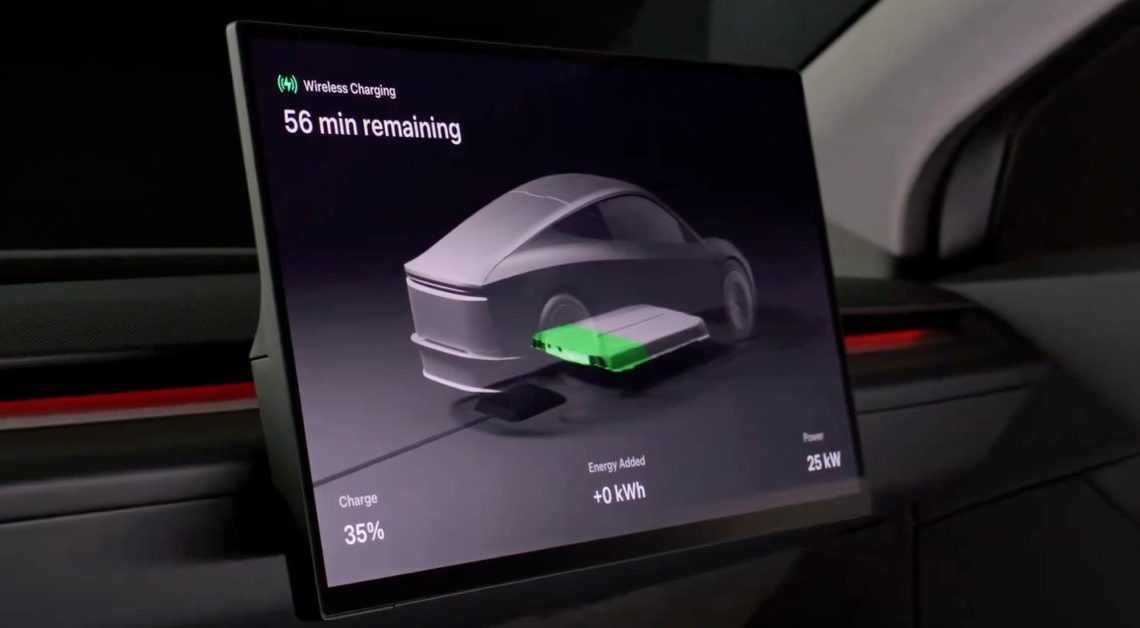
The obvious answer is the wireless home charger Tesla keeps promising.
Tesla first showed what looked like a wireless home charging station during its Investor Day in March 2023. Later that year, chief designer Franz von Holzhausen confirmed the project on Jay Leno’s Garage, saying owners would “just drive over the pad in your garage” to start charging.
Tesla then filed patents for the charging pad and, after the Cybercab unveiling, released a video of it charging the robotaxi at 25 kW, claiming efficiency “well above 90%.” In February, the FCC granted Tesla a waiver to use ultra-wideband radios to guide the Cybercab onto the pad.
And that’s where it stops. Tesla has never sold the pad, never priced it, and never given it a launch date. It even gave up on wireless charging for the Cybertruck last year, even though the truck shipped with the connectors for it.
With deliveries estimated for December, Tesla has about six weeks to launch a home pad if it wants the first owners to charge in their own garage.
The other options aren’t great
Tesla’s own plans for Cybercab charging revolve around fleet depots. In Austin, it filed plans for a hub on St. Elmo Road with 48 V4 Supercharger stalls in a first phase and cabinets to support 80 wireless chargers in a second.
Tesla could, in theory, let private owners use it. But with the owner-presence rule, that means riding to a depot across town and waiting there. That’s a Supercharger visit with extra steps.
The other route is a home DC charger, and those exist. We covered Sigenergy’s 25 kW bidirectional DC charging module last year, which bypasses a car’s onboard charger the same way a Supercharger does. Lunar Energy also announced a 25 kW home DC charger this year, but it’s not expected until mid-2027.
Neither is a plug-and-play answer. Sigenergy’s module is built to sit inside its SigenStor home battery system, which isn’t cheap, and Tesla would have to support third-party DC charging on a car it controls this tightly. Tesla could also build its own small DC wall unit. It hasn’t announced one, but CEO Elon Musk talked about integrating one into the Powerwall for years.
Author: Fred Lambert
Source: Electrek
Reviewed By: Editorial Team
