


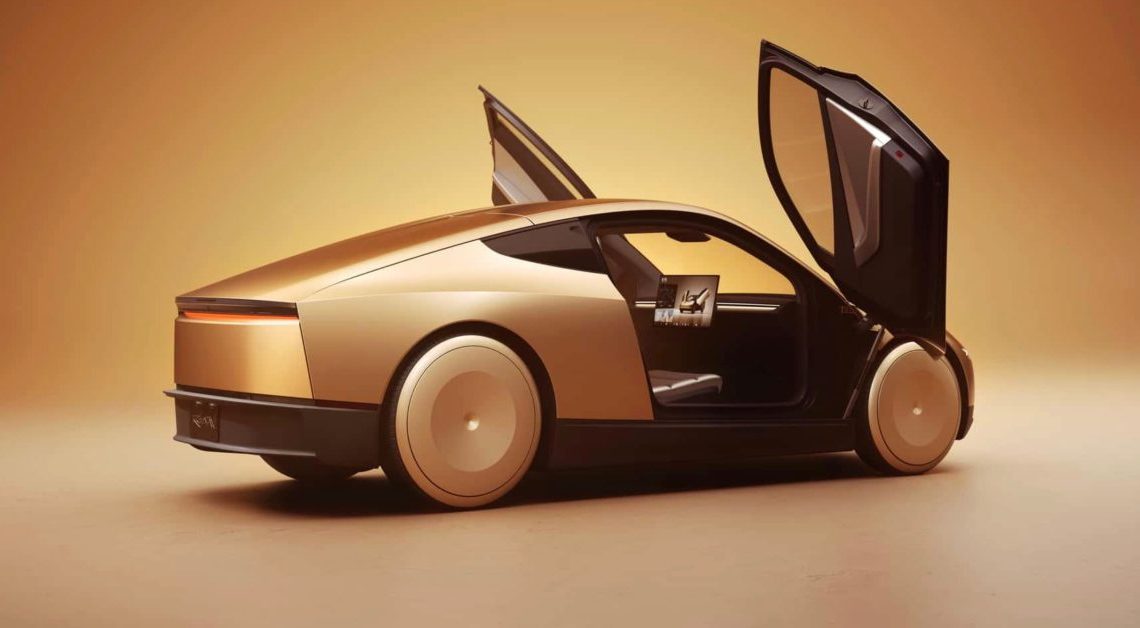
Tesla has posted the agreement that comes with its $29,990 Cybercab, and it’s even worse than the order page suggested. The two-seater can’t move without a $299 monthly “Autonomy Subscription” that Tesla can reprice with a month’s notice, suspend for a week, or cut off entirely.
And Tesla wants consumers to sign it while still refusing to give unsupervised self-driving to the Model Y owners it has been selling “Full Self-Driving” to for nearly a decade.
What Cybercab owners agree to
The “Cybercab Autonomy Subscription Agreement” (version 20261112) went up on Tesla’s configurator late Friday, hours after the company started inviting select customers to order the Cybercab for personal use at $29,990 plus a mandatory $299 per month.
The key line is short: “Your Cybercab will not operate without an active Autonomy Subscription.” There’s no steering wheel and no pedals, so that isn’t a figure of speech. Stop paying and you have a $30,000 object in your garage.
Here’s what else is in there:
- Tesla can change the subscription price with one month’s notice. You pay $29,990 up front, and the car’s usefulness then depends on a monthly fee Tesla sets.
- The Cybercab only works inside Tesla-enabled Robotaxi geofences. Driving outside them is prohibited and can be technically blocked, and Tesla “may expand, reduce, relocate, or otherwise modify the operating area at any time.”
- Tesla can suspend or cancel the subscription for “unauthorized or inappropriate use.” Three or more “strikeouts” for improper or unsafe use trigger a one-week suspension of autonomous driving, during which the car may not operate. Your payment isn’t prorated.
- Tesla can remotely access, locate, restrict, or control the car, place it in a “safe state,” or end your access, and the agreement says those actions don’t give you remedies beyond what’s in the terms.
- Tesla collects “Autonomy Data,” including image data from the cabin camera above the rear-view mirror, kept for 30 days by default.
- It’s for personal use only. You can’t put your Cybercab on Tesla’s Robotaxi network, Uber, a delivery app, or a rental platform without Tesla’s written authorization.
- No wraps, tint, or wheel changes except through Tesla or an authorized provider, or your subscription can be suspended.
That personal-use clause kills the whole pitch. For years, Musk told people they’d buy a Tesla, add it to the fleet, and make money while they sleep. The first Tesla sold to consumers for unsupervised operation is contractually barred from doing exactly that.
Then there’s the geofence. Tesla’s Robotaxi service areas are already smaller in practice than advertised: when we tested them, real coverage was between 59% and 78% of the advertised maps, and parts of the Houston map have been called “fake” by the person tracking it. Now Tesla reserves the right to shrink that area after you’ve paid for the car.
Mark Valorian, who went through the terms on X, summed it up as “an endless variable-rate lease with a ridiculous down payment.” That’s about right.
Over five years, the car plus 59 paid months of subscription comes to $47,631 before insurance, registration, charging, and taxes, all of which are on the owner.
Tesla says the Model Y runs the same thing
This is the part that should make every Tesla owner angry.
Tesla has spent the last year telling everyone that its Model Y is just as much a robotaxi as the Cybercab. Ahead of the Robotaxi launch in Austin, Musk said the cars were “the Model Ys we make currently, there’s no change to it.” On Tesla’s Q3 2026 earnings call last month, AI chief Ashok Elluswamy said Cybercabs and Model Y robotaxis already run the same software, and that customer cars might join the network around Q2 2027. The Cybercab launches on the same AI4 computer found in the current Model Y.
So the hardware is the same, the software is the same, and unsupervised Model Ys are already operating in the exact geofences where Cybercab owners will be allowed to ride.
Yet the people who paid for it get nothing. Tesla started selling “Full Self-Driving Capability” in 2016 on the promise that every car it built had the hardware for it. Owners paid up to $15,000 for the package. In February, Tesla stopped selling it outright and moved to a $99 per month subscription, which still requires you to supervise the car at all times.
Tesla’s answer to all those owners is a new car. One with two seats, no controls, a geofence it can move whenever it wants, and a subscription that costs three times as much as FSD.
Author: Fred Lambert
Source: Electrek
Reviewed By: Editorial Team
