


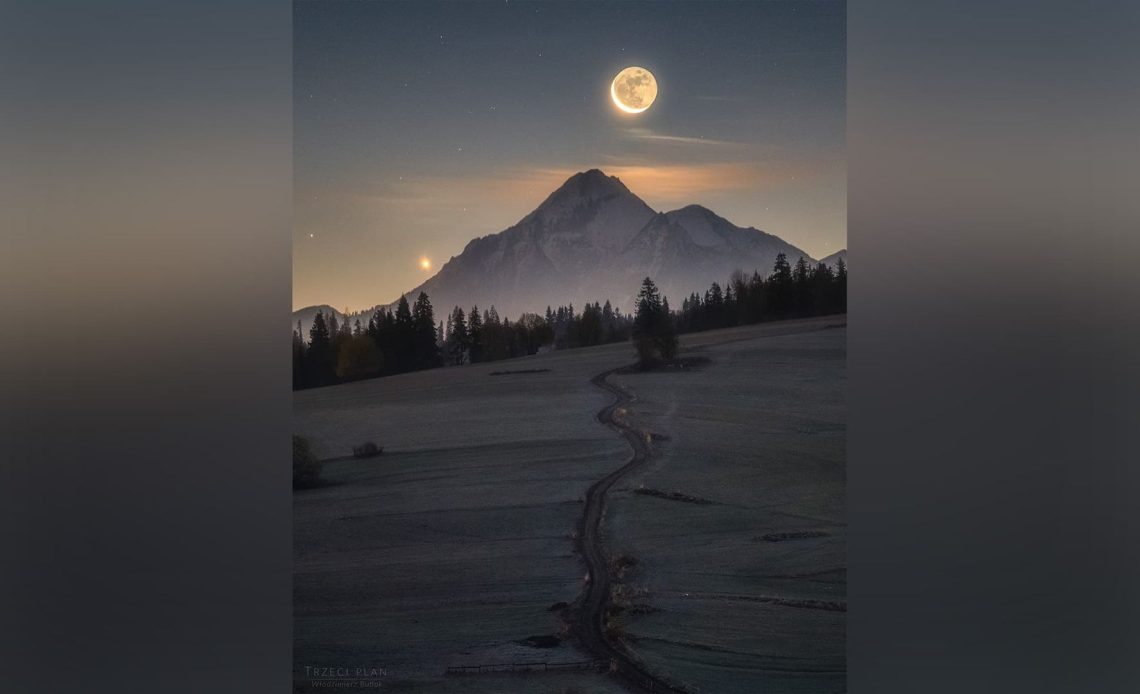
“As soon as I discovered this vantage point, I knew it was something special,” said Włodzimierz Bubak, a Polish astrophotographer whose image was recently featured by NASA as its Astronomy Picture of the Day (APOD).
And he wasn’t wrong. On the morning of November 07 2026, Bubak was ready and waiting at his vantage point.
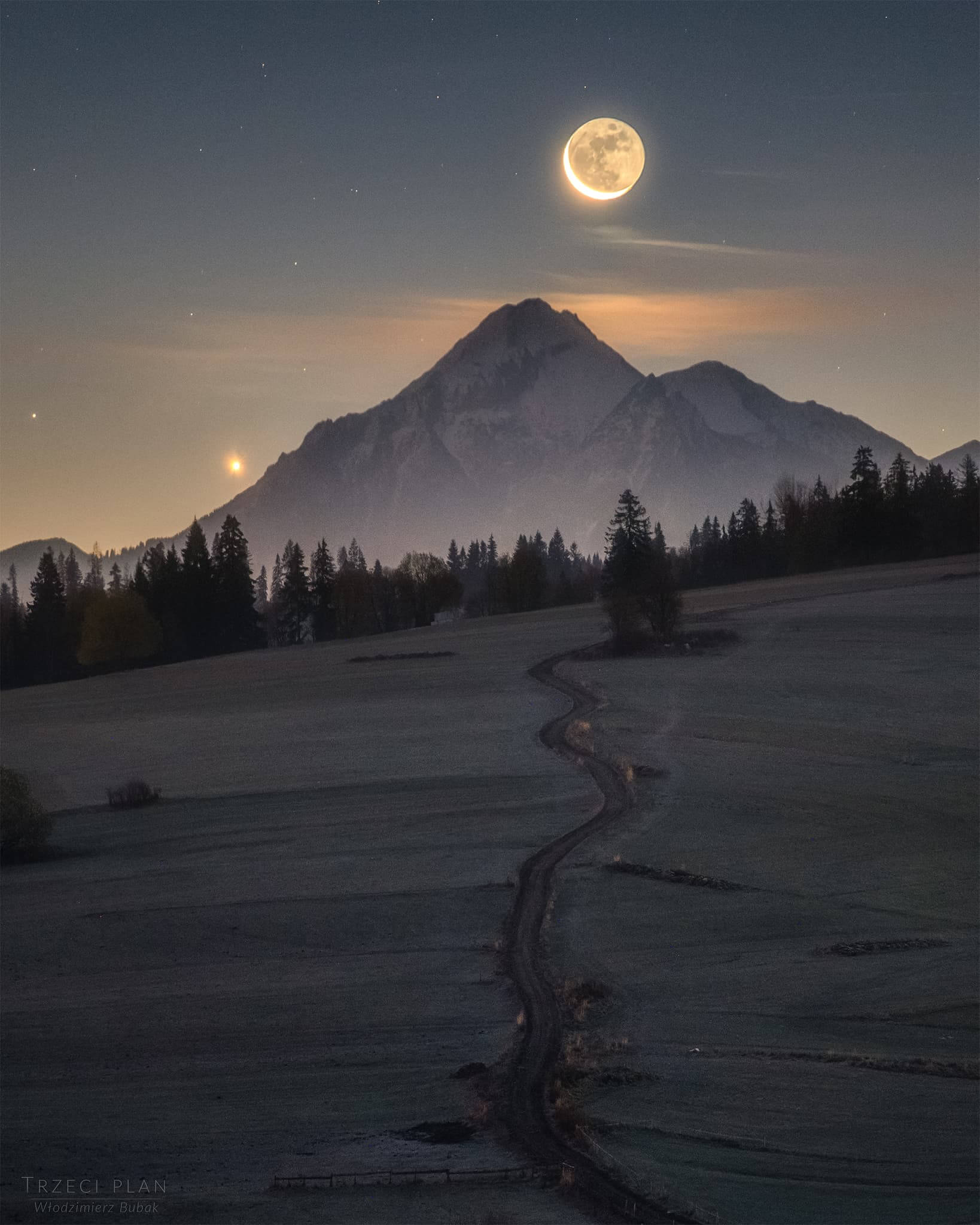
That morning, a stunning crescent moon sat high in the sky, perfectly aligned above the Tatra Massif, the highest group of mountains within the Carpathian Range. Just above the horizon, to the side of the Moon, Venus gleamed like a pearl.
“I was certain it would be an incredible sight,” said Bubak, explaining that he had planned the date earlier in the year by looking at moonrise ephemerides – datasets listing the exact predicted times when the Moon will appear above the horizon for a specific location over a given period.
Image 1 of 2
(Image credit: Włodzimierz Bubak (@trzeci_plan))
Moon, Venus and Spica Meet (above)
(Image credit: Włodzimierz Bubak (@trzeci_plan))
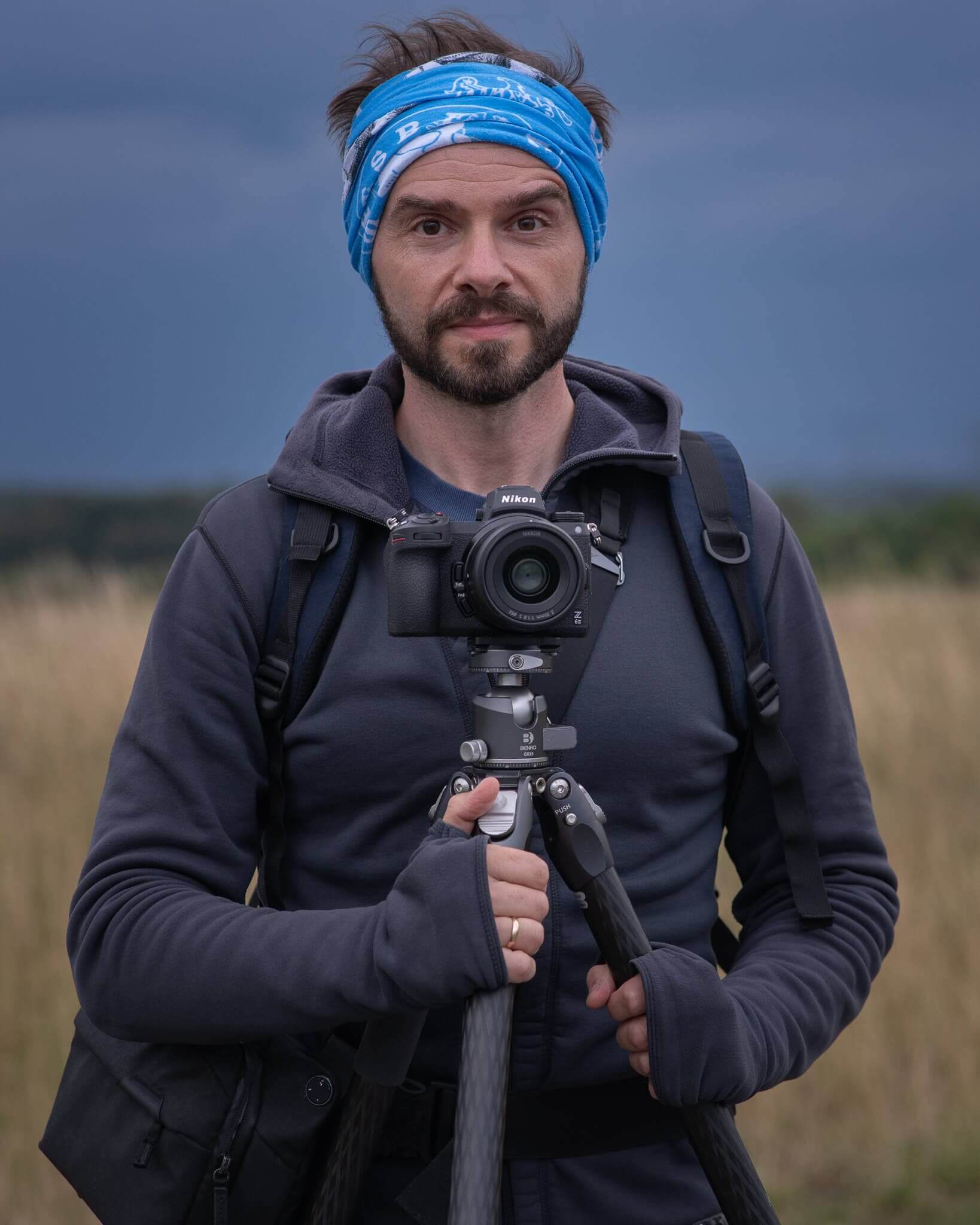
Włodzimierz Bubak (above)
View Original
View Original
Włodzimierz Bubak’s gear and settings
- Camera: Nikon Z5 II
- Lens: Tamron 70-180mm f/2.8 Di III VC VXD G2
- Focal length: 180mm
- Base image exposure: 2 secs, f/3.2, ISO3200
- Post-production: 30-second exposure overlaid onto the section of the frame containing the snow path, using a layer opacity of approximately 40%
“I kept anxiously checking the weather forecasts, and spent the night before the moonrise sleeping in my car at a mountain pass,” added Bubak, describing the days leading up to the astronomical event.
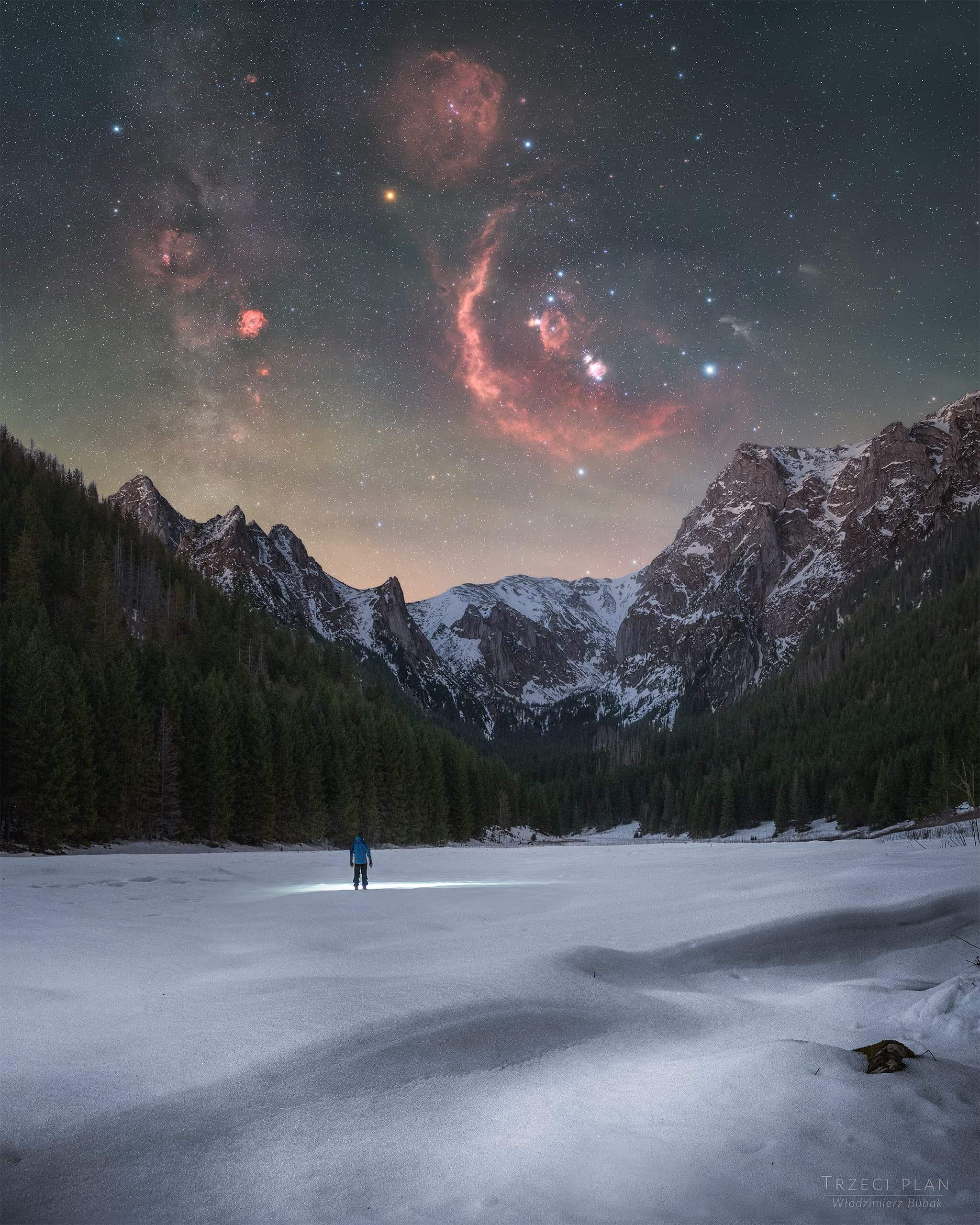
Bubak has now been featured four times by NASA’s APOD editors. For his previously featured images, the photographer explained that he used more advanced astrophotography techniques, such as star tracking and shooting with an astro-modified camera.
Image 1 of 2
(Image credit: Włodzimierz Bubak (@trzeci_plan))
Orion’s Treasures over Snowy Mountains (above)
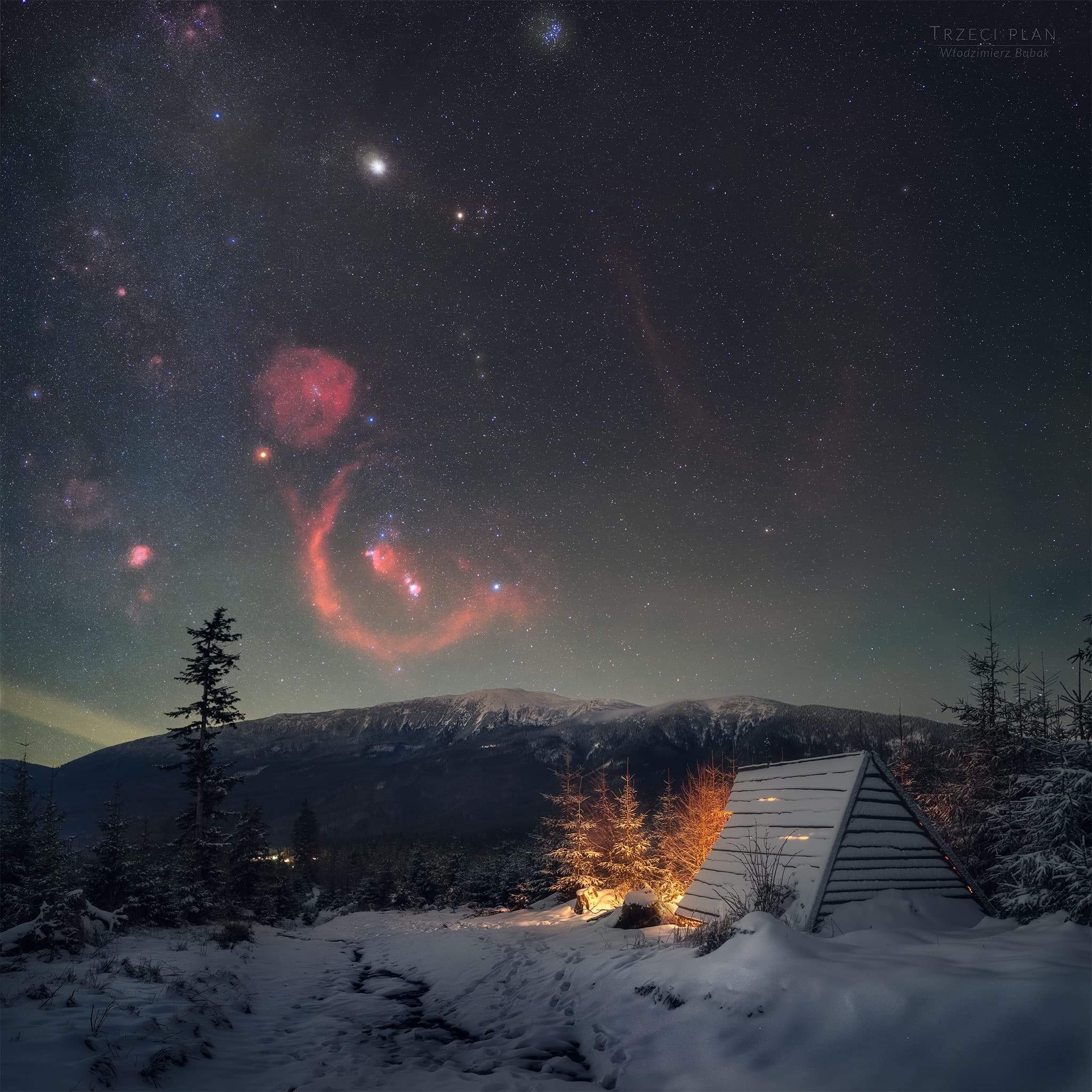
(Image credit: Włodzimierz Bubak (@trzeci_plan))
Orion rising over Babia Góra (above)
View Original
View Original
However, for his latest APOD shot, Bubak used his trusty Nikon Z5 II and Tamron 70-180mm telephoto lens. In post-production, he overlaid a 30-second exposure on top of the base 2-second exposure to bring out the details of the snowy path leading towards the distant peaks.
“I’m happy that this time, all it took was an ordinary, unmodified camera and the right location at the right time,” said the astrophotographer. “I’m passionate about my local region, and I love it when photographs reveal familiar places in unexpected and unconventional ways.”
Author: Alan Palazon
Source: DigitalCameraWorld
Reviewed By: Editorial Team
