

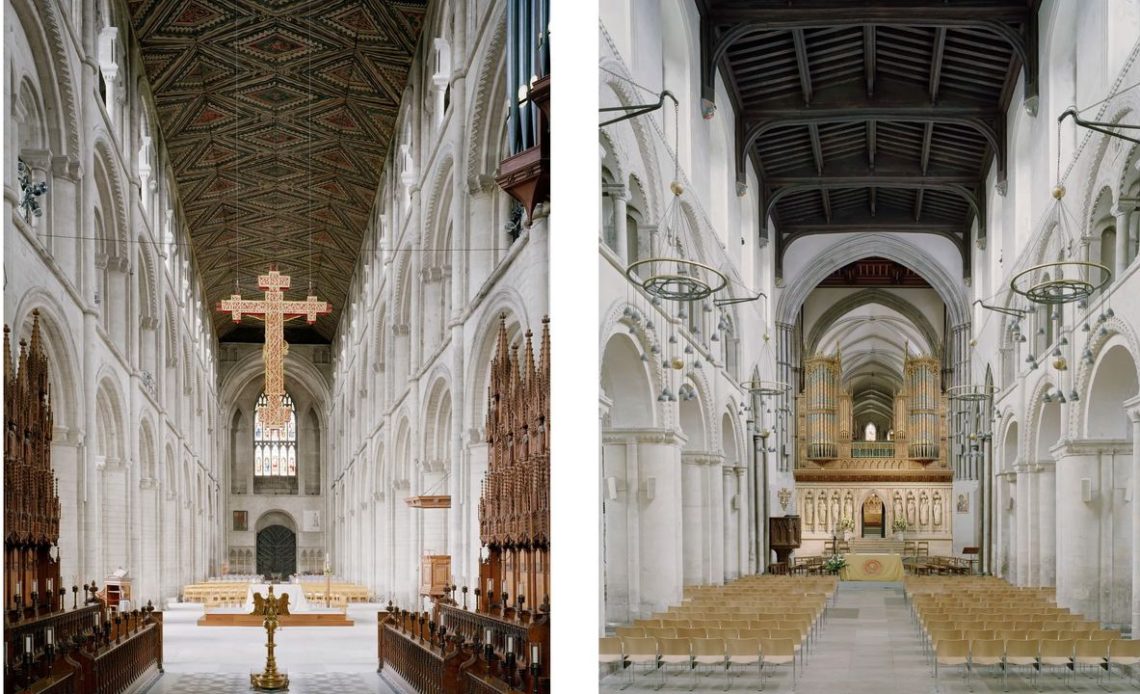
One of the tricks a great photographer can pull off is to make their job look easy. Taken between 2010 and 2012, Peter Marlow’s large-format cathedral photographs fit firmly in that category. To the untrained eye, these hushed, glowing interiors, empty of people, might look like they were easy to set up and shoot. They were anything but.
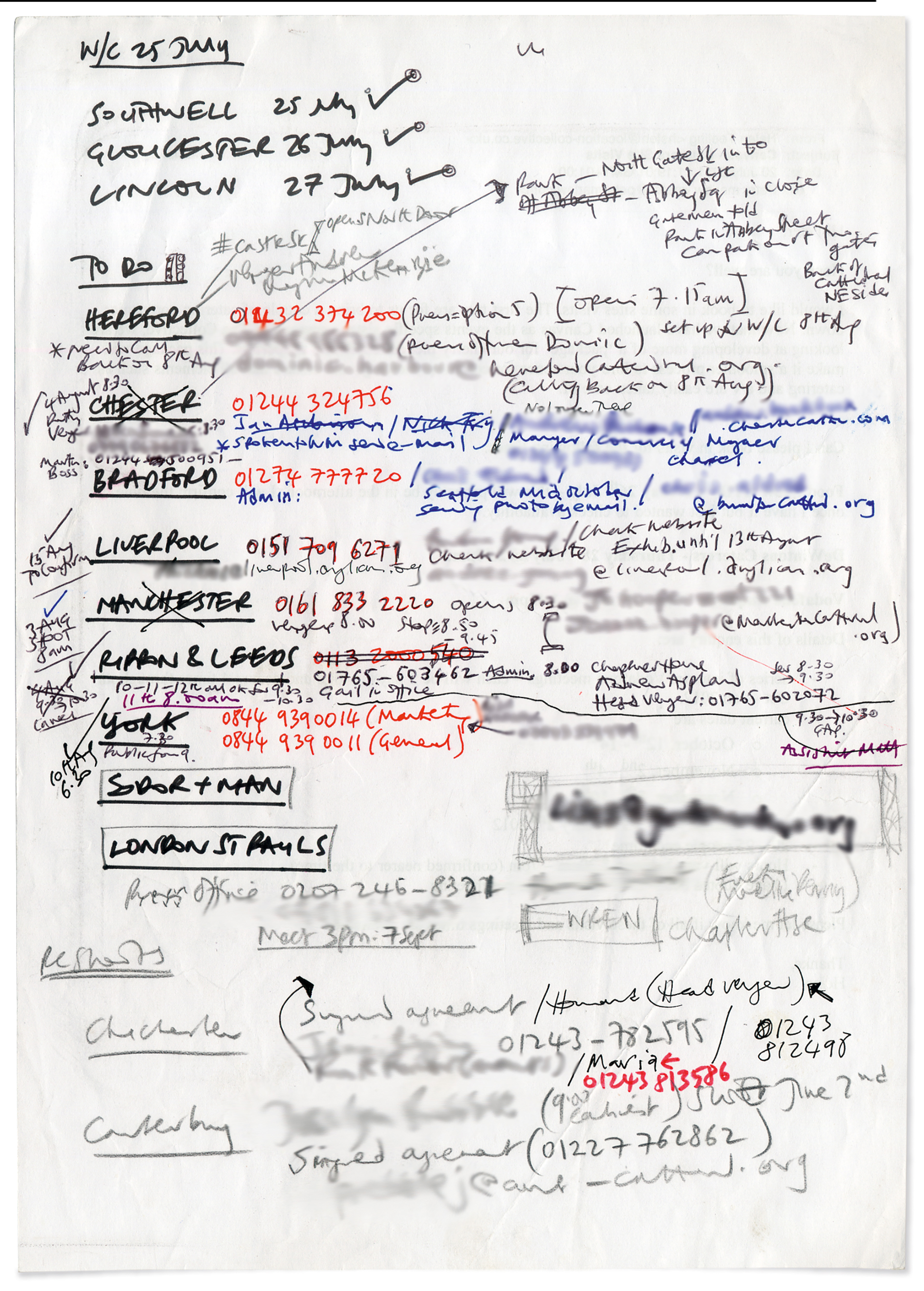
An exhibition running at Southwark Cathedral titled The English Cathedral – drawn from Marlow’s book of the same name, first published in 2012 – includes his planning notes alongside the finished prints, and they tell a very different story. One of admin, phone numbers scrawled in red biro, and vergers who needed persuading to switch off the lights.
Marlow’s archive puts the lie to the idea that “natural light” photography is ever the simple, unmediated option. Getting a cathedral lit purely by the sky, with every electric light and spotlight killed, meant negotiating access, coordinating with staff who controlled the switches, and repeat visits when the weather or the angle of the sun didn’t cooperate.
His to-do lists, reproduced as part of the show, read less like an artist’s notebook and more like a project manager’s spreadsheet: diocese phone numbers, admin contacts, notes on when scaffolding needed clearing before a shoot.
Another interesting detail is Marlow’s use of instant film, specifically Fujifilm FP-100, to test each composition and exposure before committing to a single frame of large format. His exposure notes for Rochester and Chichester show him logging shutter speeds and f-stops shot by shot, refining his read of the light before the “real” exposure went down.
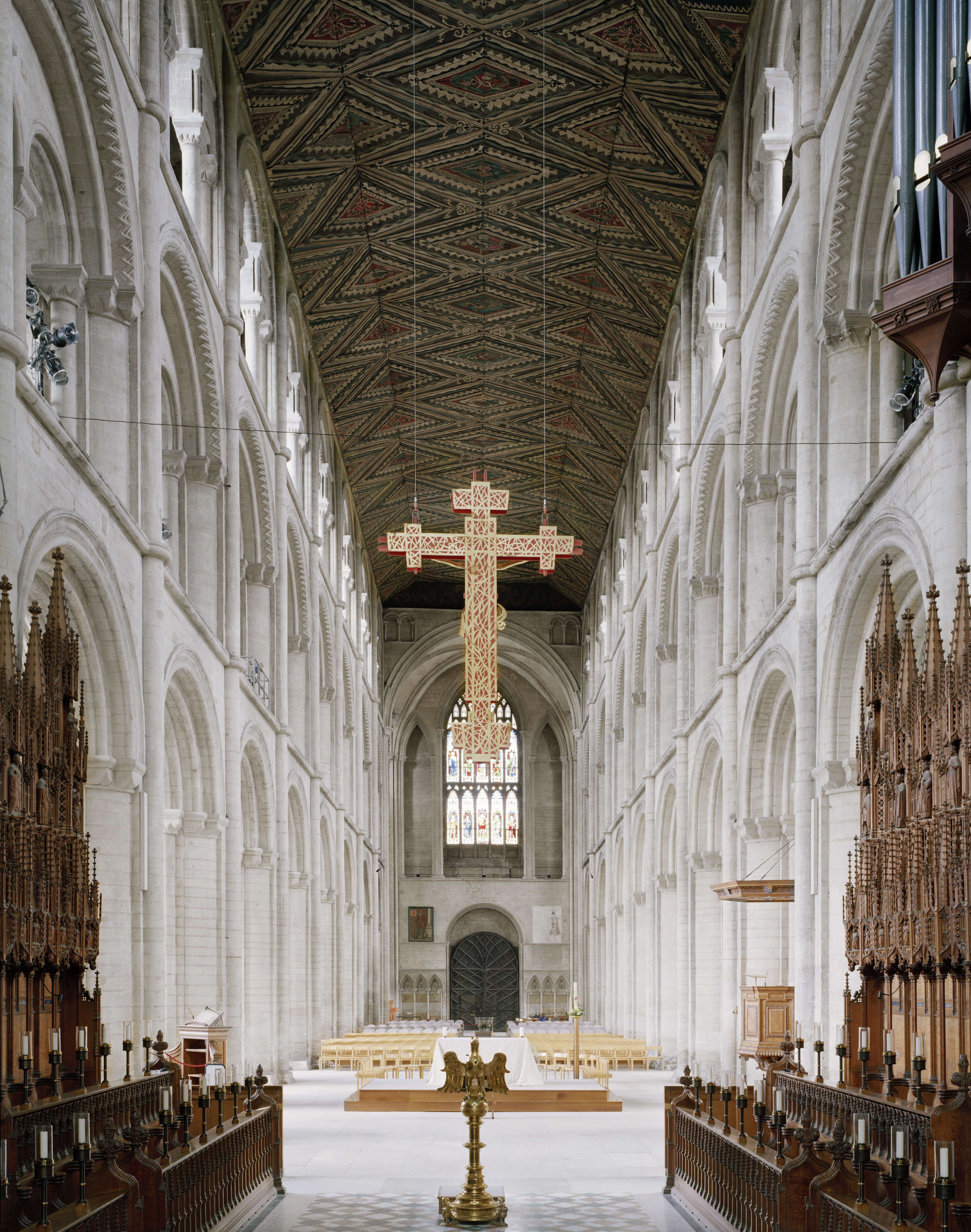
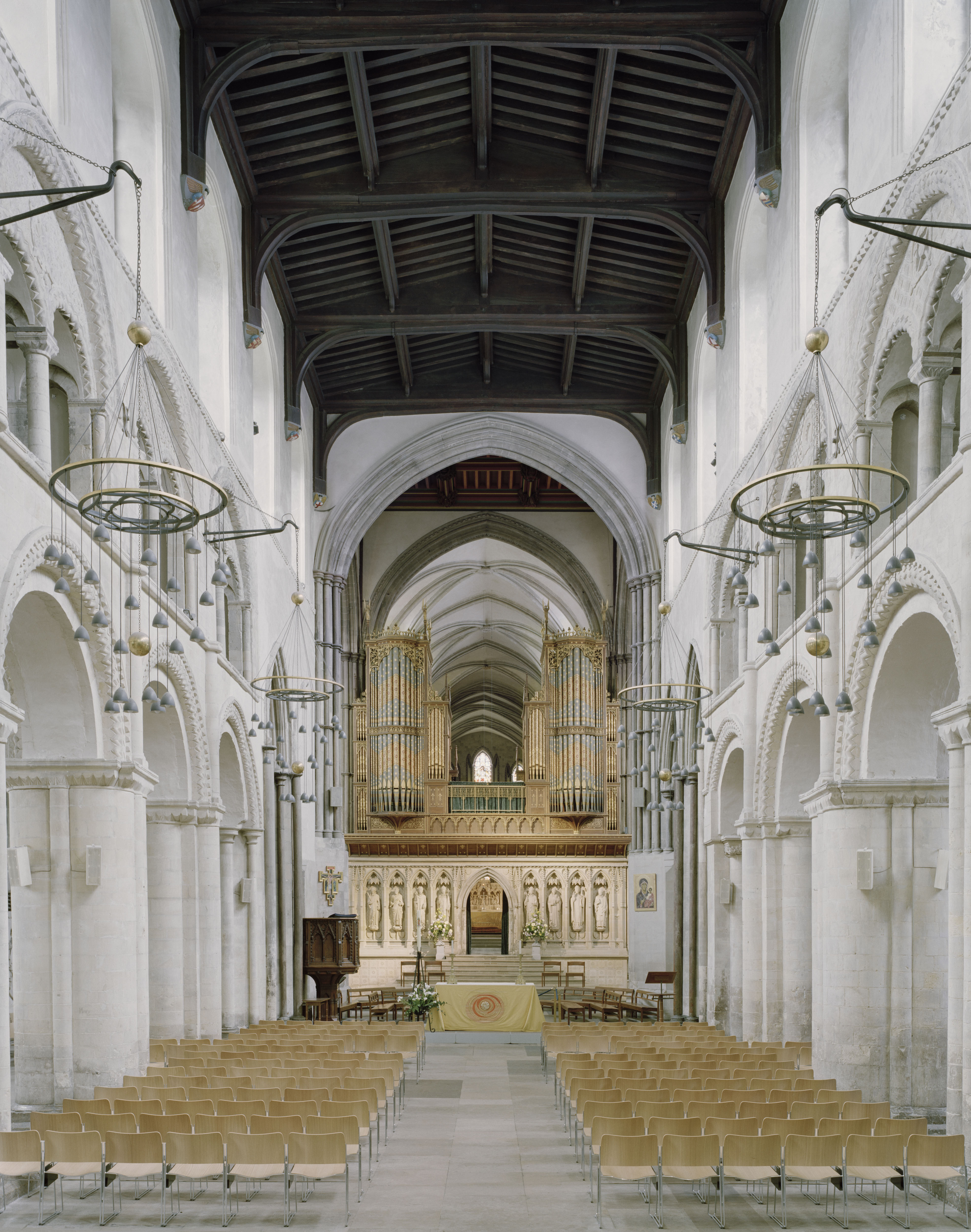
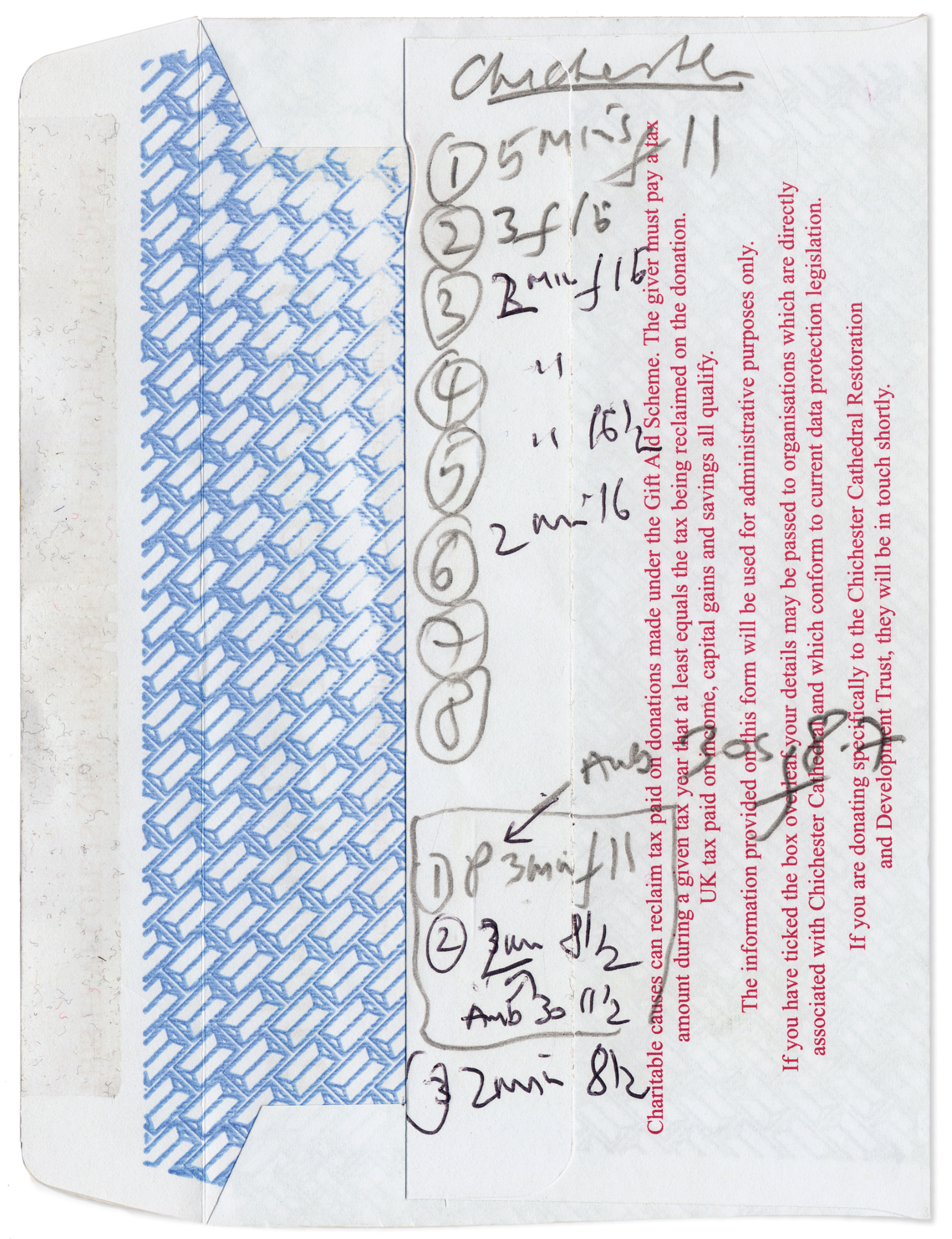
It’s a reminder that even photographers working at the very top of the trade, with decades of experience and a Magnum membership behind them, don’t trust their light meter alone when the stakes and the film costs are high.
Marlow himself put it plainly: his cathedral days involved hours of driving and thinking, with his reference Polaroids drying in the sun on the dashboard while England passed by outside the windscreen.
Camera kit
Marlow was shooting on a Sinar F1 monorail camera, fitted with a Sinaron-W 115mm lens, loaded with sheets of Fuji 160 Pro colour negative film (rated at ISO100 ASA rather than the box speed of ISO160). He mounted it on the largest tripod Manfrotto makes and stood on a six-foot stepladder to keep his shooting height consistent across all 42 buildings.
He used the rising front of the Sinar to keep verticals parallel, shot at small apertures between f/22 and f/32 for maximum depth of field, which pushed exposures out to between one and five minutes in the low dawn light.
Ultimately, though, what makes the 42 images cohere as a single body of work lies less in Marlow’s kit and more in his insistence on repeating the same discipline at every cathedral. The same eastward orientation towards nave and altar, the same reliance on dawn light, the same refusal to compromise by leaving a single spotlight on.
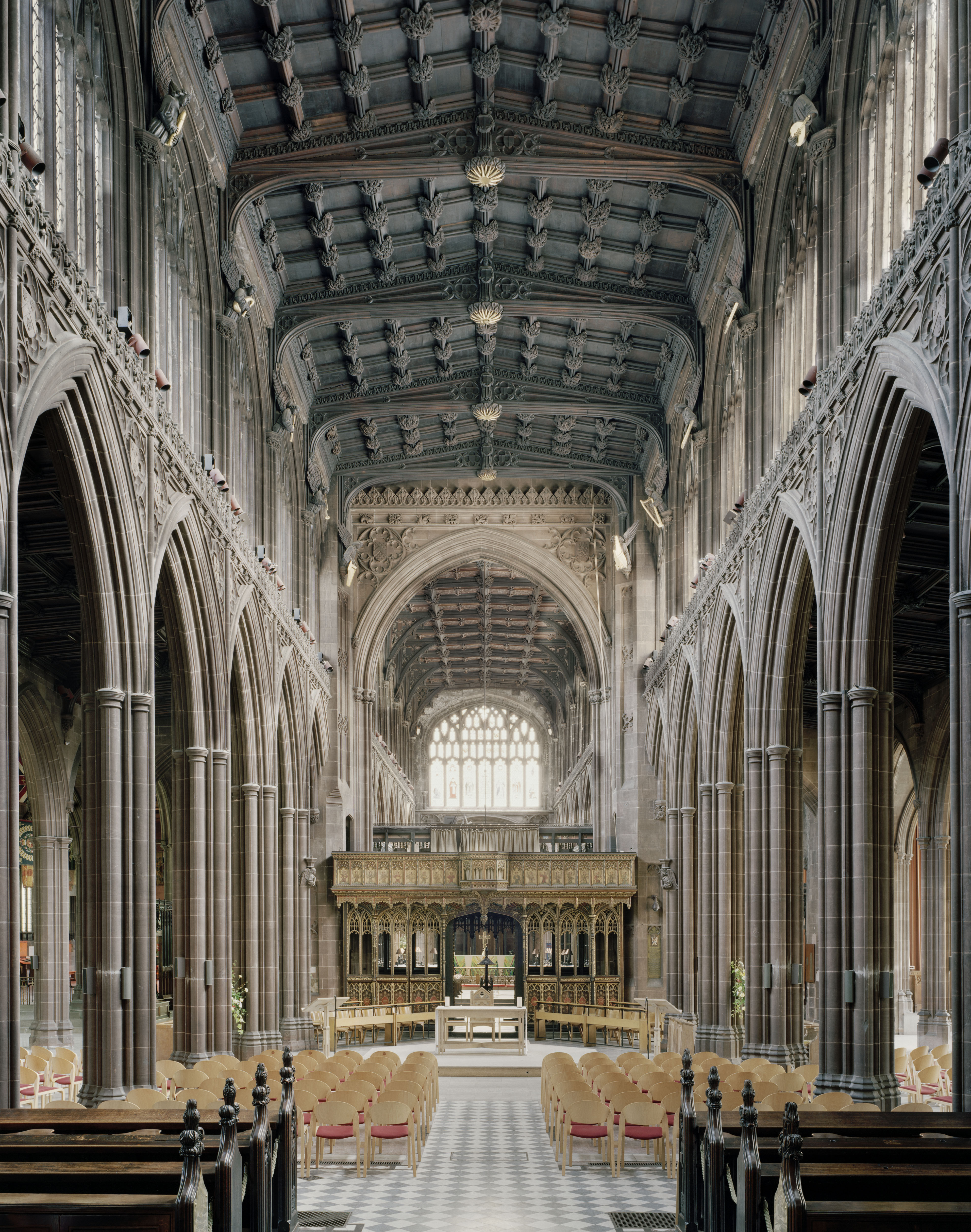
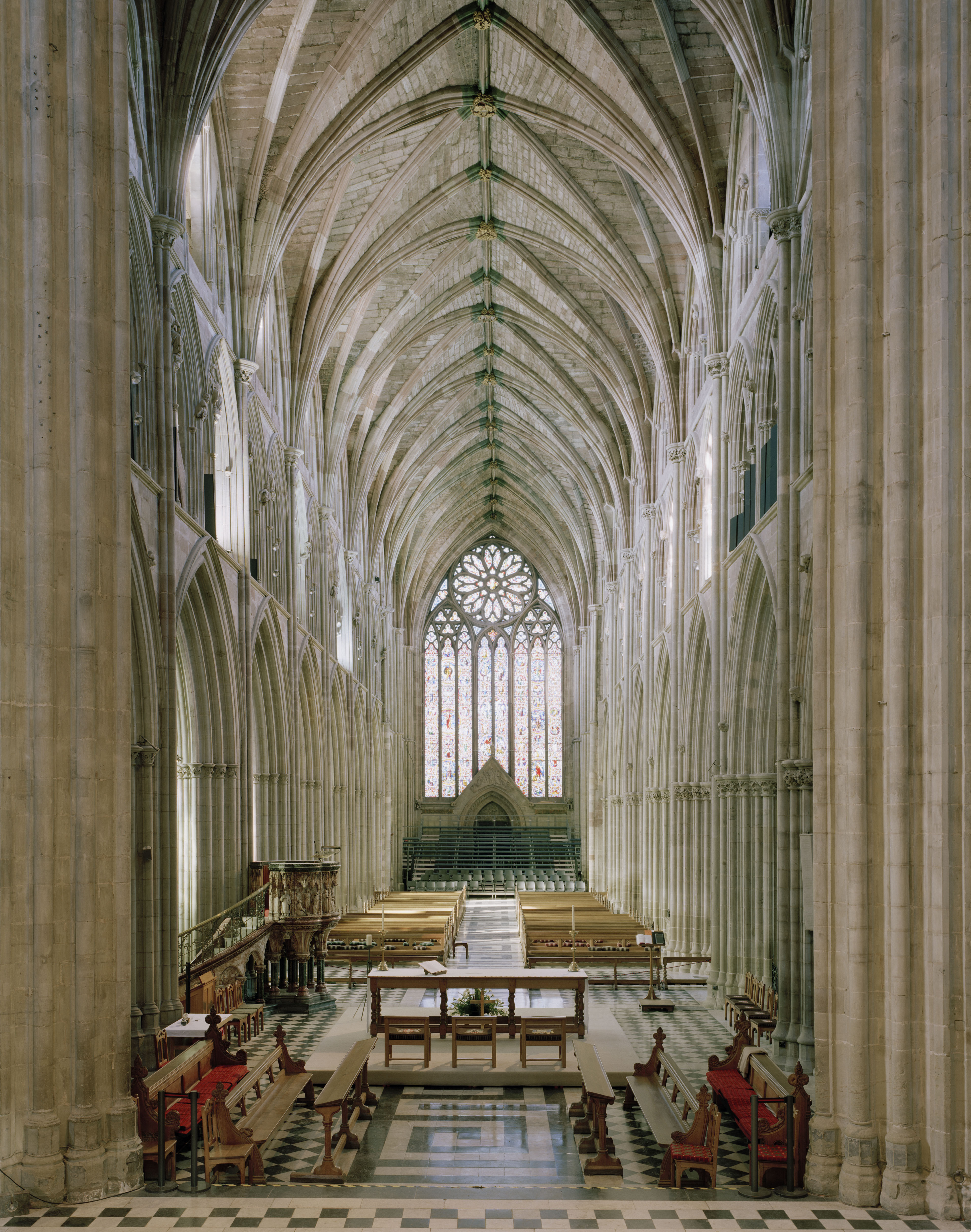
Because his method never wavered, buildings as different as Manchester’s dark hammerbeam roof and Southwark’s pale gothic vaulting ended up reading as part of one continuous project. And for anyone attempting their own long-term project, I think that’s the real takeaway from this show.
Marlow didn’t chase 42 different ideas. He found one rigorous, bureaucratically-challenging method, and applied it 42 times; cathedral vergers and drying Polaroids included.
Peter Marlow: The English Cathedral runs at Southwark Cathedral, London Bridge, Montague Close, London, SE1 9DA, until August 31. The exhibition is free to view during general opening hours.
Author: Tom May
Source: DigitalCameraWorld
Reviewed By: Editorial Team