

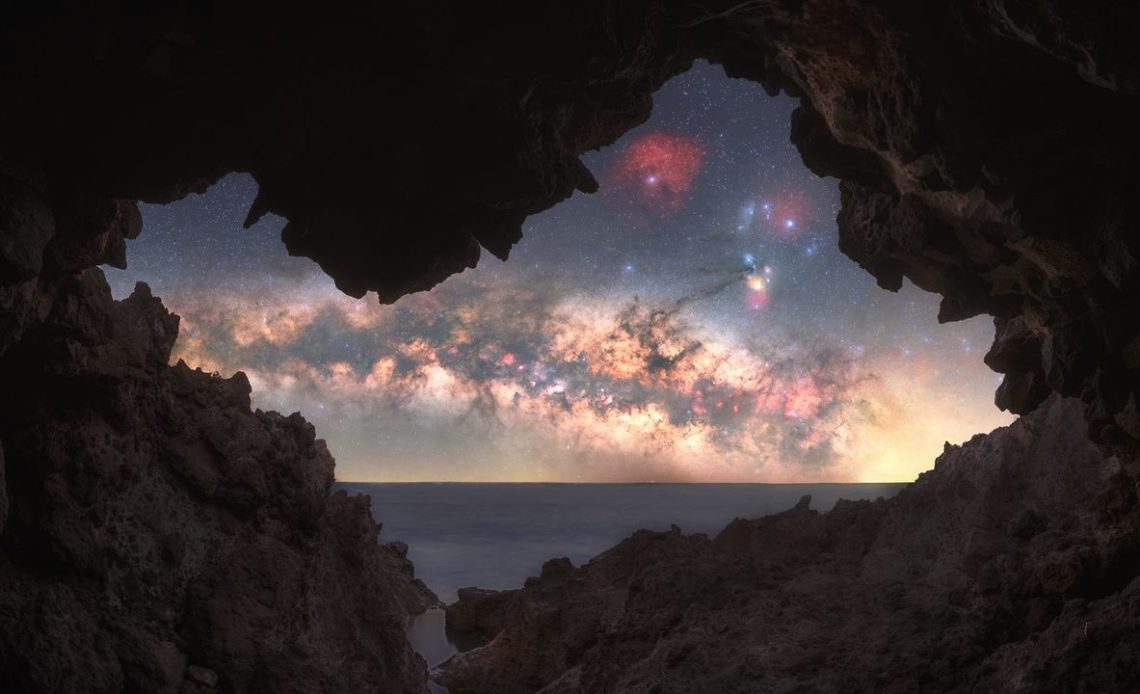
This photograph, Galaxy on the Rise, was captured in Tenerife, the Canary Islands, where the photographer spent nearly four hours searching for a hidden cave that proved remarkably difficult to find.
“I’m always drawn to locations that feel unique and relatively undiscovered, and this cave was a perfect example,” says astrophotographer Anastasia Gulova, reflecting on the image that has now been selected for Capture the Atlas 2026 Milky Way Photographer of the Year collection.
The search became even more demanding due to intense heat and powerful winds, which pushed the photographer against the surrounding rocks. Almost abandoning the attempt, Gulova finally located the cave that would become the foreground for one of her most memorable Milky Way images.
How ‘Galaxy on the Rise’ was captured
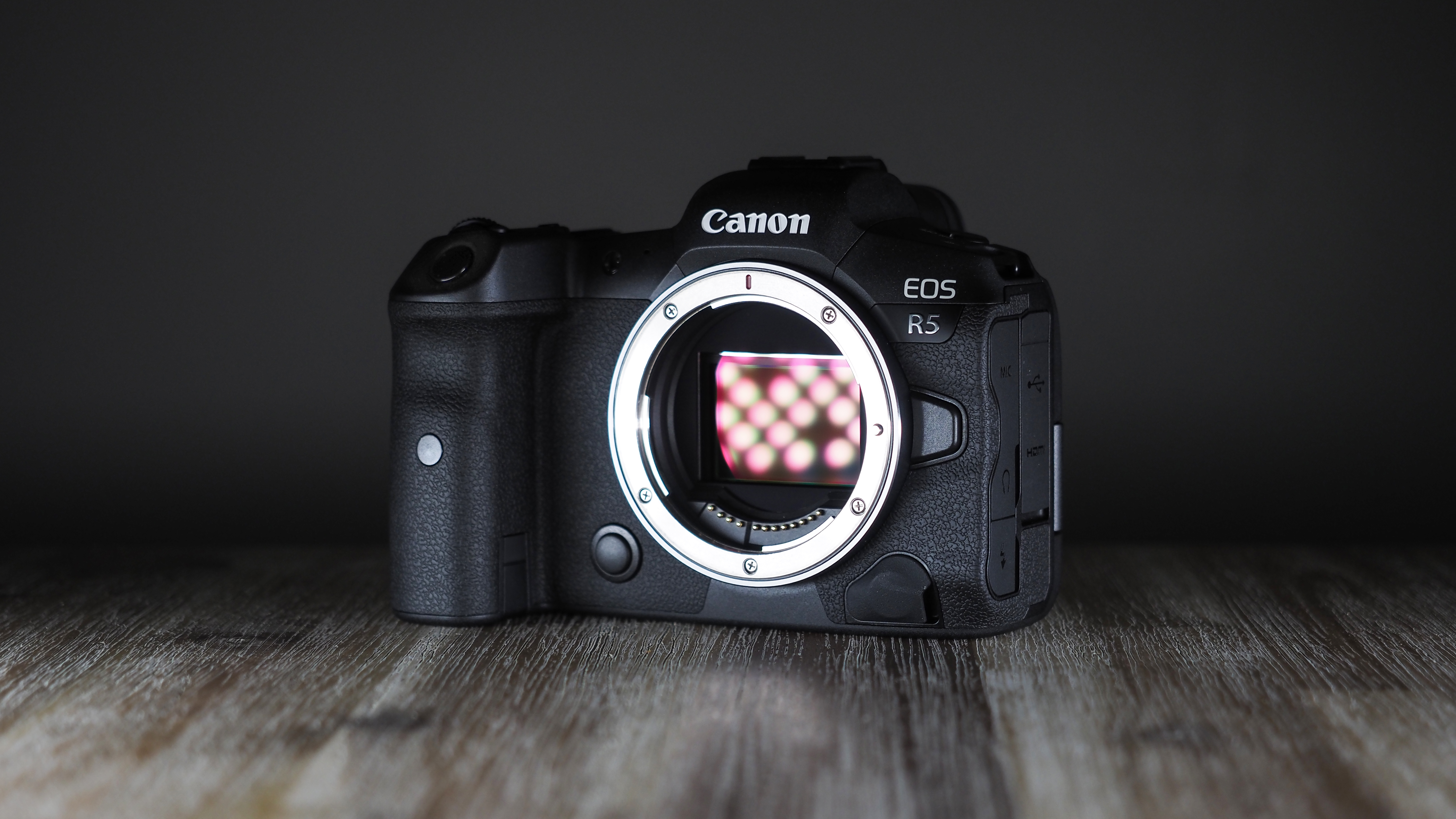
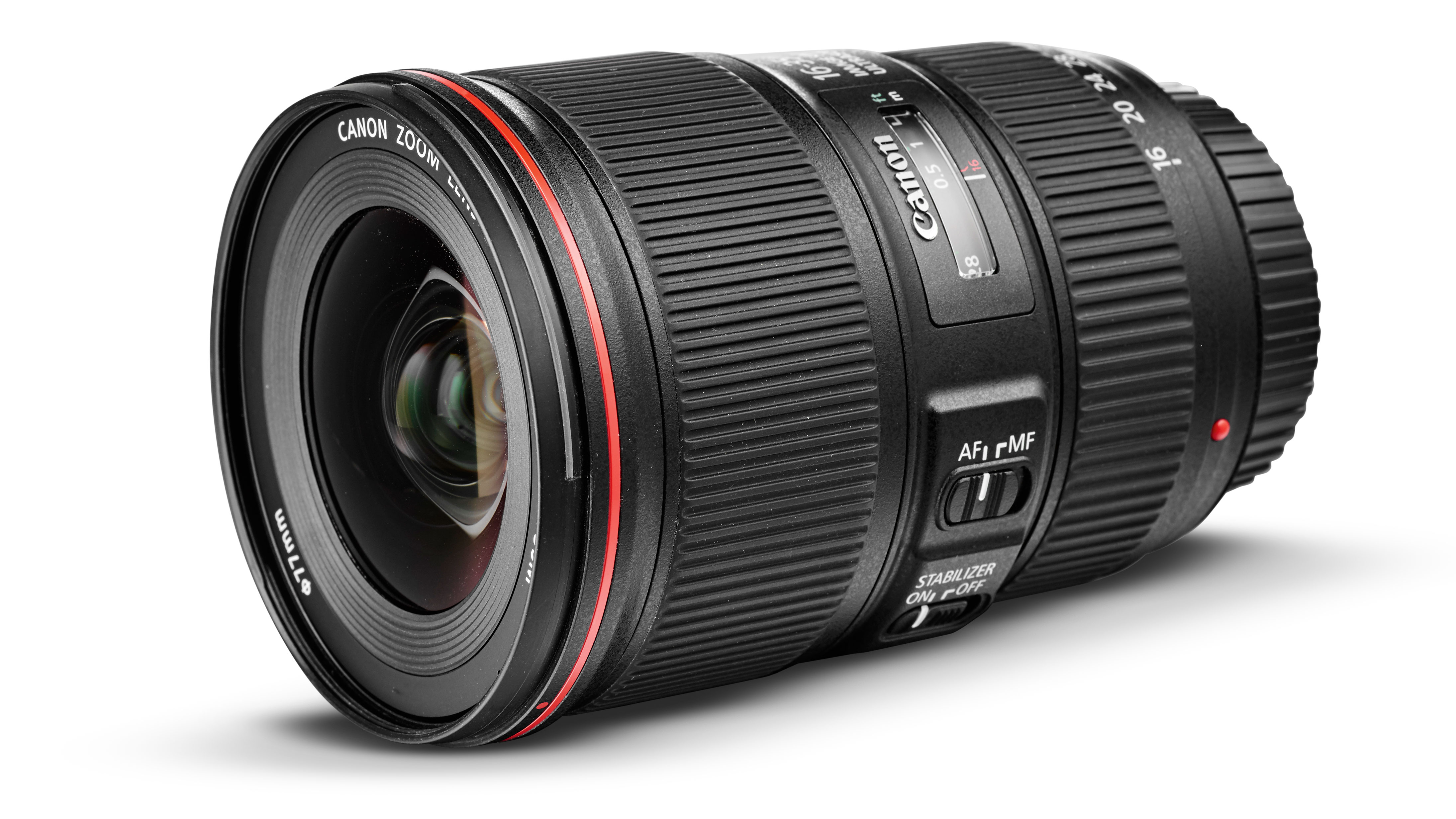
Gear: Canon EOS RP Astro-modified (for sky), Canon EOS R5 (for foreground), Tamron 35mm f/1.4 SP Di USD, Canon EF 16-35mm f/4L IS USM
Accessories: Leofoto Ranger, Sky Watcher Sky Adventurer Pro 2i, VF foto white mist filter
Exposure: Sky: Pano 1 row x 6 panels x 4 frames at 60sec, 35mm, f/1.8, ISO 800; Foreground: Pano 1 row x 6 panels at 60sec, 16mm, f/4, ISO 100 (focus stacking + bracketing)
“The conditions made the process demanding,” Gulova explains. “Intense heat combined with powerful winds made movement difficult, at times pushing me against sharp rocks.
“After nearly giving up and heading back, I finally came across the cave, a moment that made the entire search worthwhile.
“Capturing the image proved just as challenging. Composing and shooting the panoramic foreground required careful positioning, while properly illuminating the upper section of the cave was particularly difficult.
“To manage this, I used focus stacking across different planes, including the upper edge, the horizon and the lower foreground, all in near-total darkness, where the brief blue hour offered little assistance.
“With the Milky Way sitting low on the horizon, bringing out its color and detail required additional effort in both capture and processing.
“In the end, the result reflects not only the scene itself, but also the persistence and experience behind it, making it especially meaningful.”
Author: Kim Bunermann
Source: DigitalCameraWorld
Reviewed By: Editorial Team