


Many portrait photographers would dream of shooting someone influential and world-famous. Pretty good for the résumé, right? But at the same time, it’s a tricky ask. How do you go about photographing someone who’s already an icon? Your subject walks in carrying every image of themselves that already exists. How do you come up with something fresh?
Shirin Neshat had exactly this dilemma when the National Portrait Gallery commissioned her in March 2018 to photograph Malala Yousafzai, the youngest Nobel Prize winner in history. Her answer was to put the camera down and pick up a pen. Or rather: to use both.
An inventive process
Neshat, an Iranian-born artist based in New York, is known for work that examines women’s lives within Islamic culture through photography, video and film. She won the Golden Lion Award at the Venice Biennale in 1999 and has directed feature films screened at major international festivals.
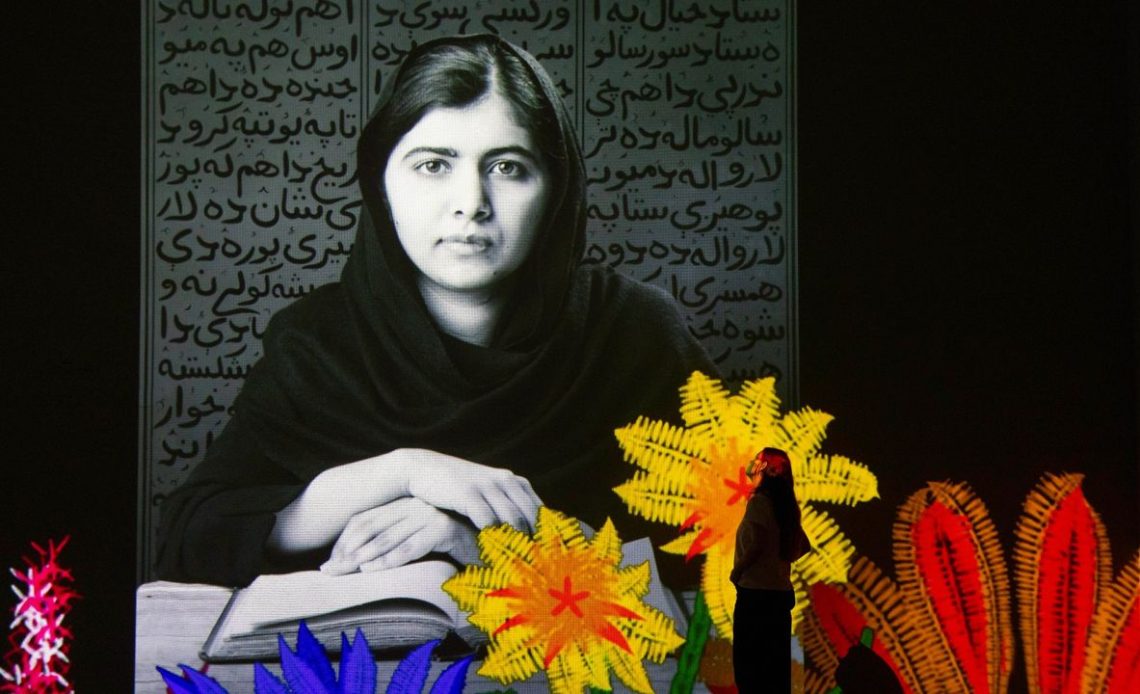
When she photographed Malala, she took a series of images during a sitting in London. Then, working from the selected prints, she hand-inscribed in calligraphy a poem written in Malala’s honor by the Pashtu poet Rahmat Shah Sayel, writing it directly onto the photographic surface.
The poem, titled Malala II, was written in 2011, when the teenager had already become well known as an education activist in Pakistan’s Swat Valley. It draws a connection between her and the legendary Malala of Maiwand, a 19th-century Pashtun heroine said to have inspired her countrymen in battle.
Neshat inscribed the text in Farsi script, using exaggerated calligraphic accents that she acknowledged go beyond strict linguistic correctness, describing them as a visual choice rooted in the aesthetics of her own practice.
The resulting portraits, of which there are two in the National Portrait Gallery collection, are harder to categorize than a straight photograph. They’re photographic in origin but layered: the script covers the background and, in places, the subject’s face.
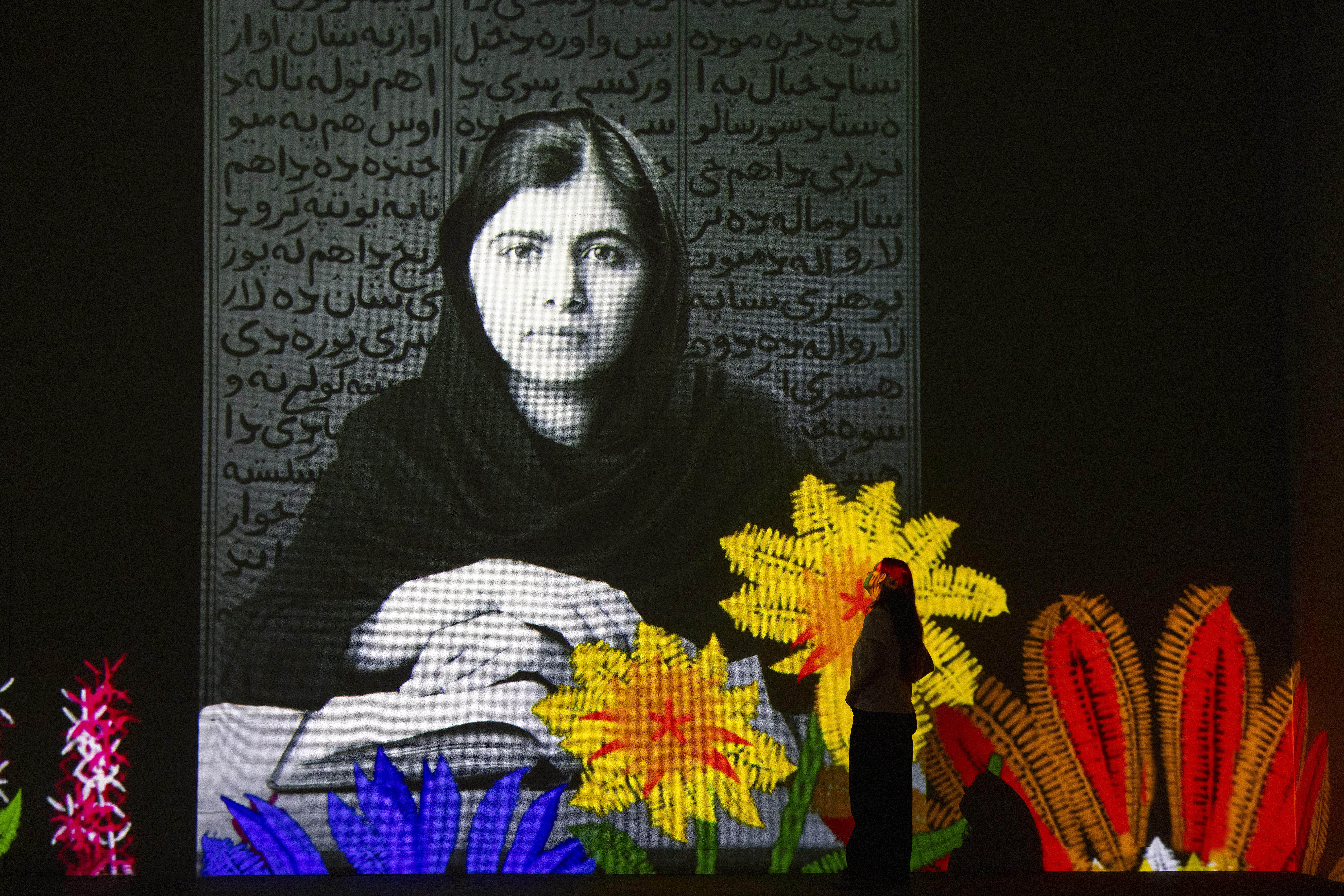
In the shot shown here, Malala is shown seated at a school desk with an open book, hands folded across the pages, her expression direct and composed. The dense calligraphic text that surrounds her functions both as context and atmosphere; a kind of visual map of the political and cultural territory she lives and breathes.
The day of the shoot
Neshat admitted she felt intimidated in the lead-up to the shoot. Malala had survived a Taliban assassination attempt at 15, won the Nobel Peace Prize at 17 and gone on to study philosophy, politics and economics at Oxford. “Yet as she arrived at the studio,” Neshat later said, “I was immediately taken aback by her timid, gentle and innocent demeanour.”
The gap between the public figure and the person in the room is something photographers often speak about. Neshat found it profound here, and it informed every compositional decision she made.
The school desk portrait was also unveiled in Birmingham, UK, in 2020 as part of the NPG’s Coming Home initiative, travelling to Malala’s adopted city as one of 50 works loaned to locations across the UK. It’s also now showing as part of Stories – Brought to Life, a new immersive collaboration between FRAMELESS and the National Portrait Gallery in London, running until September 12 and included in the standard entry ticket.
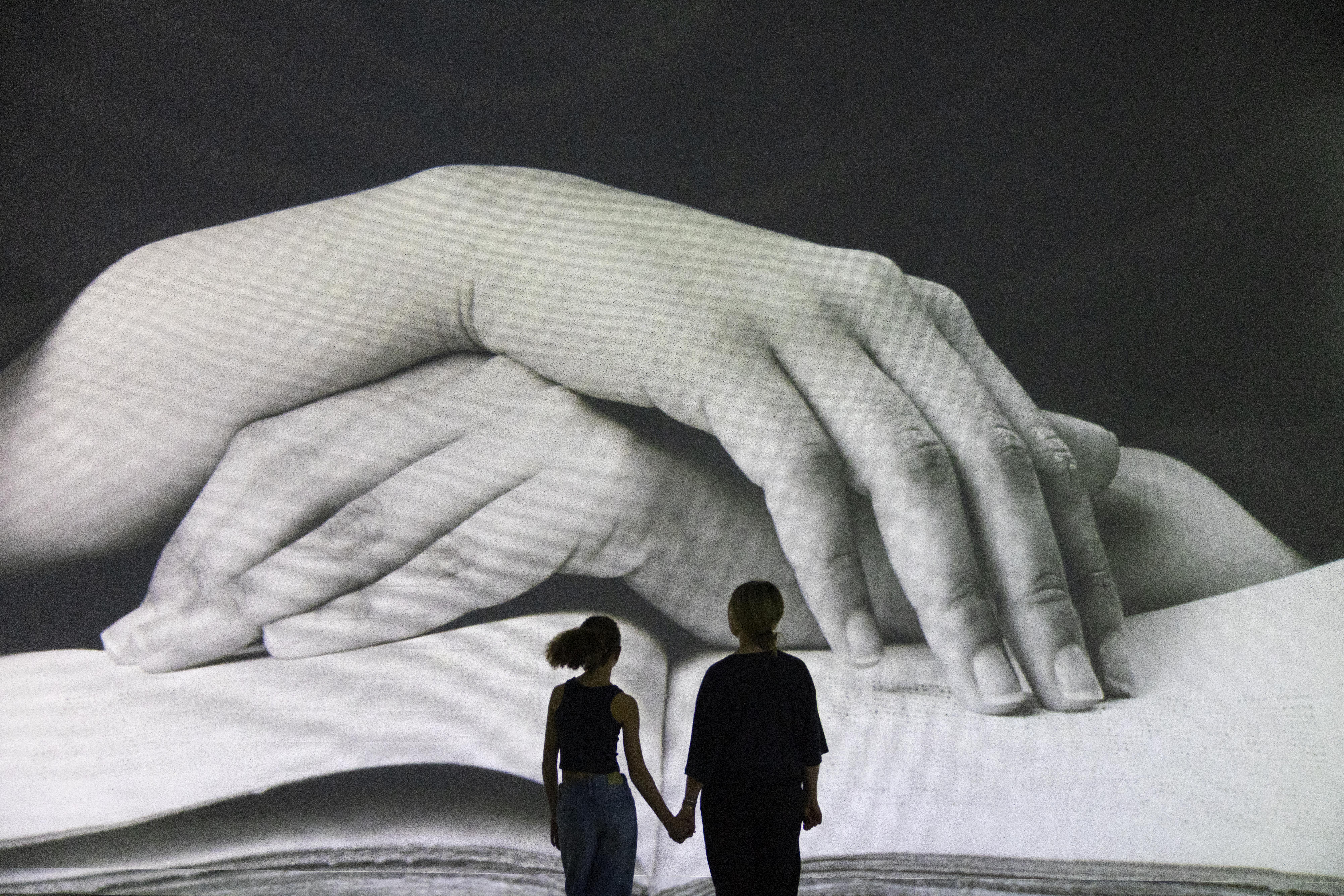
Projected at enormous scale across floor-to-ceiling screens, with animation, archival material and original sound, the 15-minute experience also features imagery of Nelson Mandela, Amy Winehouse, Queen Elizabeth II and William Shakespeare.
At this scale, Neshat’s calligraphy becomes architectural. The Pashtu script fills the walls around the image of a young woman sitting quietly with a book – which is, in essence, exactly what the portrait is trying to say.
Author: Tom May
Source: DigitalCameraWorld
Reviewed By: Editorial Team
