

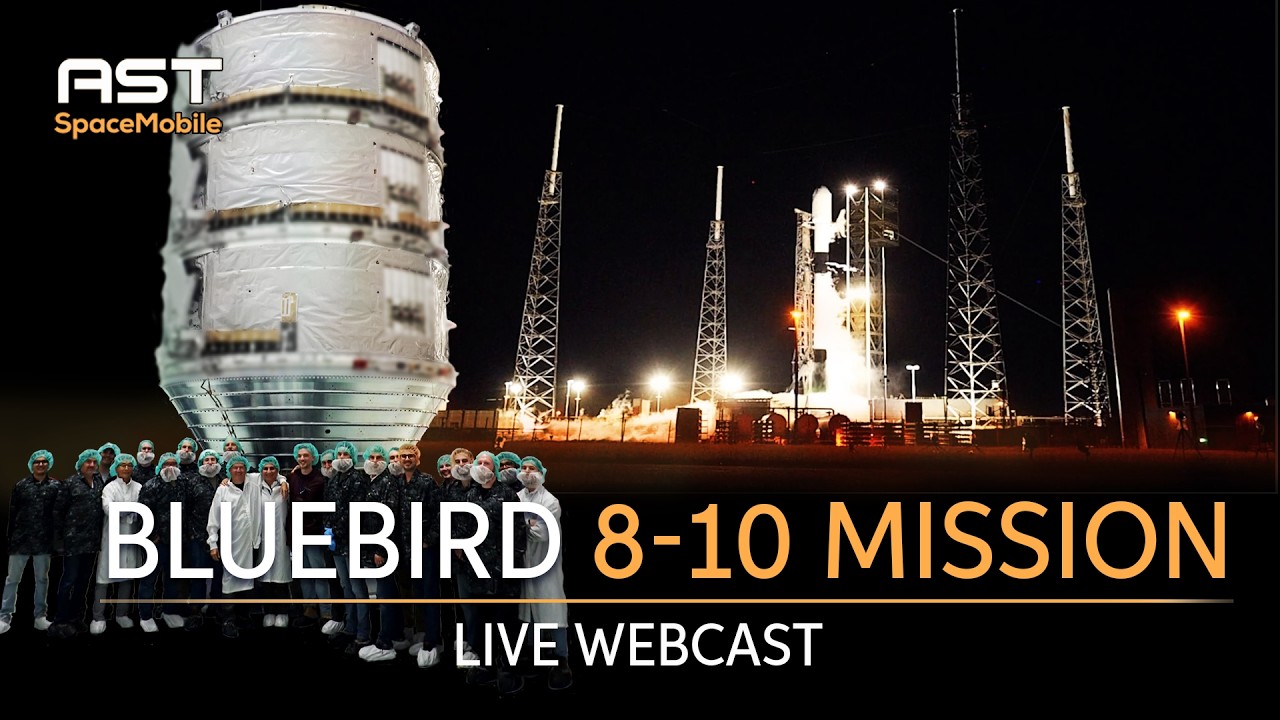
SpaceX will launch three giant direct-to-cell satellites early Wednesday morning (June 17), and you can watch the action live.
A Falcon 9 rocket topped with three of AST SpaceMobile’s BlueBird spacecraft is scheduled to lift off from Florida’s Cape Canaveral Space Force Station on Wednesday, during a 96-minute window that opens at 2:39 a.m. EDT (0639 GMT).
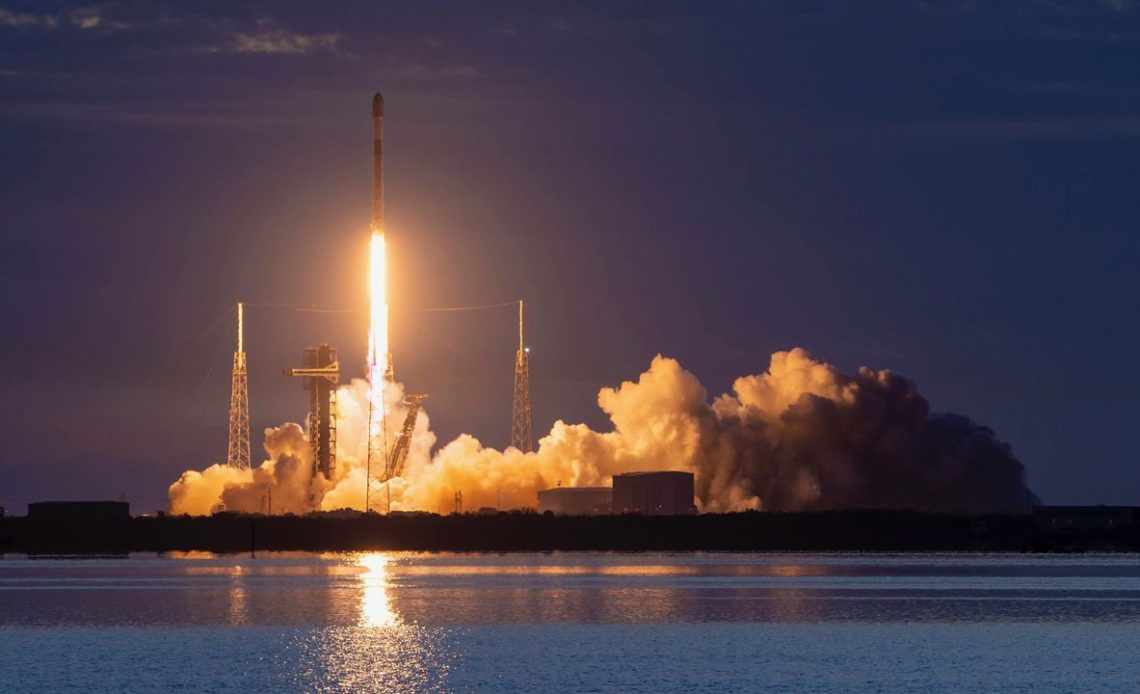
You can watch it live here at Space.com, courtesy of AST SpaceMobile, or directly via the Texas-based company. A SpaceX Falcon 9 rocket launches 29 Starlink satellites from Cape Canaveral Space Force Station in Florida on June 8, 2026. (Image credit: SpaceX)
AST SpaceMobile is building a constellation in low Earth orbit (LEO) that beams internet service directly to cell phones. The company has launched seven spacecraft to date, most recently on April 19, when BlueBird 7 took to the skies on the third-ever flight of Blue Origin’s powerful New Glenn rocket.
Things didn’t go according to plan that day, however: New Glenn deployed BlueBird 7 in the wrong orbit after suffering an anomaly, and the satellite was lost.
BlueBird 7 was the second of AST SpaceMobile’s “next-generation” spacecraft to launch, after BlueBird 6, which reached LEO successfully atop an Indian LVM3 rocket in December 2025.
The next-gen satellites have antennas that cover nearly 2,400 square feet (223 square meters) when unfurled — that’s larger than any other commercial communications arrays ever deployed in space. (The original BlueBirds were no slouches in this department; their arrays covered 693 square feet, or 64.4 square meters).
Wednesday morning’s liftoff will send BlueBird 8, BlueBird 9 and BlueBird 10 aloft, quadrupling the number of next-gen satellites in LEO.
“Our upcoming launch marks another important milestone as we continue advancing the deployment of our space-based cellular broadband network,” Scott Wisniewski, president of AST SpaceMobile, said in a June 9 statement.
“Each BlueBird satellite launched expands our ability to support seamless space-based broadband mobile connectivity directly to everyday smartphones,” he added.
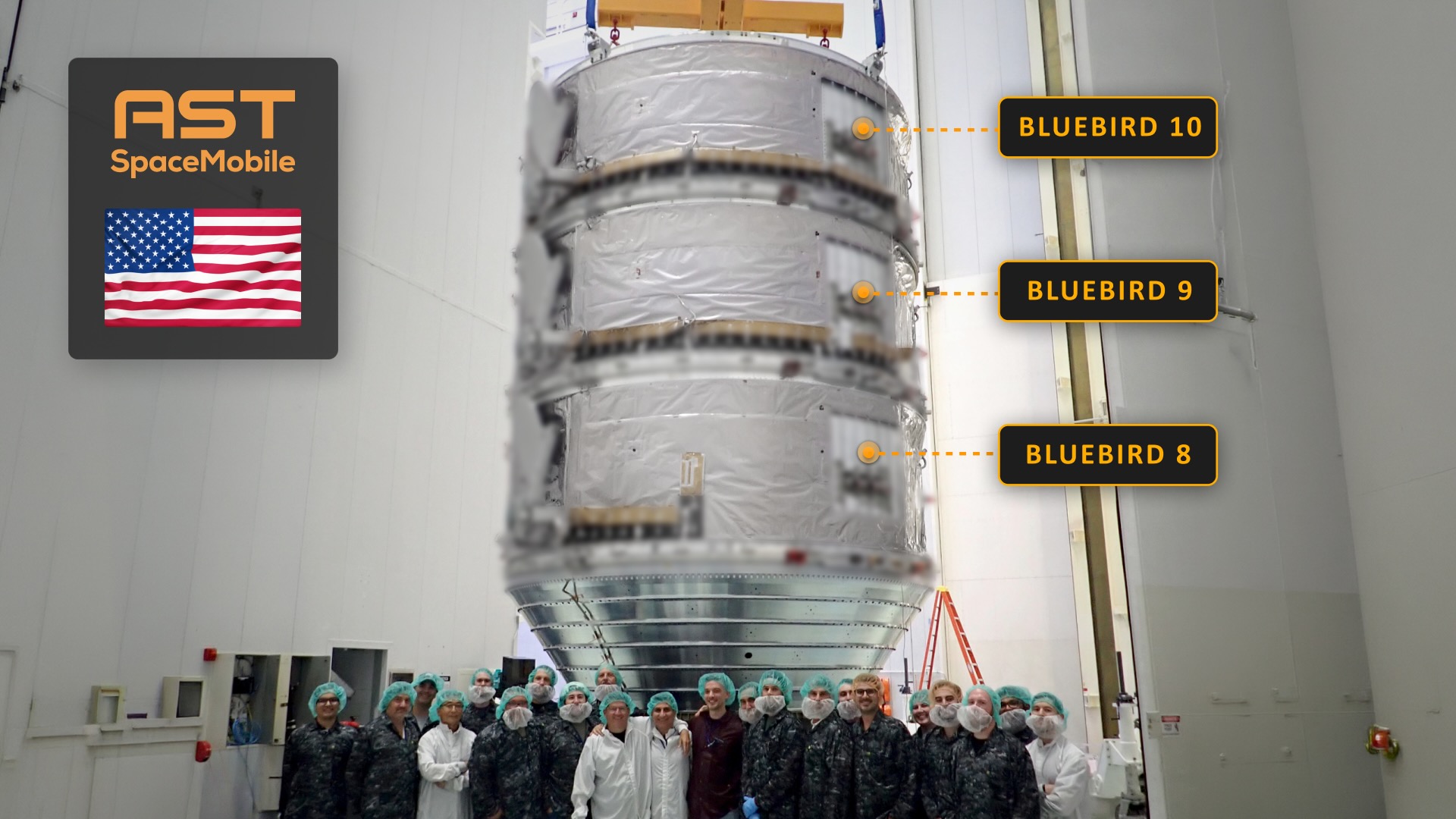
If all goes according to plan on Wednesday morning, the Falcon 9’s upper stage will deploy the three BlueBirds in a 10.5-minute span beginning about 54.5 minutes after launch.
That will be about 46 minutes after the rocket’s first stage returns to Earth. The booster will touch down in the Atlantic Ocean on the SpaceX drone ship “A Shortfall of Gravitas.” It will be the 29th launch and landing for this particular booster, according to SpaceX’s mission description.
Author: Mike Wall
Source: Space.com
Reviewed By: Editorial Team