

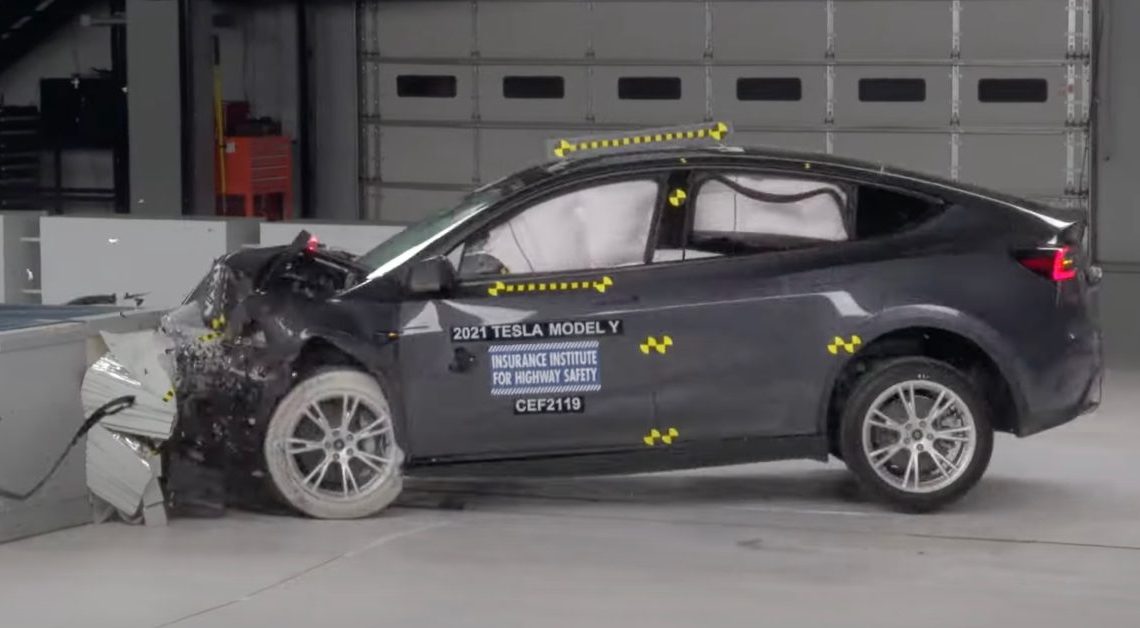
Tesla reports its Autopilot and “Full Self-Driving” crashes to the federal government, as it’s required to — and then blacks out almost everything in those reports, so the public never learns what happened in those crashes. Tesla always end up blaming the driver.
We’re matching those redacted reports, one by one, to real fatal crashes that were covered in the news as ordinary accidents. This is a running investigation, and we’ll add each crash we confirm to this page. You can view this as an investigative hub keeping track of our ongoing investigation.
What the data shows
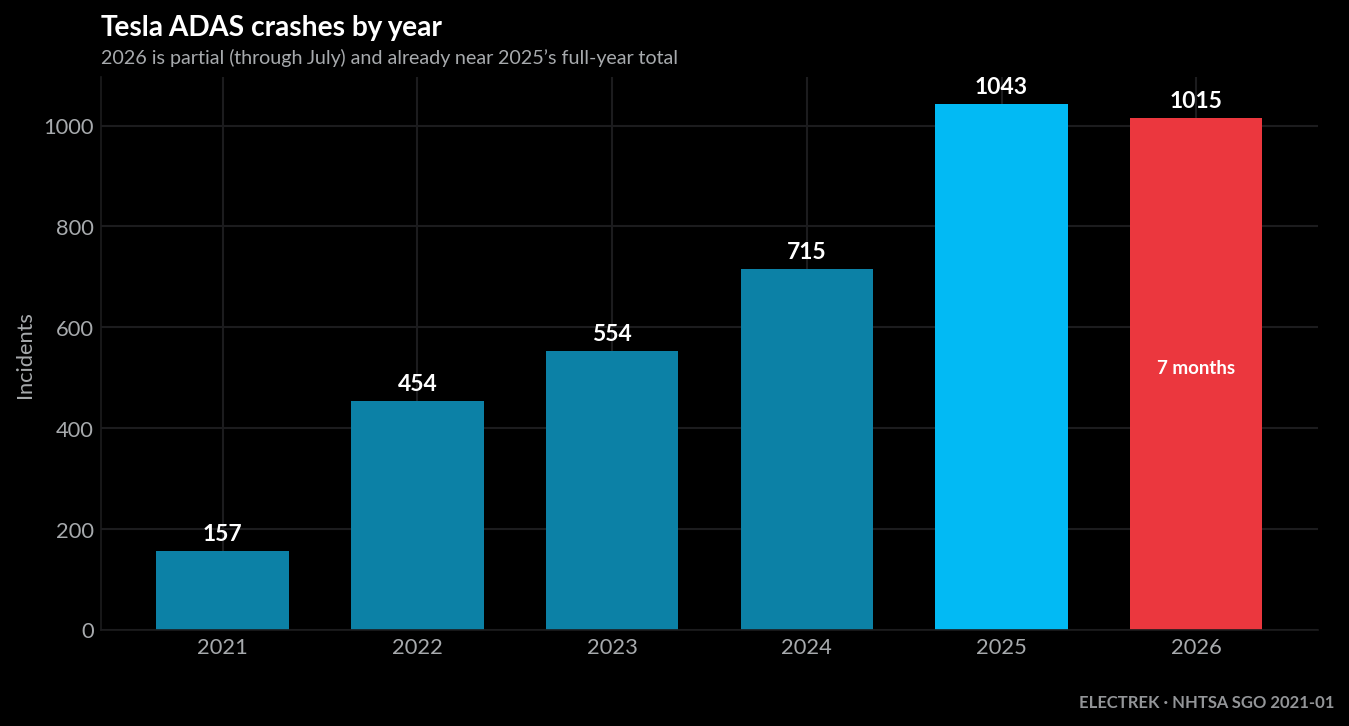
Under a 2021 NHTSA Standing General Order (SGO), automakers must report crashes where a Level 2 driver-assist system was engaged within 30 seconds of impact and someone was hurt, killed, or a vehicle was towed. Tesla accounts for roughly 85% of the entire industry’s reports — nearly 4,000 crashes — and the count climbs every year.
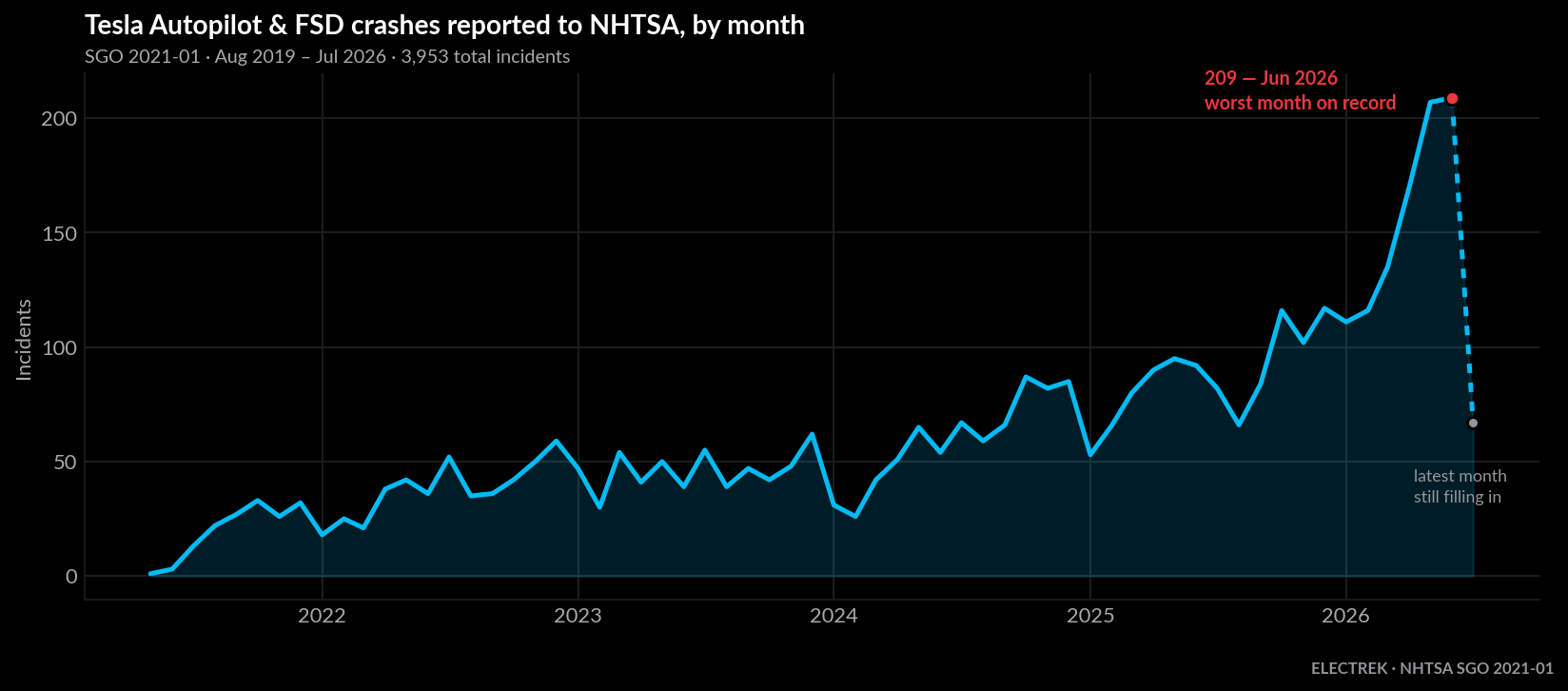
We believe that between FSD and Autopilot, Tesla has more mileage on ADAS than any other automaker and therefore, it’s not necessarily a problem that it has more crashes, but it’s nonetheless worrying that crashes are reaching new records each month.
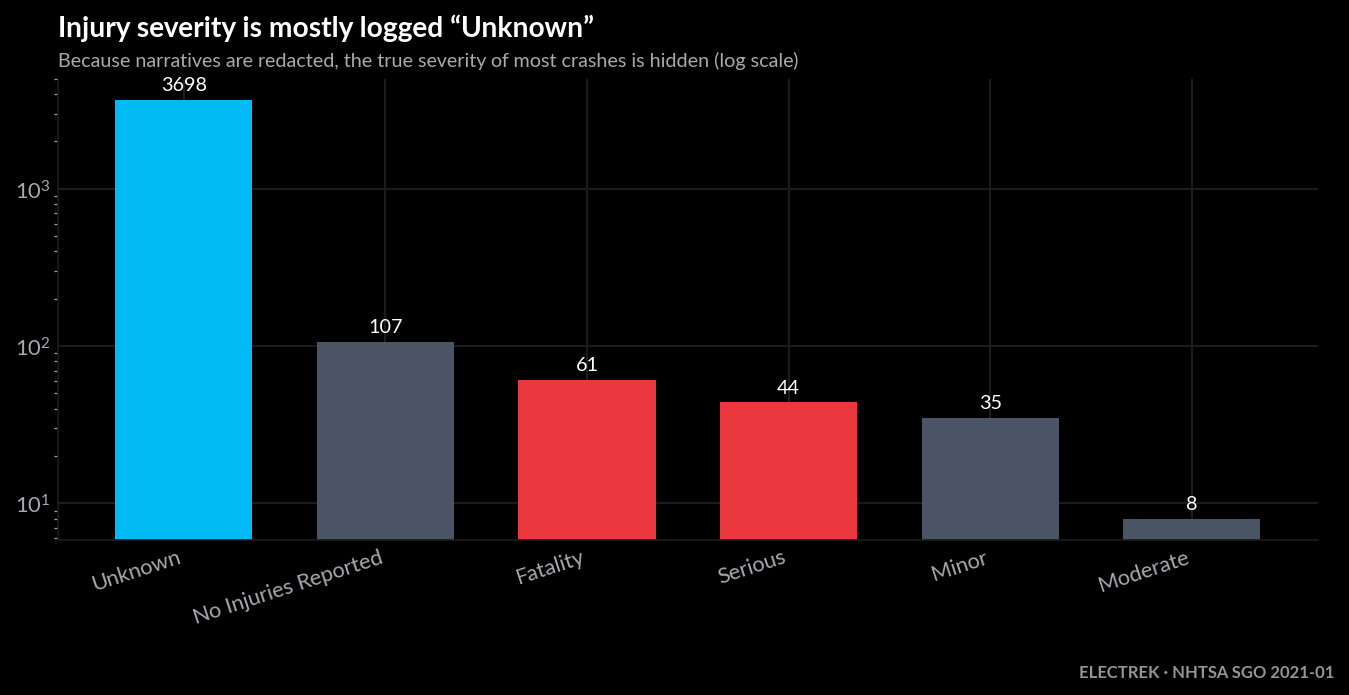
The problem is what Tesla does to those reports. On virtually all of them, it redacts the crash narrative, the software version, and the field for whether the road was within the system’s approved operating area — all as “confidential business information.” It has blacked out the narrative on 99.9% of its reports every single year since 2019.
Almost no other automaker does this. GM, Ford, Honda, and Toyota redact essentially none of their narratives. Tesla is the only high-volume reporter that hides everything.
How we’re doing this
The reports do leave a handful of fields unredacted: city, state, month, vehicle, roadway, a pre-crash speed, and an incident time logged in UTC. That’s enough to match many of them to specific, named crashes covered in the local press.
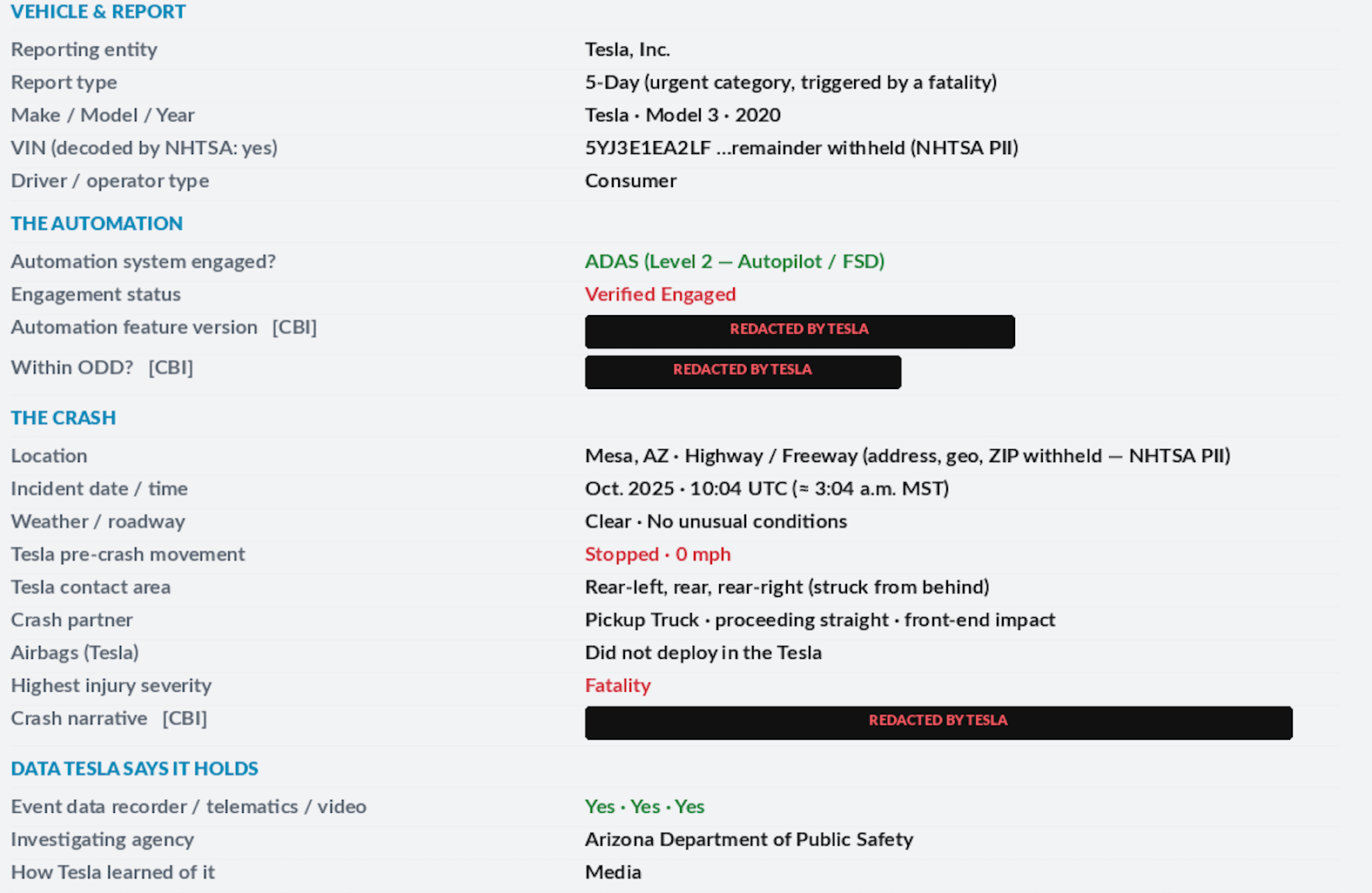
So we do. We convert the UTC timestamp to local time and line it up against the time police gave; we confirm the city, the vehicle, and the fatal outcome; and we check that it’s the only matching crash that month. Where a case checks out, we lay it out in two columns — everything Tesla told the government, and everything the public was told — and we file public-records requests with the investigating agencies for what Tesla won’t release, including whether police received Tesla’s raw telemetry or only Tesla’s own interpretation of it.
The crashes we’ve confirmed so far
Each of these was reported publicly as an ordinary crash, with no mention of Autopilot or FSD — until Tesla’s own redacted NHTSA report revealed the system was engaged.
- Clute, Texas — Steven Alvarez, 23, died when his Model 3 left the road and hit a park pool. Police called it a possible medical episode. Tesla’s data: driver-assist verified engaged at 104 mph — a speed that appears nowhere in the public record.
- Lake Mary, Florida — a 43-year-old man died when his Model 3 sat stopped in a live I-4 lane and a semi rear-ended it. Troopers said they couldn’t explain why the car was stopped. Tesla’s data: driver-assist verified engaged, at 0 mph.
- Mesa, Arizona — weeks later, a near-identical case: another 2020 Model 3, stopped at 0 mph on Loop 202 at 3 a.m., rear-ended, its driver killed. Same signature, driver-assist verified engaged — and Tesla holds the video.
- Batavia, Illinois — Maggie Espinosa, 37, a teacher and mother of five, was killed as a passenger when a Model Y turning left at an intersection struck a pickup. Tesla’s data: driver-assist verified engaged while making the turn — a maneuver that points to “Full Self-Driving.” The case is now under review by the Kane County State’s Attorney’s Office, and Tesla holds the video.
We’ll update this list as we confirm more.
Why this matters
This is not an abstract transparency fight. Tesla is, more aggressively than ever, encouraging owners to treat a Level 2 driver-assistance system as if it were autonomous. It sells the software as “Full Self-Driving,” Elon Musk repeatedly promises unsupervised autonomy is months away, and the marketing invites drivers to trust the car to drive itself.
But legally and technically, it is still Level 2: the human is driving and is responsible at all times. Tesla’s own actions confirm the gap — it has not removed the supervision requirement from consumer FSD, and its robotaxi service remains a handful of closely monitored vehicles. The technology is not what the branding says it is.
That gap is dangerous, because it breeds complacency — drivers who over-trust the system and stop paying attention. And when things don’t go well, Tesla blames the drivers for abusing the system and releases limited redacted data so we don’t even know what happened.
Tesla is pushing owners to believe the car can handle things itself; it is hiding the records that would show how the system actually behaves when things go wrong. The public is asked to trust the marketing while being denied the data.
Author: Fred Lambert
Source: Electrek
Reviewed By: Editorial Team