


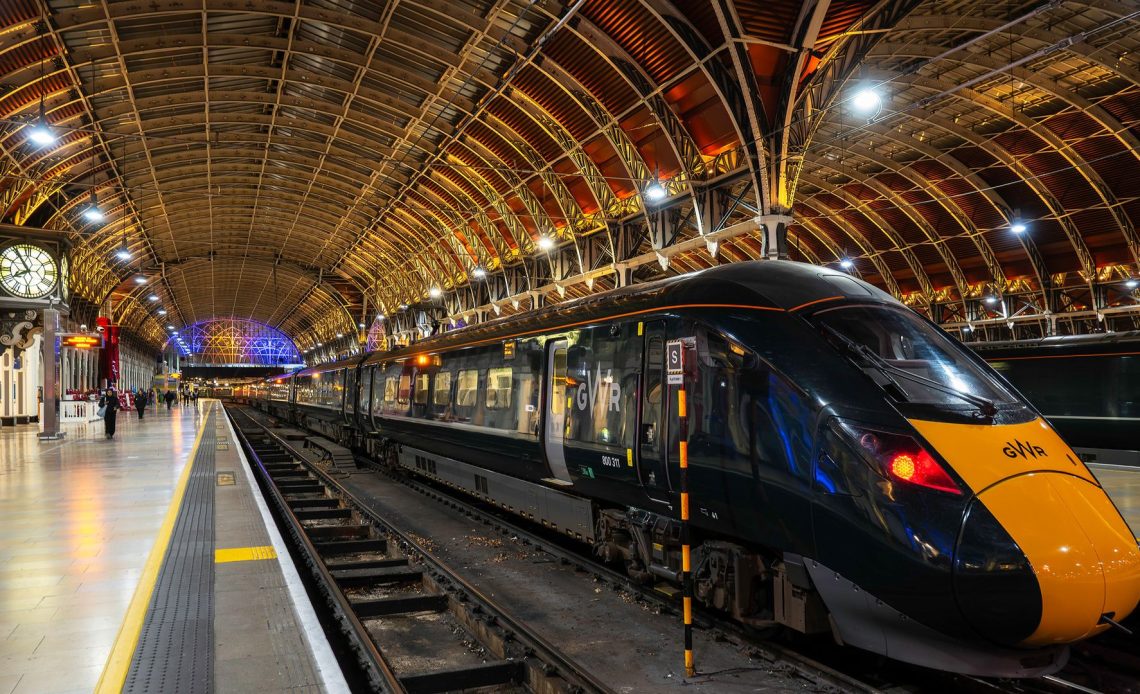
The train station at night is a mysterious and, occasionally, weird place. The light can be more interesting than during the day, with more colors at play, there are people and there are trains. Don’t forget the architecture and leading lines as well.
Rather than walk around with a tripod and attract unwanted attention, I suggest you go guerilla, whipping your camera out when something catches your eye.
Be prepared to shoot fast and move on, which, in turn, means knowing where all the functions are on your camera. You’ll need to have one finger on the ISO, another on the aperture dial and be aware of the variable lighting.
Workflow process
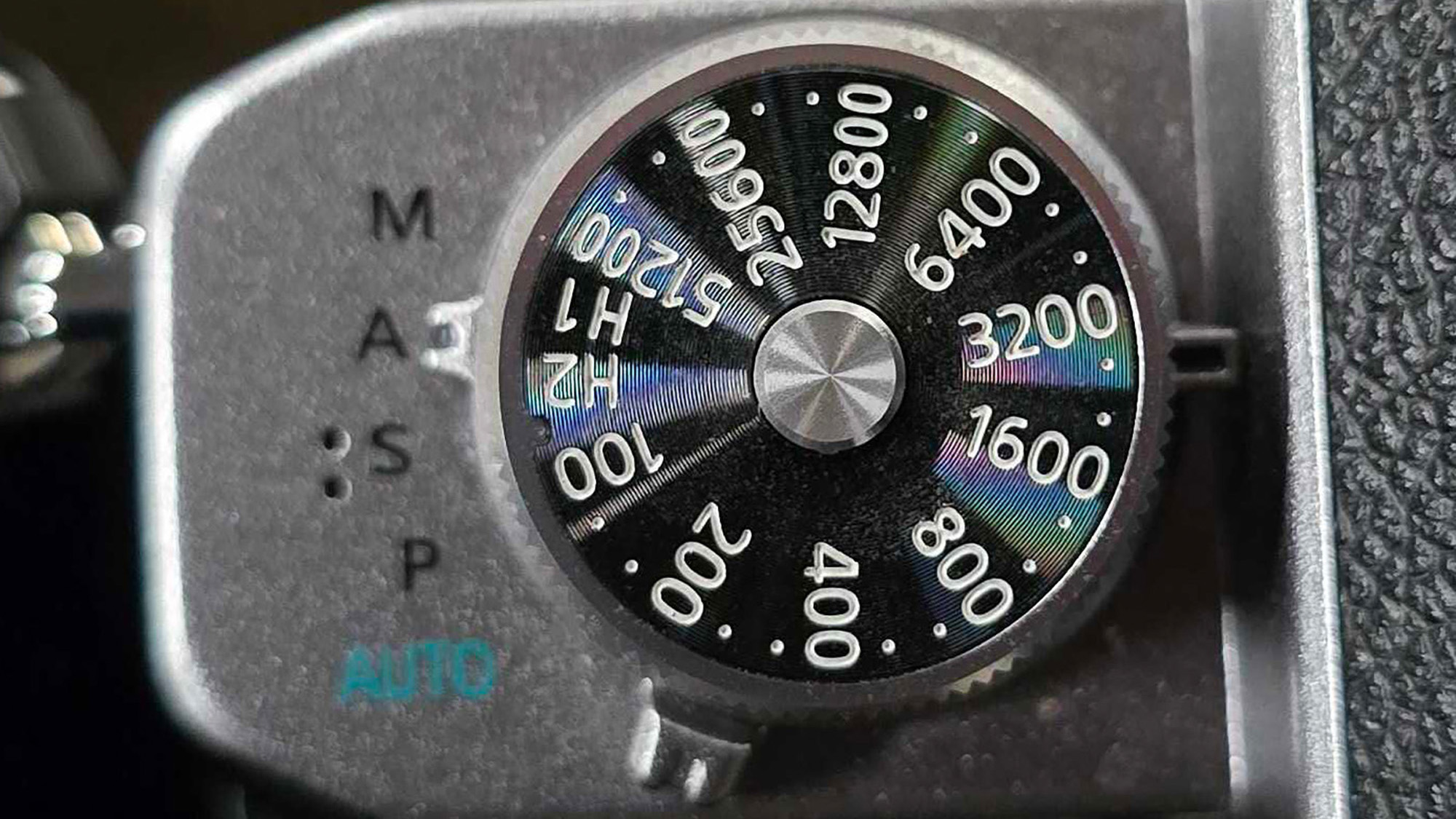
In low light conditions there’s a case to be made for using Auto ISO. Not by me I hasten to add, there are only a few cases where I use it and this isn’t one of them.
The process I used for the main shot and ones on this page is as follows. Set the shooting mode to Aperture Priority. Dial in f/5.6 to start with.
Take a meter reading. How slow is the shutter speed at ISO 100 and do I have anything to rest the camera on that would help.
For the main shot, the answer was yes (a railing), which meant I only had to increase the ISO to 800 and open the aperture to f/4 to get a shutter speed of ⅛ sec.
Without support, that would be tricky, but resting, it was doable to avoid camera shake.
The front of the train was about 3.5m away, and that’s what I focussed on.
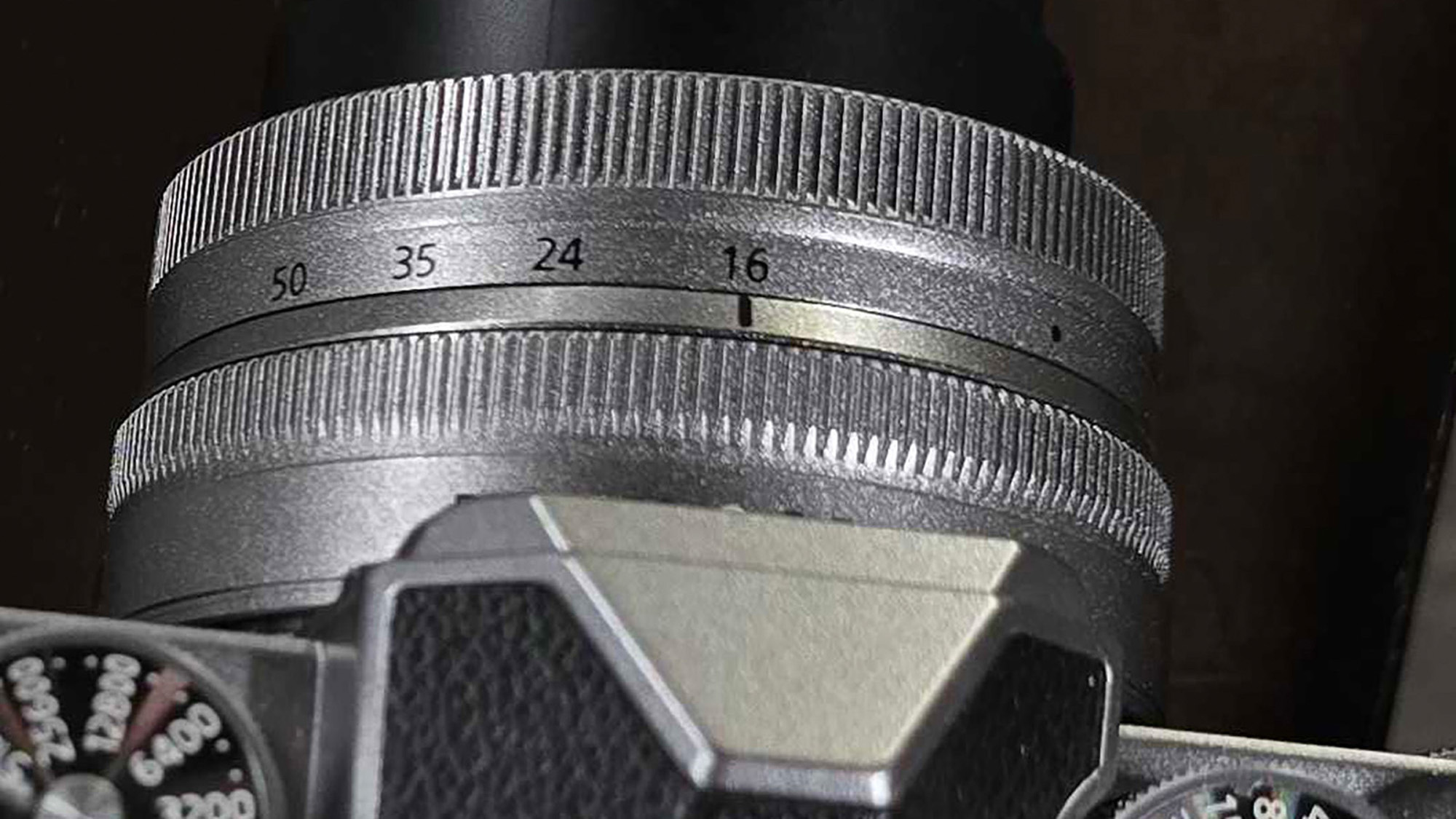
The choice of lens focal length has more effect on depth of field than aperture and at 16mm (the field of view is equivalent to 24mm) it meant that there was much more DoF available than if using a telephoto lens.
At the aperture of f/4 it meant that the depth of field came forwards 1.82m from the focus point, and went back from there to infinity. That covered the important part of the scene in focus. The point here is that the shorter the focal length of the lens, the wider aperture you can use in these low light conditions.
Metering options
The lighting in places like train stations at night is always going to be challenging so what works in terms of metering in one scene might not be the best idea in the next. Here are two examples.
Pattern metering
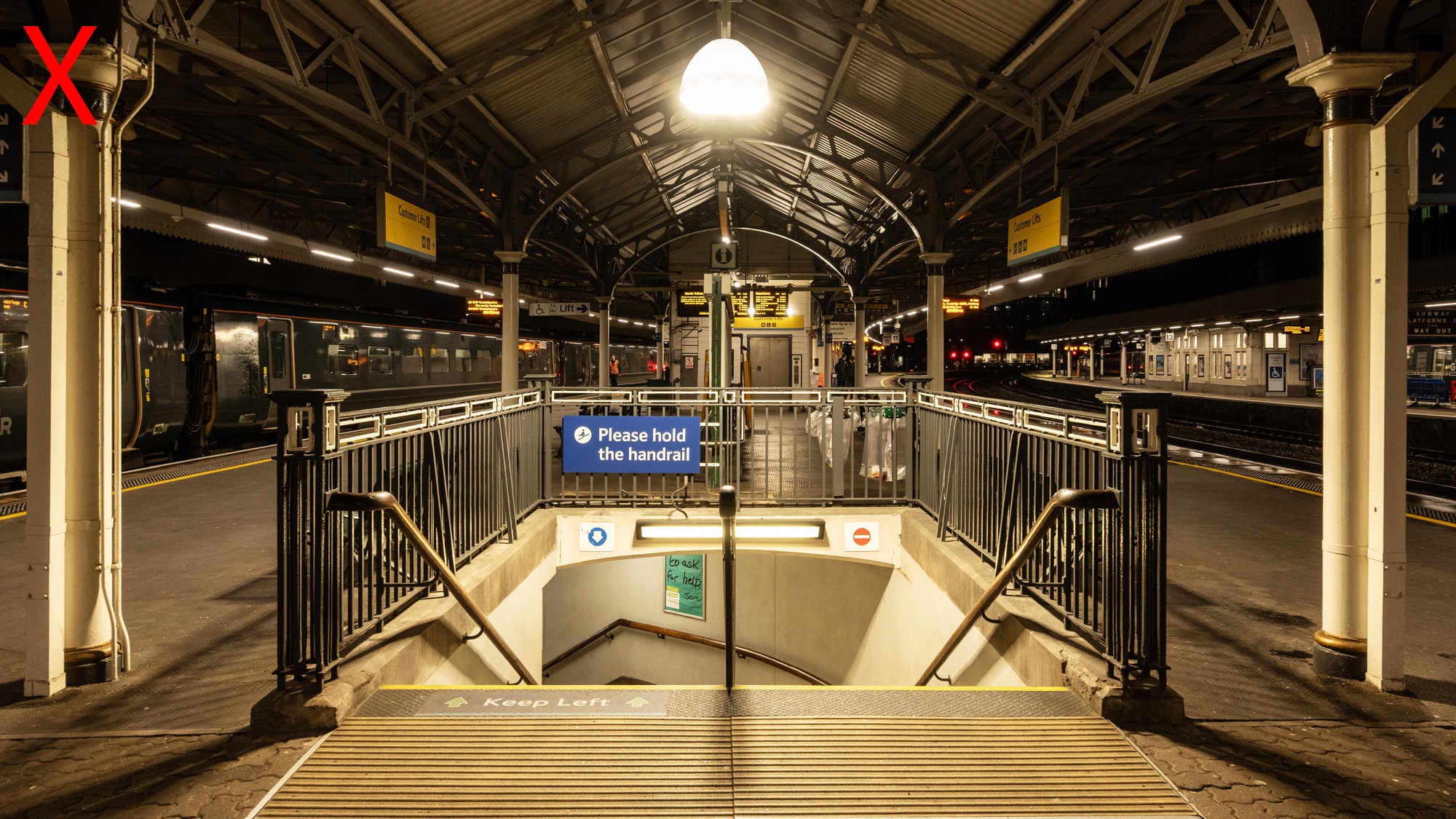
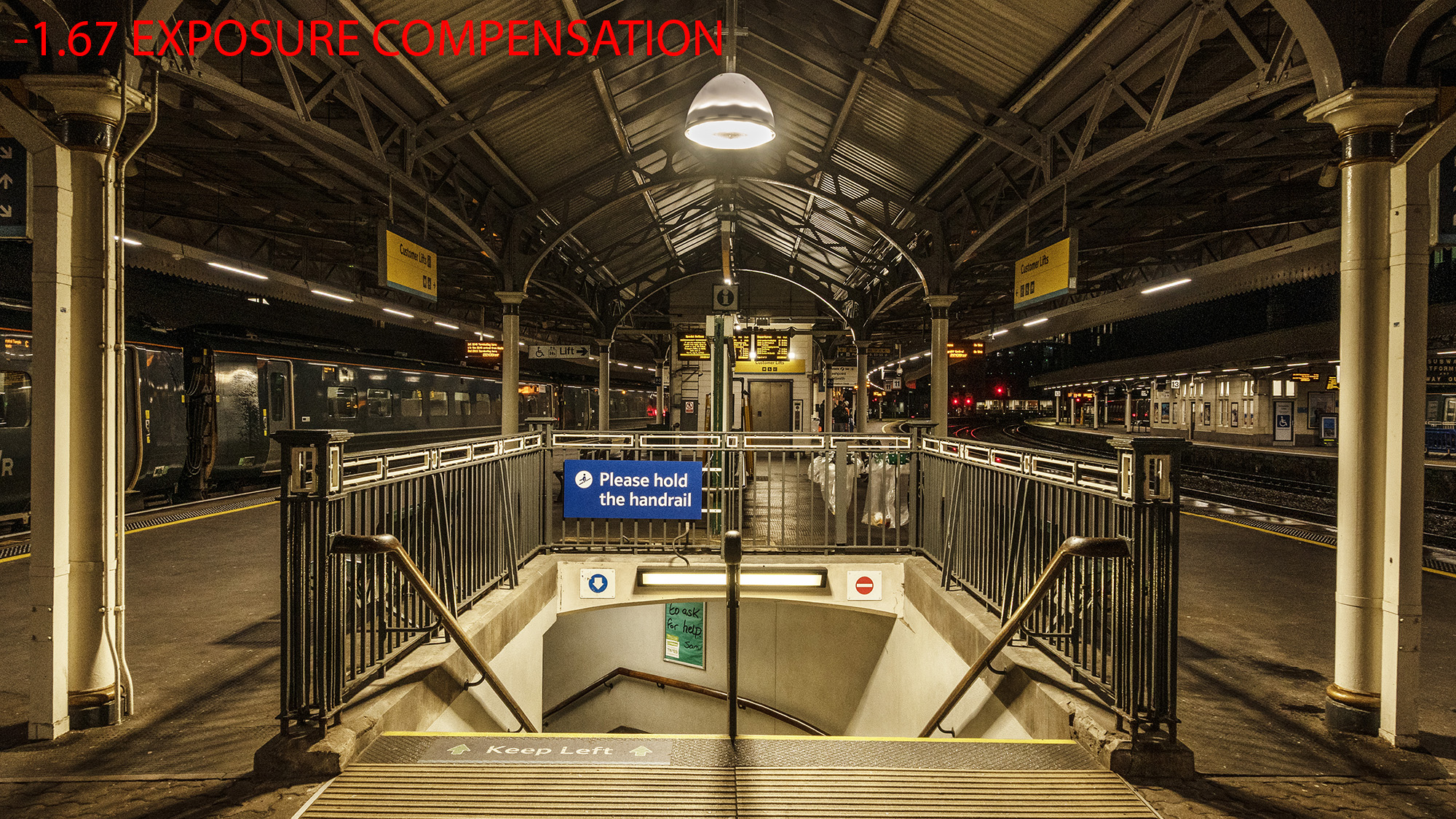
In these shots the light is mainly coming from the subway and the massive light in the middle. Centre-weighted metering was very overexposed, while Highlight metering was very underexposed, because of that big light.
The balanced option was to use Pattern/Evaluative metering but with -1.67 EV exposure compensation. Both images were shot using Pattern metering, the shot on the left has the exposure compensation, the one on the right didn’t.
Highlight metering
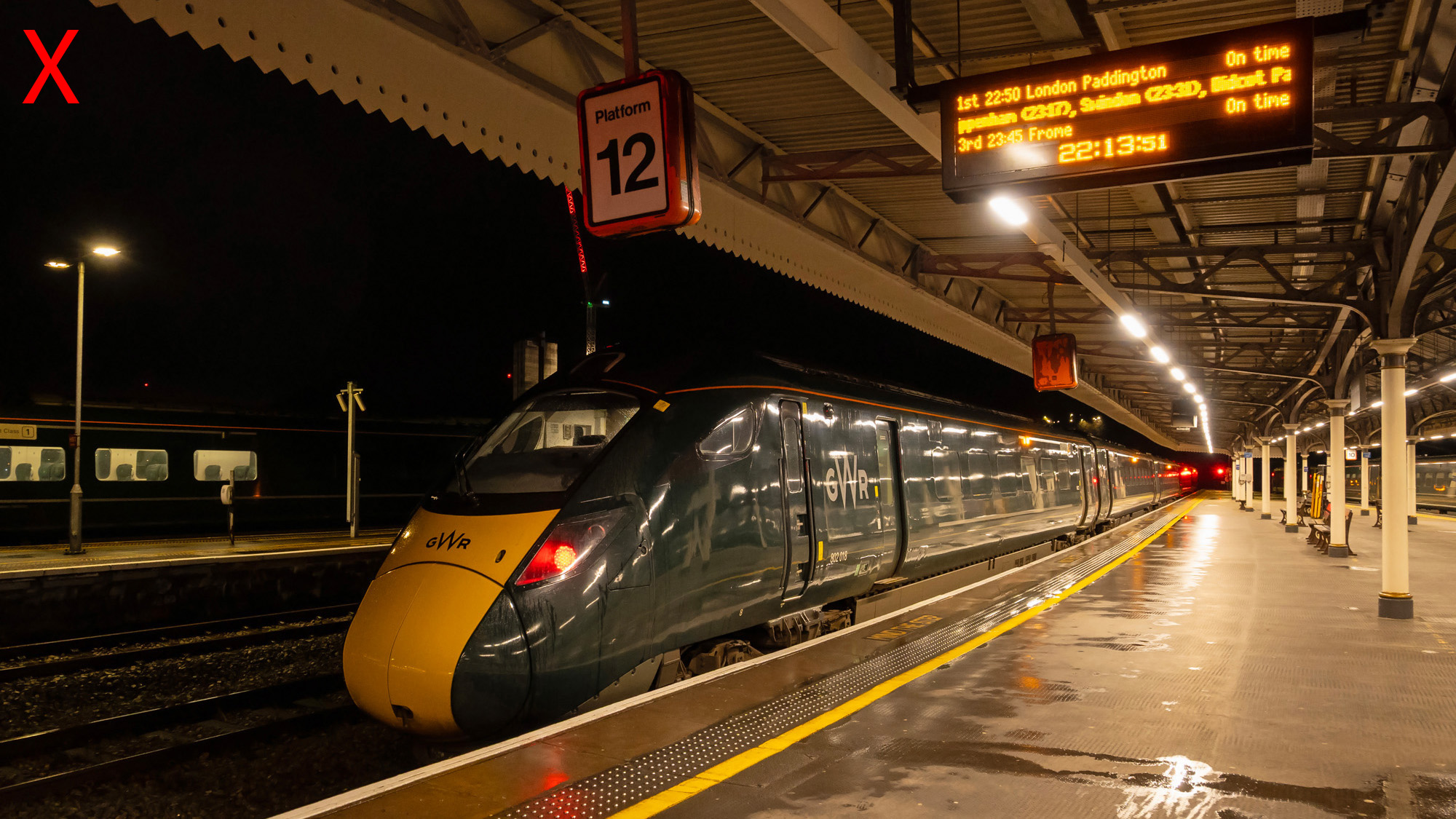
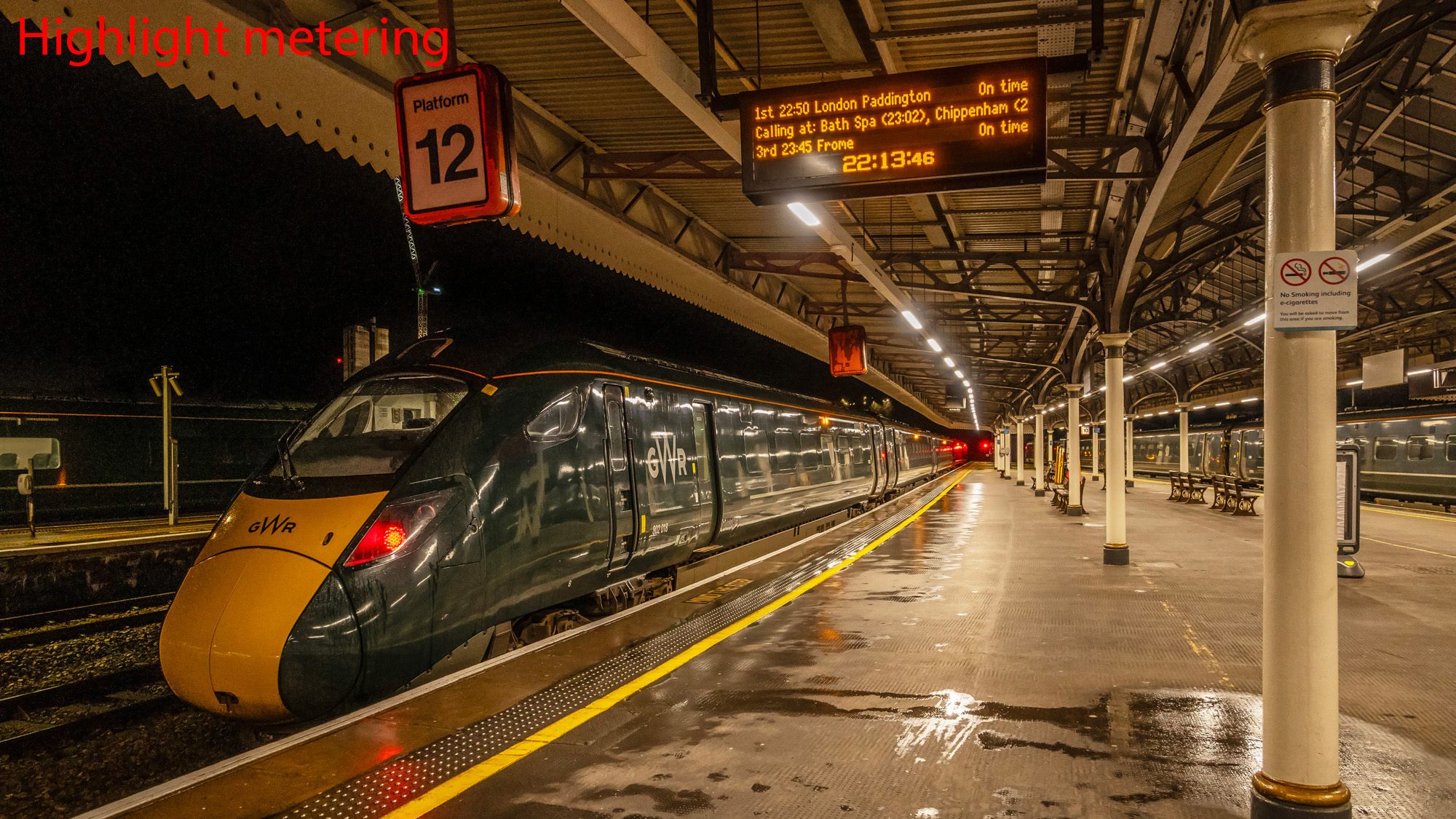
In these shots there’s a string of bright lights that runs through the scene, but they are quite small so while the overall exposure using Pattern metering is okay, notice how the LED lights and the areas around the lights and the reflection on the ground are over exposed in the photo on the right.
The solution here was Highlight metering and bringing the exposure back up in the rest of the image.
Before you go…
To shoot images like this you need a lightweight camera like the Nikon Z fc, a wide angle lens, and a high speed memory card.
Author: Wendy Evans
Source: DigitalCameraWorld
Reviewed By: Editorial Team
