


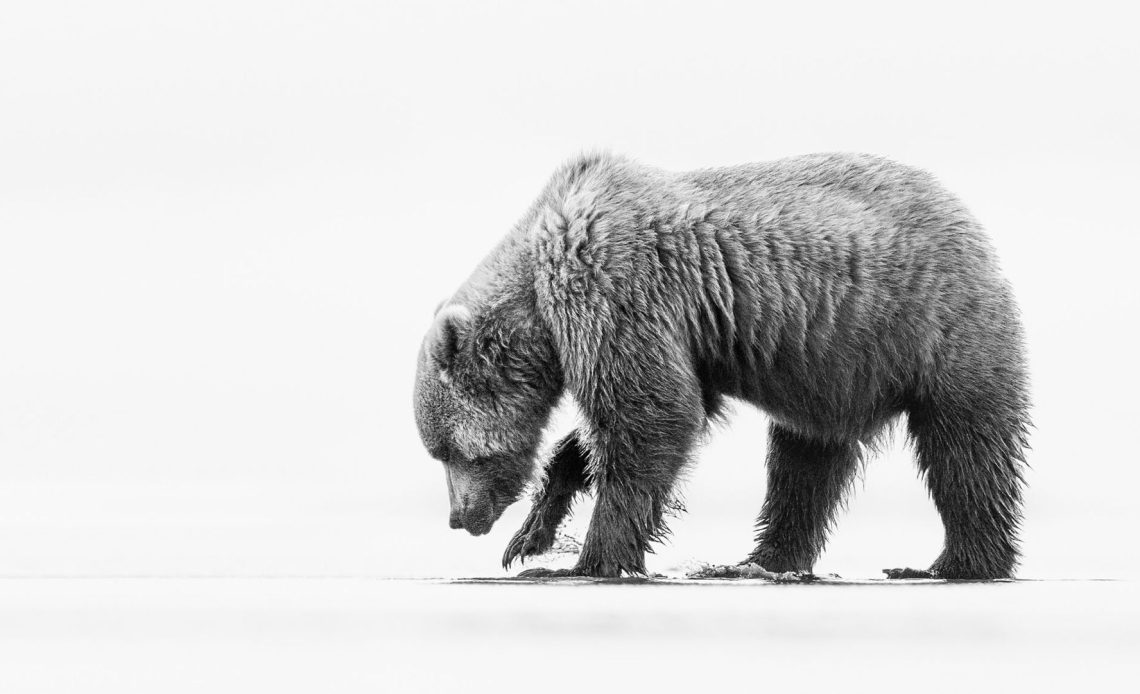
Get close and fill the frame with the animal: that’s the standard approach for shooting wildlife. But these two pictures by UK photographer Deborah Russell remind us that there’s more than one way to skin a cat, so to speak.
In Russel‘s Lonesome, shown above, a brown bear digging for clams almost vanishes into a wall of white. In Your Majesties, she got down low enough that the manes of two Serengeti lions push up into the clouds. One image is all absence, the other presence.
Now both have been recognized at the Global Lens Photography Awards 2026, placing second in the Minimalist and Black & White categories, respectively. Both also received an Editor’s Choice award.
In Lonesome, the bear is small in the frame and has acres of blank space around it. “This lonesome brown bear walks the mudflats digging for clams,” Russell writes. “The foreground of the outgoing tide merges with the background sky to make it appear that the bear is suspended in space and time.”
There’s almost nothing in the way of background detail: just a thin, dark strip of wet ground and a tiny splash where a foot has lifted. This means that the detail in the bear’s coat stands out to viewer, every tuft crisp and distinct. The takeaway? If the conditions give you a bright, featureless background, don’t fight it: lean into it.
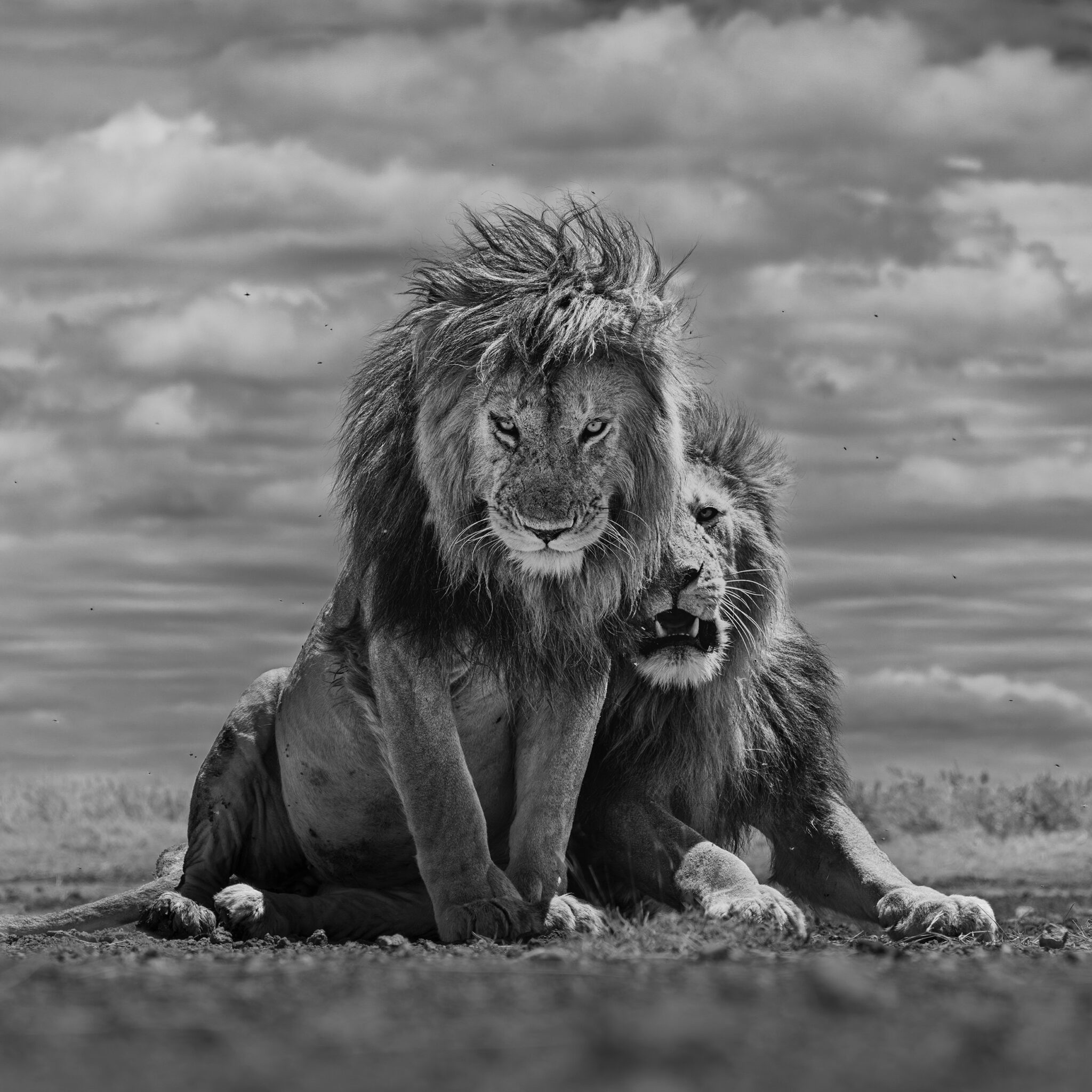
The lions, meanwhile, are two males from what Russell calls the “Team Tano coalition” in the Serengeti. Male lions often team up in small groups called coalitions, usually with their brothers, to take over and defend a pride together, and Russell wanted to capture that bond.
“A powerful pose from these two handsome male lions from Team Tano coalition that have a strong brotherly bond,” she writes. “In their prime with beautiful wind swept full manes. To convey their true majesty, I got as low as possible to put them against the big open sky of the Serengeti.”
Shot from eye level or above, the lions would have appeared against a backdrop of dry grass, which might have been a little dull. From ground level, though, they tower over the horizon, with nothing behind them but cloud, while the wind lift the front lion’s mane upward as he stares into the lens.
The second leans in at his shoulder with his mouth open, adding a sense of drama. In the words of the judges: “This is a throne for two.”
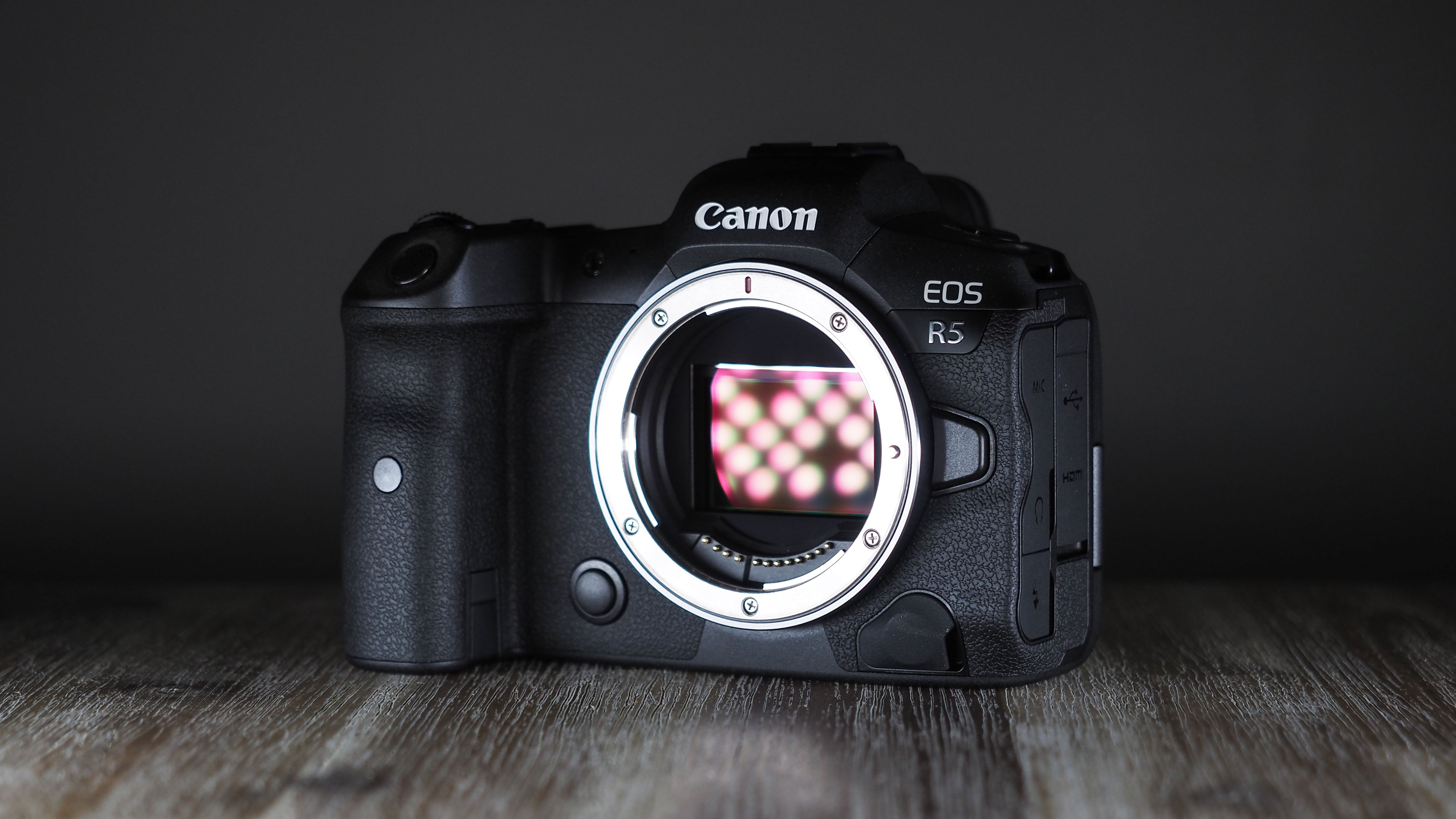
Russell took the shot on a Canon EOS R5 with an RF 70-200mm f/2.8 L IS USM at 135mm, using f/8, 1/640 sec and ISO 100. Stopping down to f/8 keeps the faces sharp, while the fast shutter speed does a nice job of freezing the windblown fur.
Put these two images together and they make a neat case study in how to shoot wildlife differently. Both are black and white, both rely on a plain sky, and both show that what you leave out can matter as much as what you put in.
You can see all the winners in the Global Lens winners gallery.
Author: Tom May
Source: DigitalCameraWorld
Reviewed By: Editorial Team
