

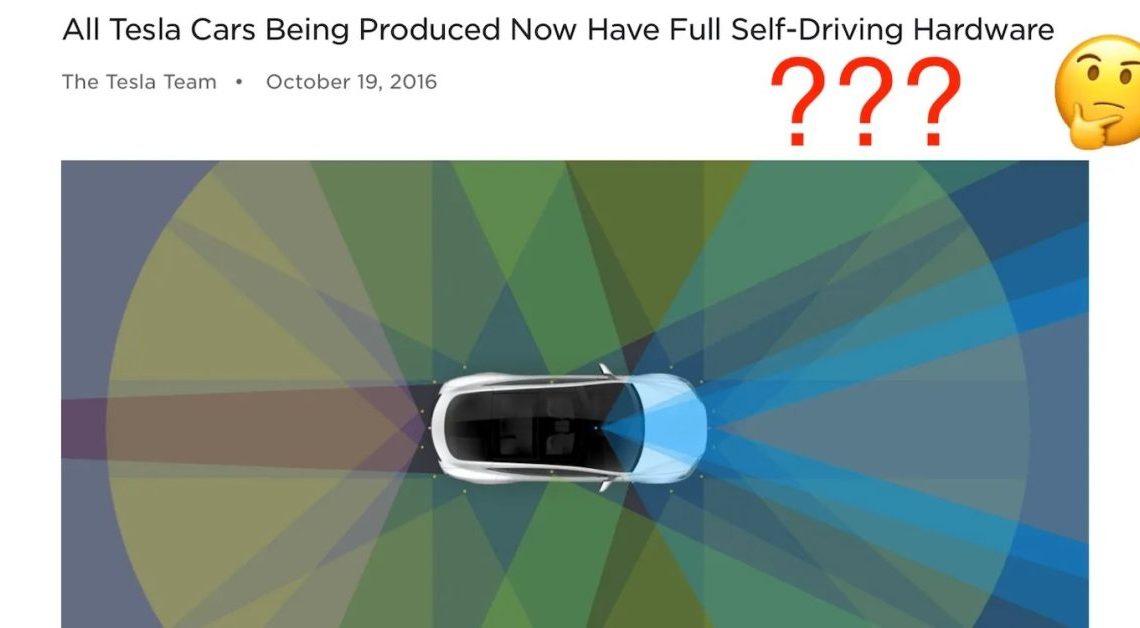
For over a decade now, Tesla has sold a promise of vehicles that can drive themselves, even stating that every car it produced had all the hardware for self-driving.
But after years of the company being unable to deliver, some owners want their money back. Ben Gawiser is one of those owners, who recently won a $10,600 judgment due to Tesla’s failure to deliver. But Tesla is still fighting to delay payment, even just a few days at a time.
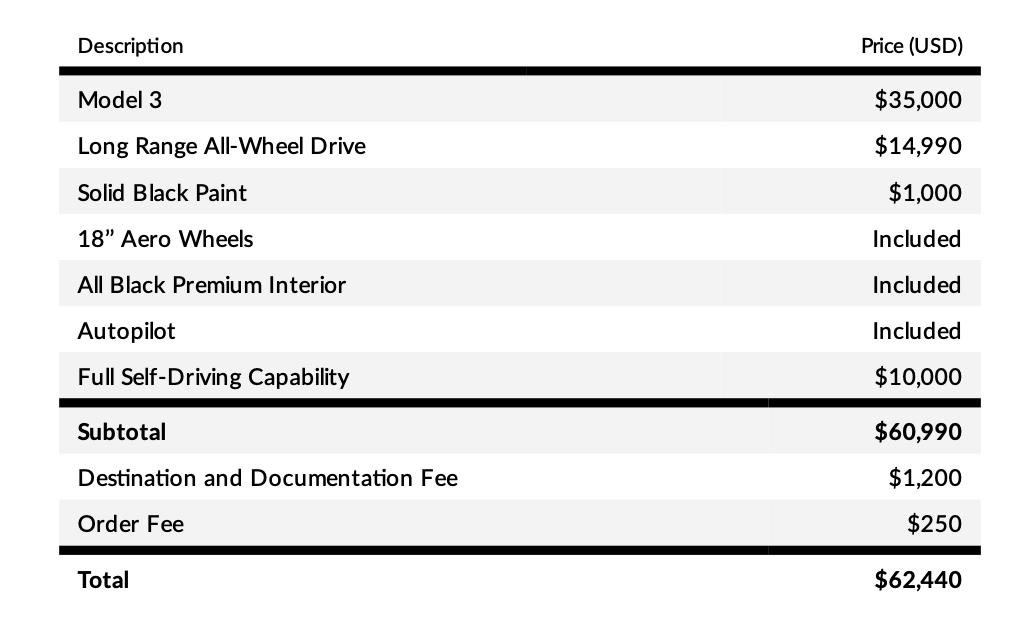
Gawiser purchased a Tesla Model 3 in August of 2021, and paid $10,000 for the company’s Full Self-Driving software. At the time, the price of the software had gradually increased, which Tesla said it would do as the software gained more capabilities and got closer to release.
(Later, Tesla lowered prices and eventually moved to a subscription-only model, where it stands now – though Tesla is still charging some owners for hardware they already bought).
After five years, Gawiser’s purchase should have allowed his vehicle to drive all by itself. After all, Tesla’s software was continually getting better, and the company’s CEO had promised in January 2021 that “the car will drive itself for the reliability in excess of a human this year.”
However, that did not happen. Tesla is still yet to deliver software that is capable of level 5 full self-driving to any owner. Even on its own fleet of Robotaxis, only a few run at Level 4 autonomy in limited circumstances.
(Tesla previously said you’d be able to use your car as a robotaxi, too, but despite that the company is now making revenue with FSD software in its “Robotaxi” fleet, it still doesn’t let you do it)
With all these false promises and what amounts to a five-digit, nearly five-year loan given to Tesla, Gawiser had had enough, and decided to do something about it. So he reached out to Tesla’s resolutions email address in November 2025 to ask for a refund for his nonfunctional software… albeit with some aggressive language.
He cited instances of his vehicle stopping in the middle of the road, asking him to take over within minutes of activation, and failing to slow for a school zone. But overall, the software simply does not deliver what it promised – he was sold a level 5 system, and FSD is still level 2.
He was given the cold shoulder, and asked again in January, at which point he was told that the only remedy available would be to visit a service center to make sure the system is working properly. But that wouldn’t have upgraded it to the level 5 system he paid for.
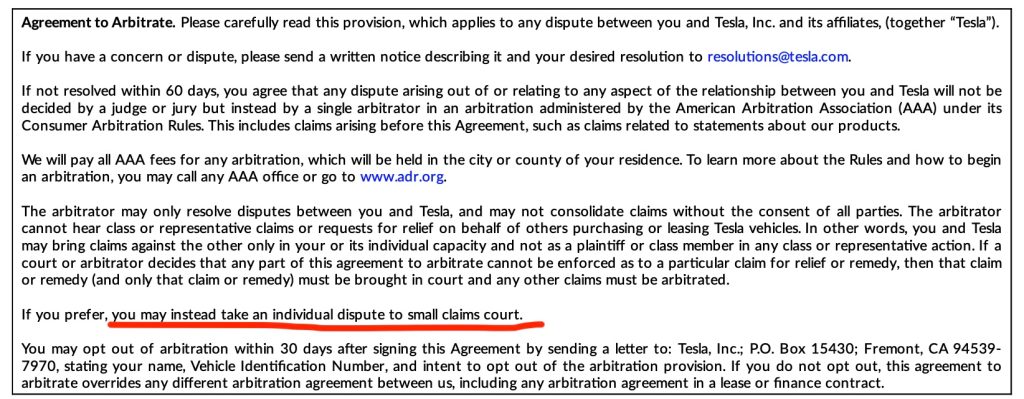
Then, he filed a lawsuit in small claims court in Travis County, Texas, where he lives and where Tesla moved its headquarters to. Gawiser isn’t a lawyer, but small claims courts are designed to be used by the public, rather than lawyers. While Tesla’s purchase agreement has an arbitration clause, it is also possible to take disputes to small claims court.
All it took was finding Tesla’s “registered agent” (under “service of process” on Tesla’s legal page), then filing a small claims lawsuit online with the Texas justice of the peace. This cost him $72.88, including the cost to send certified mail to serve Tesla with the court documents.
After being served with the lawsuit, Tesla again did not respond. So a court date was set for a default judgment hearing, which is what happens when one party does not respond to a court case. The hearing happened over video call, where Gawiser provided evidence showing how much he paid for FSD and that it had not yet been delivered, and the court made a judgment in his favor in the amount of $10,672.88, the amount Gawiser paid for FSD, including taxes and court fees.

After the default judgment was filed on April 1, Tesla had 3 weeks to file a response, and didn’t do so by the April 22 deadline (and no, in a real court case, you can’t say it was April Fools when you miss a deadline). This is when we first heard from Gawiser.
However, that wasn’t the end of the saga. Tesla waited 5 more days and filed a request for an extension, stating that they had not received notice of the default judgment hearing and therefore couldn’t show up. But rather than requesting a rehearing, Tesla merely requested the deadline be pushed back by 5 days, and then didn’t submit any additional evidence showing its side of the story (which it has to do if requesting a re-trial).
In Gawiser’s response to Tesla’s most recent request, he took a swipe at Tesla’s lack of defense, using one of Musk’s statements during this quarter’s earnings call as evidence:
Tesla, Inc. does not have “meritorious defense” for this action as their CEO as recently as April 22nd, 2026 said that Tesla could not deliver a working version of “Full Self-Driving” for the vehicle that the Plaintiff purchased required by the contract. Unless their counsel happens to know Tesla’s own products better than their CEO, they have no defense to this cause of action. The requirement for a “meritorious defense” is laid out in Craddock v. Sunshine Bus Lines. Tesla, Inc. has not presented a “prima facie meritorious defense”, nor do they have one.
In that call, Musk finally admitted that HW3 cars like Gawiser’s would never be able to drive themselves, and would require Tesla to build factories just to upgrade them. This would only add more wait for Gawiser if he did want to continue waiting patiently for FSD, as there is no indication that Tesla has started building those factories to deliver the hardware needed to make the promised software work. (Further, the current hardware, HW4, also has not yet delivered Level 5 autonomy to customers)
In short, Gawiser’s argument is: I bought this software, it wasn’t delivered, and there is no legal argument that can get around those facts as long as it remains undelivered.
The court has not yet responded to this most recent back and forth, but Gawiser is confident that he will prevail.
Then comes the matter of payment – Gawiser filed a “writ of execution” (another $240 in court fees) just yesterday, which would allow Texas law enforcement to seize and sell off enough of Tesla’s property as would be required to pay the judgment against them. If it comes to that, we hope he brings cameras.
Author: Jameson Dow
Source: Electrek
Reviewed By: Editorial Team