


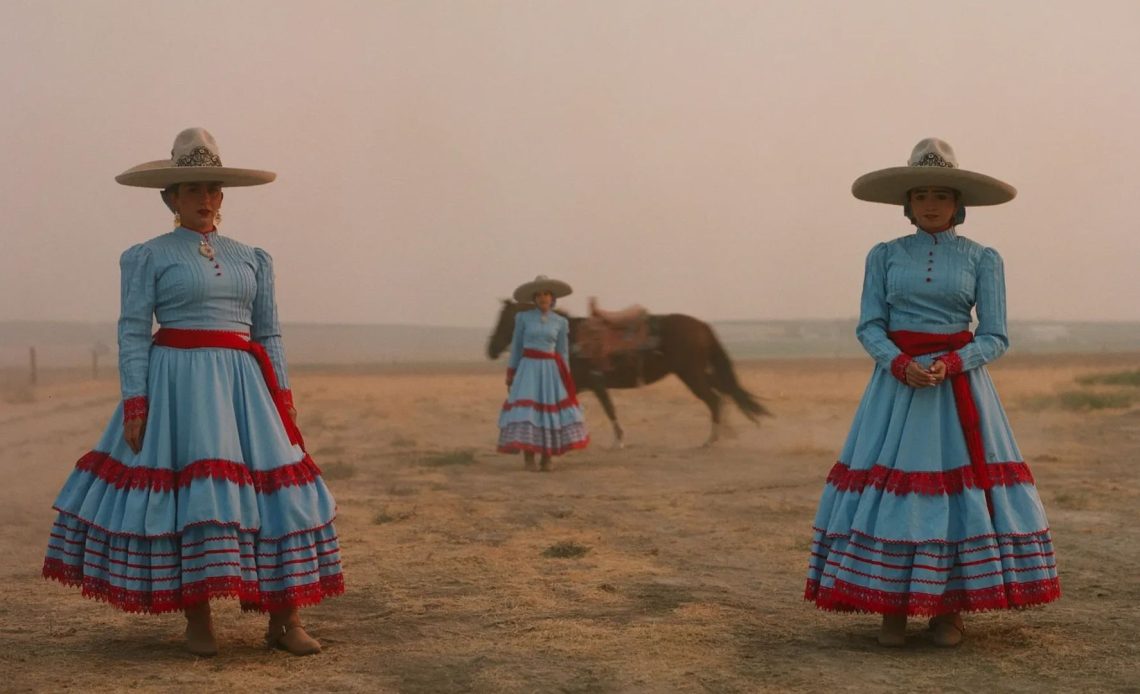
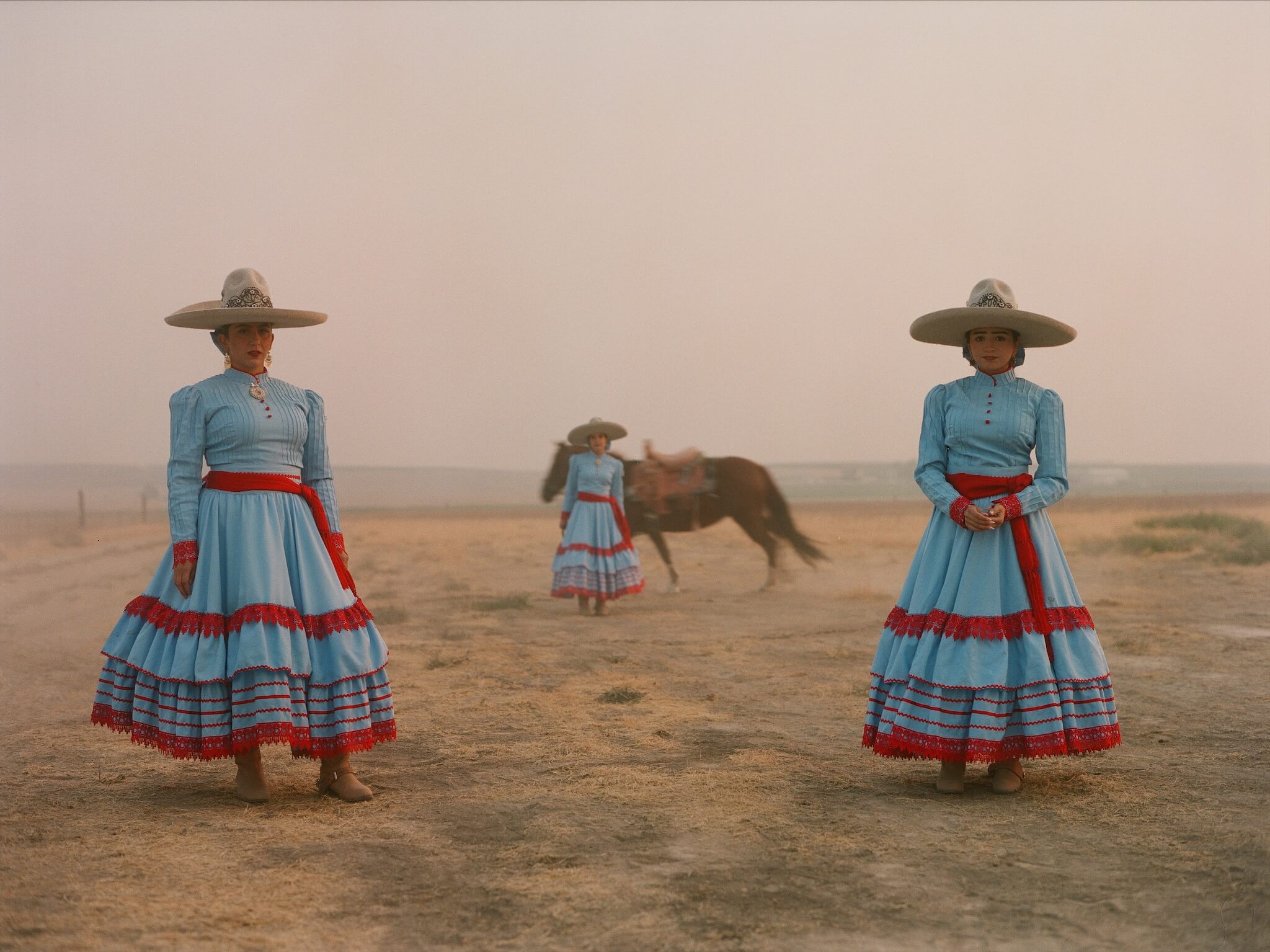
As Yamilex and Naiomy, two escaramuzas, posed for a portrait, a third, Katie, entered the background, the entire scene illuminated by an ethereal orange glow.
“I noticed Katie off to the side lunging her horse and thought it could make a beautiful composition to have all three in the frame, with the horse in motion,” said Constance Jaeggi O’Connor, who clicked the shutter.
Recently, O’Connor’s image was selected by the photography platform VSCO to feature in The Fifty. An ongoing project, The Fifty celebrates 50 photographers, one from each US state, by displaying an image from each photographer on a billboard in their home state.
Chosen from over 13,000 entries, O’Connor’s frame will soon appear on a billboard in Colorado, where she resides.
O’Connor’s gear and settings
Constance Jaeggi O’Connor has used a Contax 645 120mm film camera along with an 80mm and 35mm prime lenses for her project Escaramuza, the Poetics of Home. While she opts for film rated ISO 400 by the manufacturer, she typically set her in-camera ISO setting to 200 for richer, more colorful images.

The photographer captured the scene near Nampa, Idaho, while photographing the Reinas del Valle (Queens of the Valley) escaramuza, an all-female Mexican equestrian tradition in which riders perform intricate, high-speed maneuvers on horseback while riding sidesaddle.
As the sun hung low, creating a soft, warm light, and the stamping hooves kicked up dust that filled the smoky air, she framed the shot.
Shooting on a Contax 645, a medium-format autofocus SLR film camera, O’Connor rated her Fujifilm Pro 400H at ISO 200 in-camera and opted for a slower shutter speed to capture what she described as the “ideal” conditions.
“This was probably the best day of photographing of the entire project – which I worked on over the course of two years – and it was in part because of the light,” she explained.
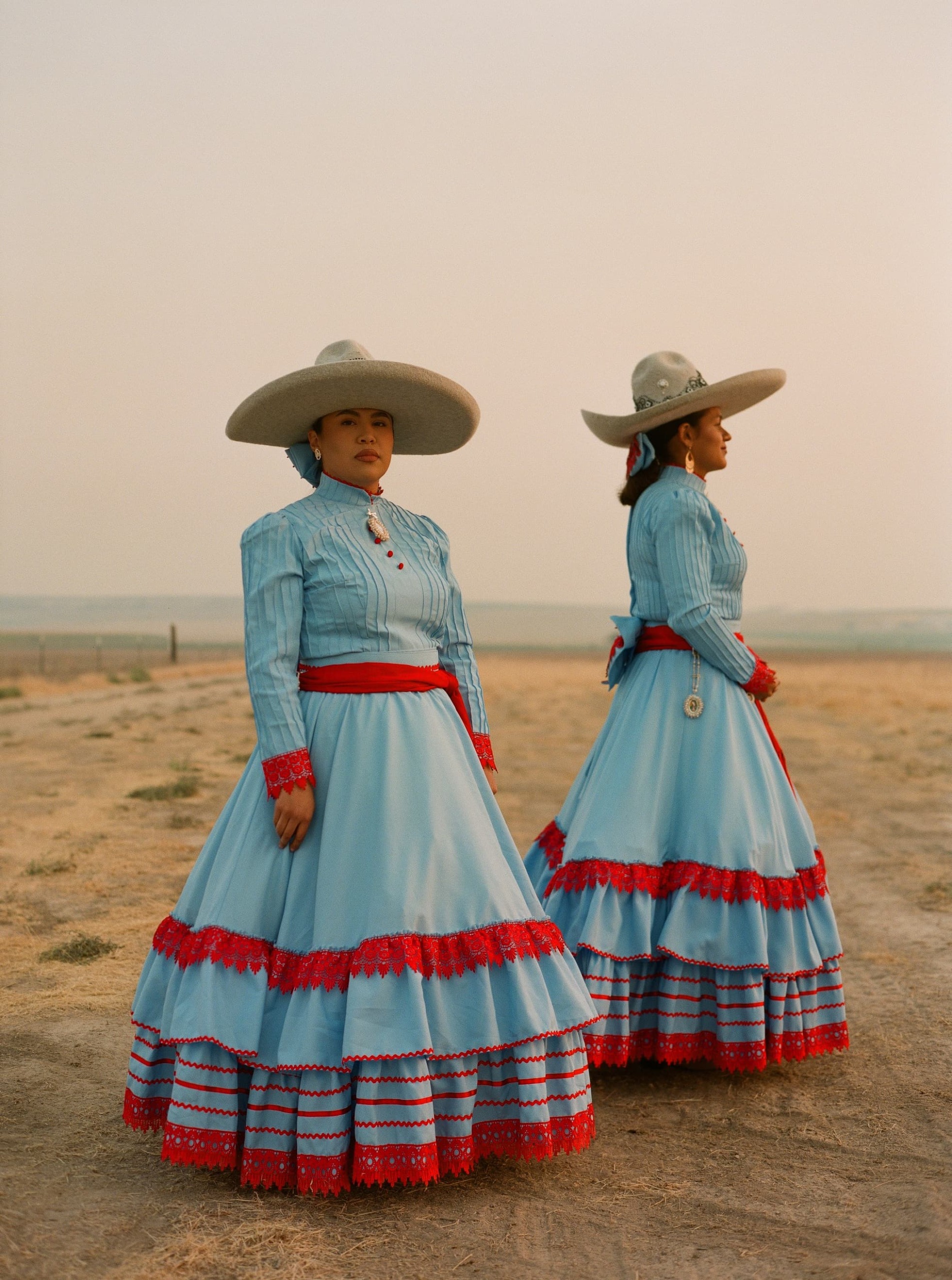
The project had developed from an exhibition commission, Escaramuza, the Poetics of Home, which was previously on display at the National Cowgirl Museum in Fort Worth, Texas. “I was certainly interested at first because of the beauty of these women’s attire, and the spectacle of their performances,” said O’Connor.
But interviews with riders revealed a more complex story about identity, belonging and gender inequality within charrería – Mexico’s overarching national horseback tradition and sport.
Rooted in the image of the charro, a male horseback rancher, the tradition became a cornerstone of Mexican identity, with traits like bravery, dominance over animals and fearless bravado treated as badges of machismo.
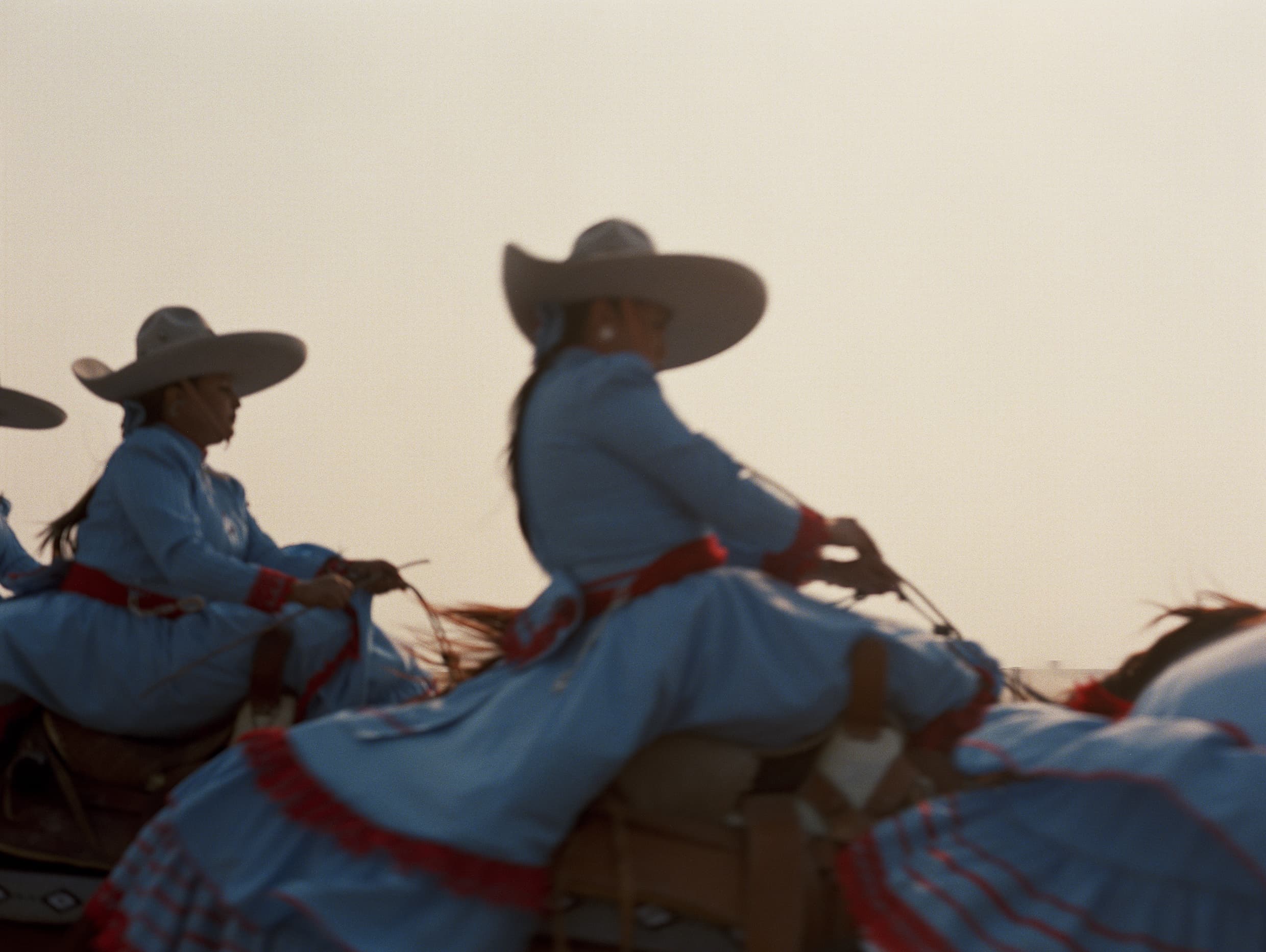
However, O’Connor’s travels across the US, interviewing and photographing escaramuzas, revealed the all-female branch of charrería “pushing back” against machismo. “I realized what a complex and layered story this was, one that I really felt the need to help to tell,” she said.
The photographer hopes that, by being featured in The Fifty, her image will help tell the story of escaramuza and how these women are redefining the Mexican charrería tradition, albeit north of the border in the US.
“Working on this project opened up a whole new world to me, and helped me understand a culture and a tradition that I hope more people are able to discover thanks to this work,” she said.
Author: Alan Palazon
Source: DigitalCameraWorld
Reviewed By: Editorial Team
