

Dylan Thomas (1914–1953) was a celebrity of his time, not only because of his unique writing style, characterized by intense, musical lyrics, but also because of the enigmatic multitude of personas he embodied.Seen as a charming yet reckless, selfish, and insecure genius, Thomas exuded energy in public, often fueled by alcohol, but was considered shy and vulnerable in private. Over his short but intense career, many portraits depicted the Welsh Bard, capturing his complex nature, and today, on Dylan Thomas Day, we examine a selection of these.
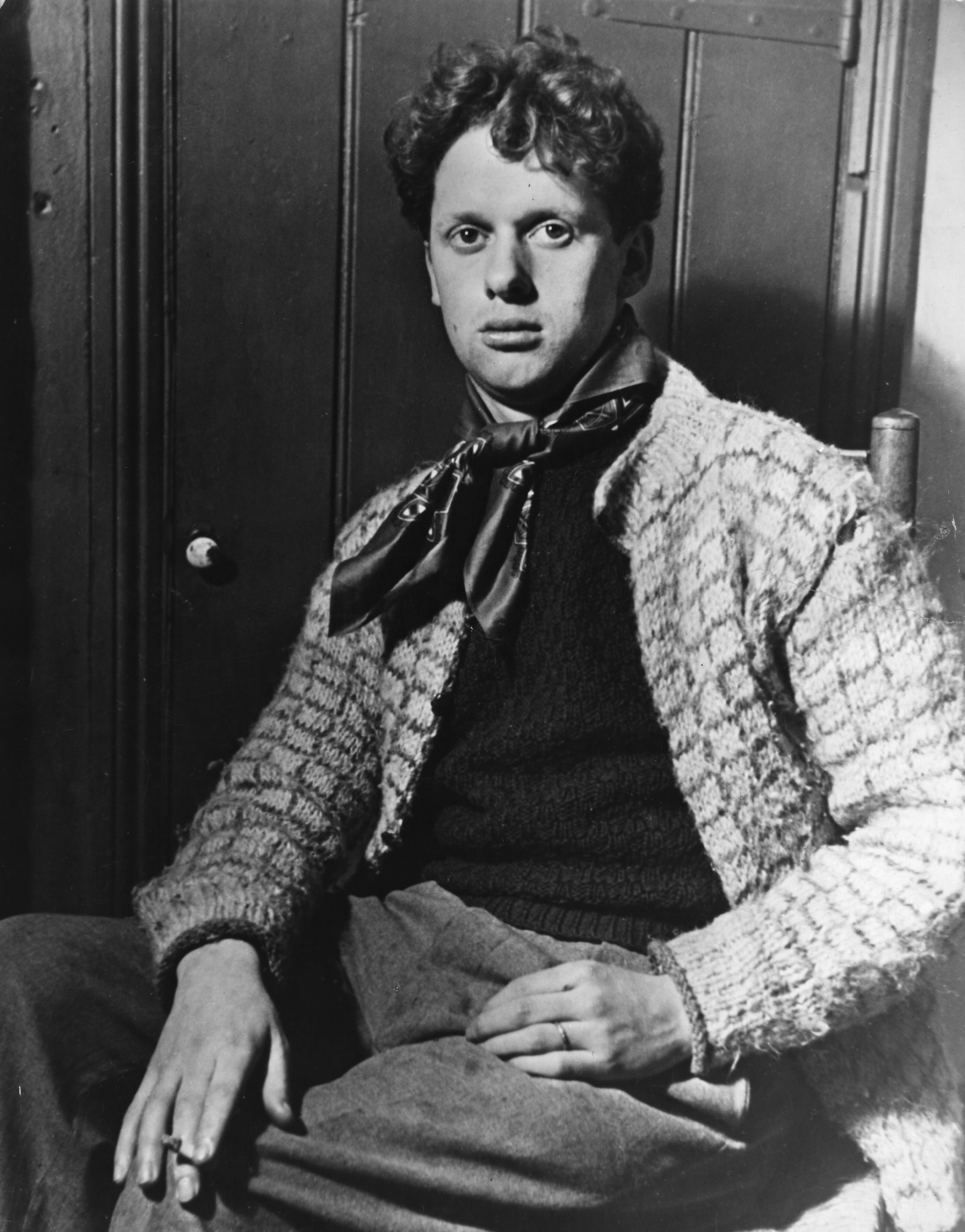
The date of this first image has been lost to time, but we see a young Thomas, most likely captured in his early 20s during the mid-1930s. Unlike most men, who would’ve dressed formally, mostly in suits during this period, Thomas rocks a flamboyant style, wearing a patterned cardigan and necktie, hinting at the charisma he would later become known for.
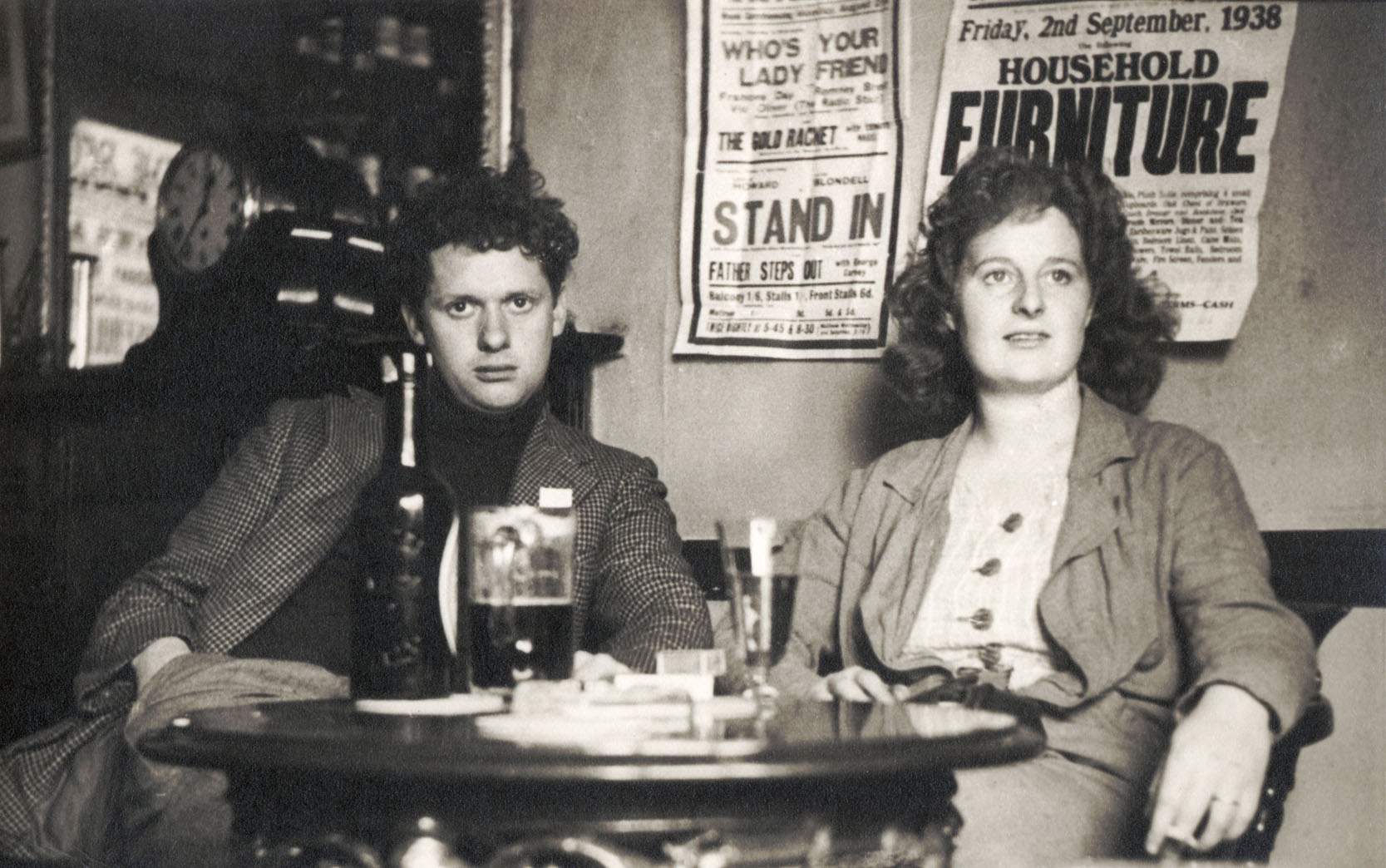
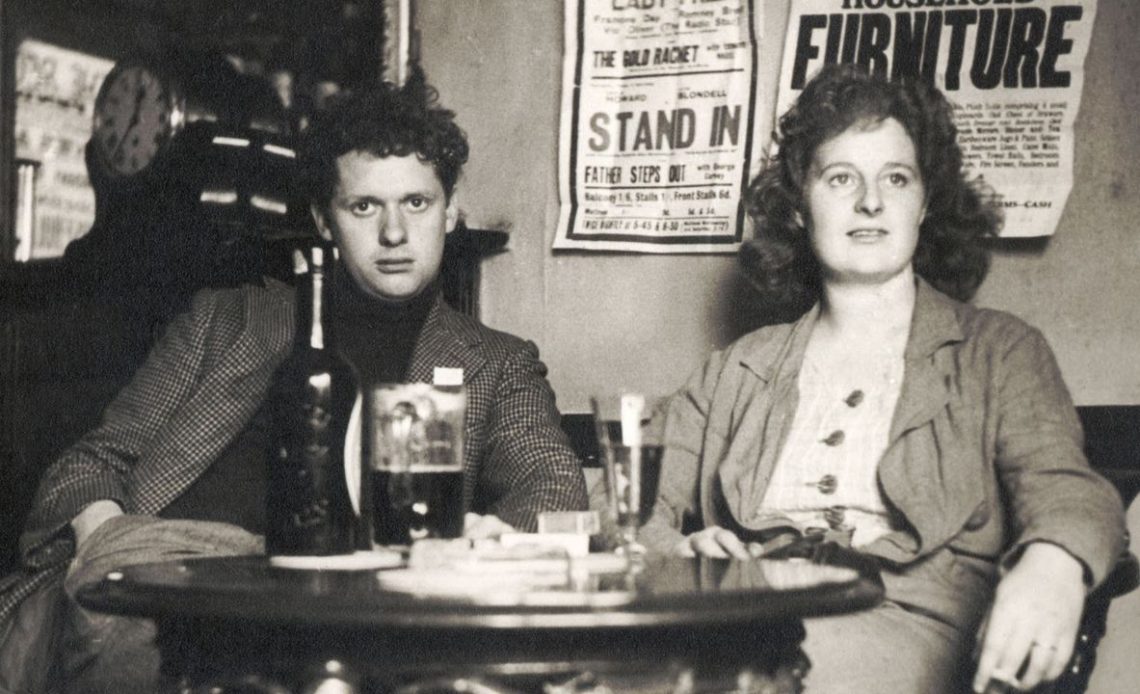
Here we see a more stern-looking Thomas alongside his wife, Caitlin Thomas (née Macnamara), in the bar of Brown’s Hotel, Laugharne, South Wales, around 1938. The couple had a tumultuous but enduring relationship that lasted until the writer’s death in 1953, famously marked by intense drinking and literary gatherings.
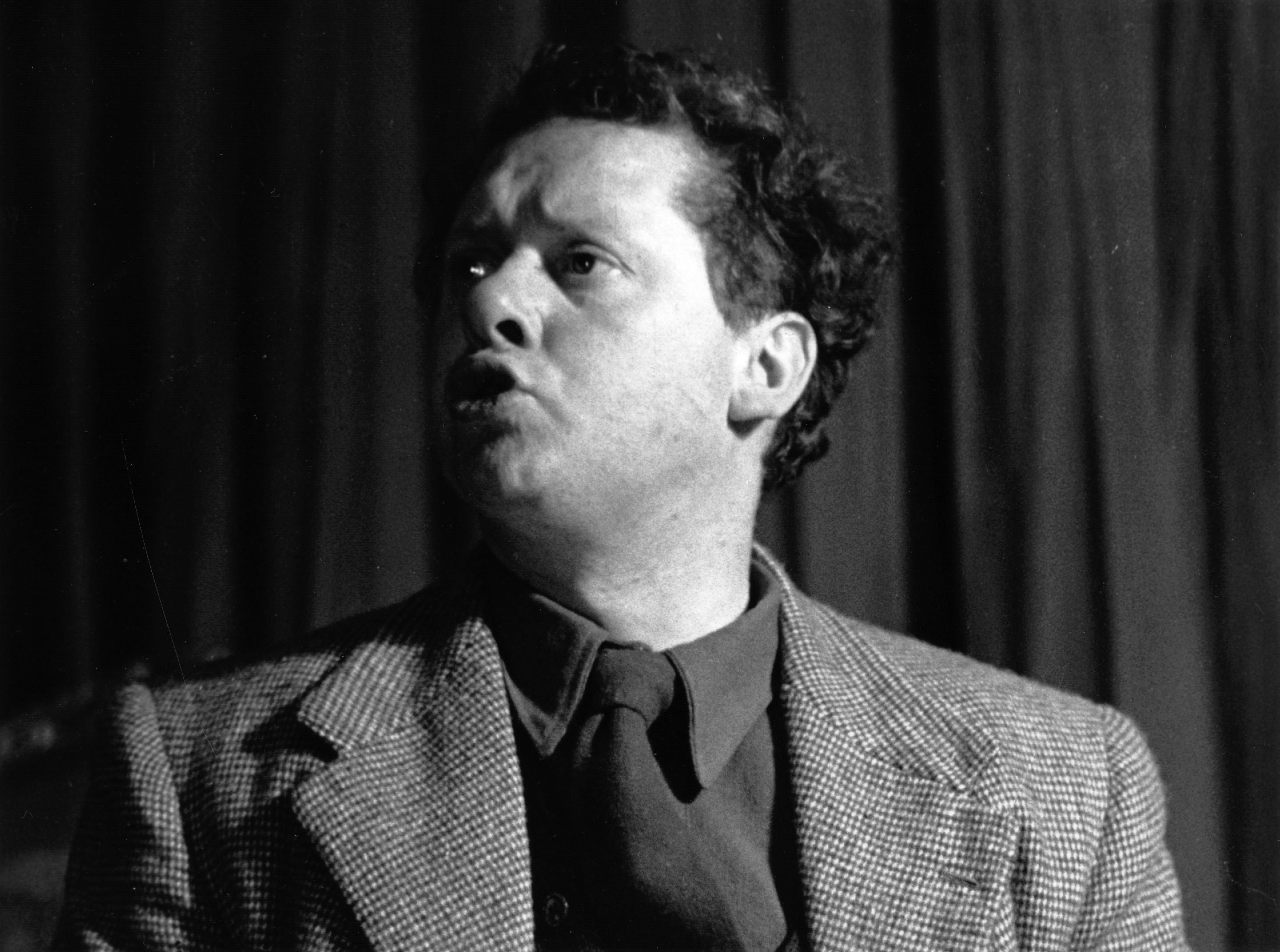
In this photograph, Thomas acts during a one-night performance of “Desire Caught By the Tail.” The photograph was originally published in 1950, covering Pablo Picasso’s play. Thomas never feared being in the limelight, the following year appearing as an extra in the 1951 film Pandora and the Flying Dutchman, which starred Ava Gardner and James Mason. This brief appearance is believed to be the only known moving image of the Welsh poet.
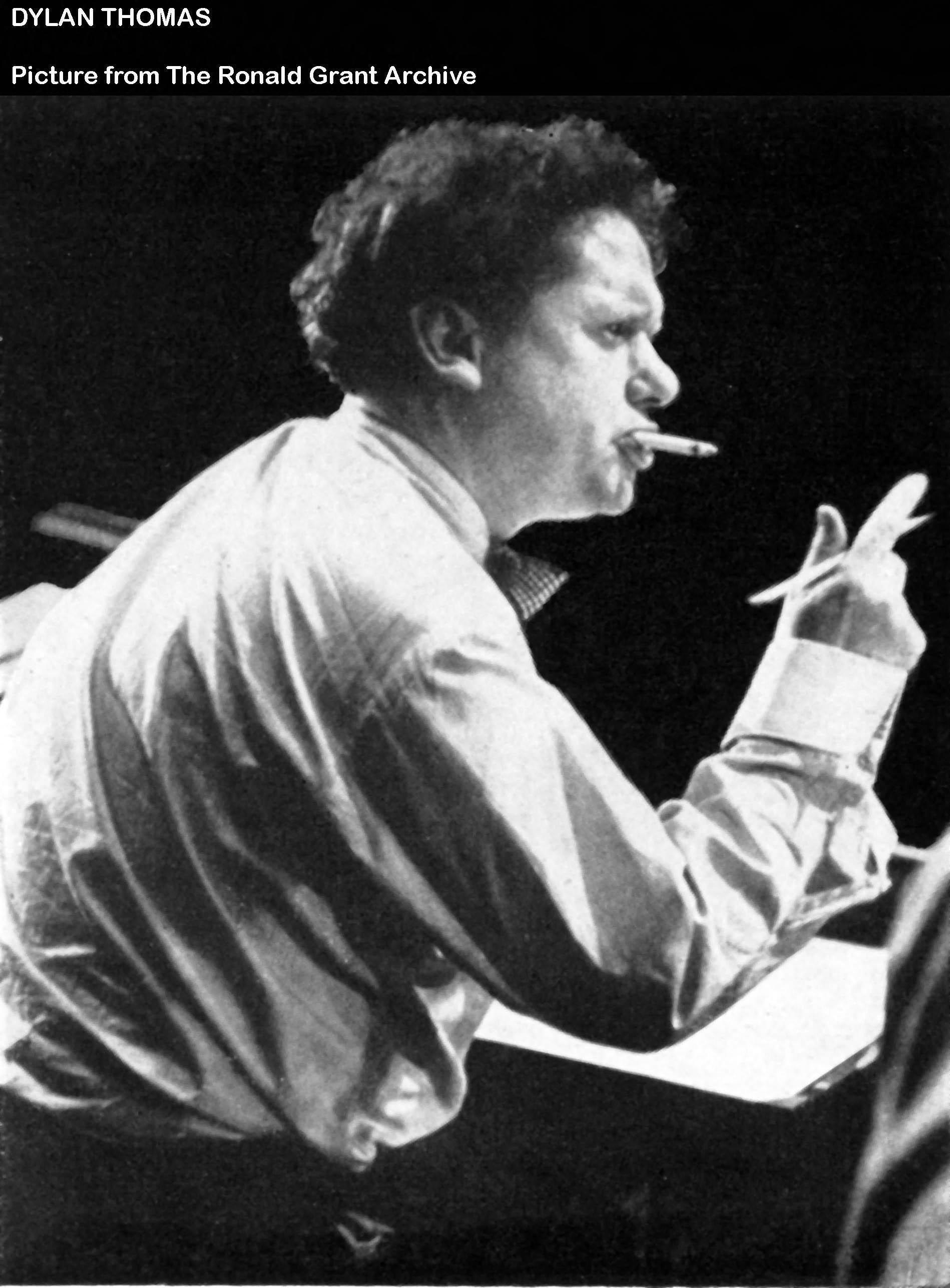
Arguably the most famous portrait of Dylan Thomas, this shot was taken in New York while Thomas was directing the first performance of “Under Milk Wood” at the 92nd St. YM-YWHA Poetry Center. Prominent American photographer Rollie McKenna (1918–2003), known for her portraits of writers and artists, snapped it, later recalling that just an hour before, Thomas was extremely unwell but mustered the strength to direct for three hours — his fierce energy captured in his pose.
Thomas drank himself to death in 1953 at the age of 39. Over a short-lived career, he burned like a wildfire, and we’re left with his iconic writings but also portraits that show the man whom critics labelled as a “dazzling obscure poet who can be enjoyed without understanding.”
Author: Alan Palazon
Source: DigitalCameraWorld
Reviewed By: Editorial Team