

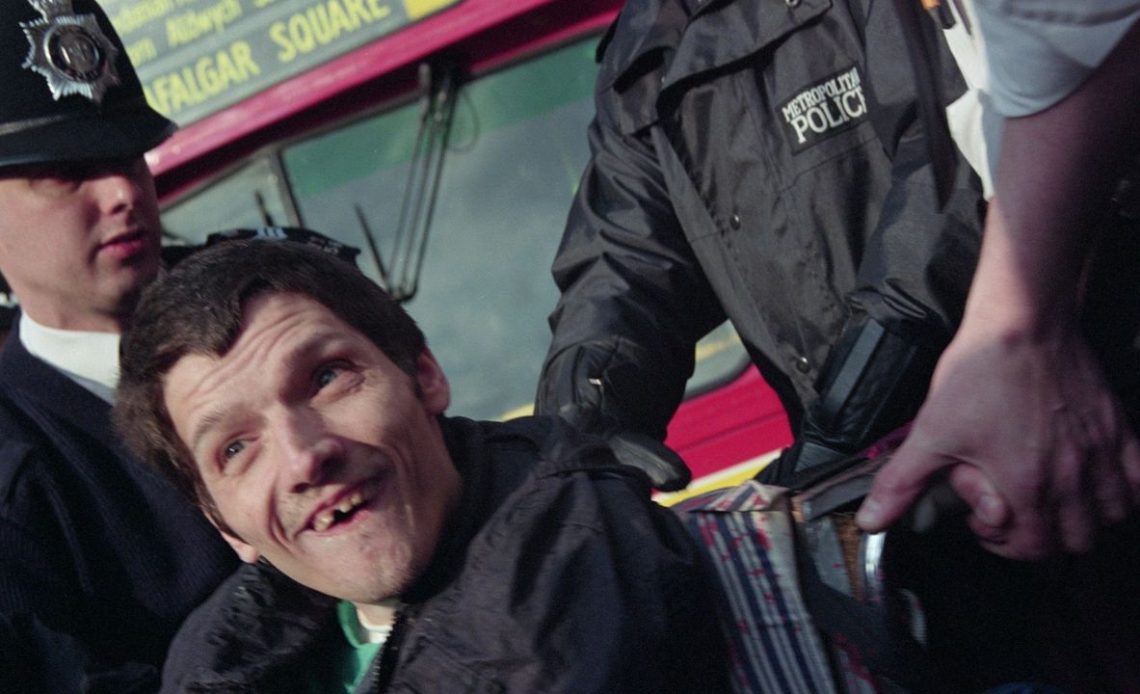
There’s a photograph in Keith Armstrong’s newly discovered archive that stops you in your tracks. A man in a wheelchair grins defiantly, surrounded by Metropolitan Police officers. A red London bus looms behind him, its destination board reading Trafalgar Square. It’s the kind of image that could have run on the front page of a national newspaper.
Actually though, it didn’t; because Armstrong (1950-2017) wasn’t a press photographer filing for an agency. He was a disability rights activist, shooting from his wheelchair, from inside the demonstration, for the movement itself.
Born in South Africa then raised in England, Armstrong spent the 1980s and 1990s documenting the campaign for disabled people’s civil rights in Britain: the bus blockades, the protests outside Parliament, the pickets and direct actions that eventually helped bring about the Disability Discrimination Act in 1995.
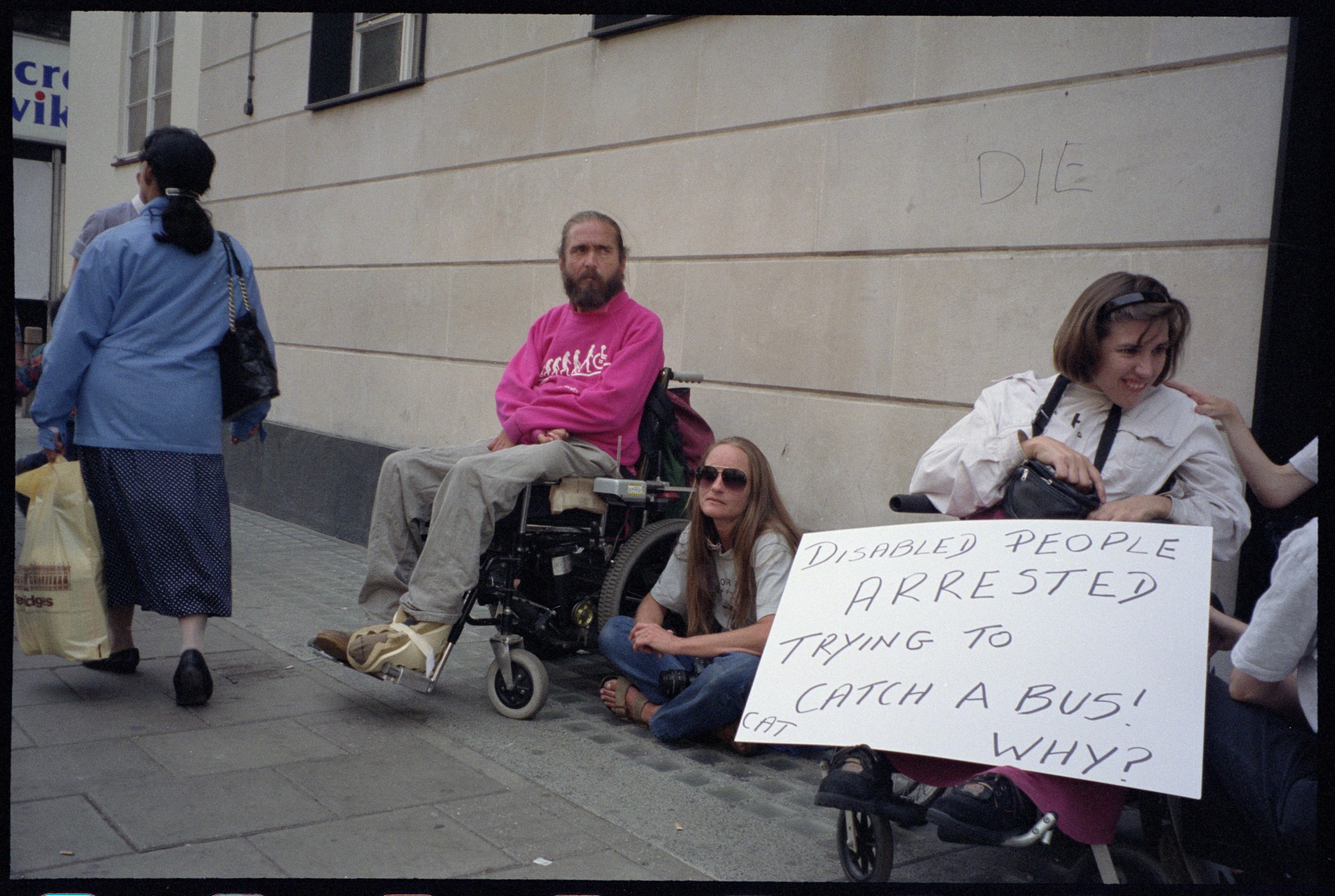
He did it with an Olympus camera, film, and the kind of access no photojournalist on assignment could ever have bought – because he was one of them. Shooting at wheelchair height gave his images a ground-level intimacy that places you inside the crowd, rather than observing it from a distance.
Uncovering the archive
His archive was discovered after his death, when members of his estate contacted Shape Arts, the disability-led arts organisation. What looked like boxes of unsorted negatives turned out to be something extraordinary: more than 500 images documenting one of modern Britain’s most significant and least-photographed civil rights movements.
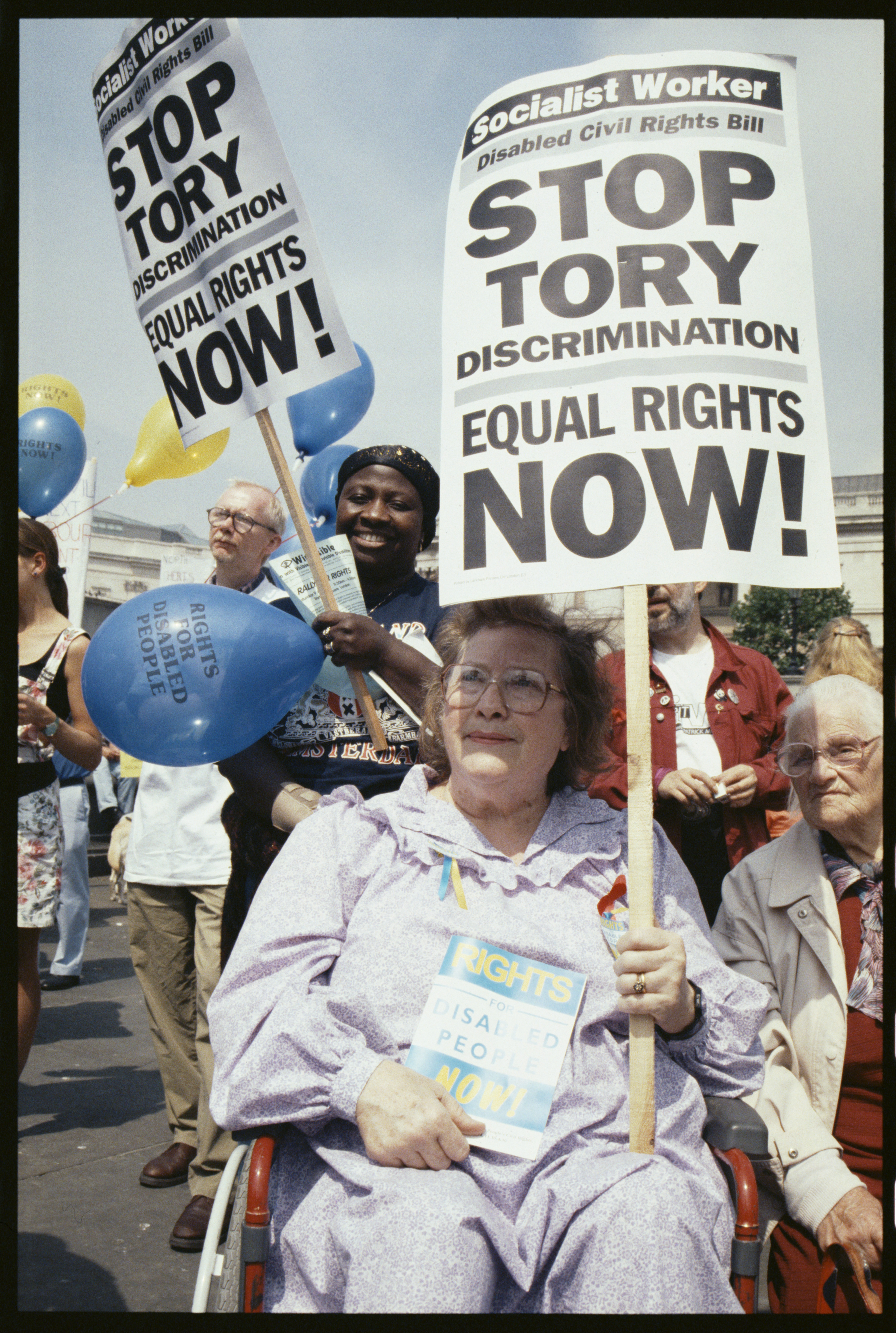
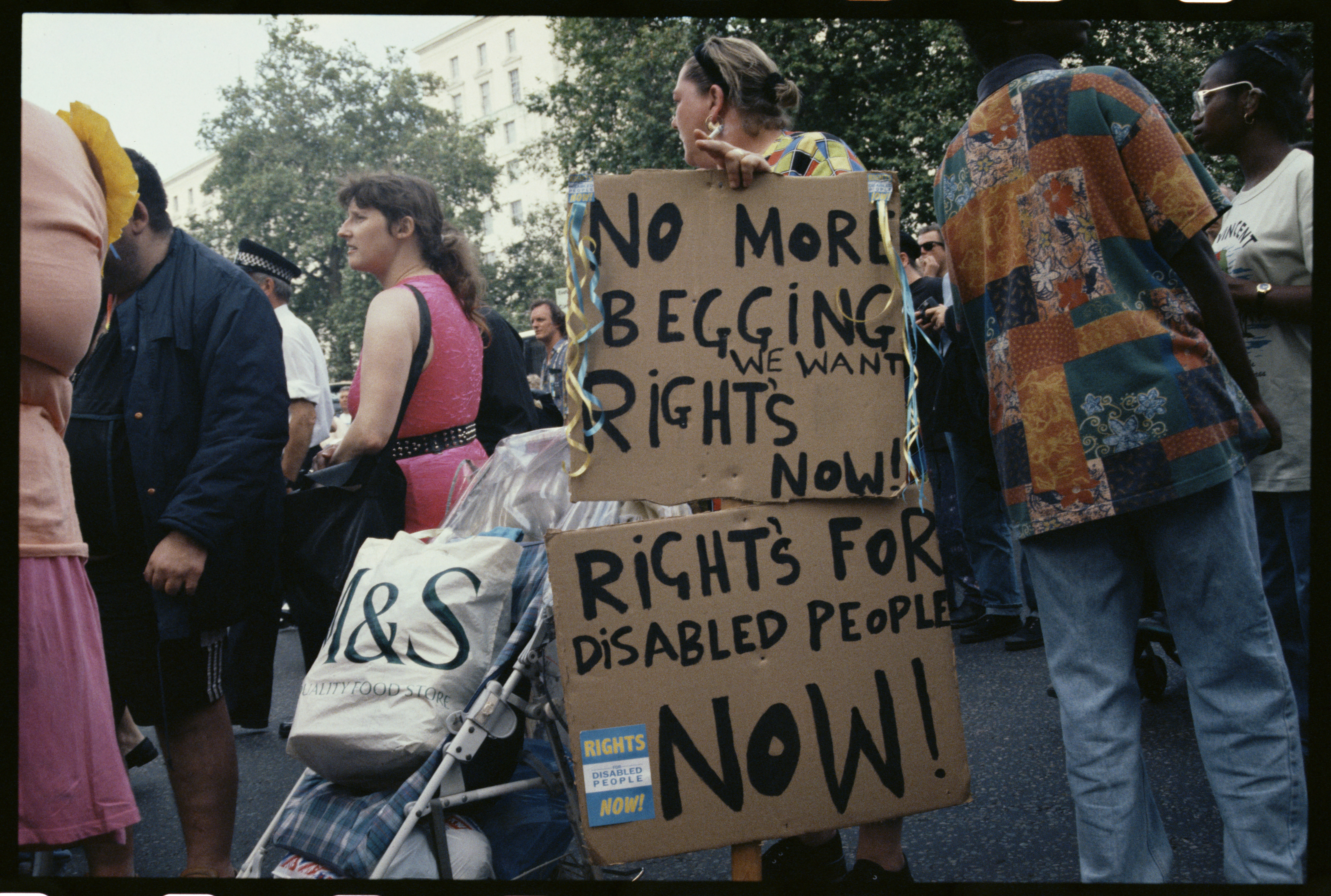
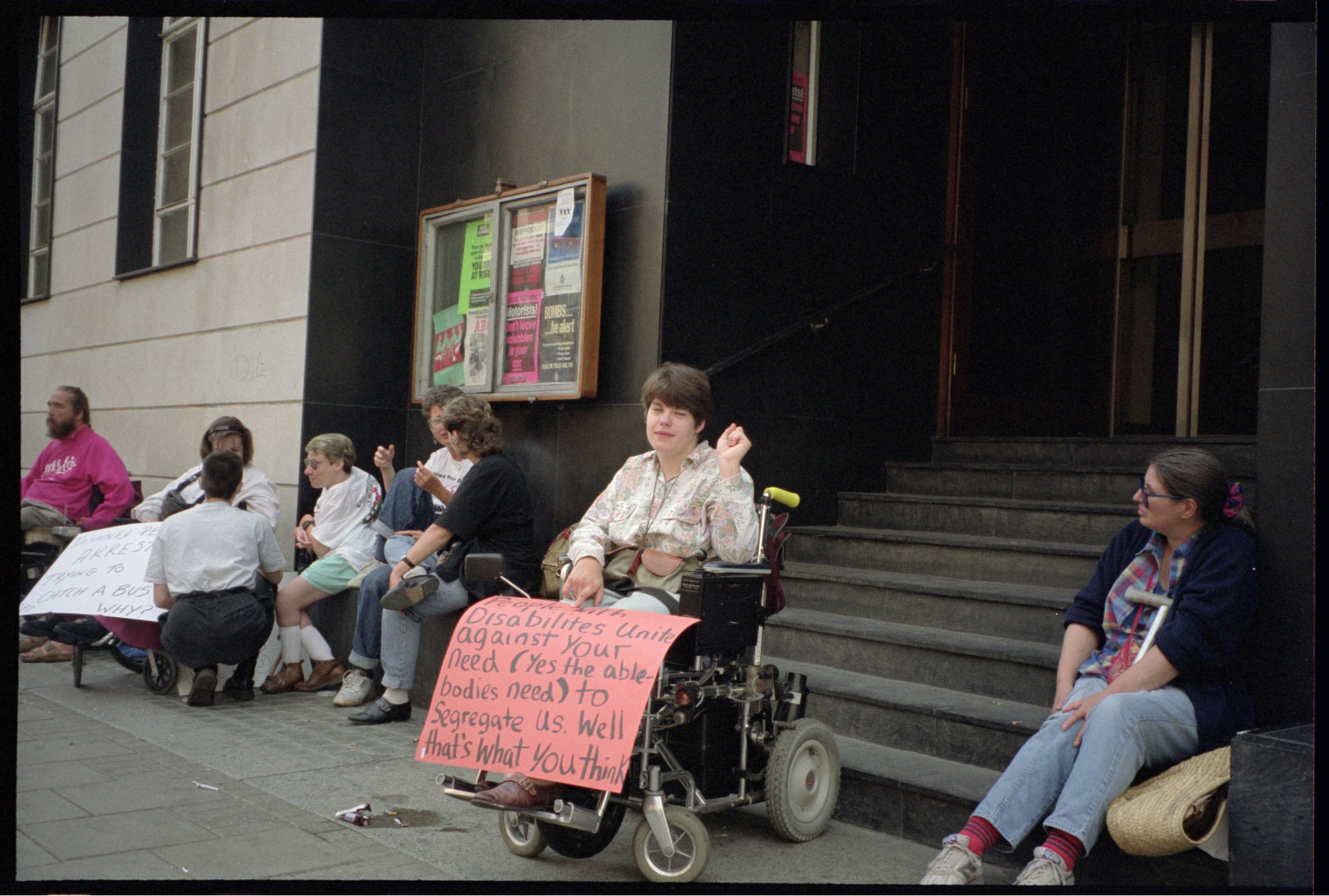
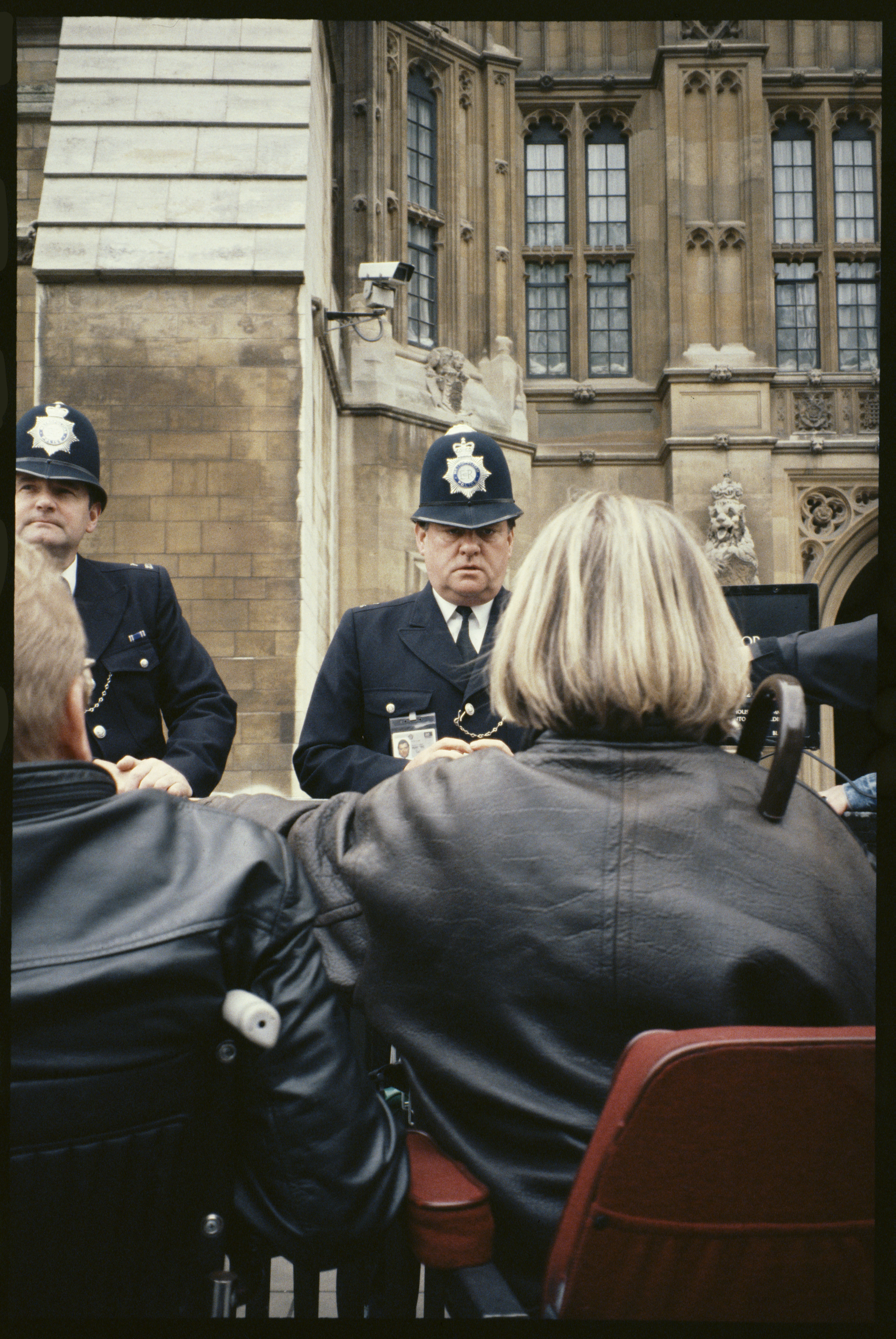
The collection has now been digitised and made publicly available through the National Disability Movement Archive and Collection at ndmac.org. And here’s the best part: it’s entirely free to use for exhibitions, publications, social media and more, with a simple credit to Armstrong and NDMAC.
Why they work
What makes Armstrong’s work remarkable isn’t just its historical significance; it’s the vantage point. Photojournalism of protest tends to work from the edges: the telephoto lens compressing a crowd, the wide-angle from a press pen, the elevated position that gives context but sacrifices proximity. Armstrong had none of those options, and the results are more powerful for it.
His images are close, chaotic and alive. Protesters hold handwritten cardboard signs reading “No more begging, we want rights now!” and “Disabled people arrested trying to catch a bus! Why?” Police officers loom large in the frame. There’s wit in some of the placards, fury in others.
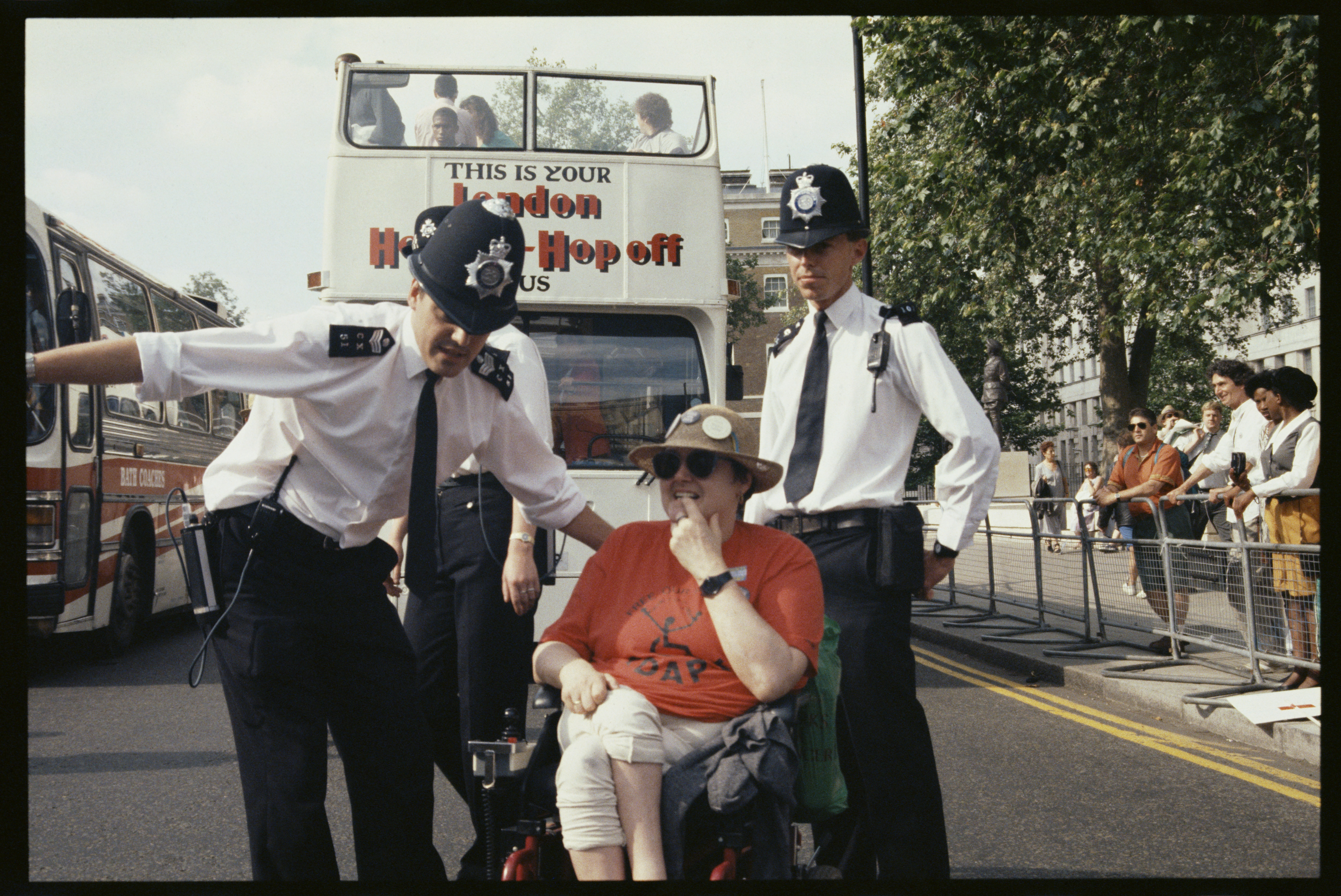
One image shows a woman in a wheelchair smiling serenely between two officers as a London sightseeing bus fills the background. The composition is almost classically street-photographic; the kind of accidental perfection that experienced documentary photographers spend careers chasing.
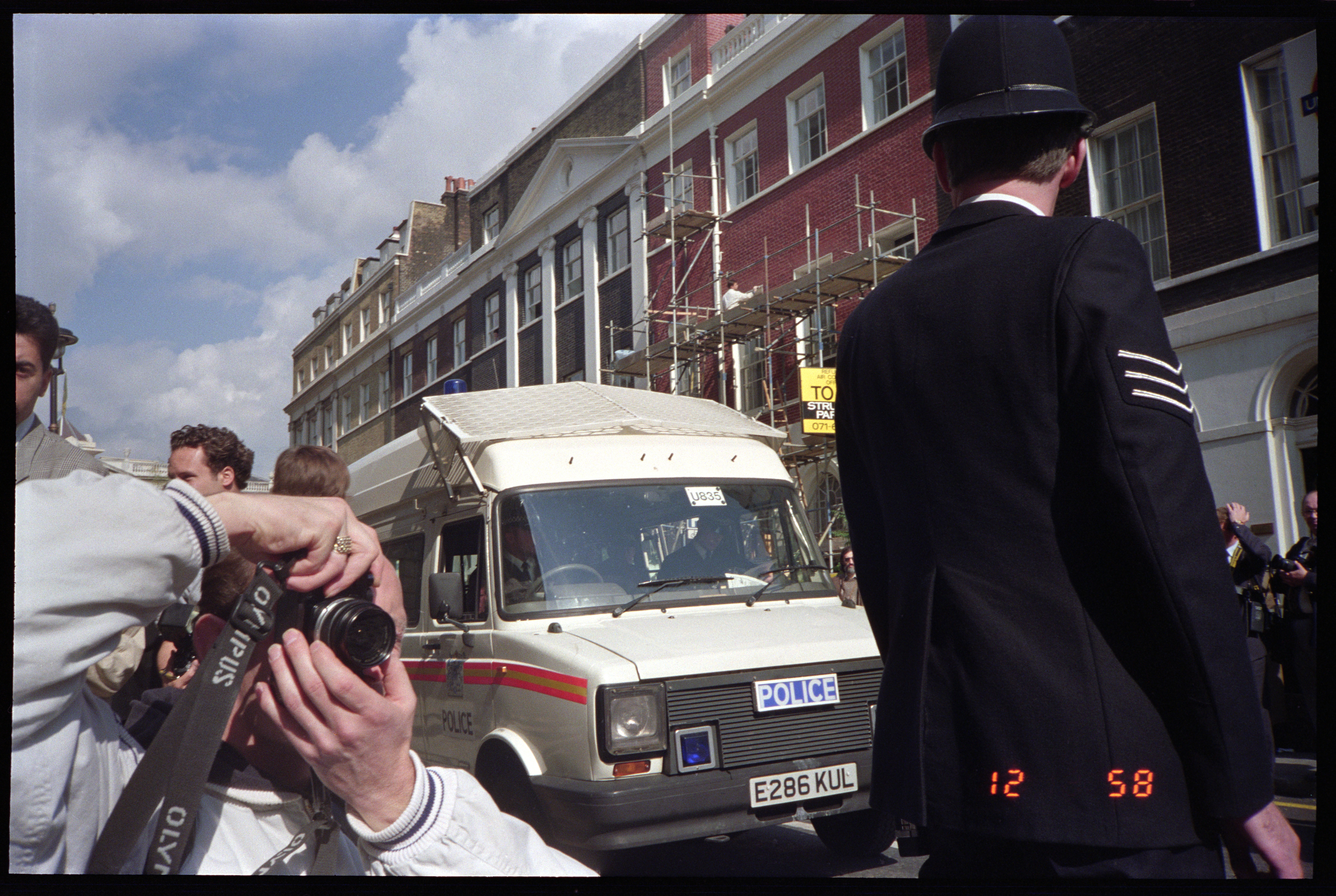
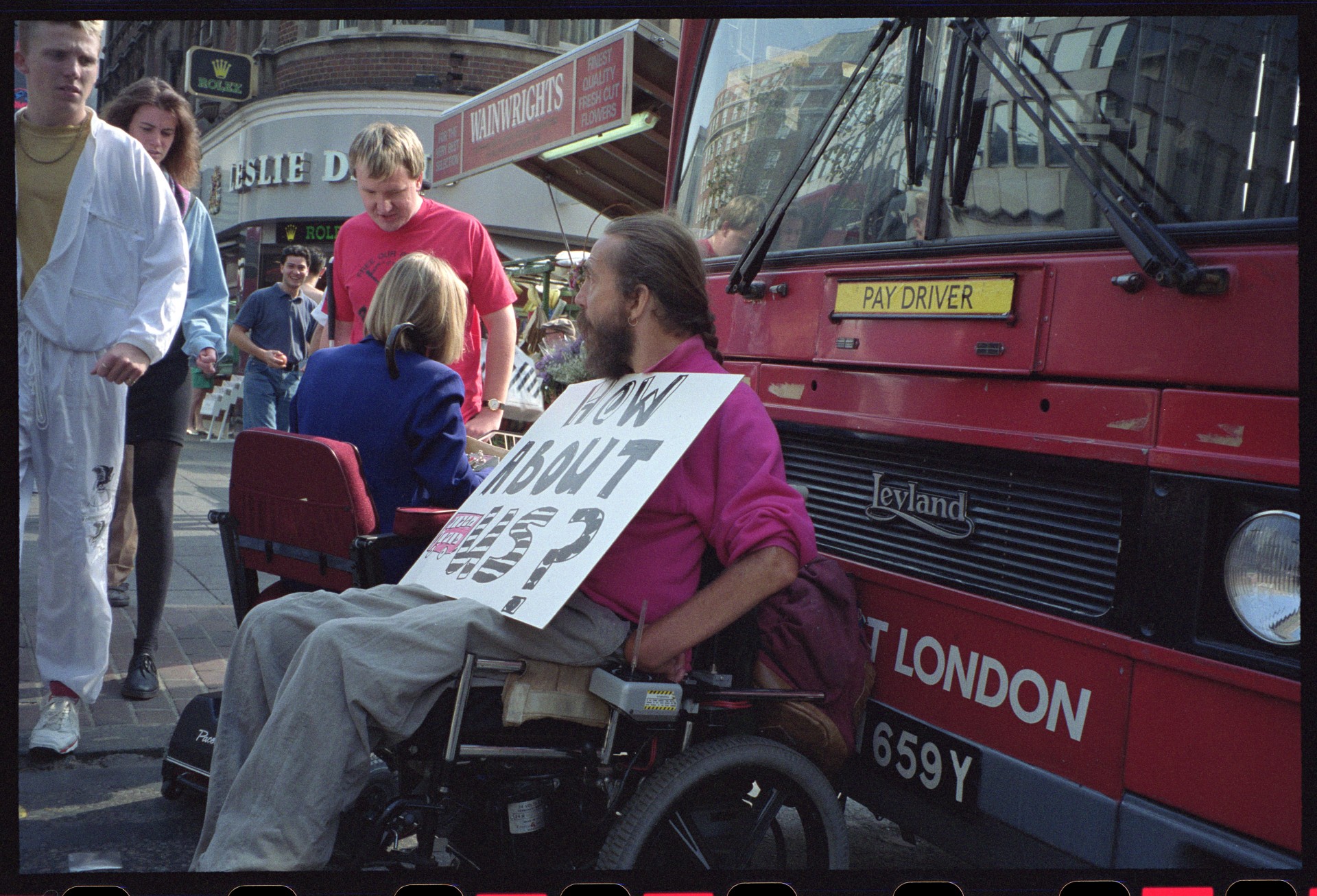
Another image, shot on New Oxford Street, in central London, shows Armstrong himself crouched low, Olympus raised, recording a police van and an officer from below eye level. It’s a reminder that the disability rights movement produced its own visual culture, its own recorders, its own history, largely invisible to the mainstream photographic press at the time.
Intimate storytelling
“Keith wasn’t just photographing disabled people and their allies,” says David Hevey, chief executive of Shape Arts. “He was photographing from within the movement. His images place you alongside the activists. They completely change how we see this history.”
That reframing is significant. As interest grows in overlooked and alternative histories of Britain, Armstrong’s archive fills an important gap: a body of work that is activist and artistic simultaneously, documentary and intimate, historically vital and visually compelling.
Author: Tom May
Source: DigitalCameraWorld
Reviewed By: Editorial Team