


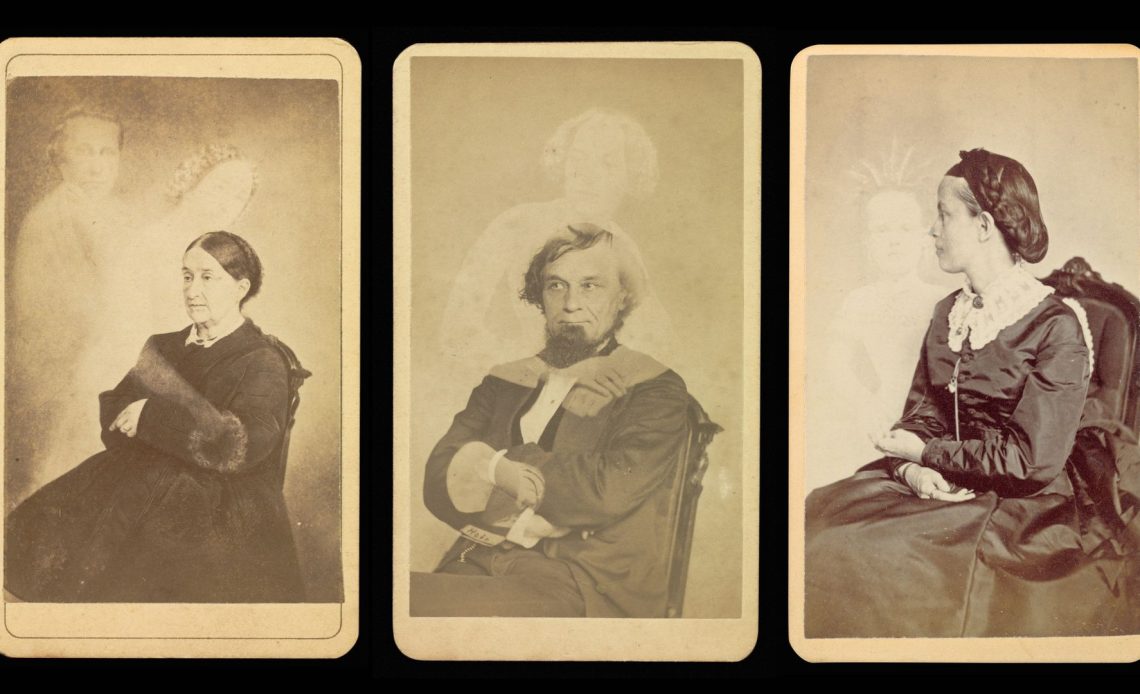
When photography was first invented, critics argued that photographs lacked the soul of traditional artwork like paintings – but around two decades after the first daguerreotype, a jewelry-maker in Boston would bring “soul” to photography in an entirely different way: spirit photography.
William H. Mumler (1832-1884) wasn’t originally a photographer but rather a jeweler who worked in engraving silver. Mumler was experimenting with a self-portrait in another photographer’s studio, Helen F. Stuart, when a dim, spirit-like figure appeared in the final print. Mumler reportedly said that figure looked like his cousin, who had died 12 years earlier.
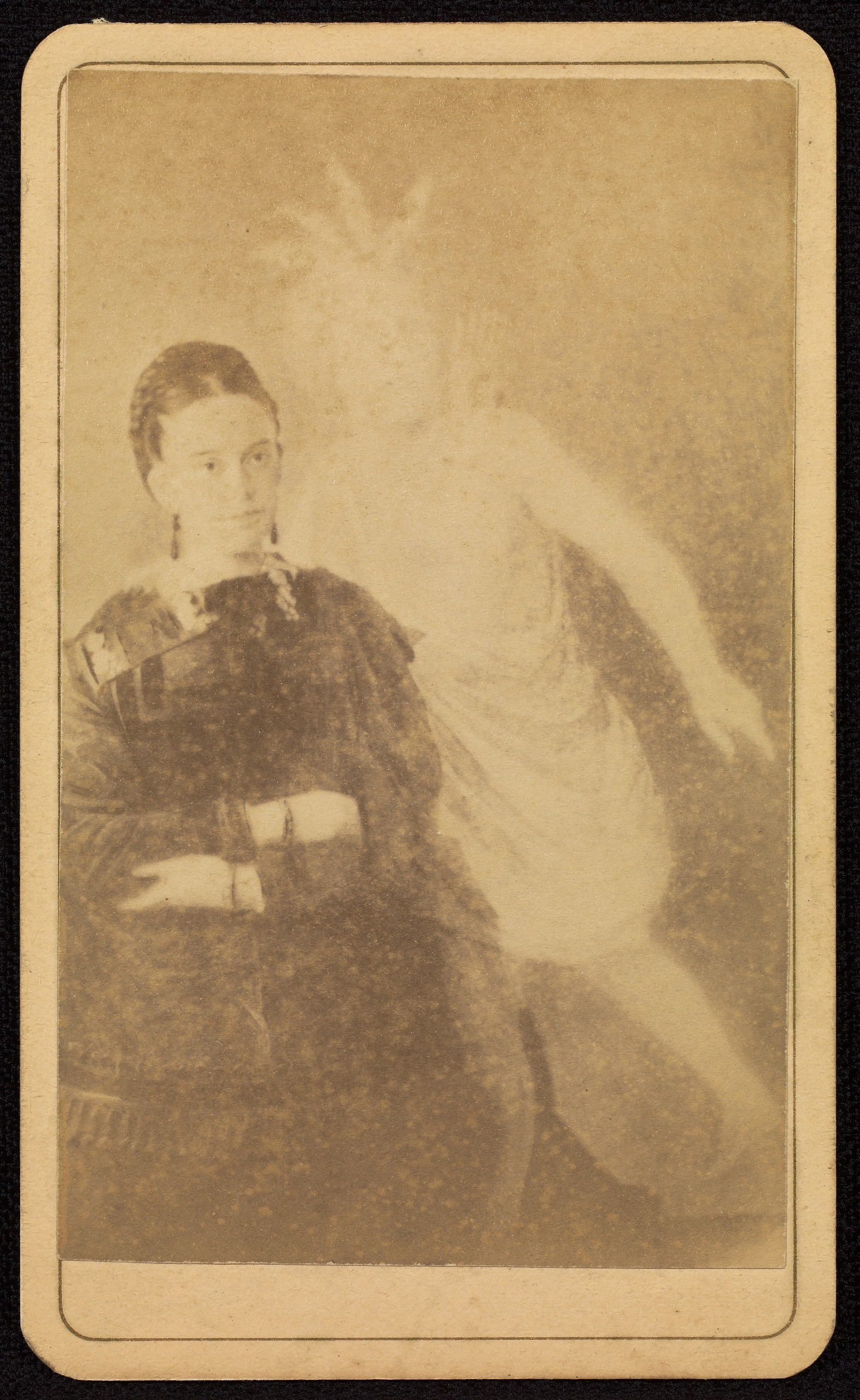
Mumler continued to experiment with photography, and soon word of the “spirits” appearing in Mumler’s photographs spread. At the time, America was in the midst of a Civil War, and many families were mourning the loss of a loved one.
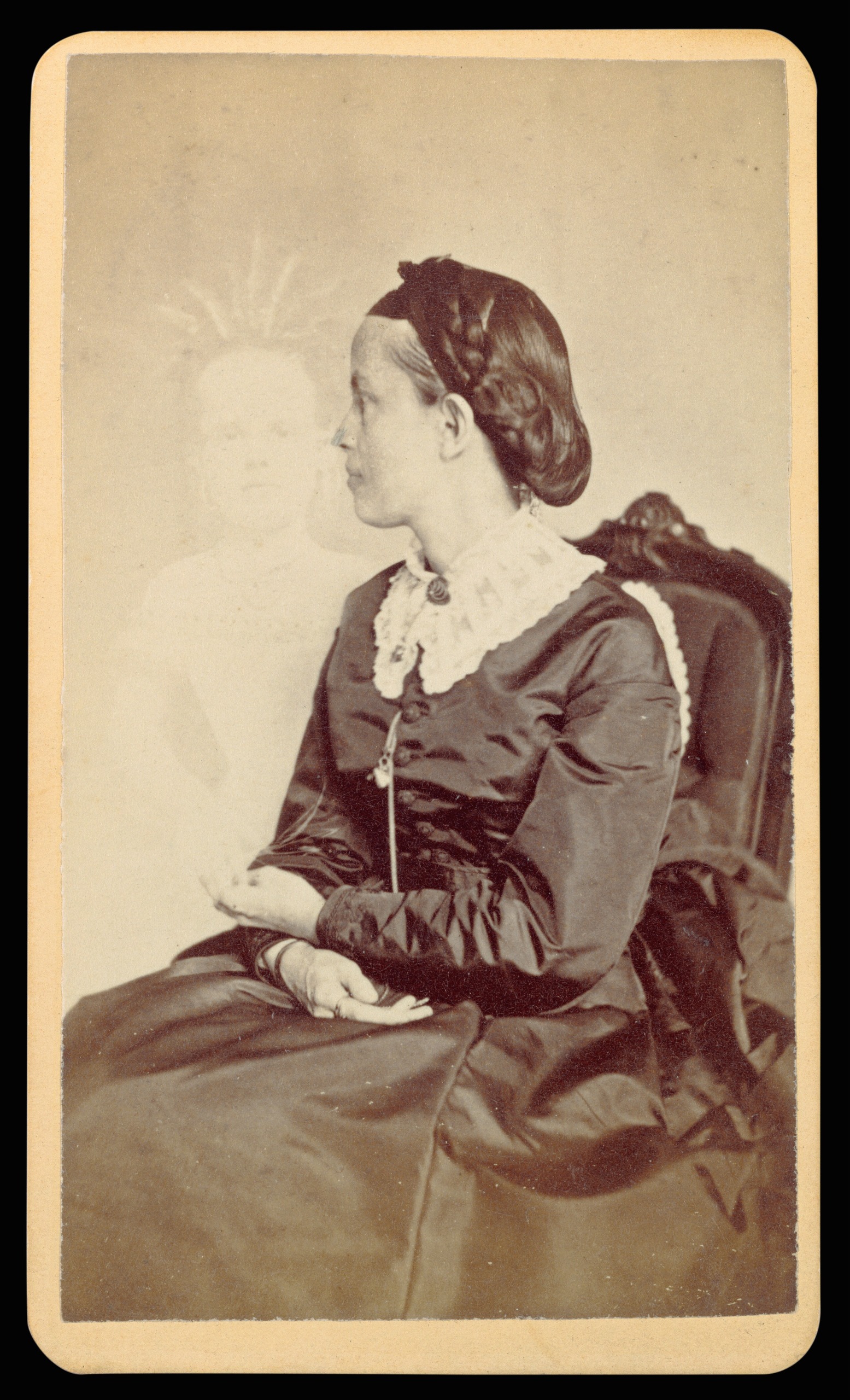
At the time, post-mortem photography was common. A camera wasn’t yet something that many families owned, and with high infant and child mortality rates, post-mortem photography at the time was often the only photograph of the deceased that the family owned.
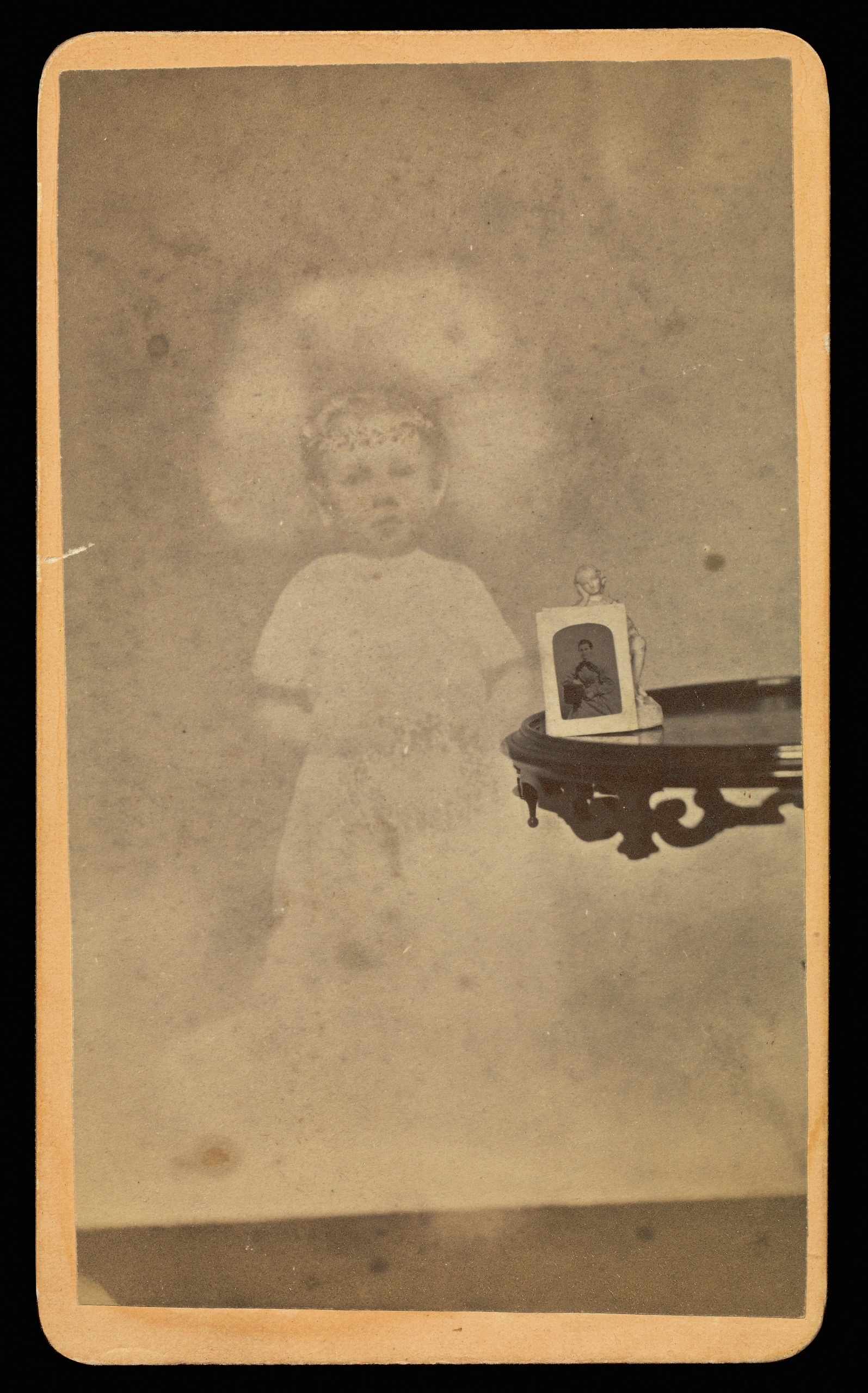
It’s amid that historical backdrop that Mumler’s spirit photography flourished. At one time, he charged $10 for a dozen photos – which would be more than $200 (£150 / AU$284 / CA$280) in today’s currency. A visit from a “spirit” was never guaranteed and, in some cases, required returning to the studio for additional photographs.
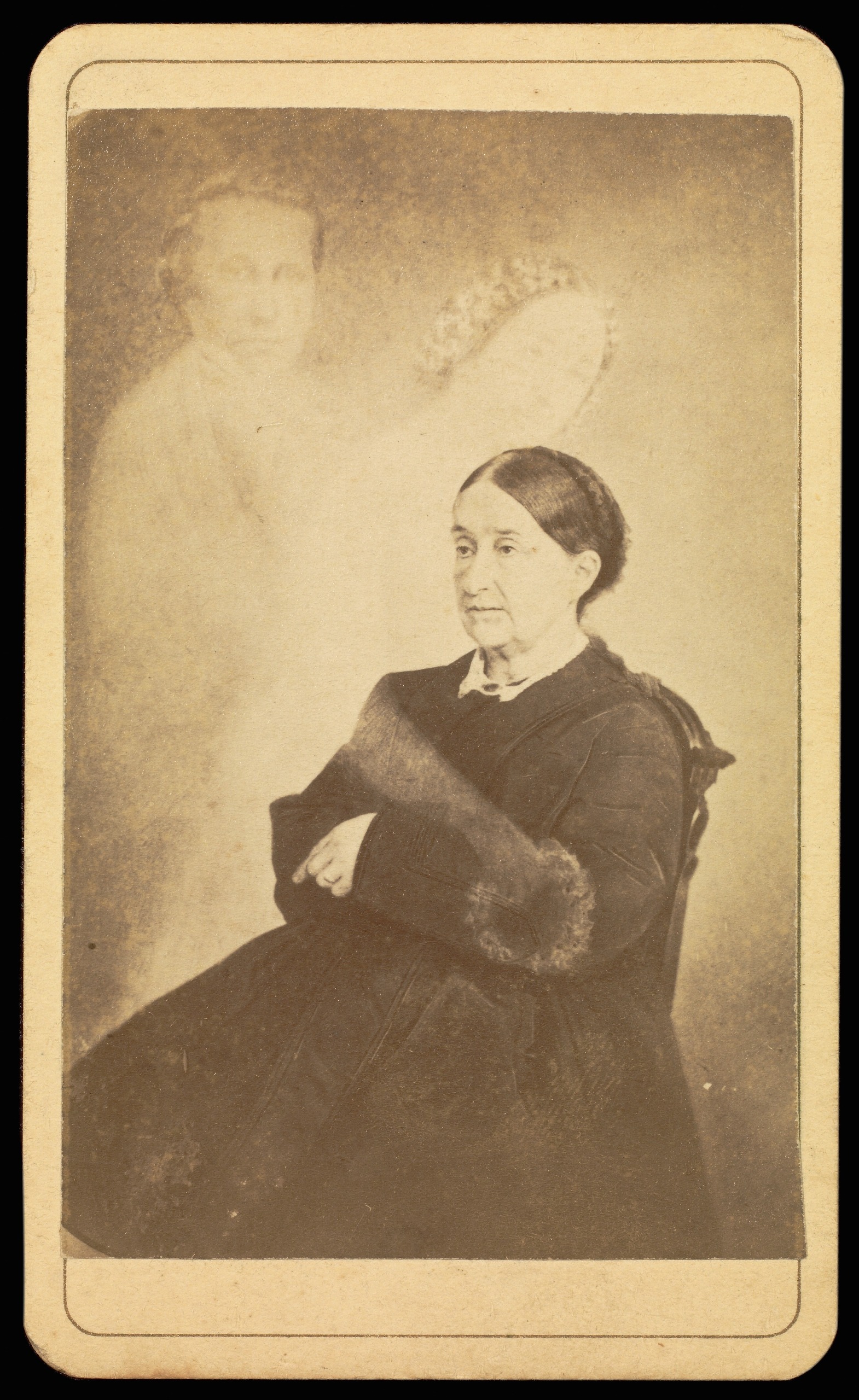
Mumler’s photographs weren’t without doubters, and when business began to slow in Boston, he moved to New York City. But around a year after that move, Mumler took a photograph that would alter the course of his photography career – some accounts say this person was an undercover reporter; others say Mumler photographed an undercover New York Marshall.
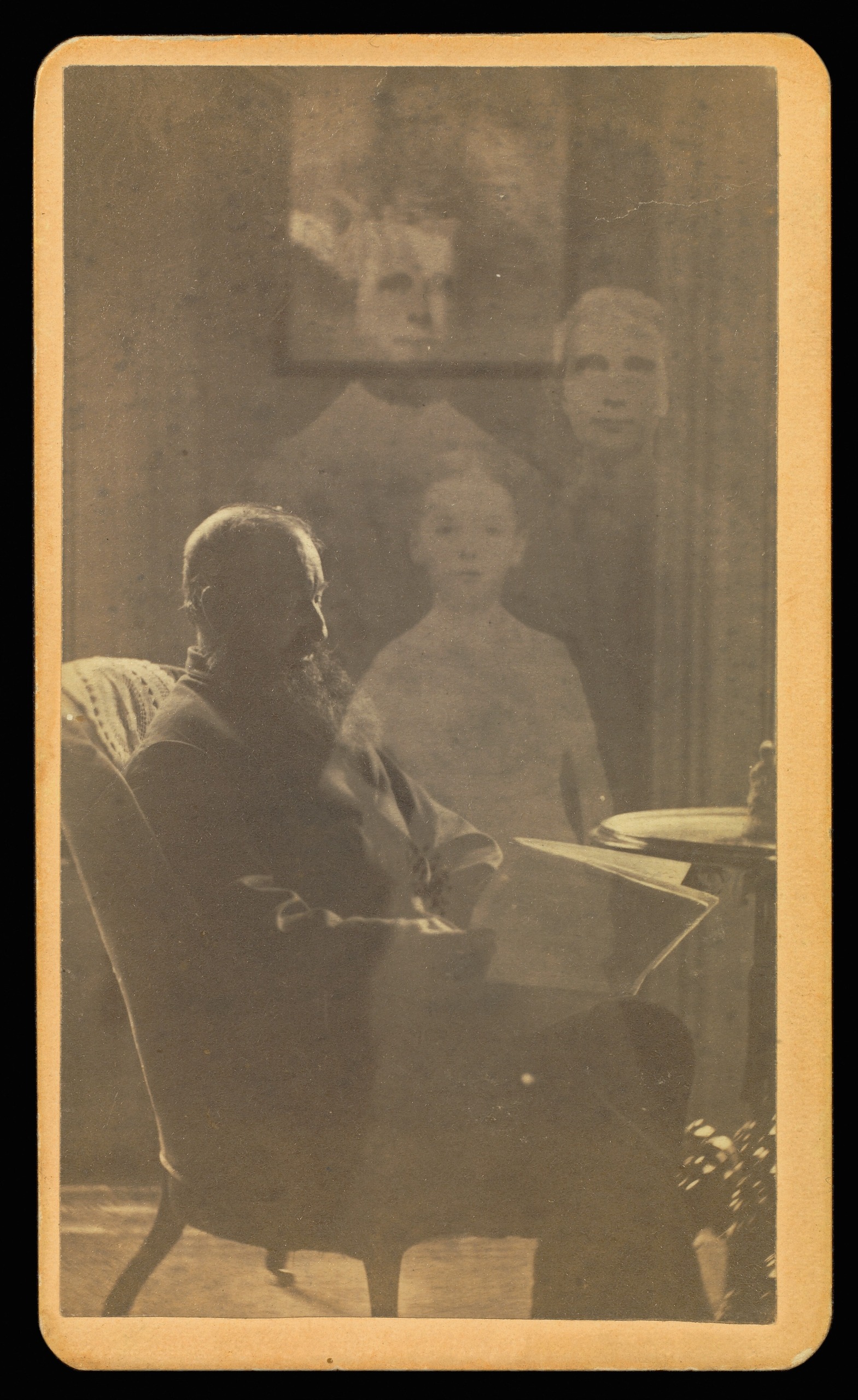
Mumler was subsequently arrested on charges of fraud. The trial drew a lot of attention, including P.T. Barnum, who served as a witness in the trial. Mumler was eventually acquitted due to a lack of evidence.
Mumler continued to take spirit photographs even after being publicly disproven, but his work became far less popular after the trial, and he stopped taking spirit photographs in 1879.
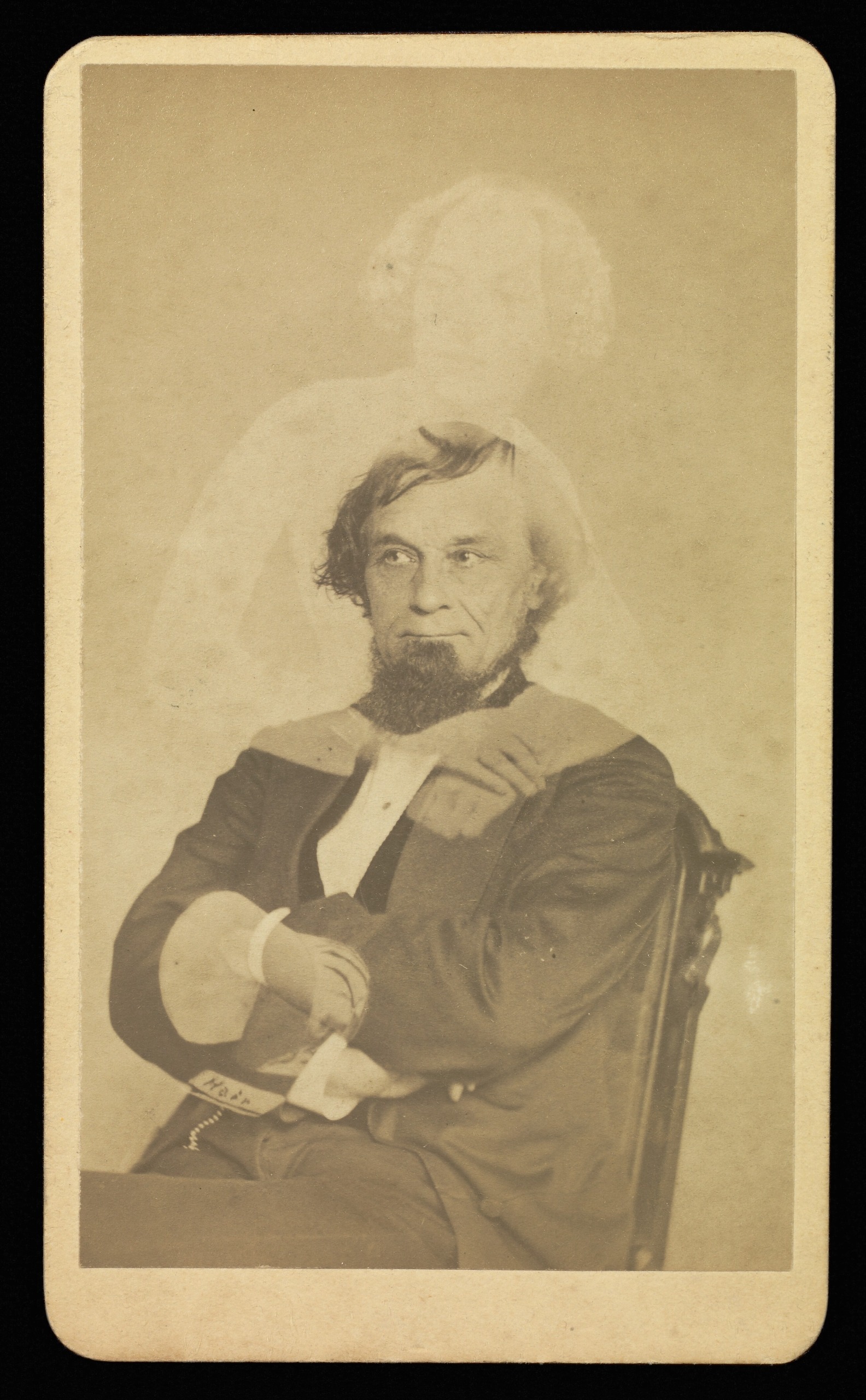
Mumler, who many describe as the first spirit photographer, likely used a few different techniques. A double exposure exposes the light-sensitive surface twice – which, in Mumler’s case, was a glass print negative. Exposing the same photo twice creates a semi-transparent image that overlaps the other. The long exposures required for photography at the time also likely contributed, with motion blur adding to the eerie look of the photographs.
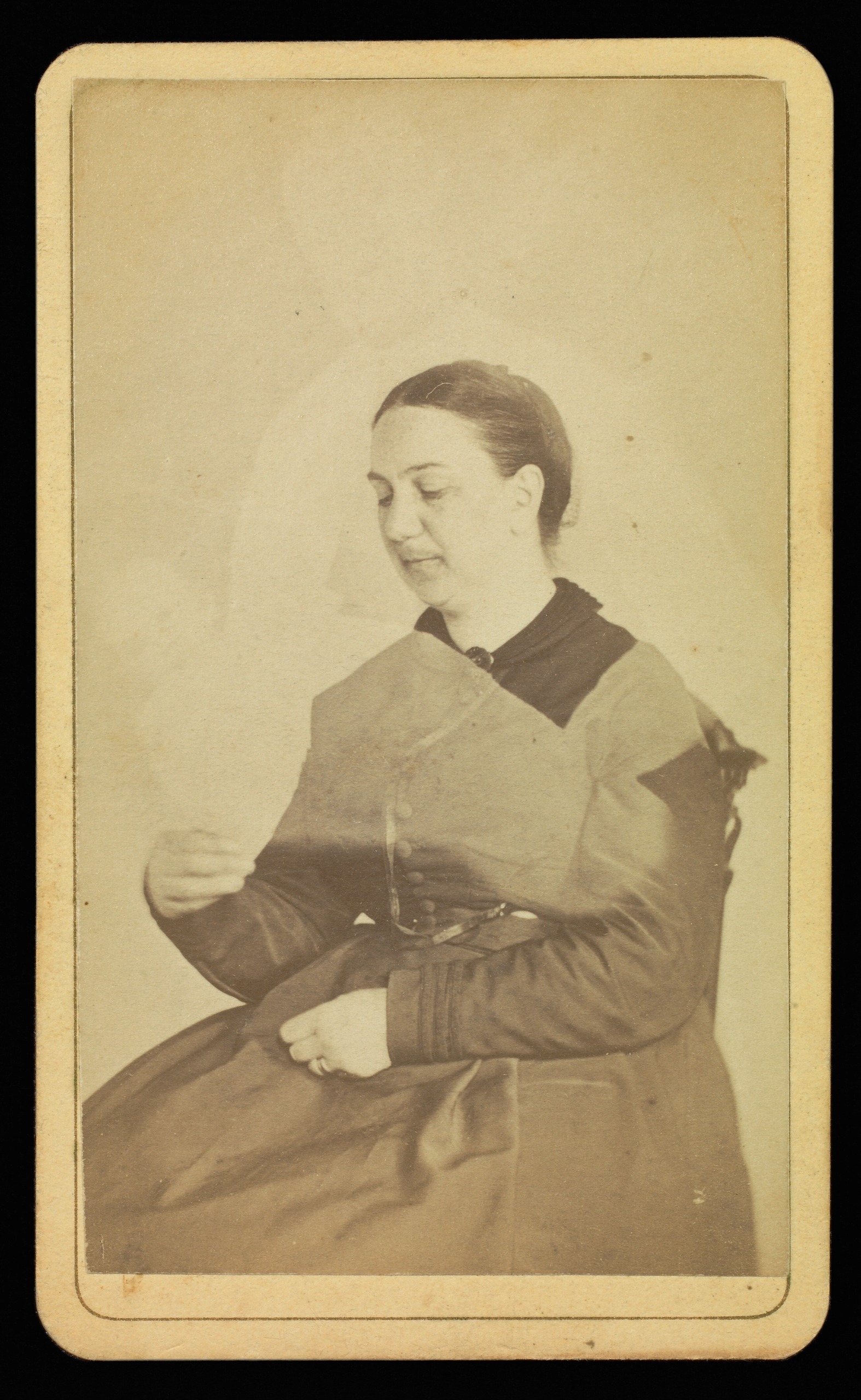
While Mumler worked well before the invention of computer-based photo manipulation, darkroom techniques were likely also part of Mumler’s photographs. Reusing a glass plate that was only partially cleaned from the first image, hand-scraping away parts of a glass negative, and exposing two glass negatives together for a print are also techniques that likely factored into the eerie quality of Mumler’s work.
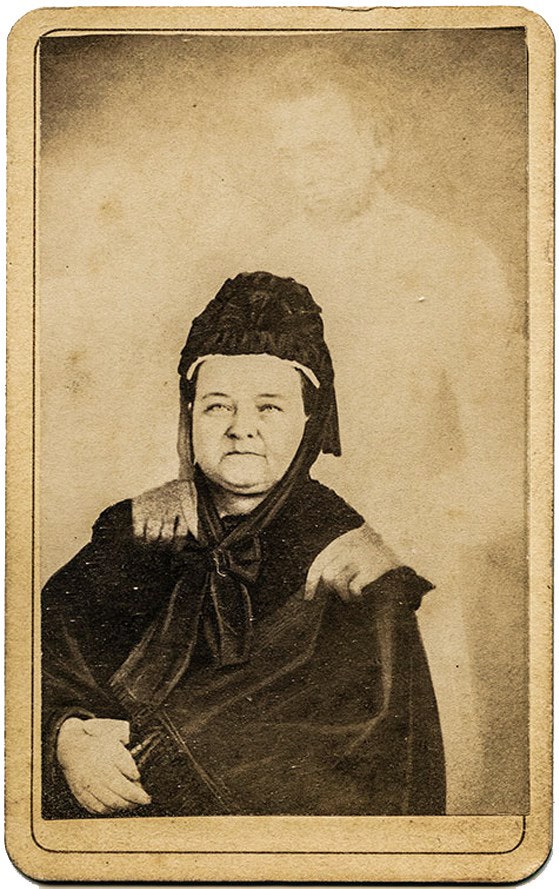
Today, dozens of his photos still exist, often housed in museums. His most famous portrait is arguably the photograph he took of Mary Todd Lincoln with the “ghost” of Abraham Lincoln.
Author: Hillary K. Grigonis
Source: DigitalCameraWorld
Reviewed By: Editorial Team
