

South African leader Nelson Mandela (1918–2013) was photographed more than almost any political figure of the 20th century. Yet in truth, most of his portraits look pretty similar. Beaming smile, thumbs aloft, the warm glow of a man who survived 27 years in prison without losing his humanity. In February 1997, Jillian Edelstein decided to do something about it.
Then working as a freelancer in London, she had flown to Cape Town to document the work of South Africa’s Truth and Reconciliation Commission, the body tasked with confronting the crimes of the apartheid era. As part of this, she was asked to photograph Mandela, by then three years into his presidency, at his official residence. This was the same house, on the same balcony, where solely white presidents had lived and governed during the Apartheid system of racial segregation. Edelstein, who was born and raised in Cape Town during that era, understood the weight of the moment.
She waited. In one moment of pause, as Mandela reflected on the reconciliation process unfolding around him, his expression shifted. “In that moment,” Edelstein later recalled, “he suddenly looked reflective and almost downcast… it was very powerful.”
The result, a bromide fibre print taken on 6 February 1997: now part of the National Portrait Gallery’s collection and one of the most arresting photographs ever made of the legendary 20th century figure.
An outsider with an inside view
Edelstein didn’t arrive as a neutral observer. Born in Cape Town during the apartheid years, she’d started her career as a newspaper photographer in Johannesburg in 1981, before moving to London in 1985 to study photojournalism. For her, the Truth and Reconciliation Commission wasn’t just an assignment; it was a deeply personal reckoning. Her book Truth and Lies, published in 2000, drew on her years photographing the commission’s work and won much critical praise.
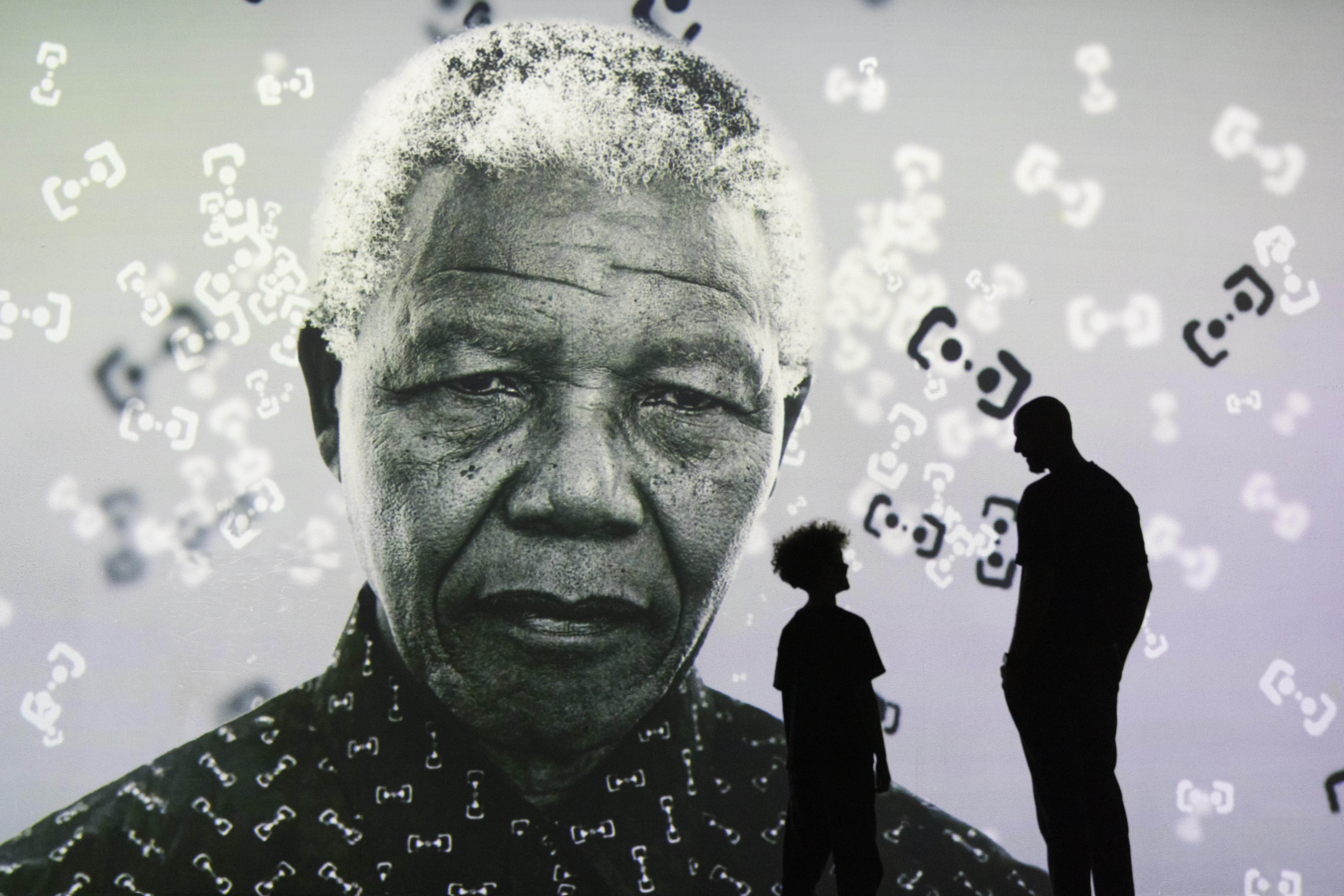
The portrait itself is spare and direct. Mandela sits in three-quarter view, head angled slightly downward, wearing a dark shirt with a light-colored repeating pattern. There’s no theatrical lighting, no obvious drama. The power comes from what’s withheld: the smile the world expected is absent, replaced by something heavier and more considered.
It’s a textbook demonstration of what portrait photographers often describe but rarely achieve: the image that tells you something the subject wasn’t necessarily trying to say.
Knowing that almost every existing photograph showed Mandela at his most exuberant, Edelstein deliberately held back from prompting or directing. The patience that produced the image is as much a photographic decision as any technical one.
Now shown at scale
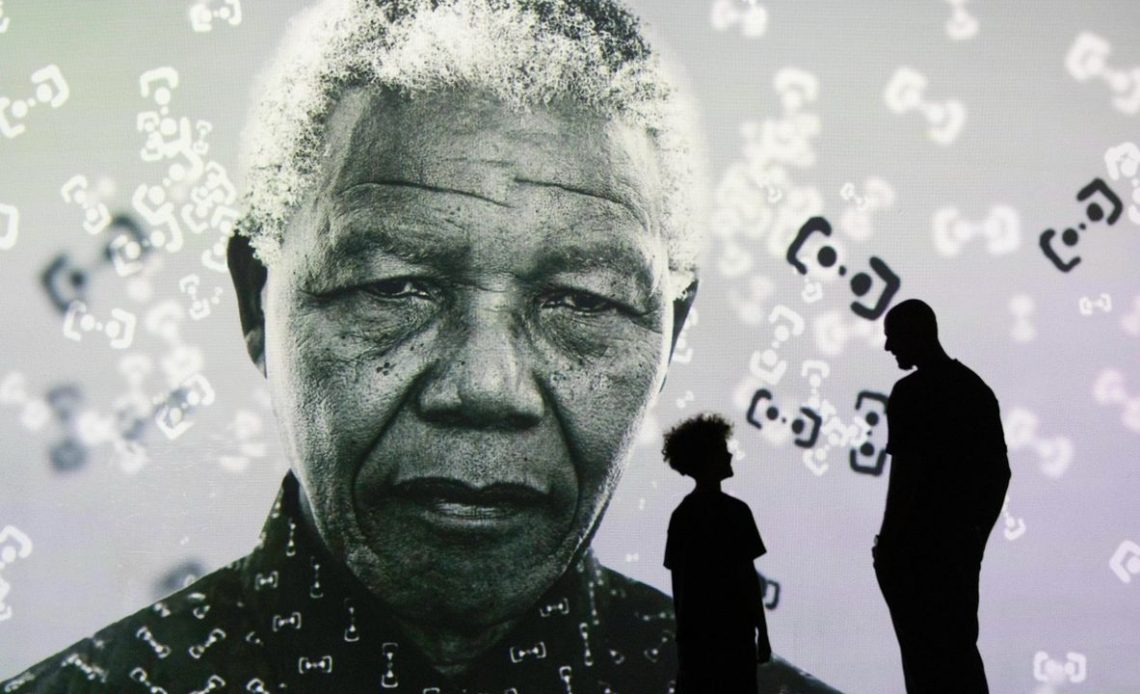
The portrait is now getting another chapter as part of Stories – Brought to Life, a new 15-minute immersive experience at FRAMELESS London, developed in collaboration with the National Portrait Gallery and running until 12 September.
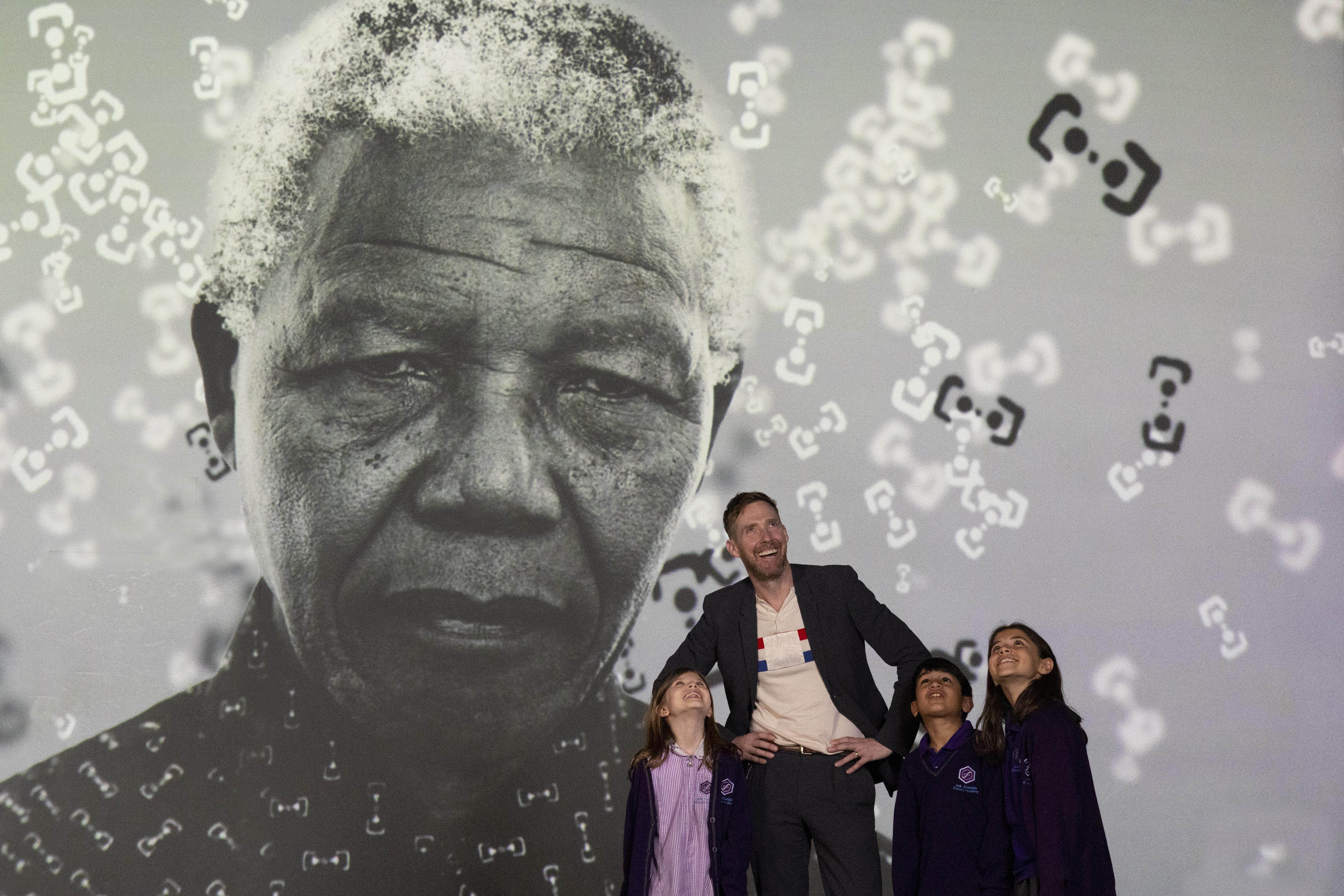
Included in the standard FRAMELESS ticket, the experience transforms portraits of Mandela, Malala Yousafzai, Amy Winehouse, Queen Elizabeth II and William Shakespeare into building-scale projections, surrounded by archival footage, animation and original sound design.
At this size, Edelstein’s photograph offers new insights. The pattern on Mandela’s shirt, barely a detail at print size, fragments outward across the surrounding space like a constellation of tiny symbols. Visitors standing in front of the image are dwarfed by his face, recreating something of the emotional scale the photograph already carries, but rarely gets to show.
Author: Tom May
Source: DigitalCameraWorld
Reviewed By: Editorial Team