

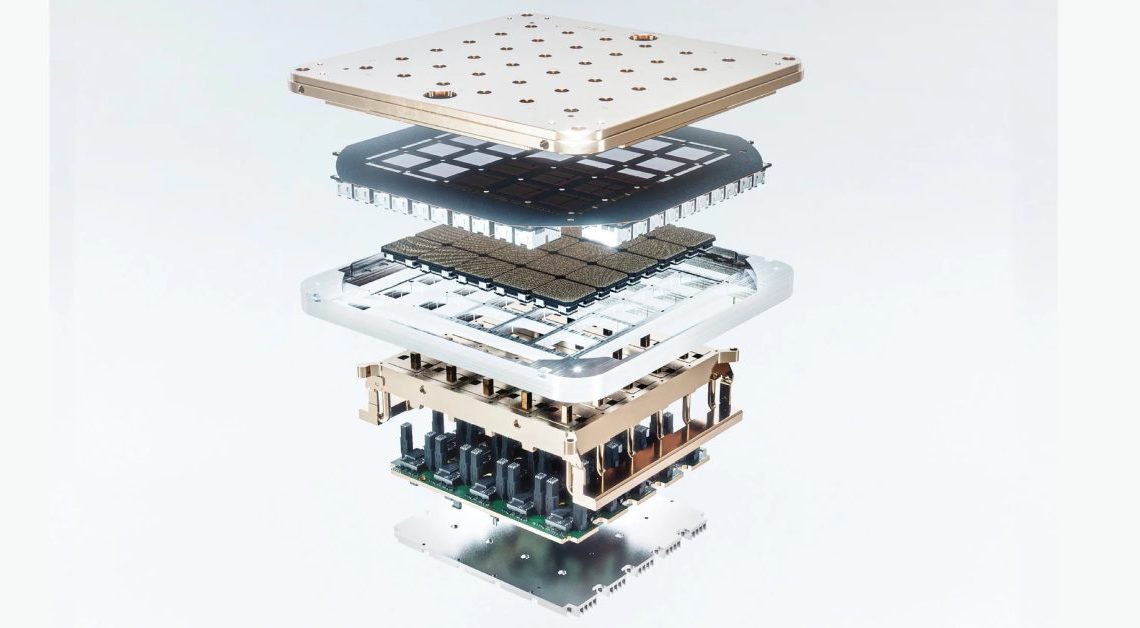
Tesla has lost another senior chip engineer to DensityAI, the AI hardware startup built out of its own former Dojo team. Shishuang Sun, who spent more than five years as a Tesla AI hardware architect on Dojo and the Autopilot computers, now lists his role as “Packaging and System Hardware” at DensityAI, starting in July.
This is not a junior loss. Sun left Tesla as Senior Director of AI Hardware Design — one of the people responsible for turning Tesla’s custom silicon into working systems, exactly the expertise Tesla needs as it stakes its valuation on in-house AI chips.
A Tesla chip veteran, twice over
Sun’s career traces the entire arc of Tesla’s in-house silicon ambition. According to his LinkedIn history, he first joined Tesla’s Autopilot hardware group during the Jim Keller era, when Tesla was assembling the team that would design its first Full Self-Driving computer and cut its dependence on Nvidia.
He left around the time that chapter wound down, spending just over two years at Waymo as a hardware engineering manager, where he ran the design verification, signal and power integrity, EMC, and PCB teams that make up the guts of self-driving hardware.
Then he came back. Sun rejoined Tesla in January 2021 as a principal engineer on AI hardware for both Dojo and Autopilot, and was promoted to Senior Director of AI Hardware Design in April 2025. His work covered IC packaging, vertical power modules, signal and power integrity, PCB design, and system thermal and mechanical engineering — the discipline of taking a chip design and making it survive in the real world.
The startup was built out of Tesla’s Dojo team
DensityAI is not a random competitor. As we reported when Tesla shut Dojo down in August 2025, the startup was founded by former Dojo chief Ganesh Venkataramanan, with roughly 20 members of Tesla’s supercomputer team following him out the door. Fellow Tesla veteran Bill Chang is CTO.
The company is building chips, hardware, and software for AI data centers aimed at automotive, robotics, and industrial customers — effectively the mission Tesla walked away from when it killed Dojo and shifted to Nvidia for training compute.
Losing packaging talent at the worst possible time
Sun’s specialty — advanced packaging and system integration — is the part of chipmaking that has become the industry’s real bottleneck. Getting the transistor design right is only half the job; getting power into the chip and heat out of it, at scale, is where high-performance AI silicon lives or dies.
Tesla is leaning on custom silicon harder than ever. It taped out its long-delayed AI5 chip in April, nearly two years behind Musk’s original timeline, with volume production not expected until mid-2027. AI6 is slated for Samsung’s 2nm process, which has hit yield problems, and Musk has floated a “Dojo 3” on top of that. On the manufacturing side, Tesla and SpaceX are pitching the $20 billion-plus “Terafab” chip factory in Austin.
Every one of those bets depends on people who can turn a tape-out into a shipping product — the packaging, power delivery, and thermal work that Sun did at Tesla for five years.
Author: Fred Lambert
Source: Electrek
Reviewed By: Editorial Team