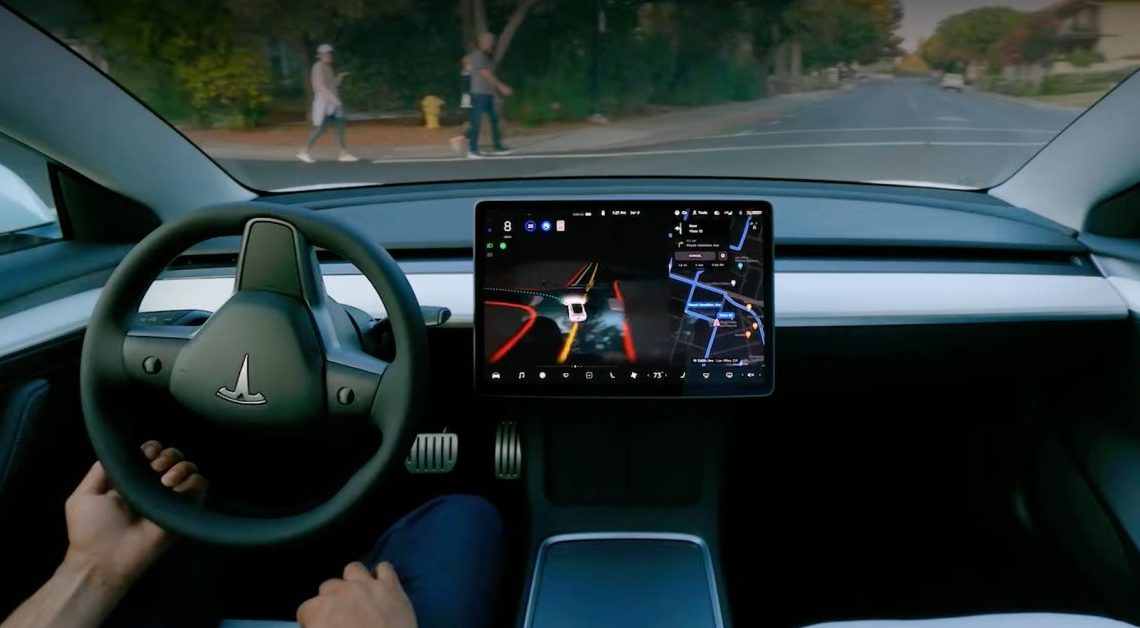
Tesla spent months pushing the Dutch vehicle regulator RDW to scale back its review of “Full Self-Driving (Supervised),” including disputing a €365,000 bill, according to emails obtained by Reuters. RDW later approved the system and is now asking the EU to do the same.
That Dutch approval is the foundation of Tesla’s entire FSD push in Europe. Eight EU countries now allow the system, and a bloc-wide vote could come as early as December.
What the emails show
Reuters’ investigation, published yesterday, is built on hundreds of pages of correspondence between Tesla and regulators in seven European countries, obtained through public-records requests.
The Dutch exchanges are the most telling. In November 2024, a Tesla staffer told RDW that starting vehicle tests by the end of that month was “mission critical for our leadership,” and that leadership would “measure the goodwill” of the regulator by whether it hit that date.
Then came the money. European rules make automakers cover the regulator’s costs for these reviews, which isn’t the case in the US. In April 2025, Tesla called RDW’s €365,000 invoice for five months of work an “extremely high cost” and said it would hold payment until it got an hour-by-hour accounting of every RDW employee on the project. It also objected to paying for five RDW staffers to visit Giga Berlin.
A week after the invoice complaint, an RDW staffer invited Tesla to suggest how the regulator “might adjust or reduce the required effort moving forward.”
Other concessions followed, according to the documents:
- Tesla argued its own test reports should be enough instead of having an RDW inspector travel to witness tests. RDW offered to monitor part of them remotely.
- Tesla pushed back on a meeting about its over-the-air software updates. An RDW staffer replied that it didn’t want to “dive too deep in technical details” and didn’t “question the quality and process for OTA’s.”
- Tesla demanded advance notice of exactly what tests RDW would run on its cars, plus the names of the safety drivers. RDW agreed and stressed its “shared goals and objectives” with Tesla.
RDW told Reuters that its engagement with manufacturers “does not compromise the independence or thoroughness of our assessment.” But it redacted large parts of the emails, and it still won’t publish its own FSD test data, citing Tesla trade secrets.
That last part matters. It’s a regulator asking 26 other countries to trust a review that the public isn’t allowed to see.
The safety data doesn’t support the “lives saved” claim
Tesla’s other pressure lever is its own safety research. It shared an “evidence dashboard” with EU member states in April and posted its European study on X last month, calling it “one of the key pieces of evidence” behind the Dutch approval.
Seven traffic-safety researchers who reviewed the methodology for Reuters found the FSD sample was too small, in the tens or hundreds of thousands of miles, to compare against hundreds of millions of miles of manual Tesla driving in Europe. Instead of crashes, Tesla measured “surrogates” like honking, blinker usage, hard braking and hard cornering, and the FSD cars were driven by Tesla’s own professional test drivers rather than regular owners.
Tesla’s own fine print says the comparisons can’t be read as “causal estimates.” So the study doesn’t show FSD prevents crashes, let alone deaths.
And yet that’s exactly what Tesla is telling the public. When it posted the study, Tesla said Europe’s average of 53 road deaths per day are “largely preventable with technology we have today” and that the benefit “remains locked behind bureaucracy.” When French transport minister Philippe Tabarot said in July that France couldn’t back FSD, Musk replied that “delaying the approval of FSD in France will cost lives.”
“When you start getting into ‘lives saved,’ that’s where it gets nonsensical,” Marco Benedetti, a former NHTSA statistician now at the University of Michigan Transportation Research Institute, told Reuters.
This isn’t new. In the US, Tesla compared airbag-deployment crashes on FSD against every crash in federal data where a car had to be towed to claim FSD was 10x safer than human drivers, later revised down to 7x. Reuters reports Tesla sent that same US research to European regulators too.
Fans as a lobbying arm
Musk asked for this part out loud. At last year’s shareholder meeting, he said “pressure from our customers in Europe to push the regulators to approve would be appreciated,” and a Tesla account on X later linked owners to RDW’s contact form.
It worked, in the sense that regulators got flooded. Public-records requests show Tesla owners sent dozens of emails to regulators in Sweden and Norway, many repeating the life-saving claims, and Tabarot’s X account filled up with posts holding him personally responsible for road deaths.
Norway’s Stein-Helge Mundal warned Nordic counterparts in an email that regulators would “need to use a lot of effort to answer misled consumers.” His statement to Reuters is the best line in the whole story: “We do not approve systems because they are popular, and we do not reject them because they are controversial.”
The pressure is paying off
France is the clearest example. Two months after saying no, Tabarot posted a photo of a video call with Musk last month, describing a “constructive exchange” and “working closely” with Tesla on changes “that will enable France to support its approval.”
As we reported last month, the EU’s Technical Committee on Motor Vehicles didn’t vote on FSD on October 6, despite Tesla pointing to that date. Approval needs 15 of 27 member states representing 65% of the EU population. Croatia has since become the eighth country to allow FSD after the Netherlands, Lithuania, Denmark, Belgium, Estonia, Slovenia and Czechia, but those are mostly small markets. Germany, Italy and Spain still haven’t signed on, and Sweden wants the EU to reject FSD unless Tesla removes the ability to set speeds above the limit.
There’s some irony in RDW’s role here. In 2025, it publicly corrected Tesla when the automaker claimed RDW had “committed” to a February approval, saying “for the RDW, (road) safety is paramount.” Behind the scenes, it was offering to reduce its effort after Tesla complained about a bill that’s a rounding error on $95 billion in annual revenue.
Author: Fred Lambert
Source: Electrek
Reviewed By: Editorial Team