

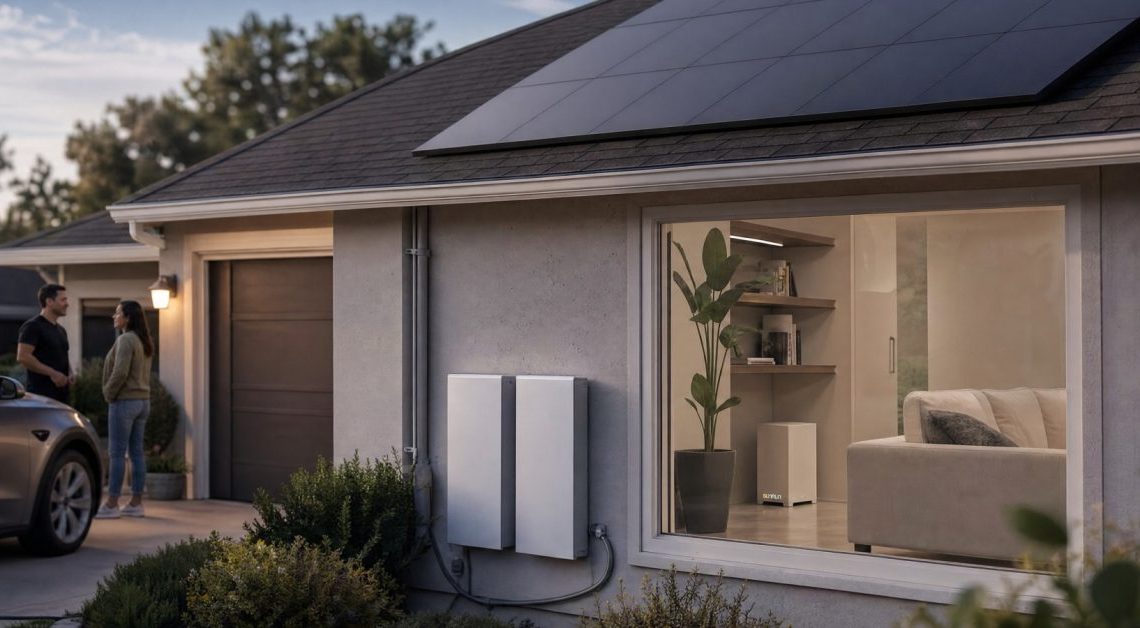
Sunrun and Tesla pulled a record 580 megawatts of power from home batteries onto California’s grid during a heat wave on September 9, the largest residential distributed power plant event ever recorded.
The dispatch pooled more than 140,000 home batteries across the state and ran for a three-hour window in the evening, when the grid was straining under air-conditioning load.
How the 580 MW came together
Of the 140,000-plus batteries, about 110,000 were Tesla Powerwalls, and Sunrun says it owns or operates 55% of them. Those Powerwalls delivered 517 MW. Another 30,000-plus batteries from other manufacturers in Sunrun’s fleet added the remaining 63 MW.
Put together, that’s enough to power every household in Sacramento County during peak hours. Not bad for a “power plant” with no smokestack and no land of its own.
The batteries fed the grid through two existing California programs: the California Energy Commission’s Demand Side Grid Support (DSGS) program and the California Public Utilities Commission’s Emergency Load Reduction Program (ELRP). DSGS triggered automatically once the day-ahead price crossed $200 per megawatt-hour, while utilities called the ELRP event directly as the heat wave peaked.
It didn’t stop there. The next evening, September 10, Sunrun dispatched another 140-plus MW at Southern California Edison’s request.
A virtual power plant the size of a real one
“Sunrun’s distributed home batteries are operating at a scale larger than many peaker power plants combined,” said Sunrun CEO Mary Powell.
She’s not exaggerating. A typical natural gas peaker plant (the expensive, rarely-used units utilities fire up only when demand spikes) runs in the 50 to 250 MW range. Sunrun and Tesla just beat several of them at once, using hardware that was already sitting in people’s garages.
This is the model Tesla and Sunrun have been building toward for years. We covered the original 2020 deal that made Sunrun Tesla’s biggest Powerwall installer, and the concept goes back even further to Tesla’s virtual power plant experiments that turned individual Powerwalls into grid assets homeowners get paid to share.
The scale has climbed fast since then. In June, Tesla, Sunrun, and Renew Home announced a 16.8 GW virtual power plant aimed at data centers, pitching home batteries and smart thermostats as a way to feed AI-driven power demand without building new transmission. This week’s 580 MW dispatch is the residential version of that same bet, running live on the grid.
Why it matters for the grid
Distributed batteries solve a problem utilities keep throwing money at. Peak demand lasts a few hours a day, a handful of days a year, and covering it usually means building or firing up plants that sit idle the rest of the time.
A fleet of home batteries covers the same peak without any of that overhead. A Brattle Group report cited by Sunrun projects up to $206 million in net savings for Californians by 2028 from this kind of dispatch. Homeowners in the program get paid for the power they send back, which helps the batteries pencil out.
Author: Fred Lambert
Source: Electrek
Reviewed By: Editorial Team