

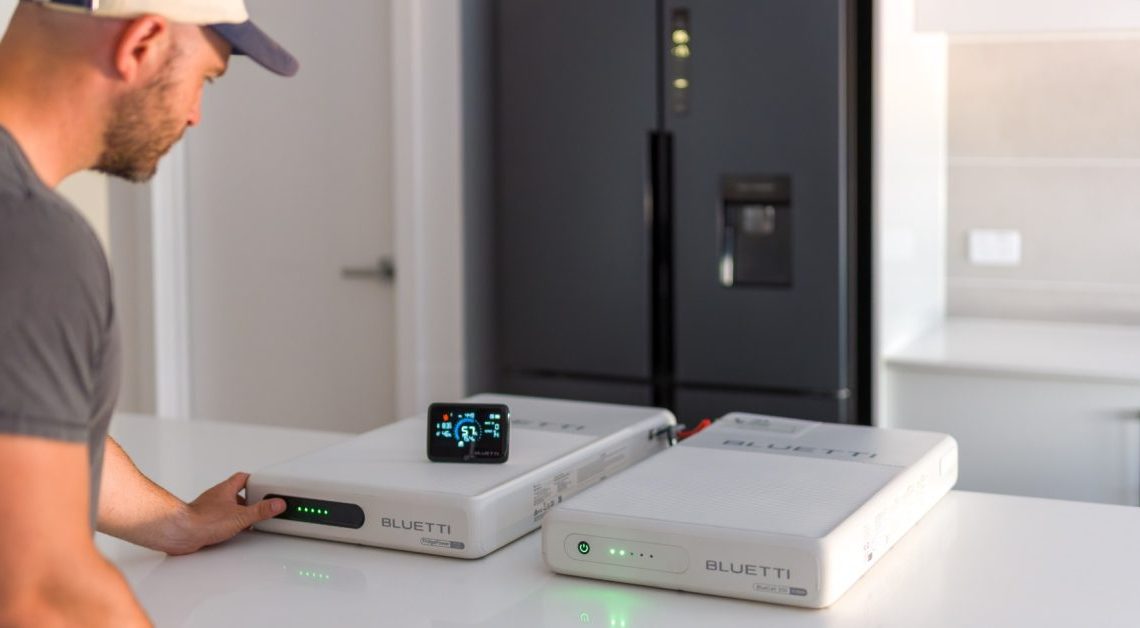
Home batteries are getting a lot of attention lately, but are people really looking for a full “whole home” setup, or are they just interested in keeping their phones alive for some post-hurricane doom scrolling? We asked you, our brilliant Electrek readers, what you were looking for in your home battery. Here’s what you said.
In case you missed the survey, the question read, “Home batteries are getting a lot of attention lately — including here on Electrek — but not everyone is looking for a full ‘whole home’ setup. If you were shopping for a home battery, what’s the minimum you’d expect it to do?”
After two weeks and more than 2,700 individual responses, the numbers seem to indicate that Electrek readers don’t have much use for a bare-bones system, but a second look may reveal something more nuanced.
By the numbers
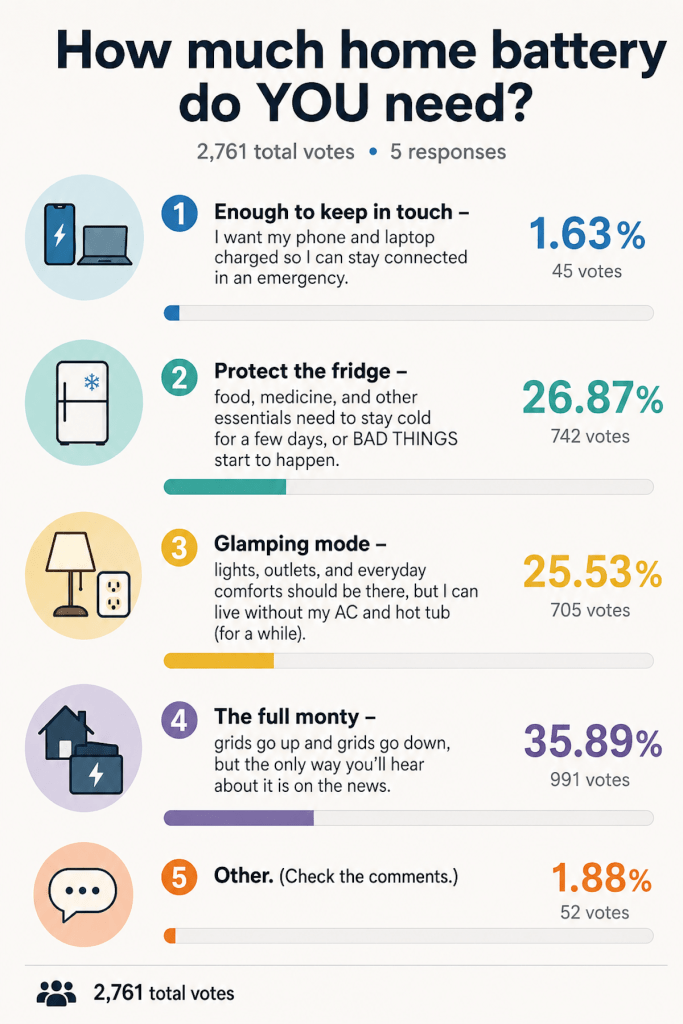
The most popular response by a significant margin was The full monty, with 35% of the vote. That was followed by Glamping mode. When combined, they accounted for more than 60% of all responses – but a number of commenters seemed to frame those systems as goals rather than a practical minimum.
In other words, while people love the idea of seamless backup power, they also recognize the cost jump between “keeping the essentials going” and “run the whole house, including HVAC, with zero interruption.”
Actually I want “camping mode”. Basically, I don’t think I need anything that runs on 240V, including the hot water heater. The exception is I do need 240V for my current well pump since I don’t have city water … my septic system runs on 120v. But yeah, lights, fridge, microwave, 120V induction stove, TV, and computer should be enough until power is restored.
KBRANNEN
Still, that doesn’t mean that everyone who aspired for a full power home battery backup solution wasn’t able to afford it.
We also have pretty much reliable power here but appreciate having up to 80kwh of battery capacity via V2H which we use to time shift usage from night rate 7p 8.5c per kWh to the day when it would otherwise cost 30p 40c, covering all our house needs including heat pump.
MARION & MICHAEL
All that said, perhaps the most unexpected responses came from the European readers of Electrek, who simply couldn’t understand the Americans were so concerned about the reliability of their local energy grids.
“I am too European for this or what? I can’t really remember the last time that grid failed at all where I live. Like decades,” asked Aigars Mahinovs.
“The actual reason a lot of people in Germany by home batteries,” continues Mahinovs, “is to store the excess energy generated by their solar panels (rooftop or balcony) so that the home could use that energy up in the evening. This is because most people do not get anything at all when they feed energy back into the grid (especially during solar maximum hours) and those that do get only something like 0.05€/kWh while the power that we then get back from the grid is 0.40€/kWh. So simply saving 1kWh of energy at midday and using it in the evening/night/morning makes a tidy 0.35€ profit every day.”
Mahinovs wasn’t alone.
I don’t know if this is being outside the USA but in the last 40 years I have never had a power cut of more than about 5 minutes and I think I could count them on one hand. Generally I think having enough power to last 24 hours of normal use (electric oven and hobs, washing machine etc) is good. It’s enough to store any solar and leave you basically not needing the grid for the majority of the summer and some of the winter too. If there was a cut you could be pretty much unaffected then if it’s not resolved in 6 hours you could probably reduce your usage and bumble on. For us it would be 12kwh.
STEPHEN FIELDS
Among the remaining Americans, another recurring theme across home battery discussions has been that batteries are increasingly being viewed as financial tools – part of a larger investment in a home and a way of life, and much more “just” blackout insurance or hurricane prep.
And the good news is that, once you’re ready to get serious about adding a backup battery energy storage system to your home, there are a number of programs out there that could help you pay for it.
Author: Jo Borrás
Source: Electrek
Reviewed By: Editorial Team