

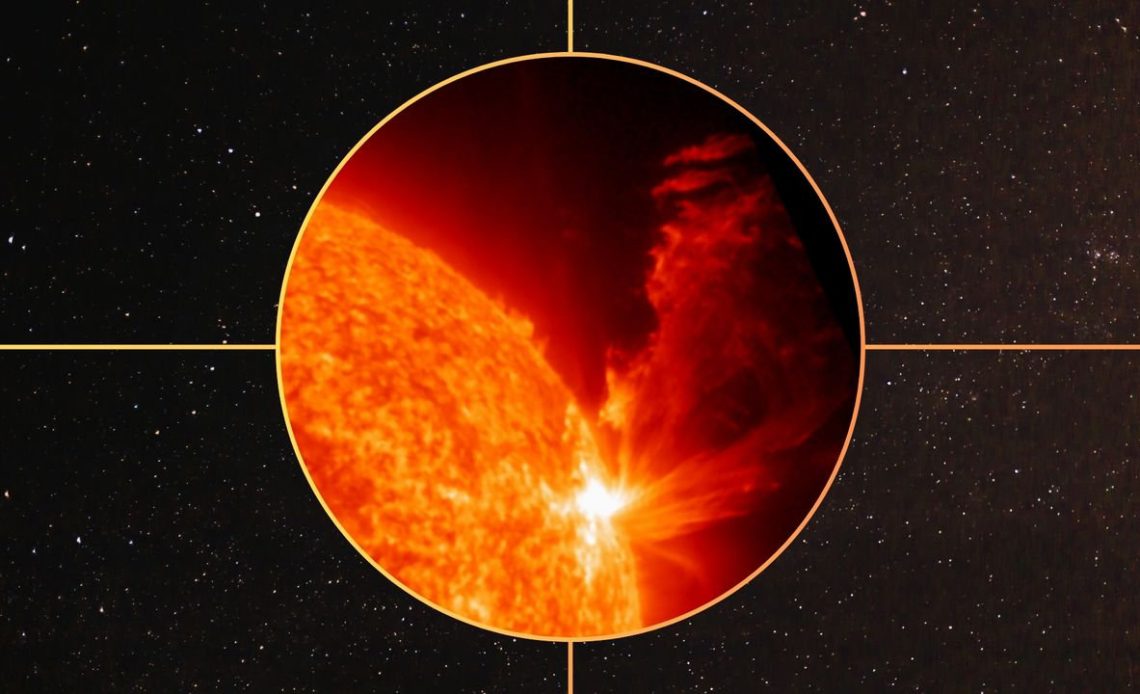
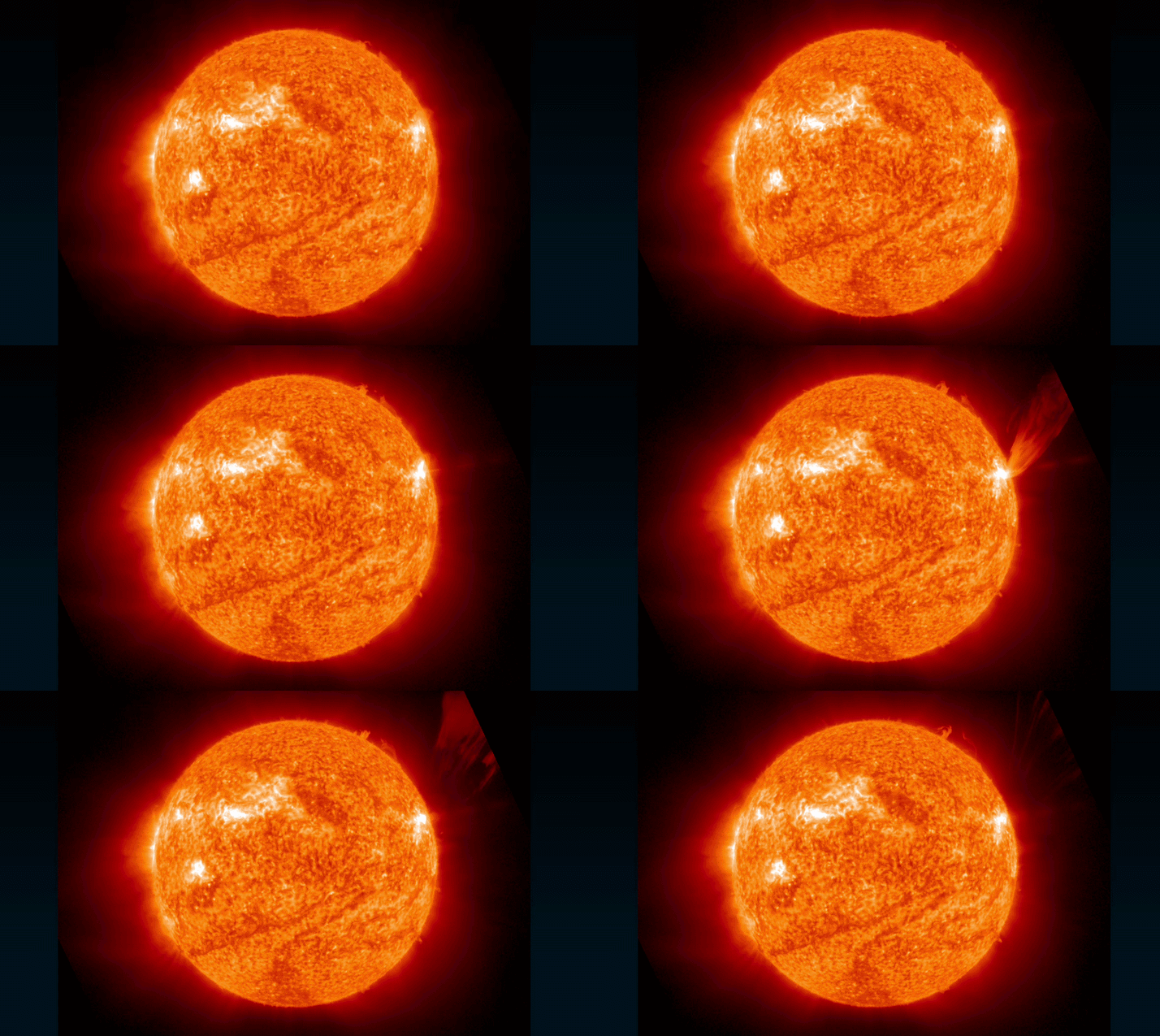
The sun has certainly woken up! It has fired off not one but two powerful X2.5 solar flares within just 7 hours.
Both eruptions came from a sunspot region on the sun’s western limb, AR4419. The first solar flare peaked at 9:07 p.m. EDT on April 23 (0107 GMT April 24), followed by the second at 4:14 a.m. EDT (0814 GMT) on April 24. These are the strongest solar flares we’ve seen in 78 days, according to solar physicist Ryan French.
The bursts of radiation from the flares triggered strong radio blackouts on the sunlit side of Earth — the first affecting parts of the Pacific Ocean and Australia and the second impacting East Asia.
The active sunspot region is putting on quite the show before it rotates out of view. The X-flares were preceded by a flurry of M-class solar flares on April 23, along with a rare “sympathetic flare” where eruptions occurred in two separate sunspot regions on opposite sides of the sun.
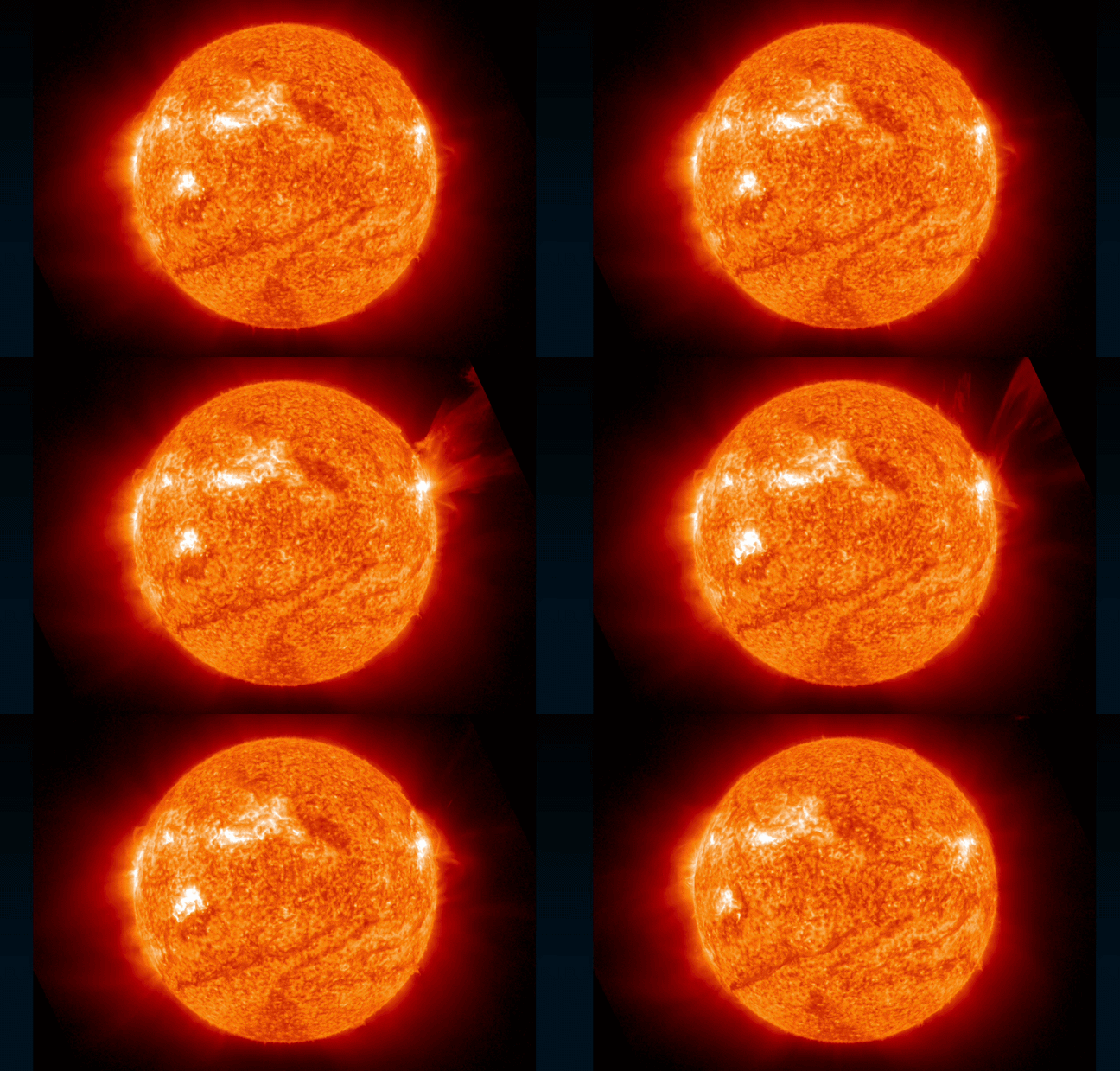
The X-flares appear to have been accompanied by coronal mass ejections (CMEs) — large expulsions of plasma and magnetic field from the sun. However, because the sunspot is positioned on the sun’s western edge, it’s unlikely these CMEs are heading directly toward Earth. That said, forecasters are still modelling their paths and a glancing blow remains possible. If that happens, it could trigger geomagnetic storm conditions and spark vivid aurora displays.
What are solar flares?
Solar flares are powerful explosions from the sun that release intense bursts of electromagnetic radiation at the speed of light, including X-rays and ultraviolet light.
They are classified by strength into five categories, A, B, C, M, and X, each letter representing a 10-fold increase in intensity, with X-flares being the most powerful.
How do they cause radio blackouts?
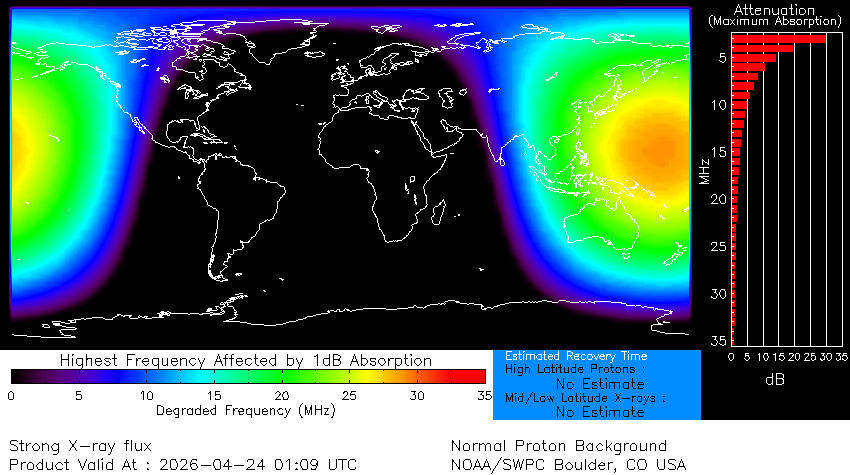
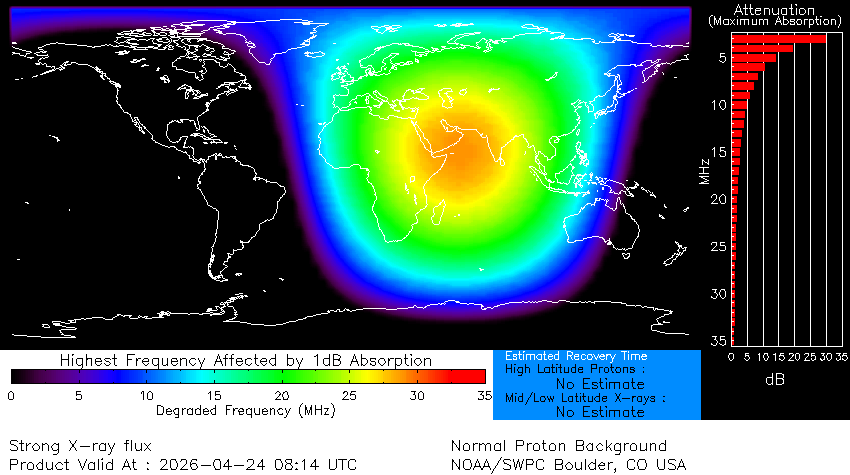
When radiation from a solar flare reaches Earth, it ionizes the upper atmosphere known as the ionosphere, which can disrupt shortwave radio communications.
Under normal conditions, high-frequency radio waves can travel long distances by bouncing off the upper layers in the ionosphere. But during a strong solar flare, the lower layers become much more ionized than usual.
This creates a denser environment where radio waves are more likely to collide with charged particles and lose energy. As a result, signals can weaken, become distorted or be completely absorbed, leading to shortwave radio blackouts according to NOAA.
Author: Daisy Dobrijevic
Source: Space.com
Reviewed By: Editorial Team