

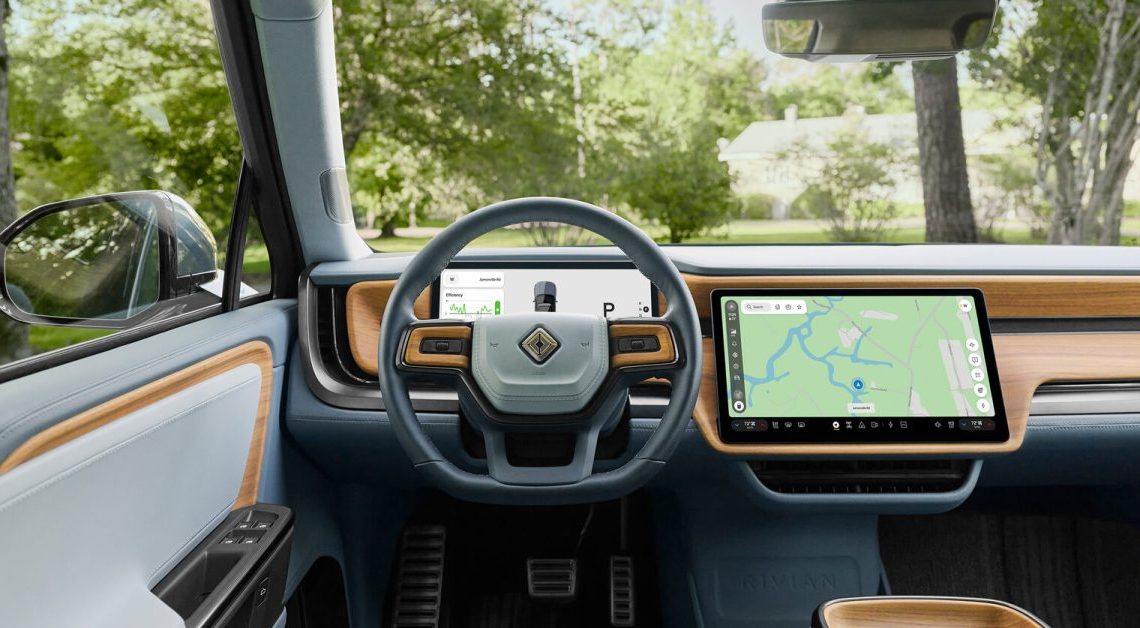
Rivian is rolling out RivianOS 2, the biggest overhaul of its in-car software since the R1 first shipped. For the first time, it puts every vehicle the company sells on a single software stack.
The update, version 2026.31, started reaching eligible R1 and R2 vehicles today. It brings a rebuilt interface, Unreal Engine 5 graphics, real-time police and speed-camera alerts, and a deeper AI layer Rivian calls Unified Intelligence.
One software stack across the whole lineup
Until now, first-generation R1s, second-generation R1s, and the new R2 ran on software that had drifted apart. RivianOS 2 pulls them back together onto one common foundation.
The hardware still sets limits. On the R2 and Gen 2 R1, Rivian is using Unreal Engine 5 for real-time 3D visualizations of the vehicle and its surroundings. Gen 1 R1s stay on Unreal Engine 4 to keep the screen responsive on older computing hardware. So “one stack” doesn’t mean one identical experience across the fleet, but it just got a lot closer.
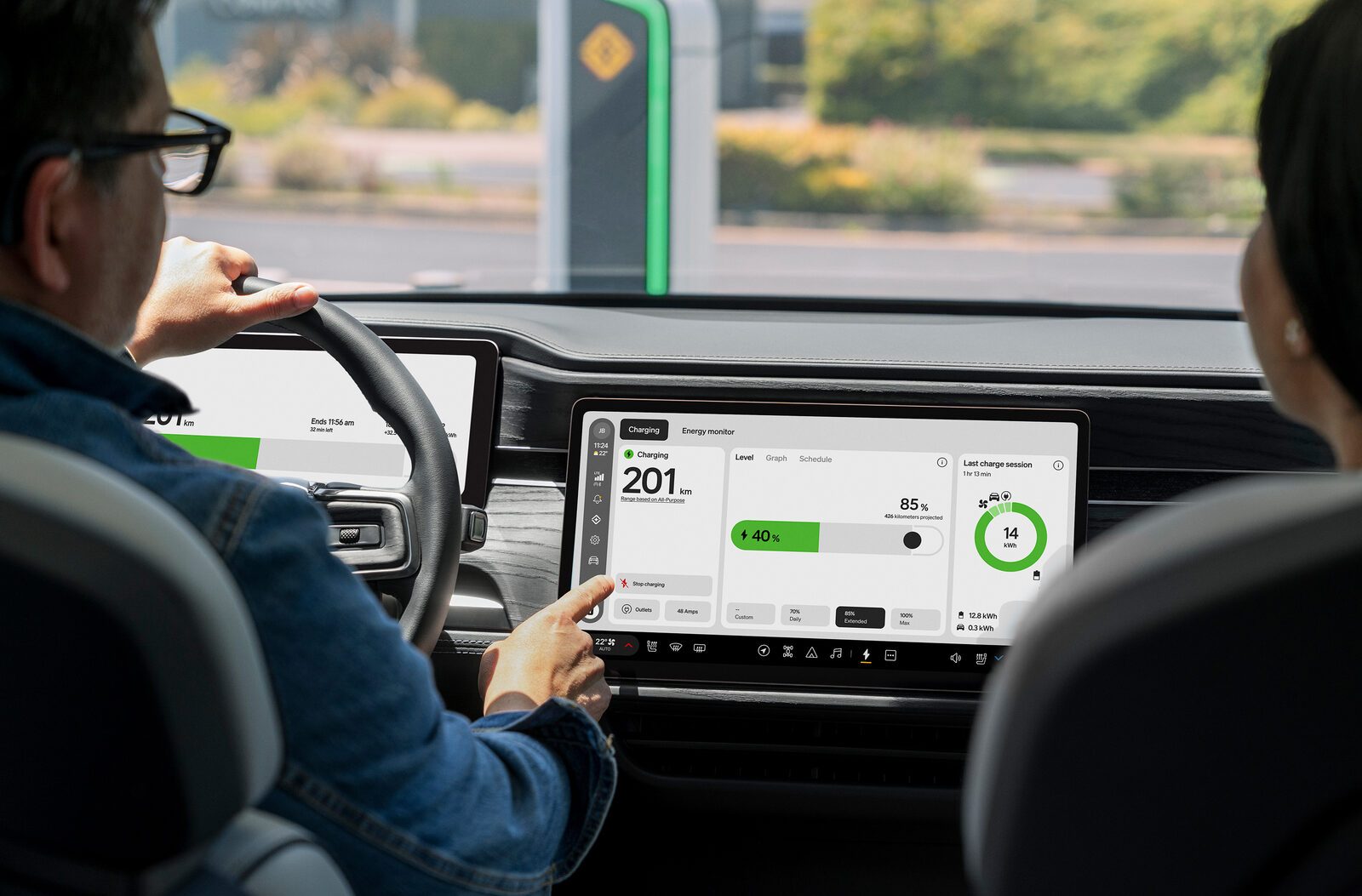
That gap matters more as Rivian scales. The R2 is the company’s volume play, and it’s the vehicle that most needs software that feels a generation ahead of gas-powered rivals in its price range.
What’s new in RivianOS 2
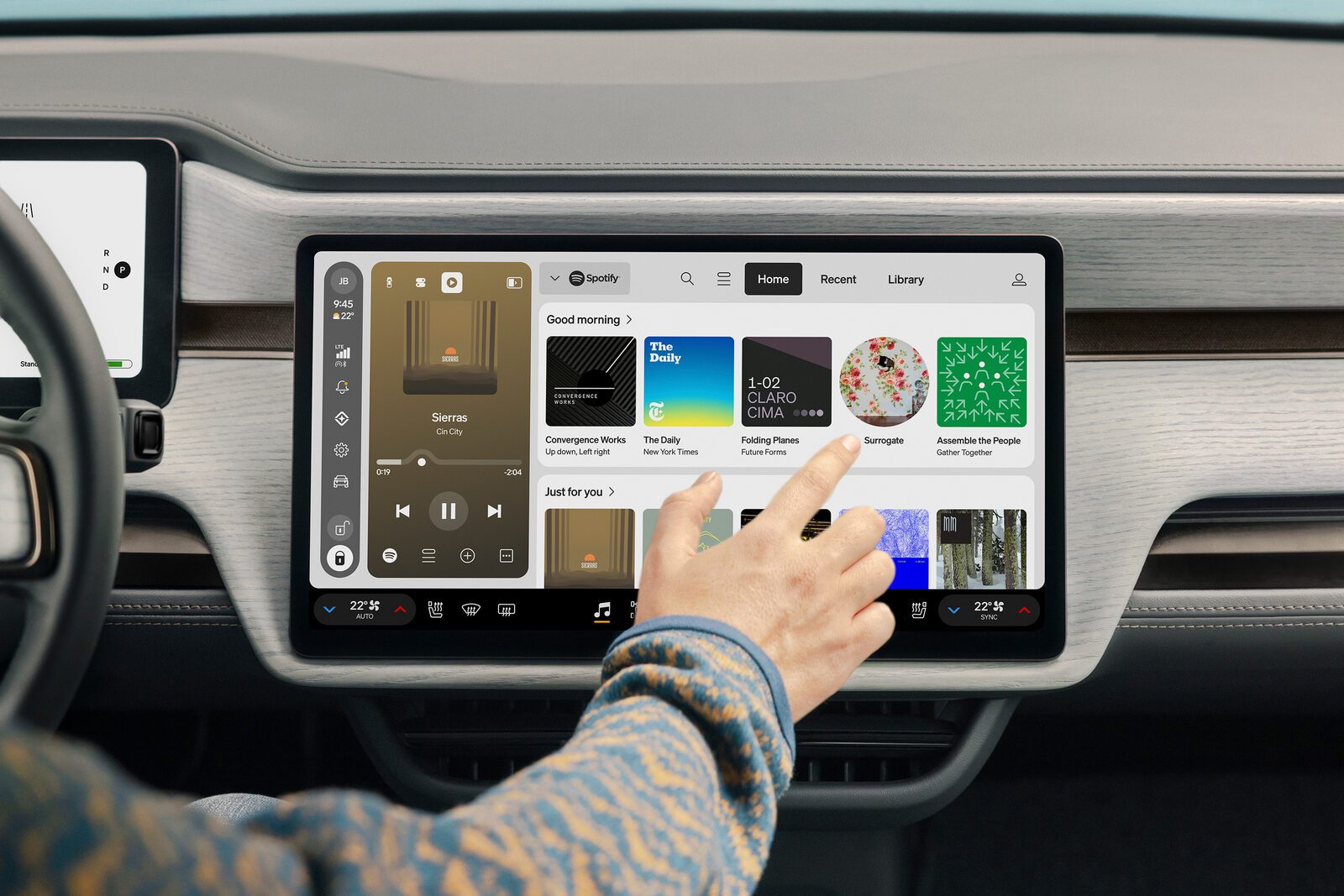
The interface is the most visible change. Quick controls and the media player can now sit on either side of the display, a new vertical status bar keeps key vehicle functions in reach, and the settings menu has been rebuilt from scratch as “Settings 2” with context-aware controls and universal search.
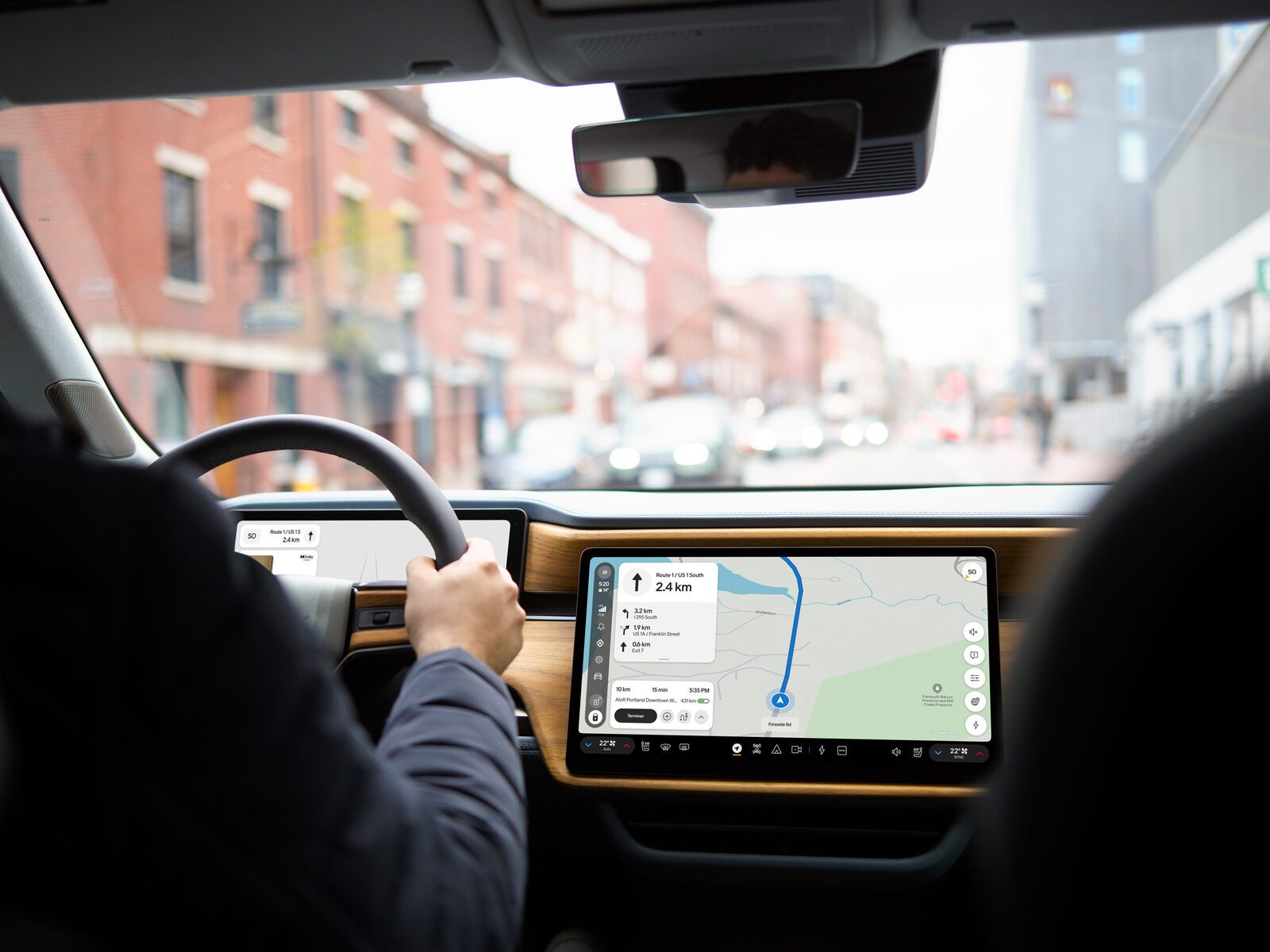
Navigation picks up Real-Time Route Alerts, which fold police presence and speed-camera information into the map through Google Maps. Rivian says the data comes from local authorities, third-party sources, and community contributions. If that sounds like Waze, it’s probably the idea.
Two features land behind Rivian’s Connect+ subscription, which runs $14.99 a month or $149.99 a year: a dedicated weather app with real-time conditions, air quality, and a 10-day forecast, and Mobile Live Trips, which let you start, view, and update an active trip from the Rivian phone app.
Then there’s the AI layer. RivianOS 2 leans on Rivian Unified Intelligence, the same foundation behind the “Hey Rivian” assistant that can control the vehicle directly. The R2 and Gen 2 R1 use hybrid edge compute for low-latency processing on the vehicle, while Gen 1 and Gen 2 R1 both get expanded cloud-assisted voice.
Rivian is also giving owners more control over their data. Across all generations, you can toggle hotword wake-words, limit location sharing, and adjust what driver-profile data the car keeps.
Author: Fred Lambert
Source: Electrek
Reviewed By: Editorial Team