

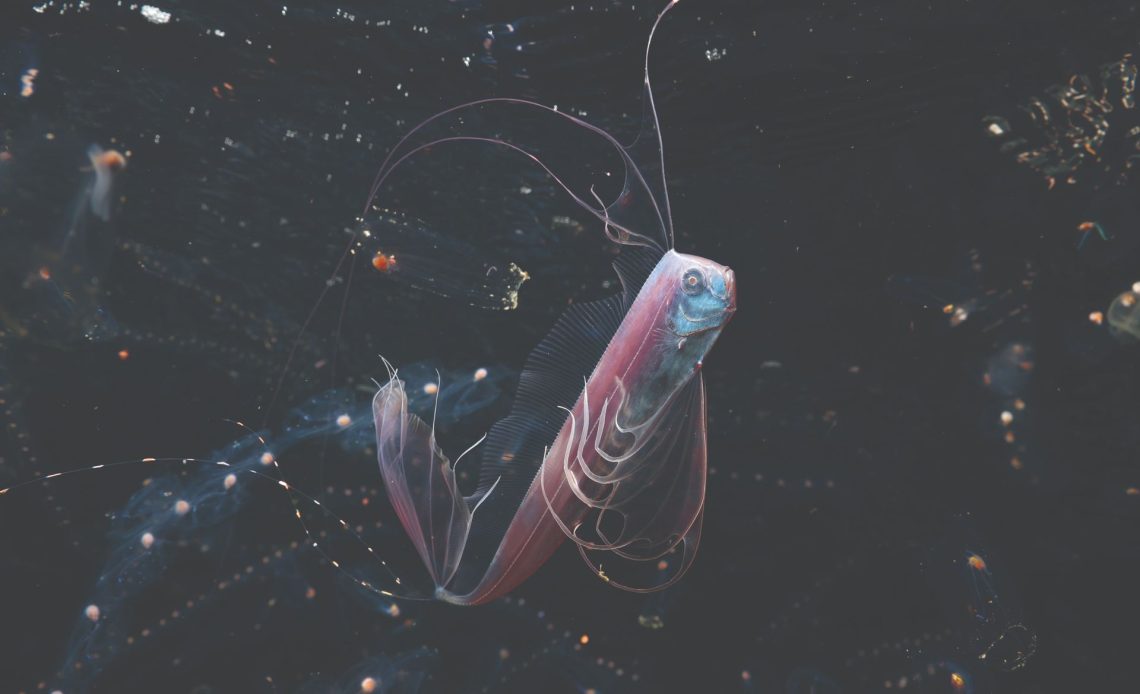
The Ocean Photographer of the Year competition added a new category this year: Ocean Unseen: Hidden Worlds. Its focus, as the name suggests, was our oceans’ smallest and least-seen inhabitants: the microscopic and the overlooked. And its first winner, Mitsuna Kawai, has set the bar high.
Captured during a dive off the coast of Osezaki, Japan, this March, it’s a dramatic scene alright. A ribbonfish rises vertically through the dark waters, as gossamer filaments trail and loop from its fins.
A swarm of salps – small, jelly-like animals that feed on tiny particles in the water – drift around it, transforming what might have been a dull black background into a maelstrom of color. It looks less like a typical underwater shot and more like something from fantasy or sci-fi.
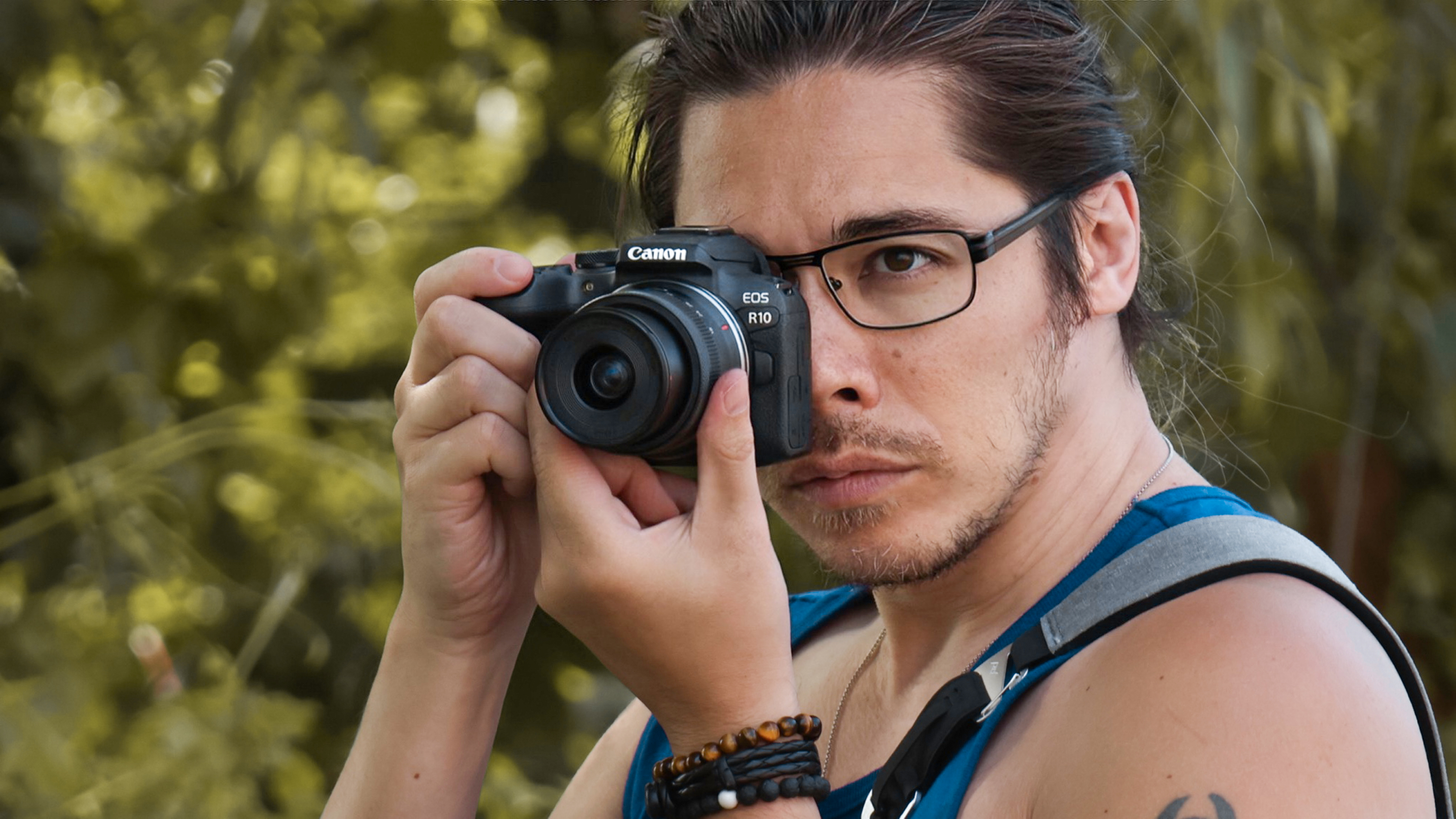
All the more surprising, then, that the kit behind it is relatively modest. This picture was taken on a Canon EOS R10, a 24MP APS-C mirrorless body aimed at beginners and enthusiasts.
The lens is the RF-S 18-150mm f/3.5-6.3 IS STM, the travel zoom Canon often bundles with said model, set to its widest 18mm (29mm in full-frame terms). Exposure was 1/160 sec at f/9 and ISO200, in manual, at 19:45pm local time on a late March evening.
That lens choice makes a lot of sense. When you’re hanging in open water at night, there’s no real way of knowing what’s about to drift by: it could be something the size of a fingernail-sized or a behemoth with meter-long tentacles. You can’t change lenses inside a housing, though, so a zoom that covers wide-angle through to short telephoto is just the ticket.
The focus distance of this image was just 28cm – and that’s smart, too. Shooting wide and close minimizes the amount of water between your lens and your subject, leading to stronger color, greater contrast and less backscatter (lit-up particles) in the frame.
Yes, you want some of the latter to make the scene feel immersive, but you don’t want to go overboard, so to speak.
Few people on Earth will ever see a scene like this in real life, which is exactly why this category is such a great innovation. Not to mention being a reminder that specialist kit matters less than knowing where to be and how close to get.
Presented by Oceanographic and Blancpain, the Ocean Photographer of the Year drew more than 15,000 entries this year, with Julien Anton’s seahorse portrait taking the overall title. You can view all this year’s winners in the gallery.
Author: Tom May
Source: DigitalCameraWorld
Reviewed By: Editorial Team