


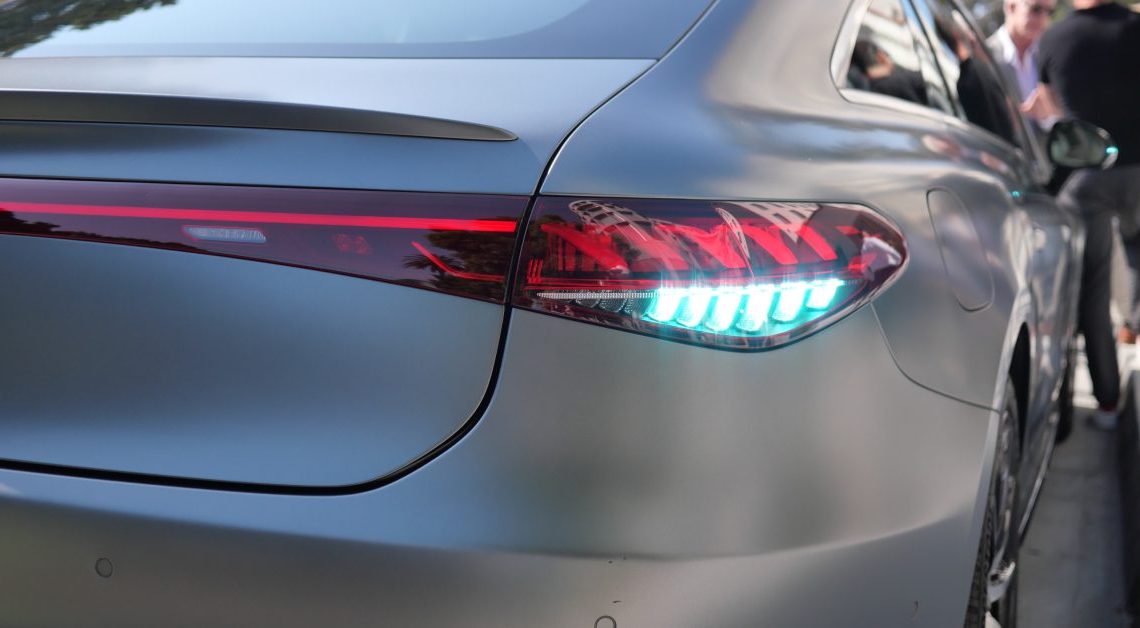
The NHTSA has proposed using cyan-colored lights to identify vehicles operating autonomously, along with other additions to get ready for autonomous vehicles.
As the autonomous vehicles start to spread on US roads, questions have come up about how to deal with these new driverless vehicles.
One question involves emergency response – not only do the vehicles need to be prepared to respond to emergency personnel, those personnel need to recognize when a car is operating autonomously. A police officer needs to know that nobody’s in the driver seat, or an emergency responder needs to know that if there’s nobody in the driver’s seat, that’s not necessarily because there’s a missing driver somewhere who needs rescue.
These are just some of the reasons one might want to know whether a car is operating autonomously, but as of yet, there is no standardized messaging to suggest that a vehicle is doing so.
This week, NHTSA proposed an answer. In a draft proposal released Friday, it suggested a whole new color for vehicle lamps, cyan, to signal autonomous operation.
The proposal was actually first put forward by Mercedes, alongside its DRIVE PILOT level 3 driver assist system. This is the first true hands-free system offered in the US, which allows drivers to forgo responsibility for the car under certain conditions, and let the car truly drive itself. This differs from systems like Tesla’s Full Self-Driving, which is actually only a “level 2” system, where the driver is still responsible when the system is on.
We tried Mercedes’ system out in Santa Monica traffic, and were impressed at how quickly we adjusted to our temporary robotic chauffer.
When we saw that system, we also saw Mercedes’ proposal for lighting: cyan lights around the exterior of the vehicle, denoting autonomous operation.
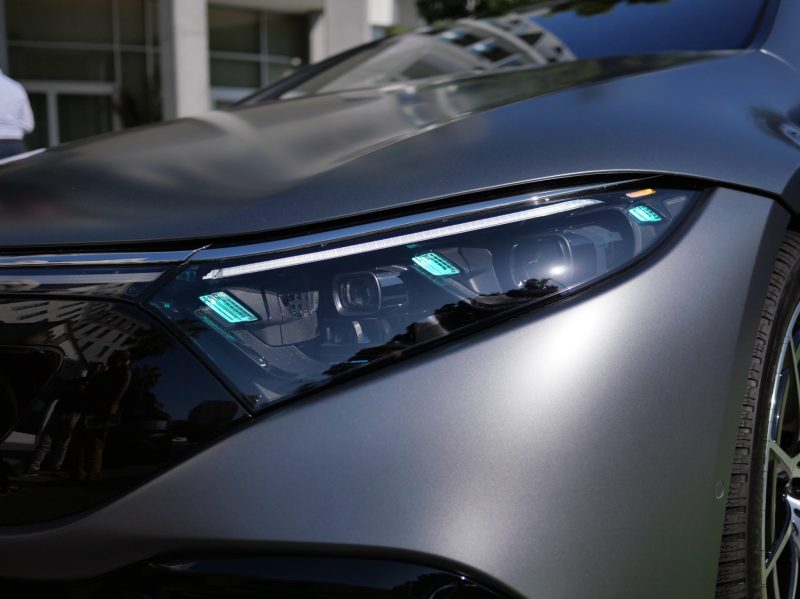
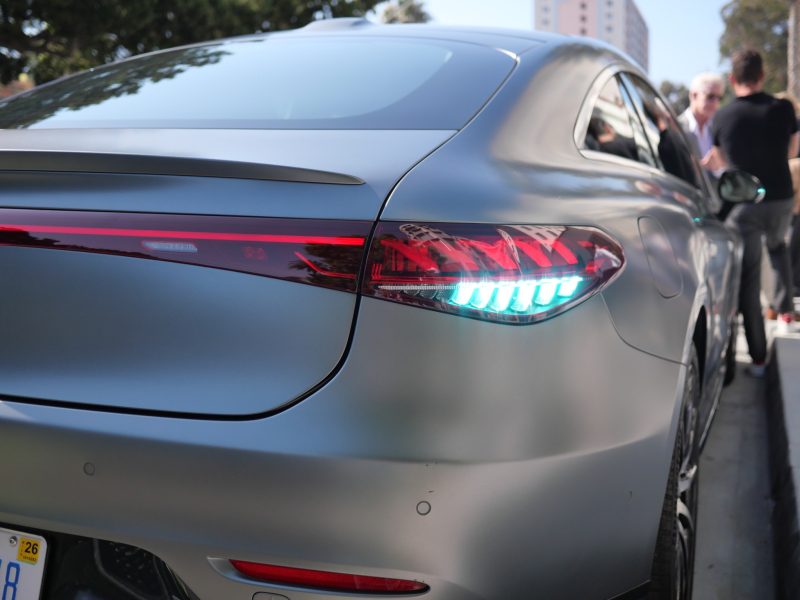
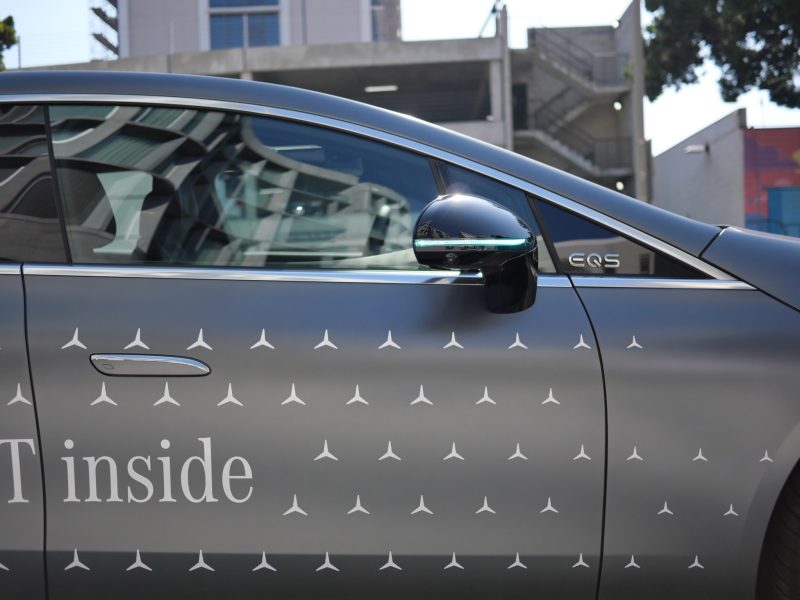
Unfortunately our demo was on a bright sunny day (a necessity to operate the level 3 system, which doesn’t run at night or in bad weather), so the lights didn’t pop as much as they might have in lower light, but you get the drift.
Mercedes trialed the system in California for two years, and it seems the NHTSA is happy with the results, since it is proposing to take the idea national (after input from the SAE, which also likes the idea of using cyan).
The new draft regulation would allow for optional inclusion of cyan lights, but would not require them. So, it’s entirely possible that automakers would decide to save the small cost that it would take to engineer and include these lights.
But by putting the idea out into the regulations, it gets everyone thinking about a future where this color might be required (and I could see that requirement coming quite quickly) – so automakers are likely to start thinking of where these lights would go, and including them, since LEDs don’t really cost anything anyway.
The regulation states that the lights should turn on when the car is operating autonomously, and turn off when it isn’t – they should never be on when a driver is actively driving the vehicle. They should all turn on and off simultaneously, and they should be visible from any angle, with markers on the front, sides and rear, all at least 15 inches off the ground.
China just announced essentially the same regulation earlier this week. The country released a draft standard that would take effect in 2028, is optional, and uses turquoise as its proposed color. This, too, was a reaction to the proliferation of lights on autonomous vehicles in China, and the government has asked automakers to stop doing their own thing and instead follow the new standardized system.
The NHTSA’s draft regulation covers several other aspects of autonomous vehicle operation, mostly by updating Federal Motor Vehicle Safety Standards (FMVSS) rules to allow some flexibility for certain operations that won’t be used by autonomous vehicles.
For example, cars are required to have a turn signal that turns off automatically after the steering wheel turns beyond a certain threshold and then returns back to neutral. That wouldn’t apply to cars without steering wheels, so the updated rules delete that requirement for autonomous cars. It also changes certain headlight requirements for more design flexibility.
Author: Jameson Dow
Source: Electrek
Reviewed By: Editorial Team
