


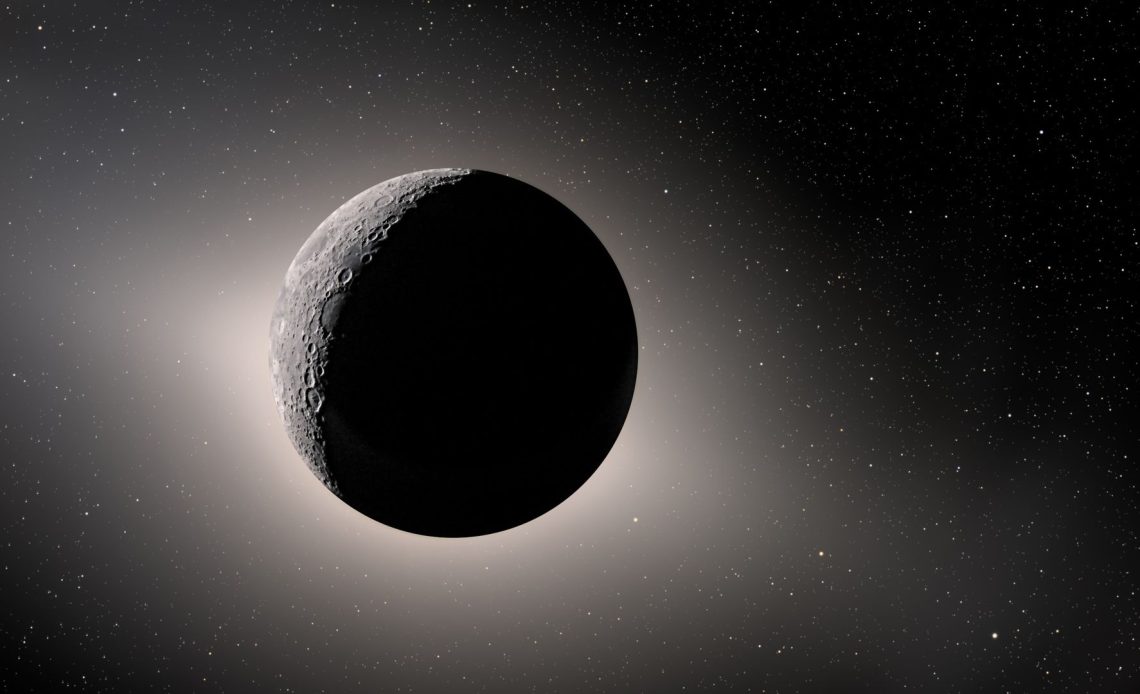
Astronauts aboard Artemis II took more than 11,000 photographs – and the 800GB of data is a treasure trove not just for scientists, but for astrophotographers. One astrophotographer and researcher based in Osaka, Japan, assembled 62 RAW photos to create a more detailed shot of the far side of the Moon.
Astrophotographer and researcher Stefano Ivan Stinga recently shared a highly detailed photograph of the far side of the Moon, built from 62 RAW photos taken aboard Artemis II with the Nikon Z9.
While NASA shared the photos of the lunar flyby back in April, the space agency last month uploaded more than 800GB of data, including more than 11,000 photos and videos, to the scientific community.
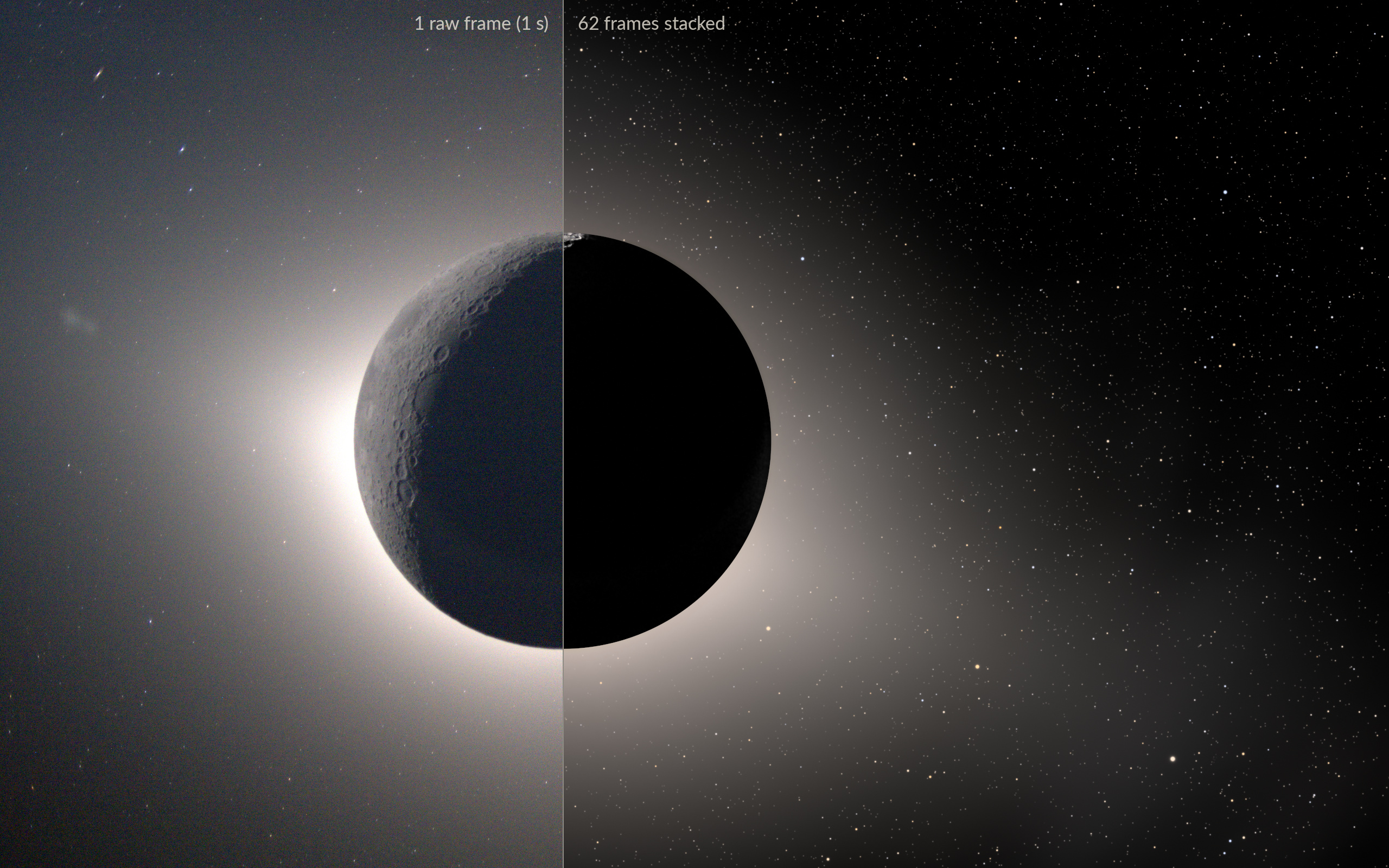
Using RAW photos taken on the flyby across the dark side of the Moon, Stinga assembled more than 60 shots in order to reveal more detail across the challenging mixed lighting, along with showing more detail on the surface of the Moon itself.
The solar eclipse viewed from Artemis II created a challenging lighting scenario with most of the Moon in shadow and a glow created from the Sun hitting space dust. Stinga used 55 frames on the background alone in order to define the bright, dusty glow behind the Moon.
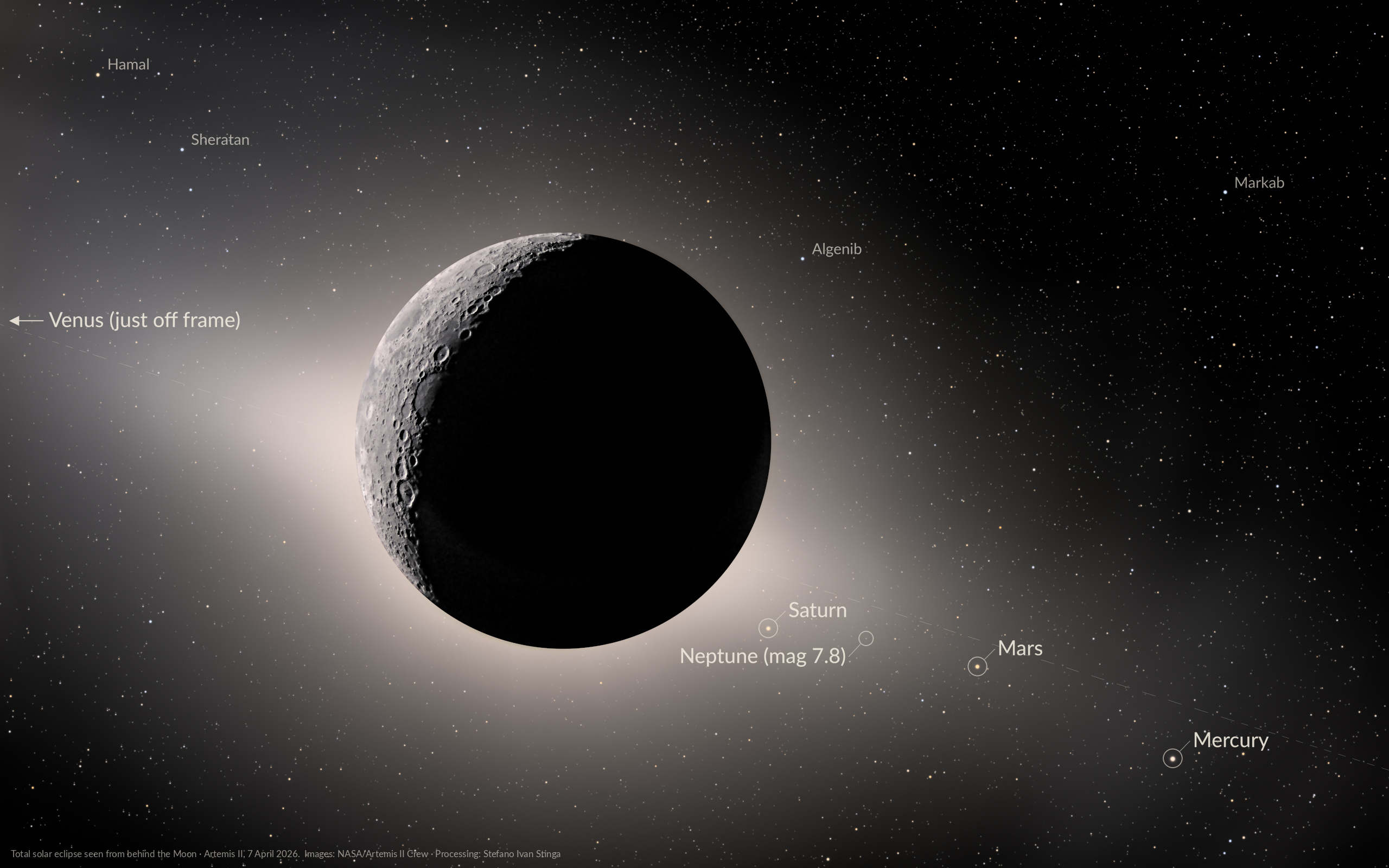
The Moon itself is created from a stack of 17 photos. Stinga aligned the photos using the moon’s craters.
Impressively, Stinga counted 9,430 stars across those photos. The astrophotographer re-drew those stars, measured for brightness and color.
Stinga said he did not use cloning or generative AI at all in the edit, noting that he did remove a glare from the Artemis II window.
The resulting composite shows a much more detailed glimpse of the far side of the Moon, with more contrast and detail. The edit also serves as a reminder of the role of photo editing in astrophotography, offering another look beyond NASA’s official imagery.
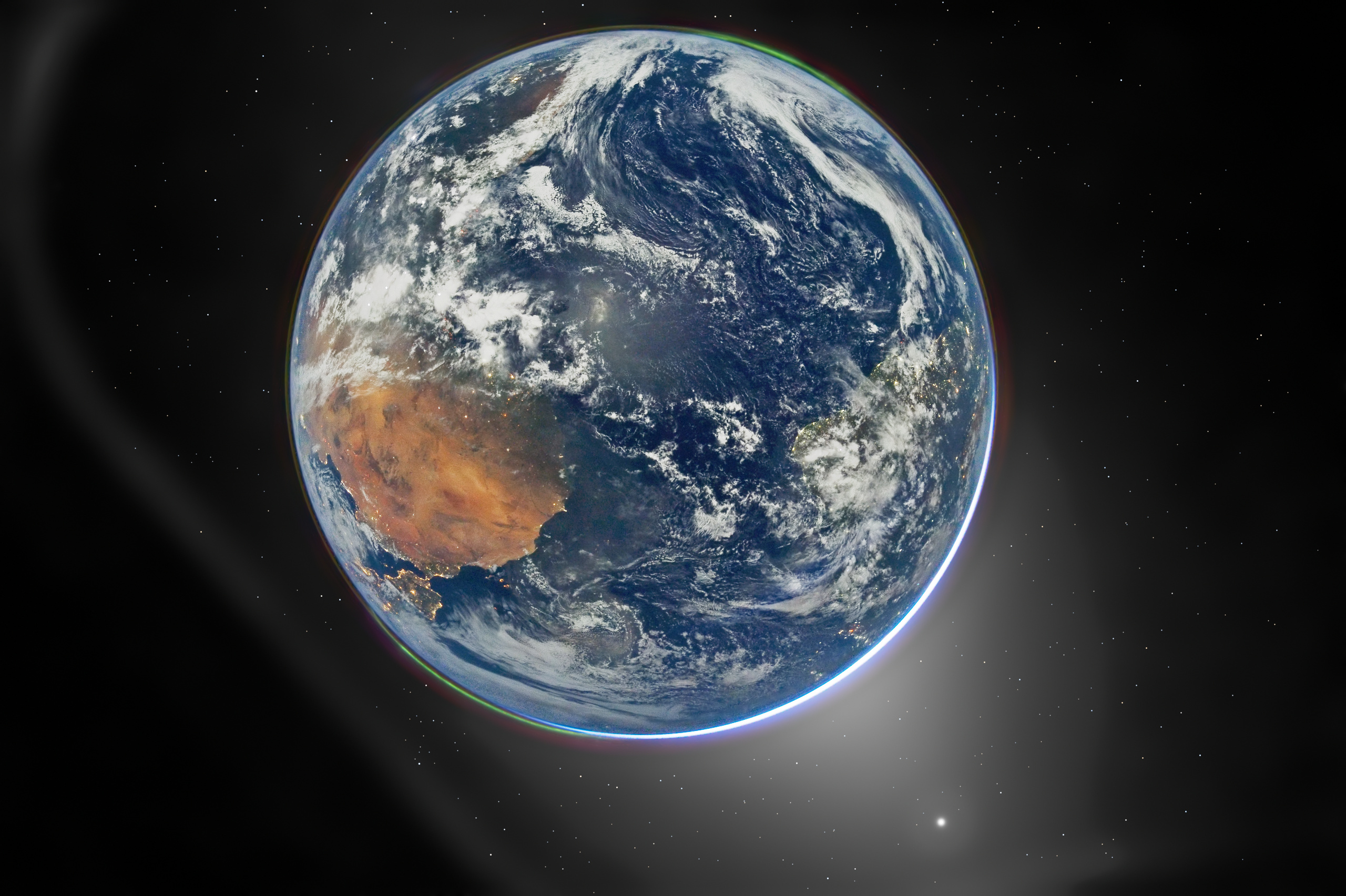
Stinga also recently created a composite of Commander Reid Wiseman’s first viral photos from Artemis II as the astronauts looked back at Earth, including an aurora, early on in the mission.
The more than 800GB of data from Artemis II, I imagine, will keep scientists – and photo editors – busy for quite some time.
Author: Hillary K. Grigonis
Source: DigitalCameraWorld
Reviewed By: Editorial Team
