


We all remember the class portrait photo from our school days, and not always in a kindly way. Rows of children, arranged by height, squinting at a stranger behind a lens. Getting shouted at to comb your hair. Being berated for not smiling properly. It wasn’t everybody’s idea of fun.
And yet if someone keeps the print, and it turns up a couple of decades on, we’re generally pleased. Not because it’s a great photo: it’s typically average at best. The light is whatever the light happened to be. The composition is entirely predictable. At least one or two kids end up blurred.
No, whether we’re talking about a 100-year-old portrait or a 20-year-old one, what makes it precious isn’t usually anything the photographer did. It’s how well someone captioned them afterwards.
A face to a name
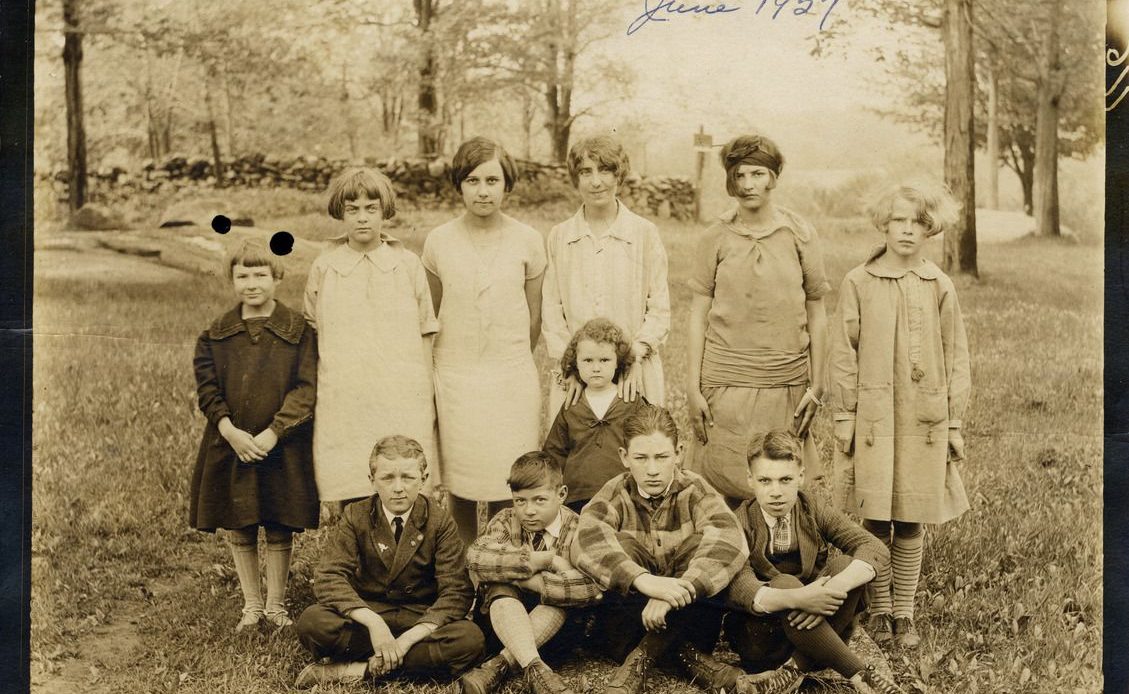
Take the 1927 photo from Mountain School in Wilbraham, Massachusetts, at the top of this page. On its own, it’s just fine.
A young teacher, nine pupils and a small, curly-haired child, on a lawn. The boys’ socks are wrinkling down their shins. One girl squints hard into the sun.
Then you turn it over. On the back, someone has written down every name, row by row: Paul Kittredge, James Curns, Gilbert Stacy, Wilfred Bennett along the front, then Madella Stacy, Georgia Curns, Florence Dupont, the teacher Pearl Supernow, Janet Piper and a girl whose surname they weren’t sure of (“Louise?”). The toddler is listed as “small child visitor Clare Tupper”.
That list makes the difference between just a nice old picture and a truly fascinating historical document. If you just have the picture, it’s nothing special. With the list, you have real, breathing people, with families and descendants who are able to find them today.
An invaluable help
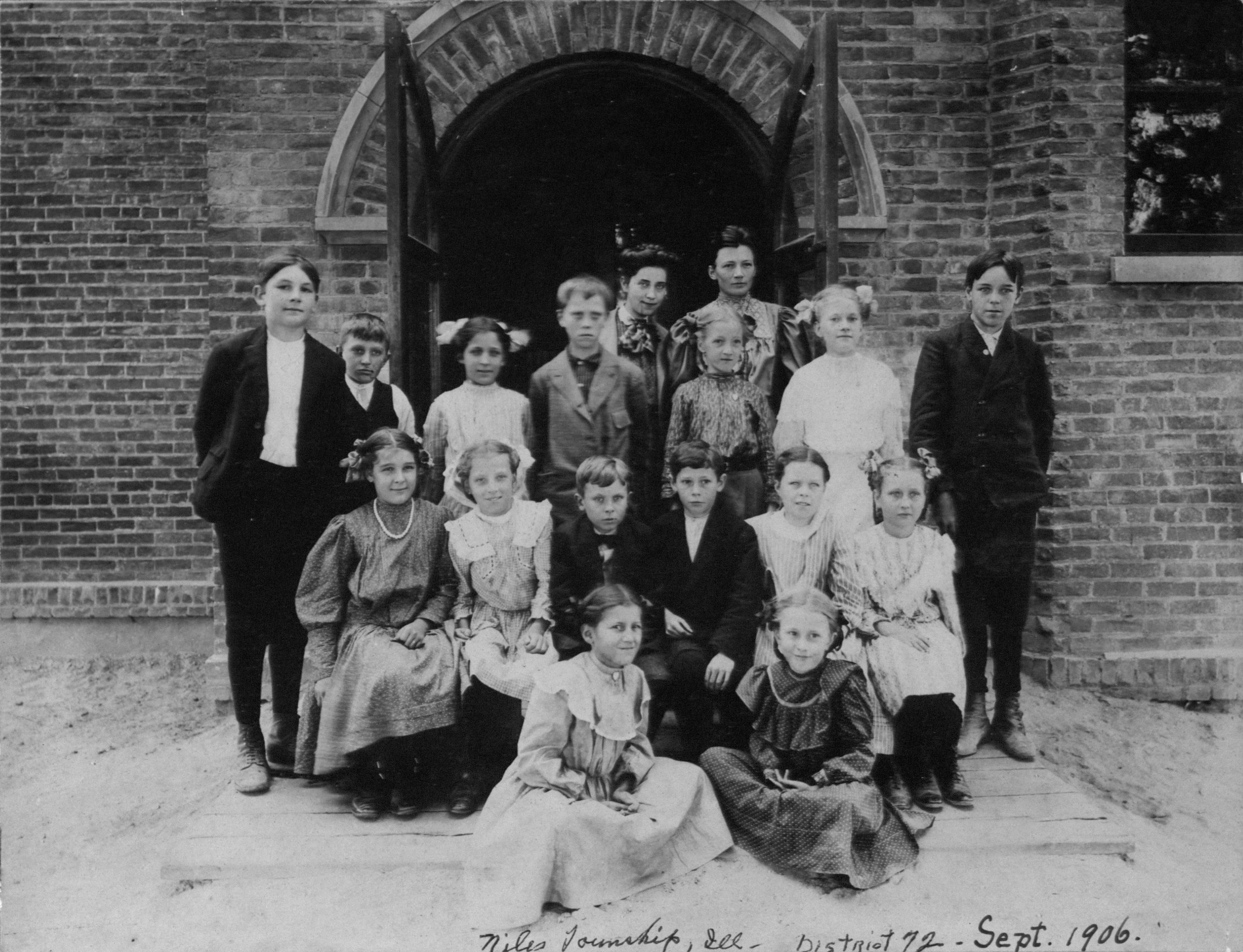
Sometimes the info is right there on the picture itself. This 1906 picture from Fairview School, Illinois, shows the classic structure of the class portrait: small ones at the front, tallest at the sides, two teachers in the doorway, almost no one smiling. Along the bottom, in careful copperplate, are the words: “Niles Township, Ill – District 72 – Sept. 1906”.
It’s barely a dozen words. But it means an archivist 120 years later can tell you exactly which school this was, where it stood and who probably ran it. That’s not just helpful, it’s invaluable. Especially considering the building has long gone, and the town isn’t even called Niles Center anymore (it’s Skokie).
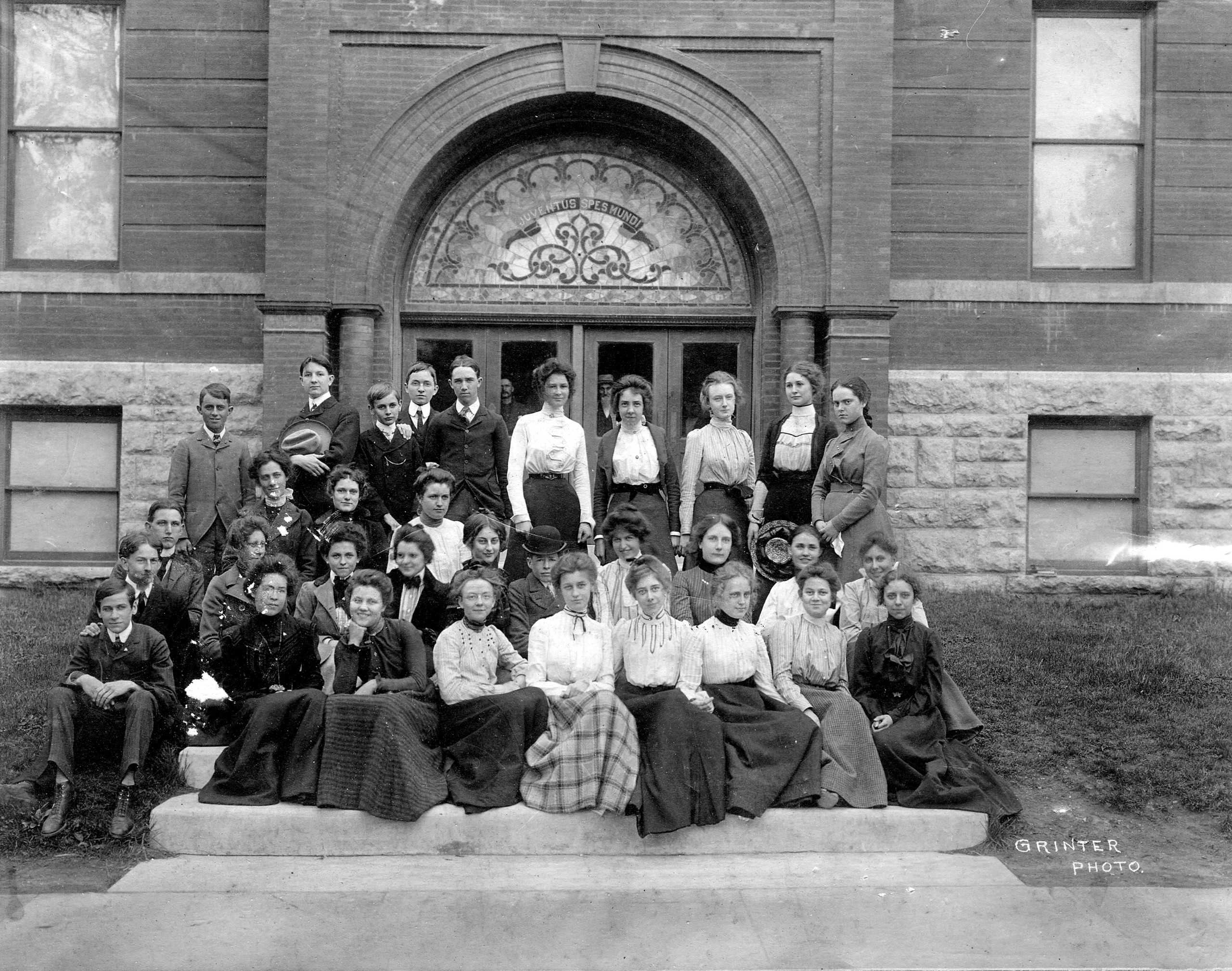
Finally, we have the graduating class of 1901 in Independence, Missouri, posed beneath a stained-glass window. And again, we know exactly who’s in it, because someone recorded all the names, row by row.
That’s just as well, because the boy fourth from the left in the back row is Harry S Truman, future 33rd President of the United States. His future wife, Bess Wallace, is there too.
Here’s what’s bothering me. We now take more photos in a month than some of these people took in a lifetime. Automatically, our camera will record the time, a date and maybe even the GPS location. But it won’t know that the girl second from the left is your great-aunt, or that the toddler was only visiting. Those details need to be written down by an actual human.
So, here’s my plea: think of future generations. And next time you shoot a group of people, take five minutes to write down who’s who. It’s not fun, and it’s not glamorous. But half a century from now, it may well be the only part that matters.
Author: Tom May
Source: DigitalCameraWorld
Reviewed By: Editorial Team
