

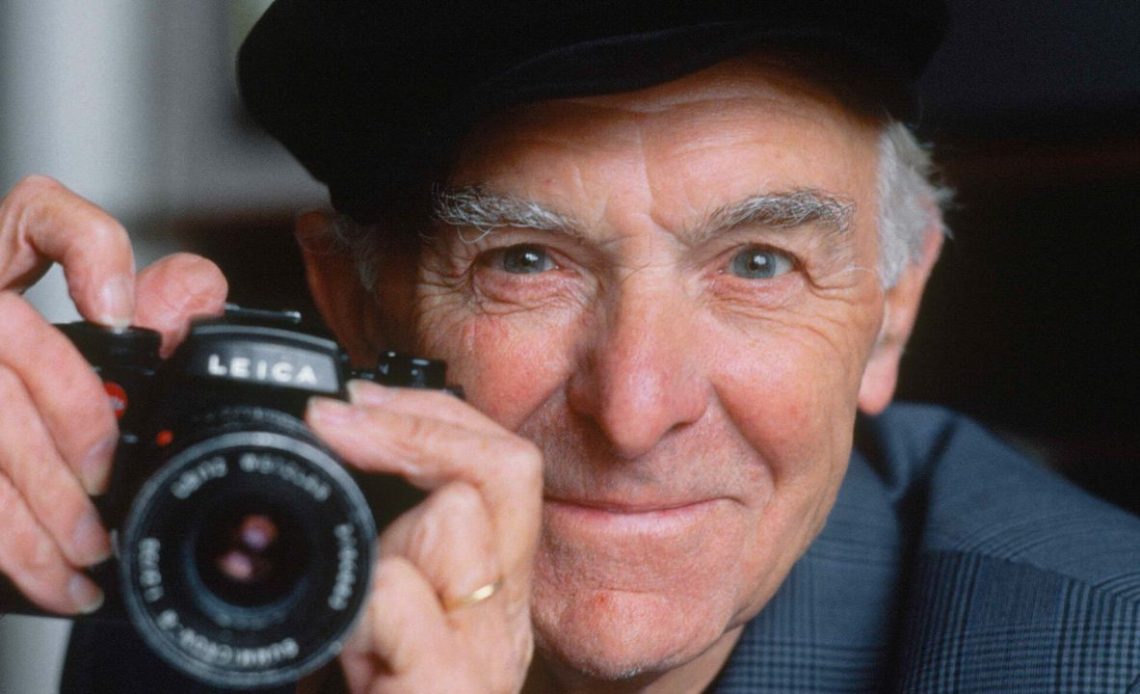
Robert Doisneau (1912-1994), the iconic 20th century French street photographer, is best known for his famous humanist approach to documenting everyday Parisian moments.
In later years, though, he’s arguably become just as well known for something he said to Australian photographer and photography historian Peter Adams in 1987.
Adams was interviewing Doisneau as part of a monumental 39-year pursuit to photograph the most famous living photographers from the past century, when the Frenchman said:
“You must let the person looking at the photograph go some way to finishing it. You should offer them a seed that will grow and open up their minds.”
But what did Doisneau mean by this, and how do you do this with your photos?
While certainly open to interpretation, I’m sure many of us would agree that the central idea the late street photographer was getting at was that a good photo doesn’t tell the beginning, middle and end of a scene.
It leaves a gap for the viewer to decide, in some way, how the narrative should unfold. A philosophy that the following image, taken fairly recently (and, fittingly, in Paris) by Pulitzer Prize-winning photojournalist David Turnley, perfectly encapsulates.
A post shared by DAVID TURNLEY (@davidturnley)
A photo posted by on
At first, it may seem like the image tells the entire story. Inside the cafe, we see the subject: a woman with a coffee and a half-eaten pain au chocolat. And reflected in the window we see what she sees: a man riding by on a bicycle and the Parisian cityscape.
But it’s the woman’s pondering, perhaps concerned, expression that enables us to write the end of this script, despite the fact that Turnley gives us a complete understanding of her surroundings.
What is she thinking? Is she concerned or is she just in deep thought? Maybe she’s simply posing, hoping that Turnley captures her best angle.
To me, it’s this. I don’t know the story behind the image, but the way the woman eloquently rests her head on her clasped hands makes me think she noticed the camera in time to position herself.
Interestingly Doisneau himself didn’t always follow his own philosophy, so well-embodied by Turnley’s frame. Ironically, his most famous shot – a staged scene called Kiss by the Hôtel de Ville – doesn’t leave much to the imagination, at least not in my view.
Although maybe this is just as important a takeaway: that a philosophy should guide your photography, not be a strict rule to follow at all times.
But the idea of planting a seed in the mind of the viewer for them to sow into an idea was certainly of utmost importance to Doisneau – who, in much of his work, found ways to infuse intrigue, mystery, and imagination into everyday scenes of life on Paris’ streets.
Author: Alan Palazon
Source: DigitalCameraWorld
Reviewed By: Editorial Team