

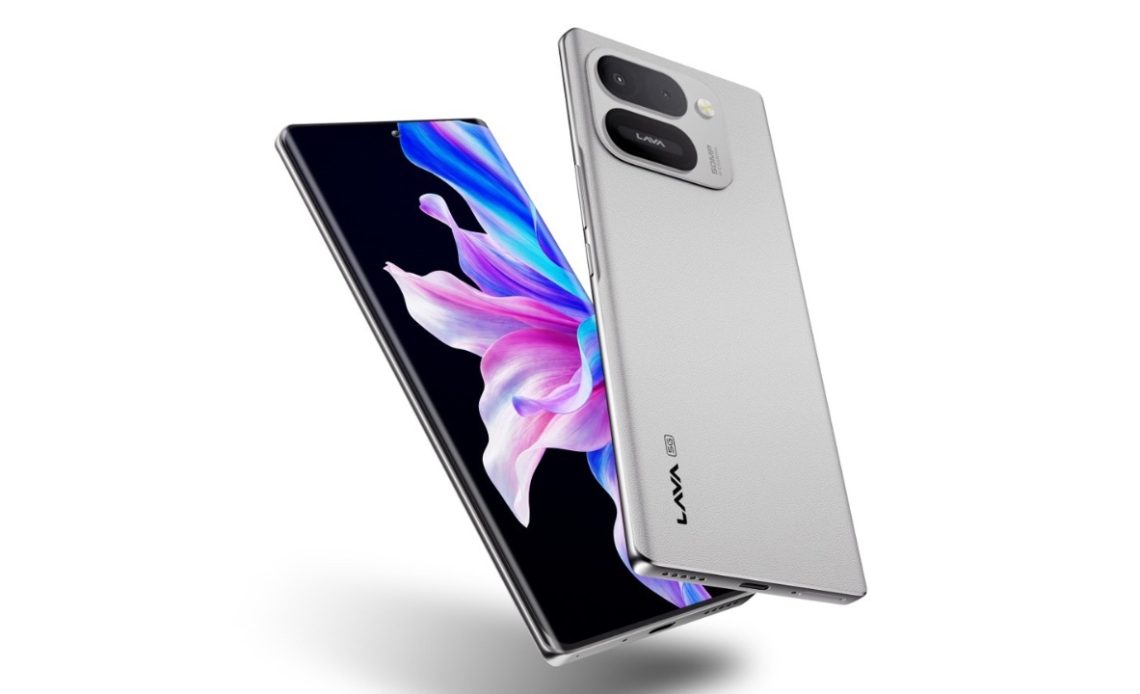
Indian handset maker Lava International is betting that reliability, not raw specifications, will be the differentiator that finally lifts a homegrown brand out of the shadow of Chinese rivals that have dominated the country’s smartphone market for more than a decade.
The company is also preparing to expand its portfolio into the ₹30,000-₹40,000 price segment next year, marking another step in its attempt to move beyond its budget-phone roots while building its position around long-term performance, software support and after-sales service.
Lava, which has traditionally had a stronger presence in entry-level smartphones, wants to establish itself below ₹30,000 before moving further up the price ladder, Sumit Singh, Senior Vice President and Head of Product at Lava International, told The Mobile Indian in an interview.
Singh said Lava was targeting the sub-₹30,000 market, which he estimated accounts for about 70% of smartphone sales, and wanted to “master the products completely” in that segment before expanding further.
The next step will take Lava into the ₹30,000-₹40,000 bracket, Singh said.
However, the company does not intend to rush into the ₹50,000-and-above segment. Singh said Lava would move higher only when it was confident that its phones could deliver performance on par with products from global brands.
The cautious approach contrasts with rivals that operate across multiple price bands and frequently use specifications and new hardware features to distinguish their products.
Gradual move up the price ladder
Lava’s strategy reflects its attempt to rebuild its smartphone business after Chinese manufacturers captured much of India’s handset market over the past decade.
About four years ago, the company was launching almost all its products below ₹10,000, with only one or two devices crossing that threshold, Singh said.
Lava subsequently increased the number of devices in the ₹10,000-₹20,000 segment before moving some launches above ₹20,000. Instead of abandoning the entry-level market, it has maintained its presence there while adding products at higher prices.
Singh acknowledged that Lava had spent the past few years catching up with competitors but said the company now believes it can compete on product merit in the segments where it operates.
He pointed to hardware, software optimisation and after-sales support, saying Lava was no longer playing “the catching-up game” in smartphones priced below ₹25,000.
That focus, Singh said, is also why Lava has resisted spreading its portfolio across every price category. The company wants to establish its capabilities in one segment before moving to the next.
Lava cautious on silicon-carbon batteries
That philosophy extends to hardware technologies such as silicon-carbon batteries, which handset makers are increasingly using to fit higher battery capacities into thinner devices.
Singh said Lava was working on silicon-carbon technology but would adopt it when the benefit to consumers justified the additional cost.
He estimated that current mass-produced silicon-carbon batteries could provide about a 10% improvement in performance while costing substantially more than conventional batteries.
“Is it wise for the customers to pay 50% more for the extra 10%?” Singh said.
Lava believes battery optimisation through software and AI algorithms can currently deliver some of those gains without passing the higher hardware cost to consumers, he said.
The company would consider wider adoption of silicon-carbon batteries when the additional performance and additional cost were better aligned, Singh added.
The approach illustrates a broader difference Lava is trying to draw between adding specifications and adding features that consumers will notice in everyday use.
Singh cited one of Lava’s phones with a 6,000mAh battery, a weight of 184 grams and thickness of about 8mm as an example. The question, he said, was whether consumers specifically wanted silicon-carbon technology or simply wanted faster charging and longer battery life.
Betting on trust
As Lava moves into higher price bands, it faces another challenge: establishing an identity in a market where competing brands are associated with attributes ranging from cameras and design to software and performance.
Singh said Lava wants trust to become the central element of its positioning, encompassing device performance, software support and after-sales service.
A Lava customer “should be having no tension,” Singh said, adding that the company wanted buyers to know they would be supported even after purchasing the device.
Lava is developing systems to detect software issues and deliver fixes directly to phones, reducing the need for customers to visit service centres. Customers will be able to identify and report problems themselves, Singh said.
The company’s clean-software approach forms another part of that strategy. Singh argued that unnecessary preloaded applications consume device resources and can contribute to performance problems as users install more applications over time.
The benefits will take time to become visible, he said.
“It will not give you the results in the shorter run,” Singh said. “It will give you the results in the longer run.”
Welcomes new Indian smartphone brands
Lava is also facing the arrival of more Indian companies in the smartphone market, but Singh said he welcomed new domestic entrants.
“I wish them to be successful,” he said, adding that the image of Indian smartphone brands had suffered because of their performance in the past.
Their prospects would depend on sustained investment, product development and systems built around consumers, he said.
Singh said Lava’s own experience showed that consumers were willing to switch from established manufacturers when they saw value in another brand.
“If you really do a good job for the customers, customers will definitely buy,” he said, while warning that a short-term approach risked repeating the problems that had hurt Indian handset makers previously.
Global expansion from 2027
Lava is also preparing another push outside India as part of a longer-term plan extending to 2030.
Singh said the company expects to strengthen its position in India over the next two years and has already begun planning its overseas expansion.
Lava intends to enter more neighbouring markets in 2027, he said.
The strategy will differ from simply launching products in a country to establish a presence. Singh said Lava wants each new market to support a business that can operate over the long term.
“It is just not like launching and then coming back,” he said, describing the aim as establishing operations that can “sustain for years.”
The immediate test, however, remains India, where Lava’s move towards ₹40,000 phones will put it into more direct competition with brands that already have a presence in the mid-premium segment.
Singh said the company ultimately wants consumers to associate Lava with trust and performance over the life of a device.
“Performance will be the key,” he said.
The aim is for a customer to use a Lava phone for “three years, four years” without its performance becoming a reason to replace it, Singh said.
Author: Sandeep Budki
Source: The Mobile Indian
Reviewed By: Editorial Team