

Mario Tama had only been working as a photojournalist for Getty Images for about two months – not yet long enough to consider himself a true New Yorker – when he got the call from his editor. A plane had hit the World Trade Center. Unable to call a taxi, he ran towards the devastation, camera in hand – and 25 years later, Tama’s photographs of 9/11 remain a devastatingly poignant part of American history.
“I was a new New Yorker,” Tama said in an interview, part of a large-scale effort by Projections NYC to document the 9/11 story of more than 35 photographers. “I was so new that I had never taken a photo of the Twin Towers. I had seen them, and they were like my North Star. You could figure out where you were by those towers. I always thought I would wait and get them in better light.”
Unable to get a taxi, Tama made his way towards the Twin Towers on foot that morning. At one point, he was stopped from getting any closer by an NYPD barricade that, he believes, saved his life.
Tama instead went around towards the south side of the South Tower, near Cathedral Trinity Church. Photographing the plumes of smoke coming from the South Tower, he ran into fellow Getty photojournalist Spencer Platt, who told him, “This is the story of our lives.”
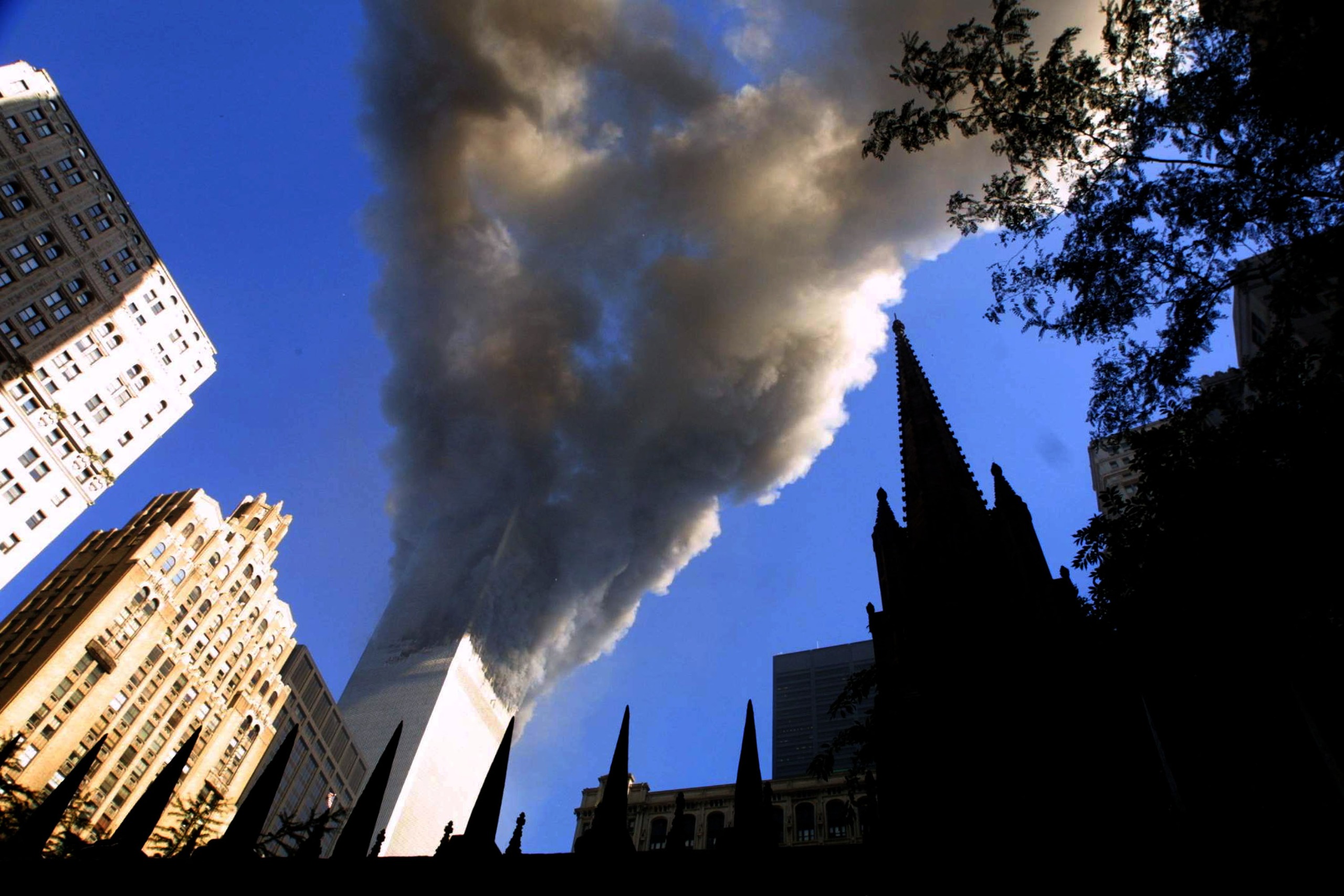
“I was in a panic trying to get as many images as I could,” said Tama, who was using one of the earliest professional digital cameras, the Canon EOS D30, a 3.1MP DSLR. “Being a new New Yorker, I wish I had that gravitas perspective, but [Platt] shook me and he grounded me in a way that I wasn’t before.”
Tama was making his way towards the South Tower when he heard a sound that, to this day, he finds hard to describe. “I looked up, and the top of the South Tower started to tilt and collapse. The sound echoed down the canyon, and it was completely horrifying.
“I went from being a photojournalist to just another New Yorker running for their lives…at some point during my sprint, I remember looking back, and there was this tornado cloud of dust coming towards us. In hindsight, if I had stopped and taken a photograph, it would have been a powerful image, but I kept sprinting towards a parking garage. The dust storm cloud went over everything after that.”
It was after the dust settled that Tama took a photo of two civilians huddled near a wall, one praying in English, one praying in Spanish.
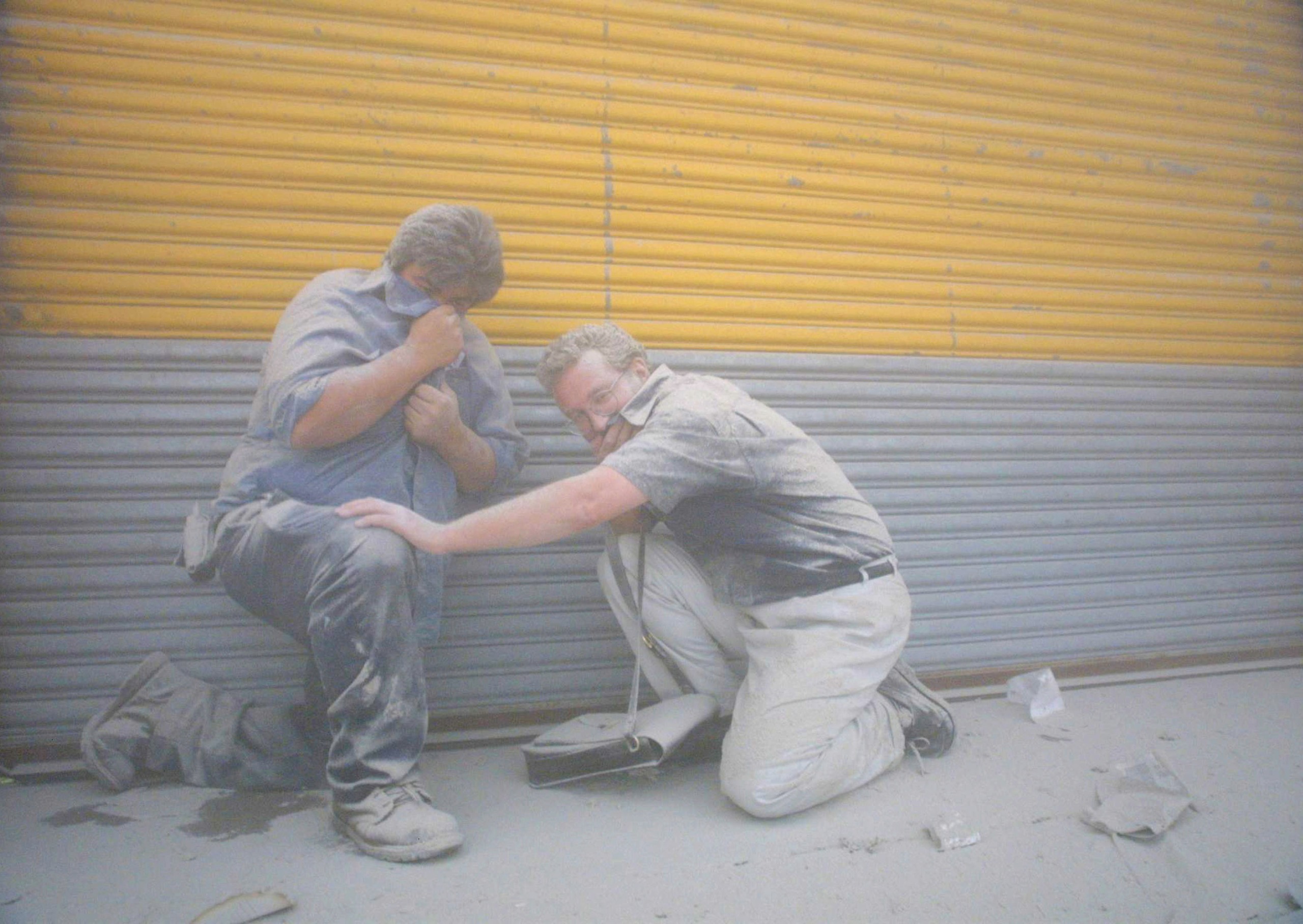
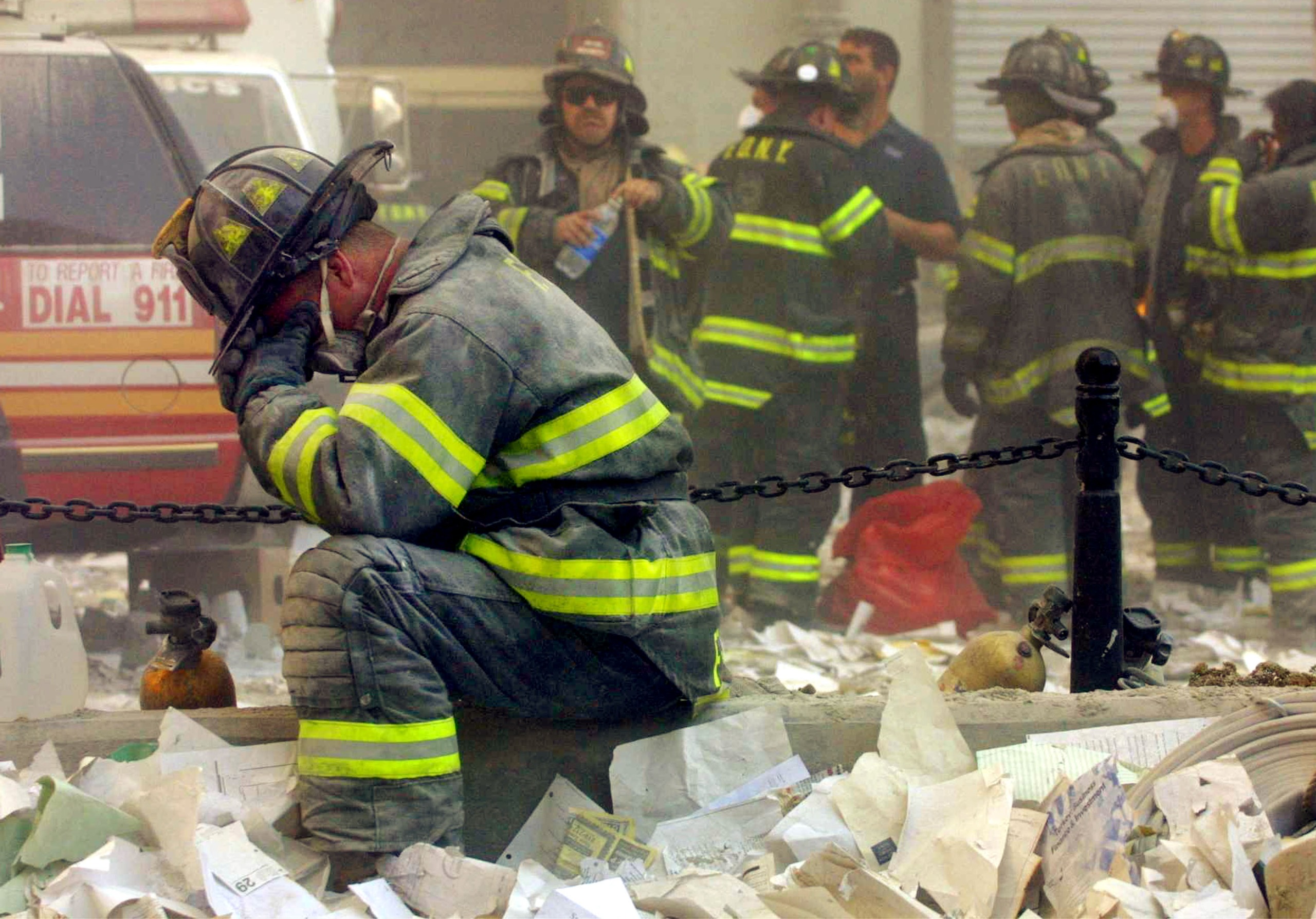
“The only thing that I knew was to put that camera up to my eye and keep photographing,” Tama said. “I think it was a shield in a way and also a way to process what happened…the camera was my tool and I just started walking around photographing, looking for survivors. It was an incredibly horrifying feeling to realize that those of us out here had survived and so many others inside had lost their lives. The only thing that I knew to do was to take photos.”
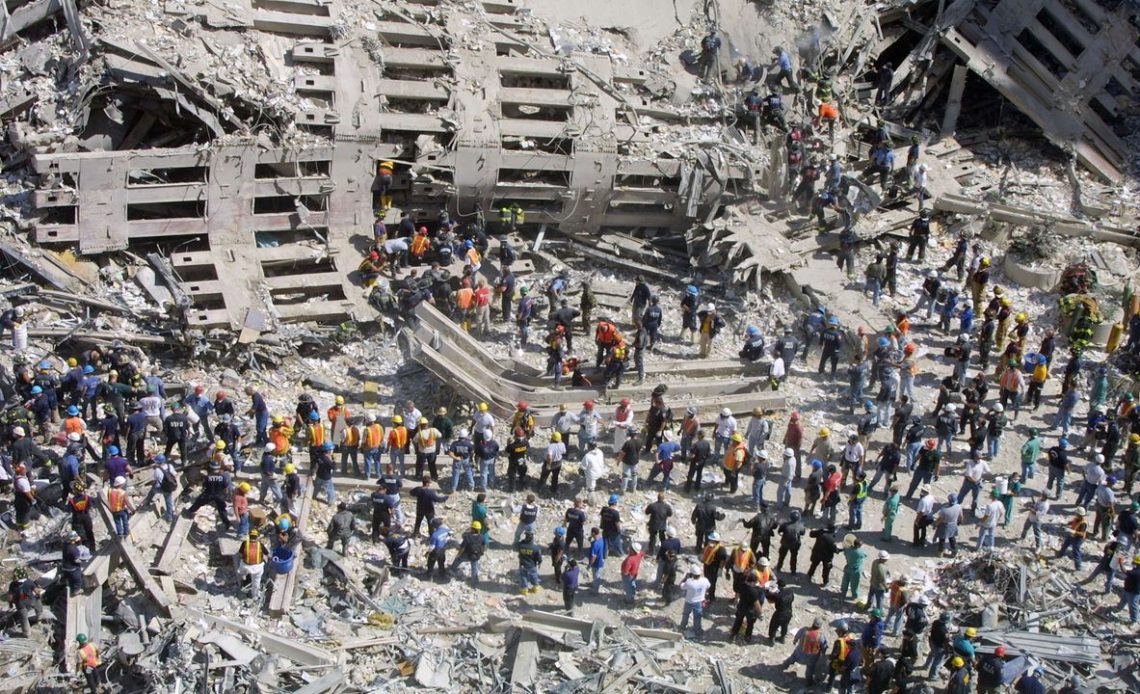
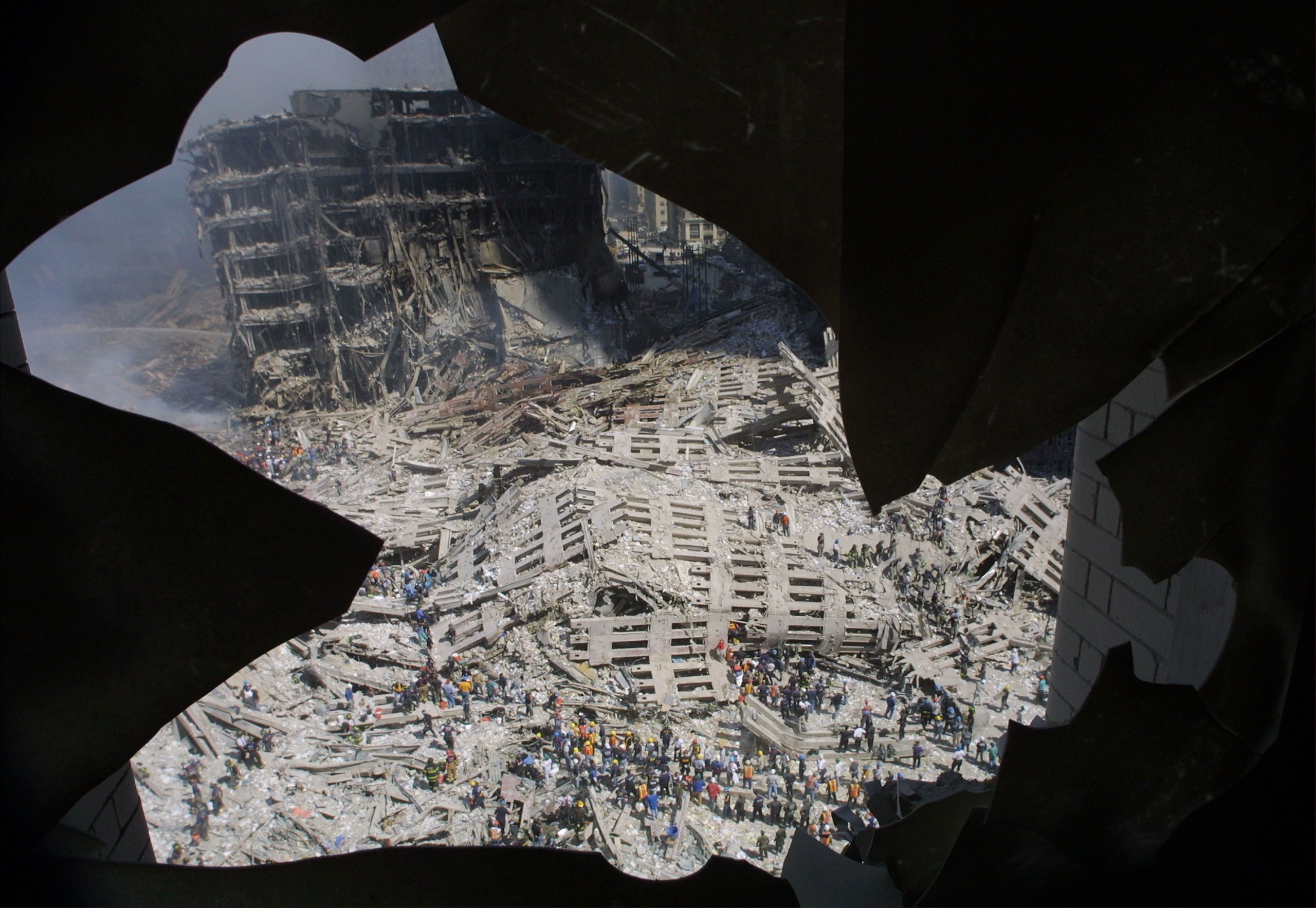
The moment that Tama began to feel like a true New Yorker wasn’t experiencing the day of 9/11, but in the days that followed. On September 13, he was in a shell-shocked apartment building with the windows blown out, climbing the stairs in order to try to get high enough to see Ground Zero.
He made it to the ninth or tenth floor, where he captured a photo of lines of emergency responders and volunteers amid the rubble.
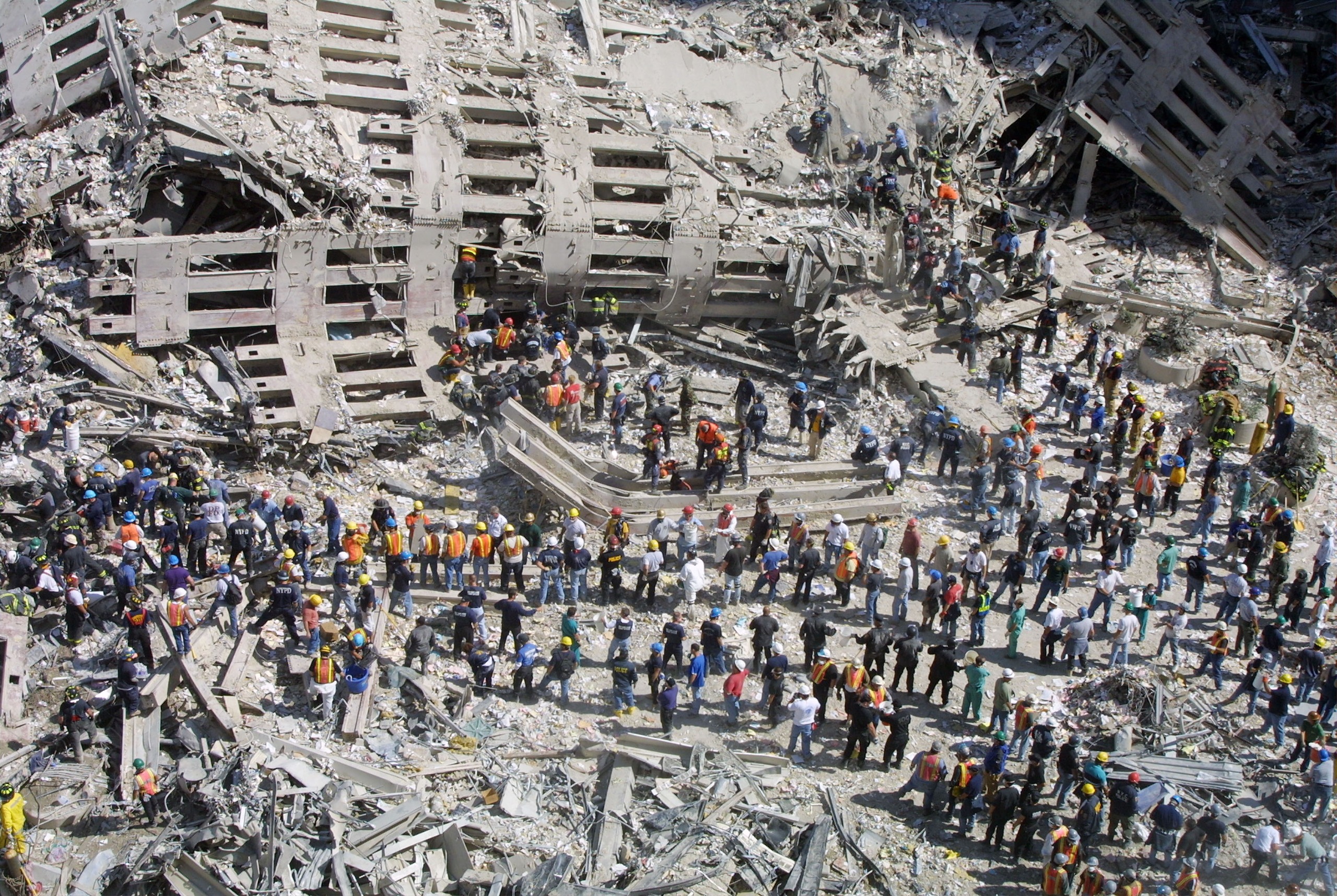
“Looking down on that scene, it was the first time that I felt hope,” he said. “To see all these incredible, brave workers of all stripes – police, fire, construction workers, hospital workers, civilians all there, trying to dig out and this hope over fear feeling swept over me. I just put the cameras down and wept. At that moment, I think I became a New Yorker and fell in love with the city.”
“I’m honored to have this photograph and this recollection….In my mind, [this incredible humanity] won, they won. New Yorkers just showed incredible humanity and heart and it’s something I will hold with me forever.”
Projections NYC is spending six days interviewing 36 photographers who photographed 9/11 and the aftermath to record their stories for history between September 6-11. The series continues with live Zoom broadcasts at 7 PM ET on September 10 and 11.
The interviews will also be uploaded to Projections NYC’s YouTube page approximately 1-2 weeks after the live broadcast.
Author: Hillary K. Grigonis
Source: DigitalCameraWorld
Reviewed By: Editorial Team