


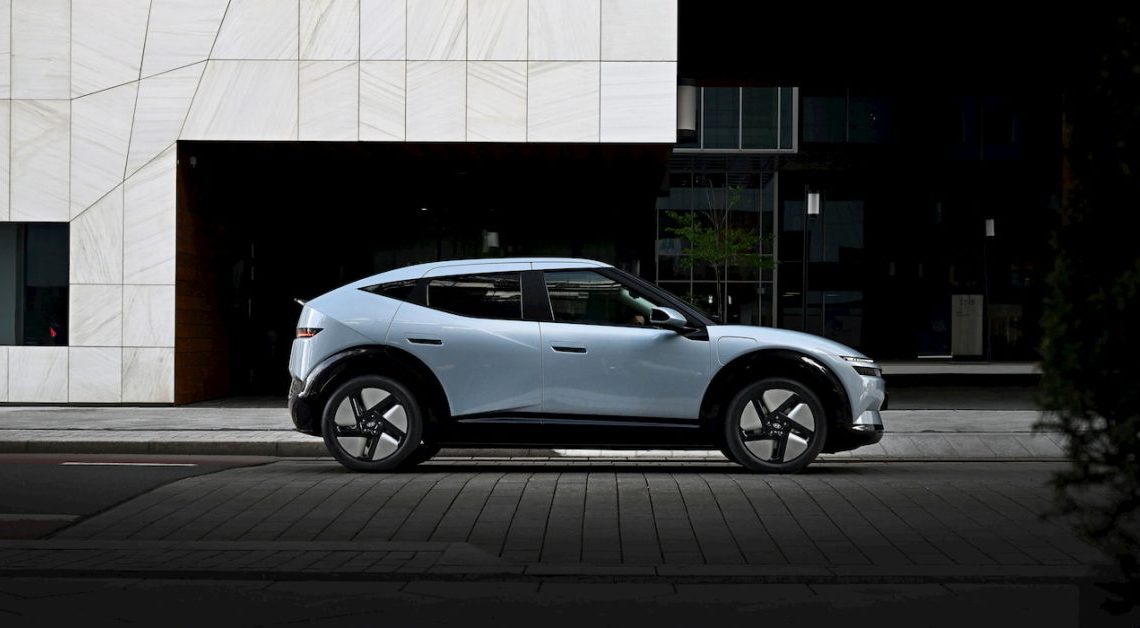
The IONIQ 3 has received the “highest-ever” levels of customer interest for any Hyundai model (EV or gas), with prices starting under $30,000.
Hyundai IONIQ 3 prices revealed in the UK
Hyundai’s electric hatch made its first public debut “on the road” in the UK at the Goodwood Festival of Speed (FOS) on Friday, ahead of its highly anticipated launch later this year.
The IONIQ 3 has received “the highest-ever level of customer interest recorded for a new Hyundai model,” the company said, gas-powered or EV.
With orders set to open soon, Hyundai confirmed IONIQ 3 prices are expected to start at under £25,000, or about $33,500.
On Vertu Motors’ website, the base Hyundai IONIQ 3 Standard Range model is already listed at £22,245 ($29,800).
It’s available in Standard or Extended Range versions with four different trim options: Advance, Premium, Ultimate, and N-Line Evo. The IONIQ 3 N, Hyundai’s electric hot hatch, will also join the lineup.
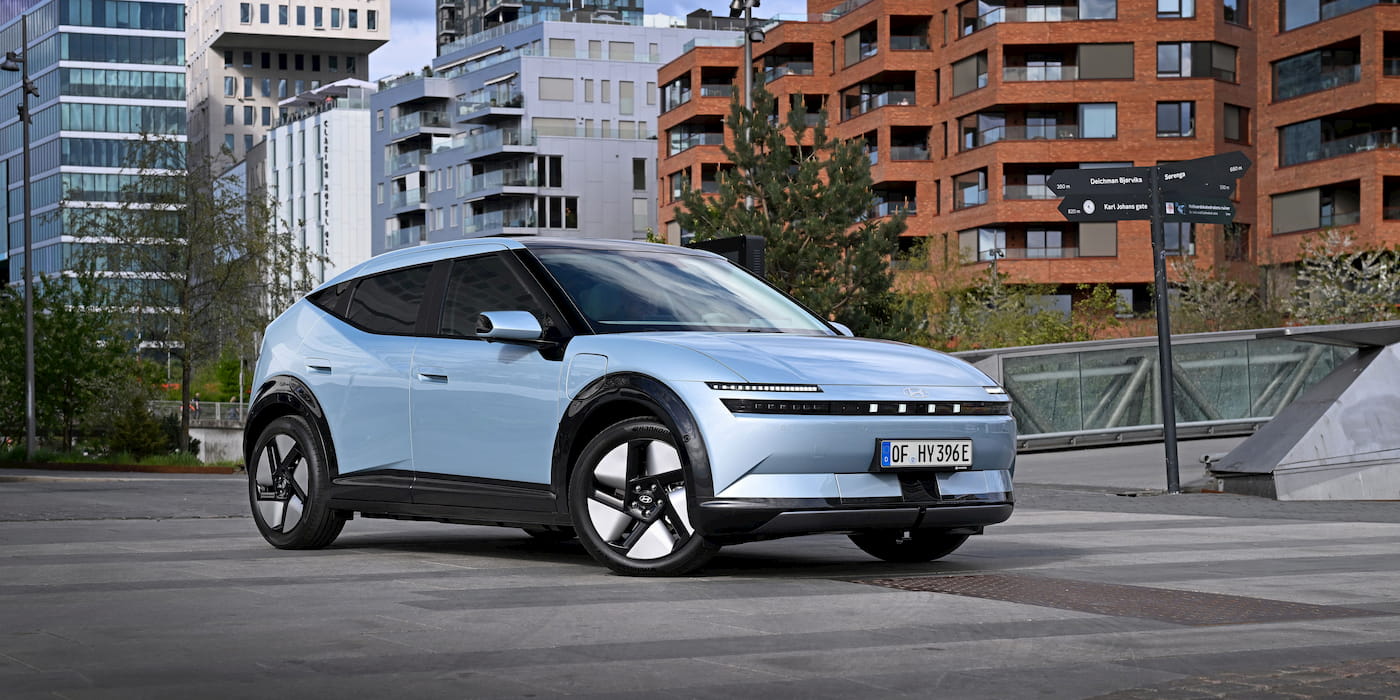
As Hyundai’s first compact EV in its IONIQ series, the electric hatch is positioned as a smaller, more affordable sibling to the IONIQ 5.
Although it’s part of the same lineup, the IONIQ 3 debuts a new “Aero Hatch” design that makes it distinct from Hyundai’s other electric vehicles.
The new look “reimagines the compact EV silhouette,” according to Hyundai. Not only that, but it also provides a drag coefficient of just 0.263, the best in its class.
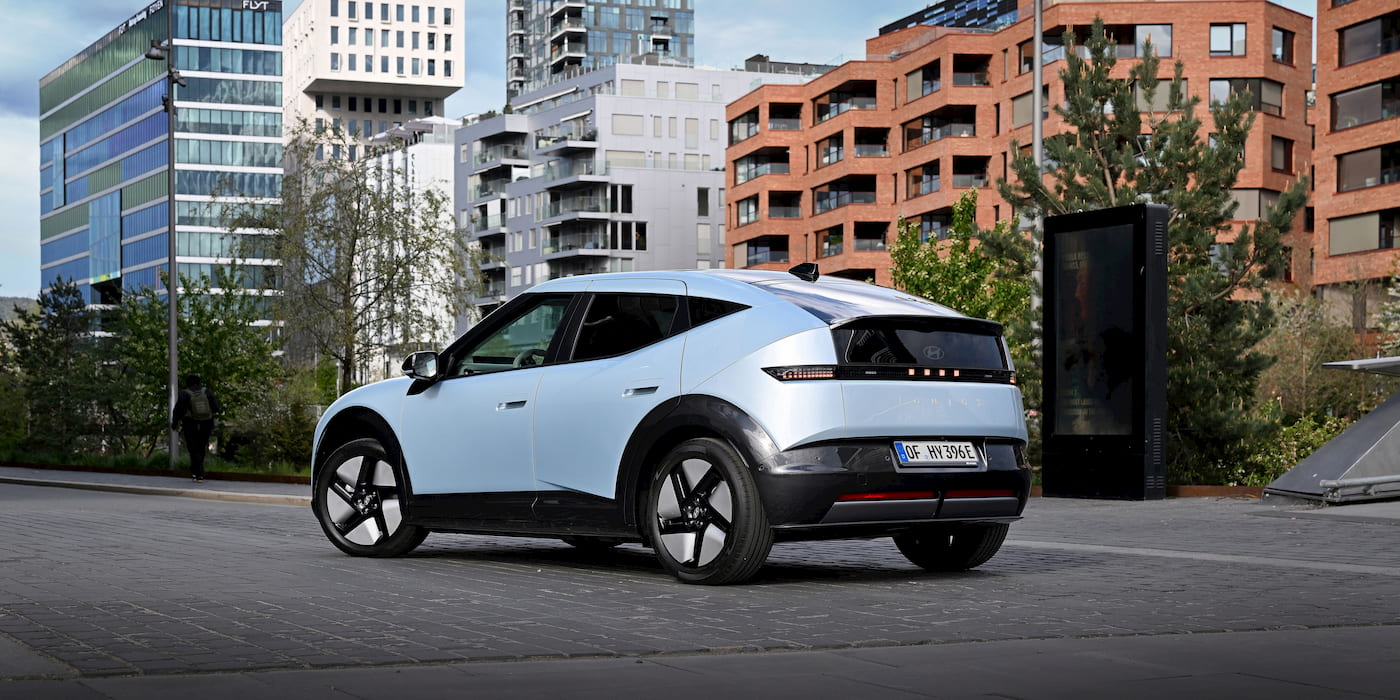
At just 4,155 mm (163.5″) long, 1,800 mm (70.9″) wide, and 1,505 mm (59.3″) tall, with a wheelbase of 2,680 mm (105.5″), the IONIQ 3 is even slightly smaller than the new Chevy Bolt EV and Kia EV3.
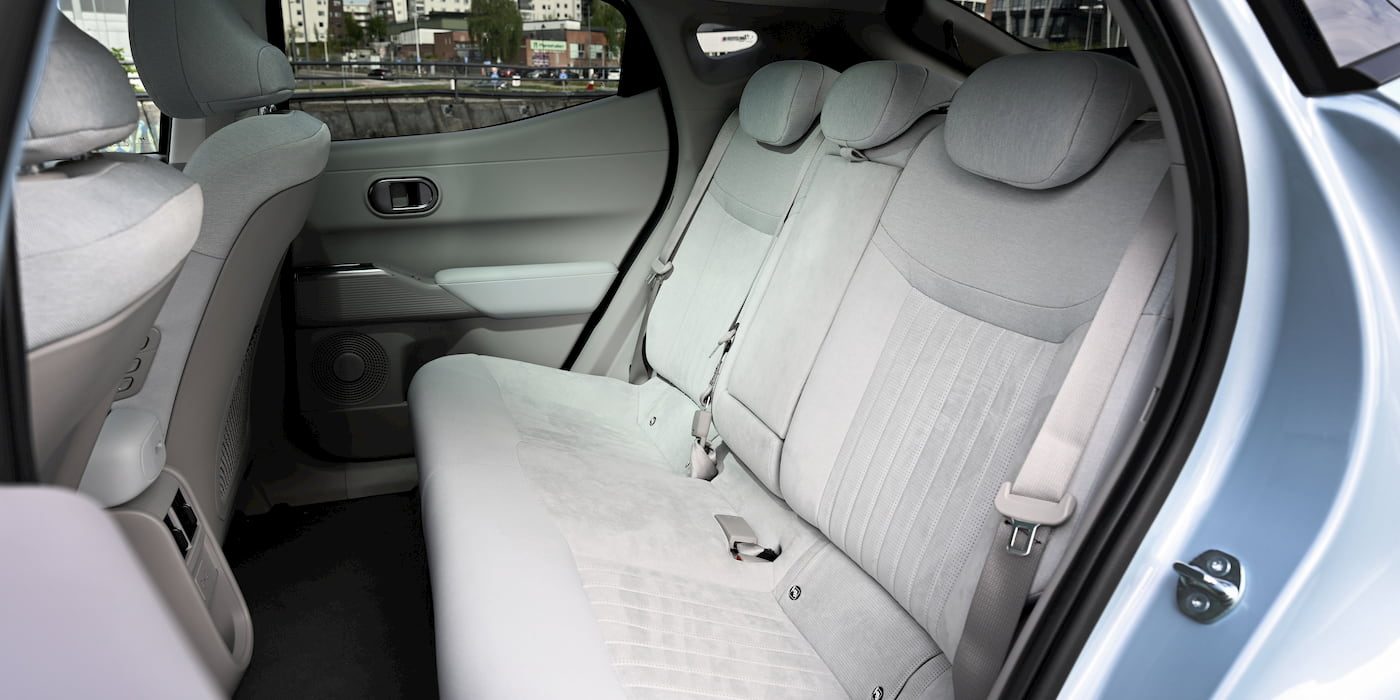
Despite its compact size, the IONIQ 3 is more spacious than it looks, with a luggage capacity of 441 liters, which, according to Hyundai, is expected to “set the benchmark in the segment.”
Ashley Andrew, president of Hyundai Motor UK, said the IONIQ 3 will “open up electric driving to a whole new group of customers.”
“The fact that we’re already seeing record levels of interest before it’s even gone on sale tells us everything we need to know about its appeal,” Andrew added.
Based on the same E-GMP platform as Hyundai’s other IONIQ models, the IONIQ 3 will be available with two battery packs: 42.2 kWh and 61 kWh. The standard range (42.2 kWh) provides a WLTP range of up to 213 miles (344 km), while the extended-range battery (61 kWh) delivers up to 308 miles (496 km).
Unlike the IONIQ 5, the electric hatch is based on a 400V architecture rather than an 800V one to cut costs.
| Hyundai IONIQ 3 trim | Battery | Starting Price |
| Advance | 42 kWh | £22,245 ($29,800) |
| Advance | 61 kWh | £25,745 ($34,500) |
| Premium | 61 kWh | £27,445 ($37,000) |
| Ultimate | 61 kWh | £29,945 ($40,000) |
| N-Line Evo | 61 kWh | £31,945 ($42,700) |
With DC fast charging, the IONIQ 3 can still recharge from 10% to 80% in about 29 minutes with the standard (42.2 kWh) battery. The long-range (61 kWh) battery takes about a minute longer at around 30 minutes.
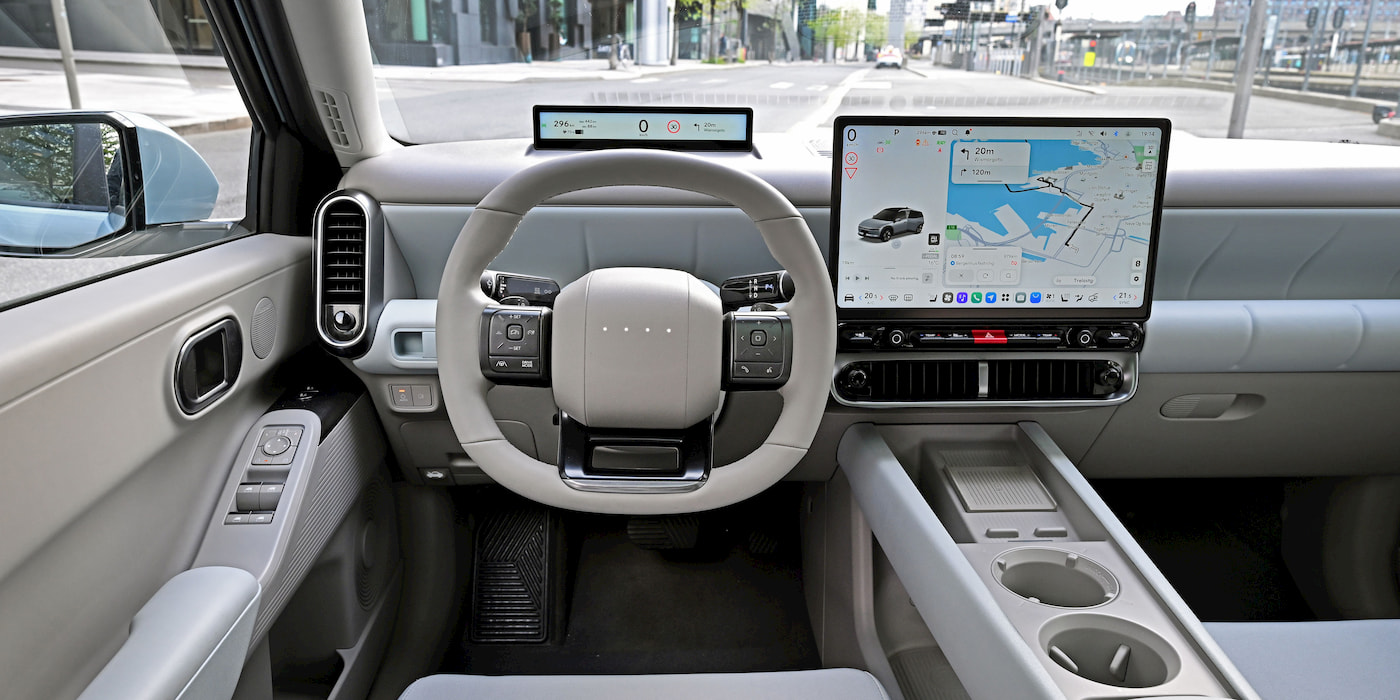
The IONIQ 3 is also Hyundai’s first vehicle in Europe and the UK equipped with its new Pleos Connect OS and infotainment system.
Based on Android Automotive OS, the system is more like Tesla’s with a smartphone-like user interface.
The setup will be available with 12.9″ or 14.6″ center infotainment screens, plus an optional driver display. Like Volkswagen, Hyundai is bringing back physical buttons for climate control, audio, and more, located under the center infotainment and on the steering wheel.
Hyundai’s new system features an AI companion, Gleo AI, that learns and adapts to offer a more personalized experience.
Author: Peter Johnson
Source: Electrek
Reviewed By: Editorial Team
