

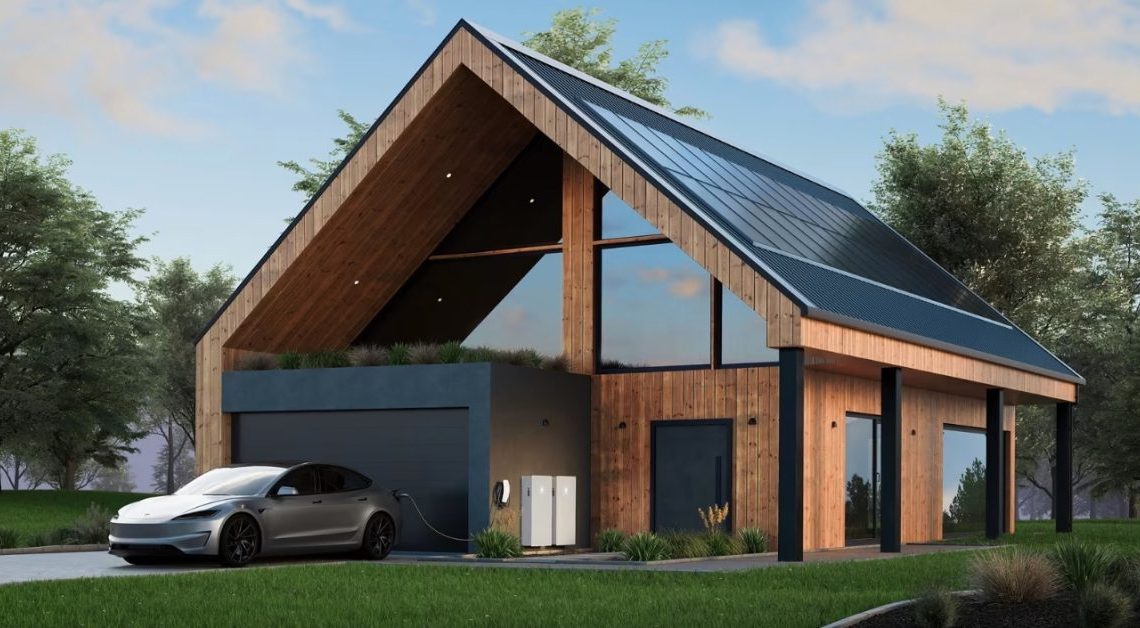
Tesla’s residential solar business has been shrinking for most of a decade, ever since the company absorbed SolarCity in 2016. Now, with electricity rates climbing across the US, Tesla is trying to revive it around a new in-house solar panel and Powerwall 3 — while quietly retiring the product it was once best known for.
Earlier this month, Tesla discontinued its Solar Roof, the glass solar tile it launched in 2016. It was always a tiny piece of the business, and its end says more about where Tesla solar is going than where it’s been.
From the biggest installer to a shrinking one
When Tesla bought SolarCity for roughly $2.6 billion in 2016, it inherited the largest residential solar installer in the country. It didn’t stay that way.
Tesla’s quarterly solar deployments have fallen for years, and the company eventually scaled back how much it discloses about the segment. Its overall energy business is booming, Tesla reported $12.8 billion in energy revenue in 2025, up 27% year over year, but that growth is almost entirely driven by battery storage like Megapack and Powerwall, not rooftop solar.
Solar Roof was the clearest example of the struggle. Despite years of promotion, Tesla had installed only about 3,000 of the tile roofs in the US by the end of 2022, accounting for roughly 0.17% of residential solar installations that year. It was expensive, slow to install, and never scaled. A surface view of Tesla’s energy business might lead you to think that killing solar roof amid a scale-down of its solar business means Tesla is walking away from solar, but that’s not the case.
What Tesla sells now
The centerpiece is a new panel. In January 2026, Tesla launched a US-made 420-watt solar panel assembled at its Gigafactory in Buffalo, New York — the same plant that used to build Solar Roof tiles. Tesla says it’s the first solar panel the company has fully designed and manufactured itself, with an all-black look, integrated mounting, and better performance in shade.
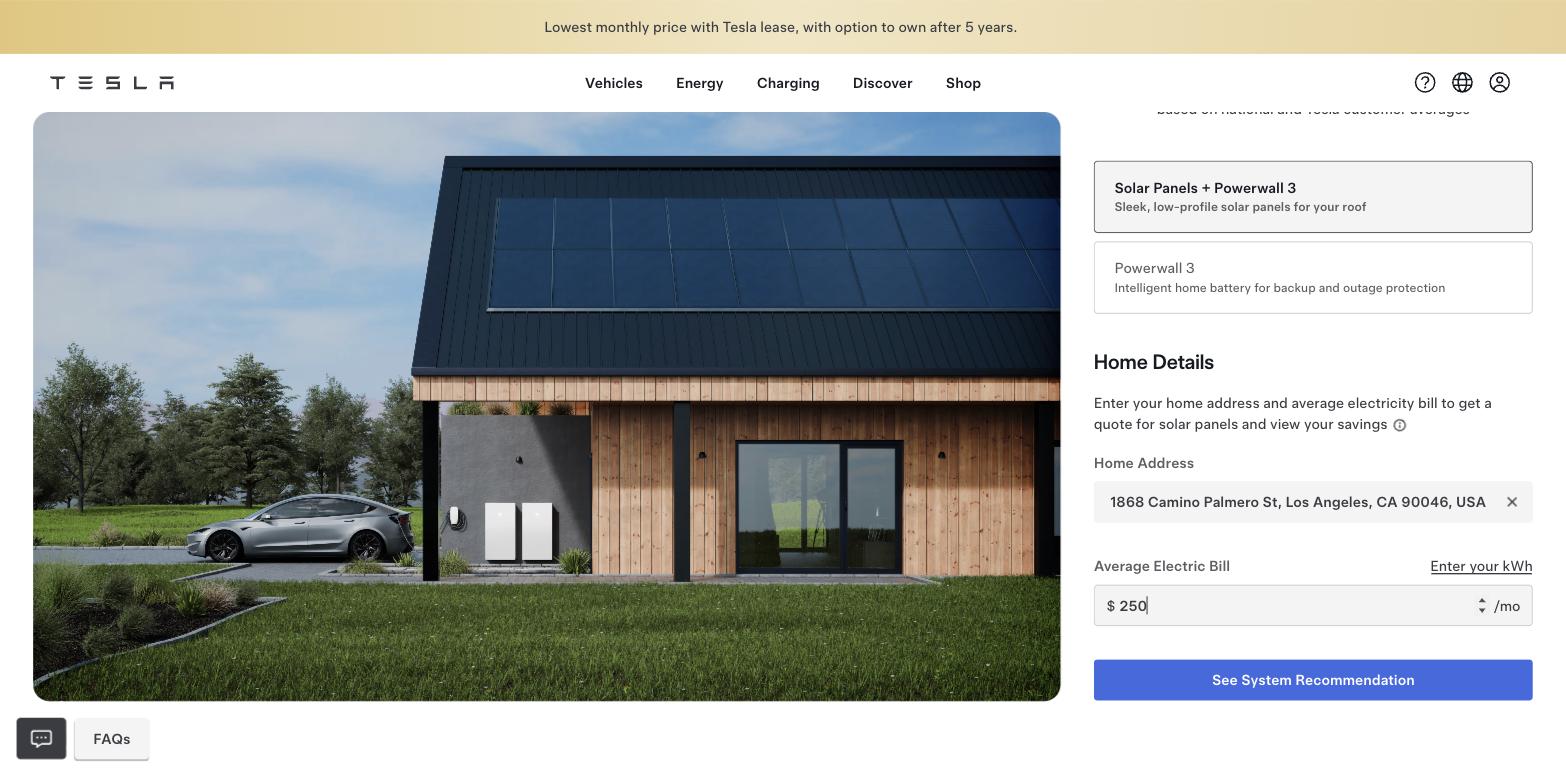
The panel is designed to pair with Powerwall 3, which combines the home battery and solar inverter in one unit. On Tesla’s design tool, the default configuration is now solar panels bundled with a Powerwall 3, and the whole experience is built around storing energy for outages and rising time-of-use rates.
Solar-only is still an option, Tesla’s configurator lets you drop the battery, but Powerwall is pre-selected, and much of the current pitch is about backup power and energy independence rather than solar alone.
Who actually installs it
This is where Tesla solar has changed the most, and where it gets confusing for buyers.
Tesla is stepping back from doing its own installations. In September 2024, the company began recruiting third-party “Certified Installers” as it wound down its in-house solar crews. Tesla’s own support pages now describe a hybrid model: “Tesla works with trained Certified Installers to install our home energy and charging products in areas where Tesla does not directly install.”
That network has grown quickly. Tesla counted about 2,000 certified installers across 14 countries in late 2024. Today, its partner page lists more than 7,000 installers in 35-plus countries and over 1 million installations. These companies buy Tesla hardware, quote and install it, and handle service, all running on Tesla’s “Tesla One” software platform.
So there are effectively two ways to get Tesla solar. In Tesla’s own “direct service territories,” Tesla sells and installs the system with its own crews. The scale of that operation is unclear. Everywhere else, you buy Tesla equipment, but a certified installer designs, prices, installs, and services it.
Where it’s available — and why that’s hard to answer
Tesla no longer publishes a list of states where it installs directly. The company doesn’t tell you which model applies to you until you enter your address in its online design tool.
The sales side is effectively national. Tesla’s configurator generates instant quotes and takes a $100 refundable deposit to start an order in states across the country, with a base cash price around $2.30 per watt before installation and incentives. Financing is standardized too: solar loans around 7.24%, Powerwall loans around 6.99%, and leases around 8.5%.
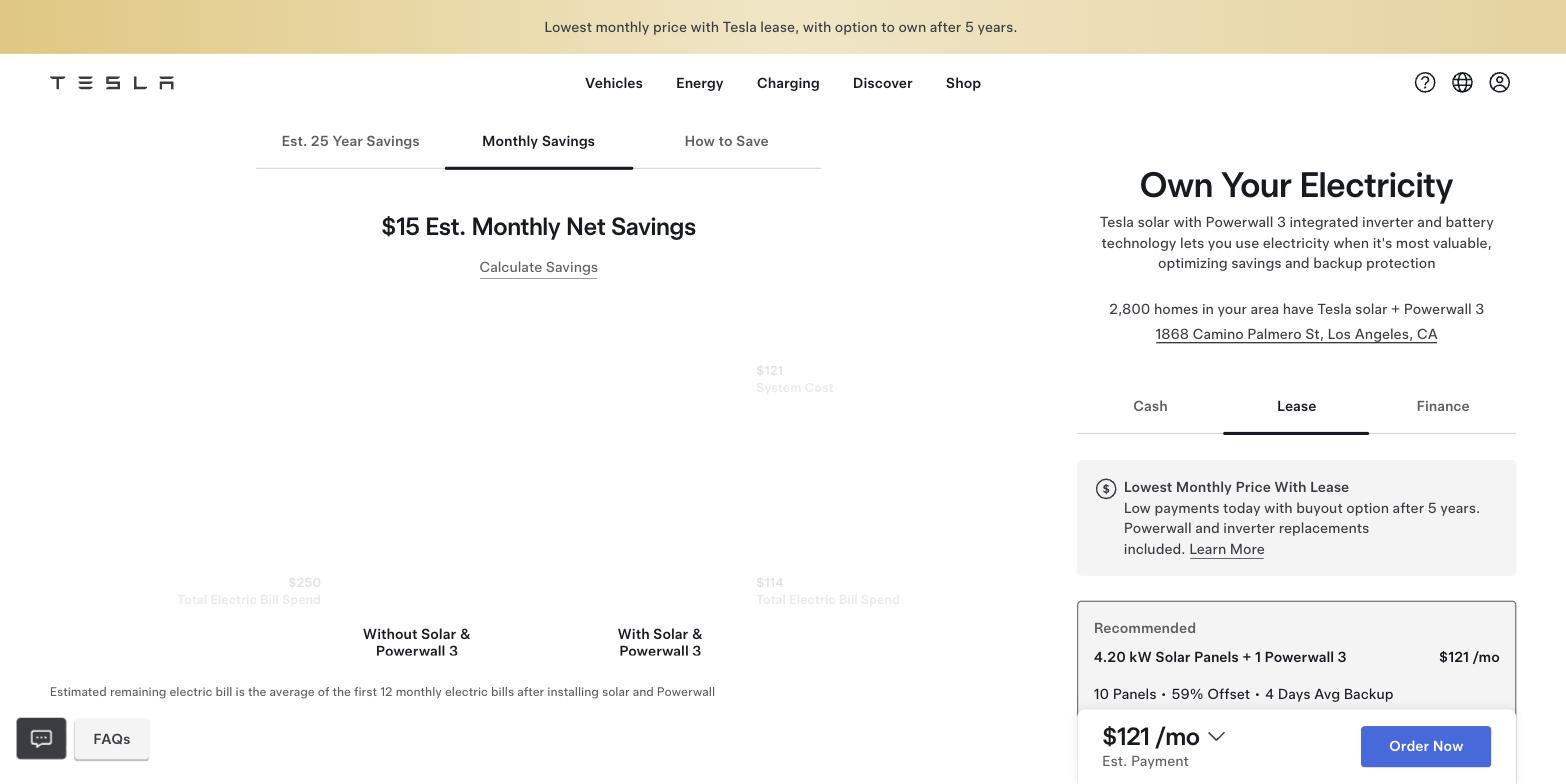
The install and financing side is where geography matters. Tesla’s lease, a 25-year solar lease (12 years for Powerwall-only) with a buyout option after five years and a 3% annual price escalator, is offered only in Tesla’s direct service territories, according to the company’s support pages. Within a given state, availability of leases and utility incentives can also vary by utility, which is part of why Tesla keeps the map vague and steers everyone to the address-based tool.
Author: Fred Lambert
Source: Electrek
Reviewed By: Editorial Team