

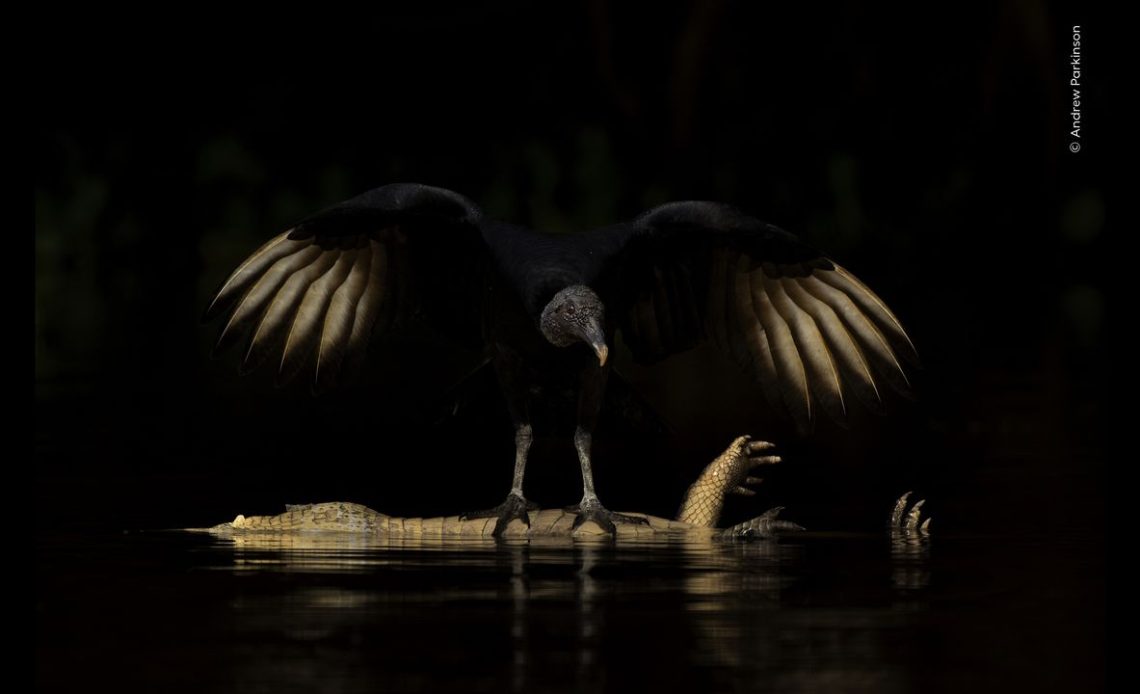
With a record-breaking number of submissions of over 65,000 images, the world’s leading wildlife photography competition reveals a sneak peek of the exceptional photographs captured from around the world.
Now running in its 62nd year, the Wildlife Photographer of the Year, developed and produced by the Natural History Museum, London, gives us rare insights into the intertwined lives of a rhino and an oxpecker, a not-so-easy-to-find dragon katydid and more – all showcasing the remarkable inhabitants of our planet.
The category winners and the prestigious Grand Title and Young Grand Title awards will be announced on October 13. You can watch the ceremony live on YouTube. The full set of highlighted images will be showcased in an exhibition from October 16 at the Natural History Museum, with tickets available here.
Wildlife Photographer of the Year – Sneak Peak Highlights
Behaviour: Mammals
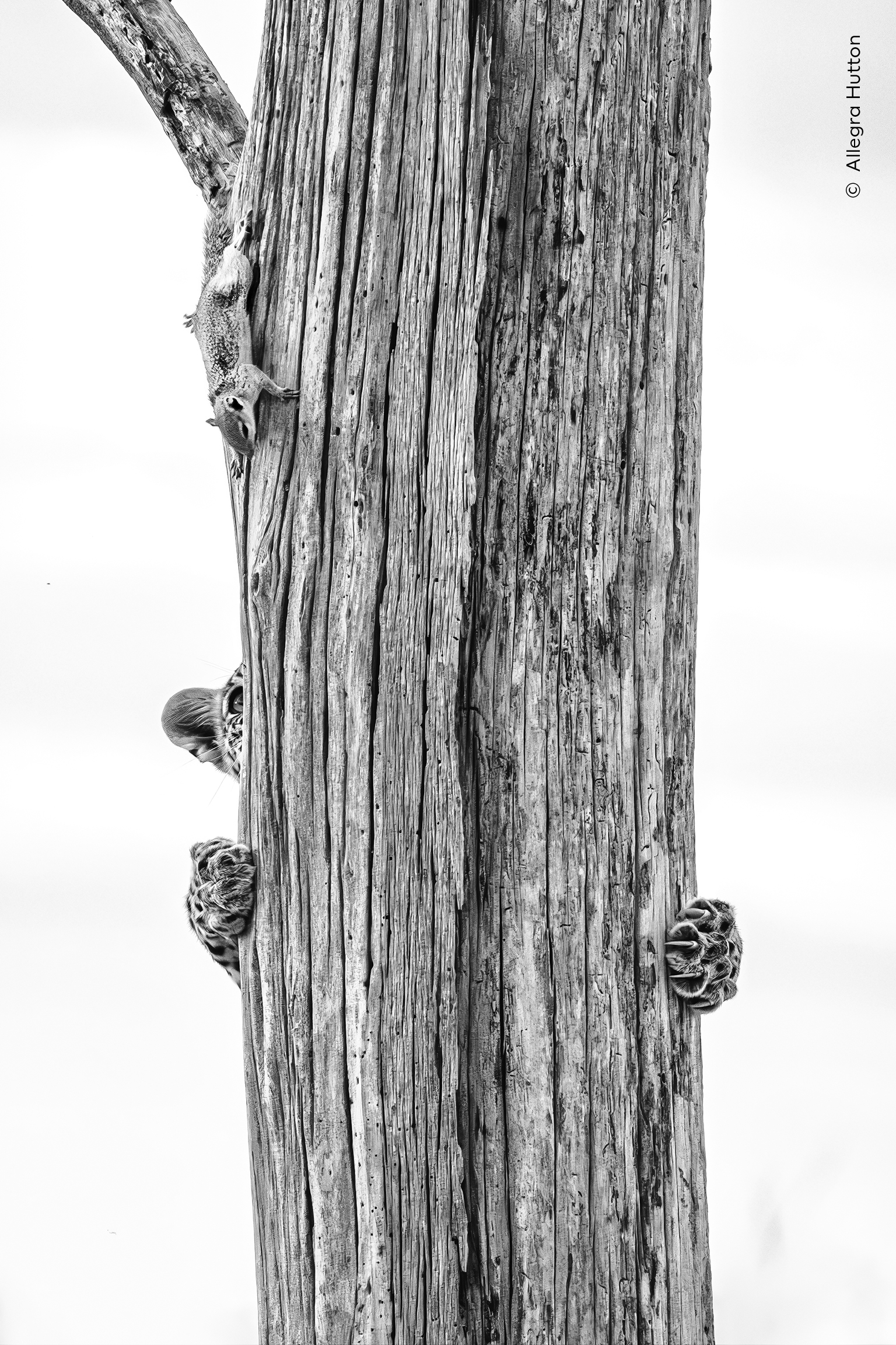
Highly Commended
Up a Tree without a Squirrel by Allegra Hutton, USA
Technical details
Sony A7R V + Sony FE 200–600mm f/5.6–6.3 G OSS at 467mm; 1/640 at f/11; ISO 4000
Allegra had already watched the leopard try – and fail – to stalk a rabbit. The squirrel also avoided the leopard’s clumsy manoeuvres, eventually ascending too high for the leopard to follow. By then, the cat could barely hang on. An awkward backward retreat ensued.
Oceans: The Bigger Picture
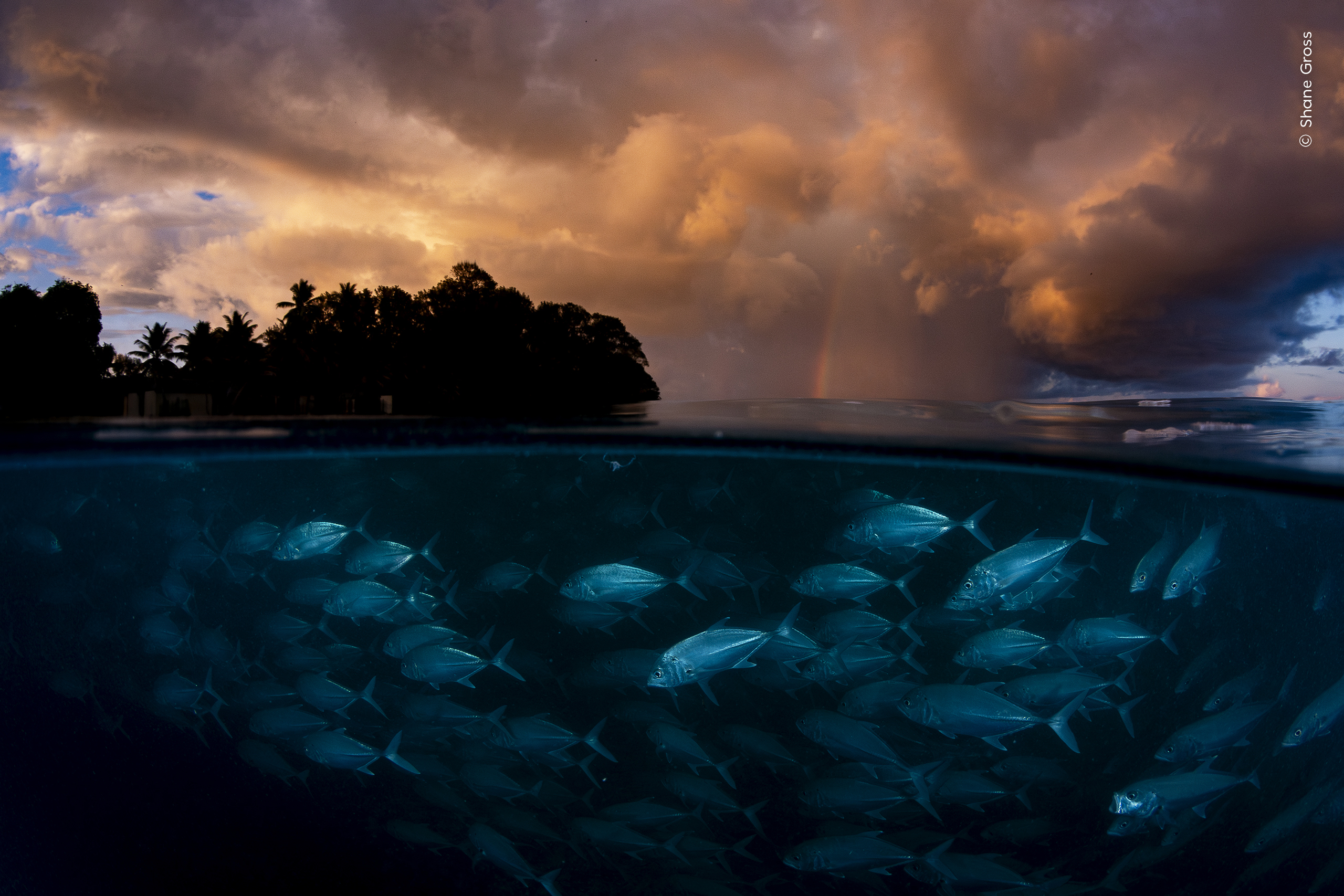
Highly Commended
Calm Amid the Storm by Shane Gross, Canada
Technical details
Nikon D500 + Tokina AT-X107 Fisheye 10-17mm f/2.5-4.5; 1/200 at f/16; ISO 500; Aquatica AD500 housing; 2x YS-250 Sea & Sea strobes
Shane noticed this school of fish swimming near the shore every morning at sunrise. Aiming for a split shot, he flipped the camera upside down to aid buoyancy distribution and adjusted his position, slowly approaching the curious school.
Behaviour: Amphibians and Reptiles
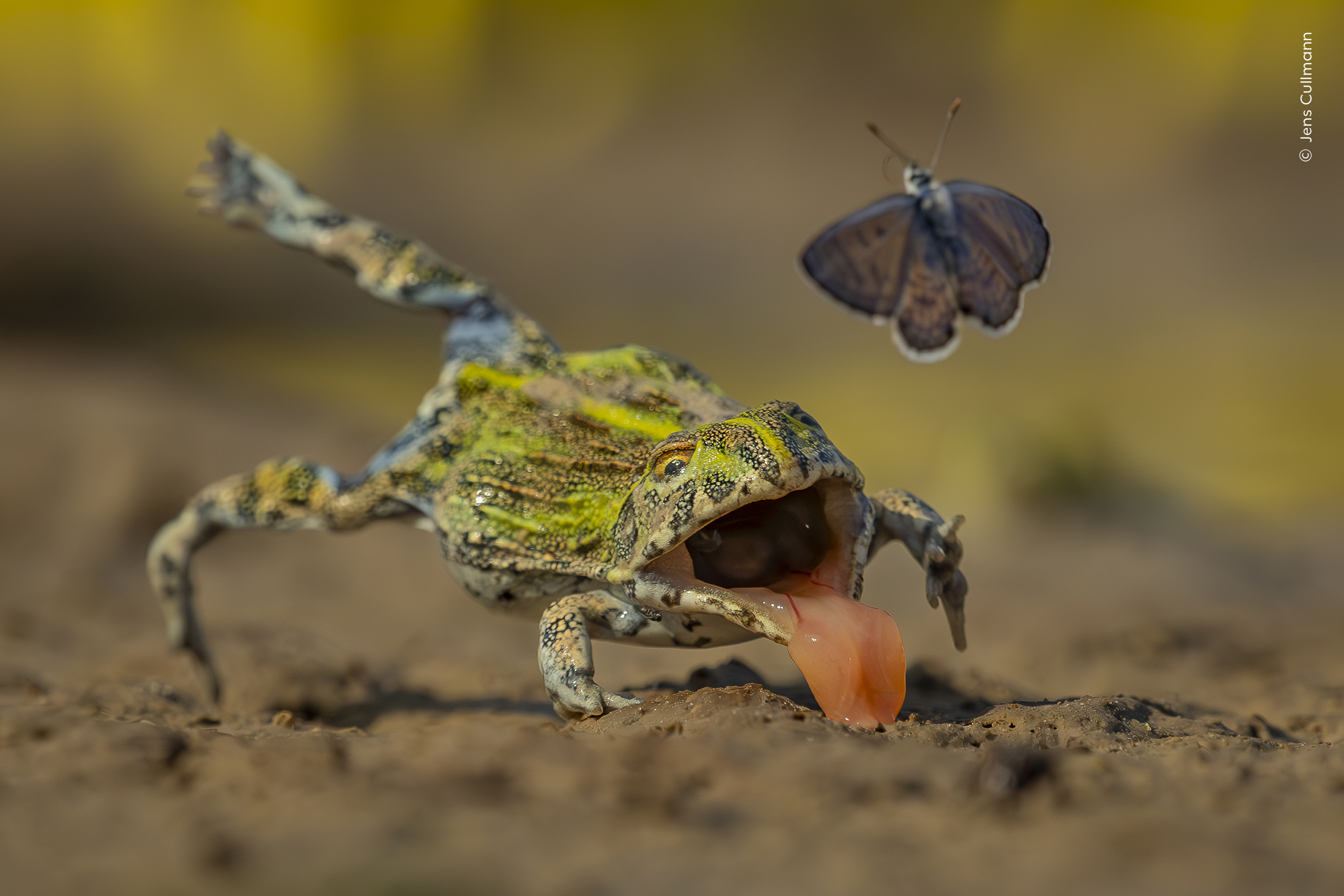
Highly Commended
Split-Second Escape by Jens Cullmann, Germany
Technical details
Canon EOS R3 + Canon RF 100–300mm f/2.8 L IS USM + 2x teleconverter; 1/4000 at f/9 (-0.3 e/v); ISO 2500
Jens noticed tadpoles on a previous visit after heavy rains and returned the following month to find ponds and puddles full of young bullfrogs. He spent more than two weeks watching the young frogs ‘eat everything that moved’.
Behaviour: Invertebrates
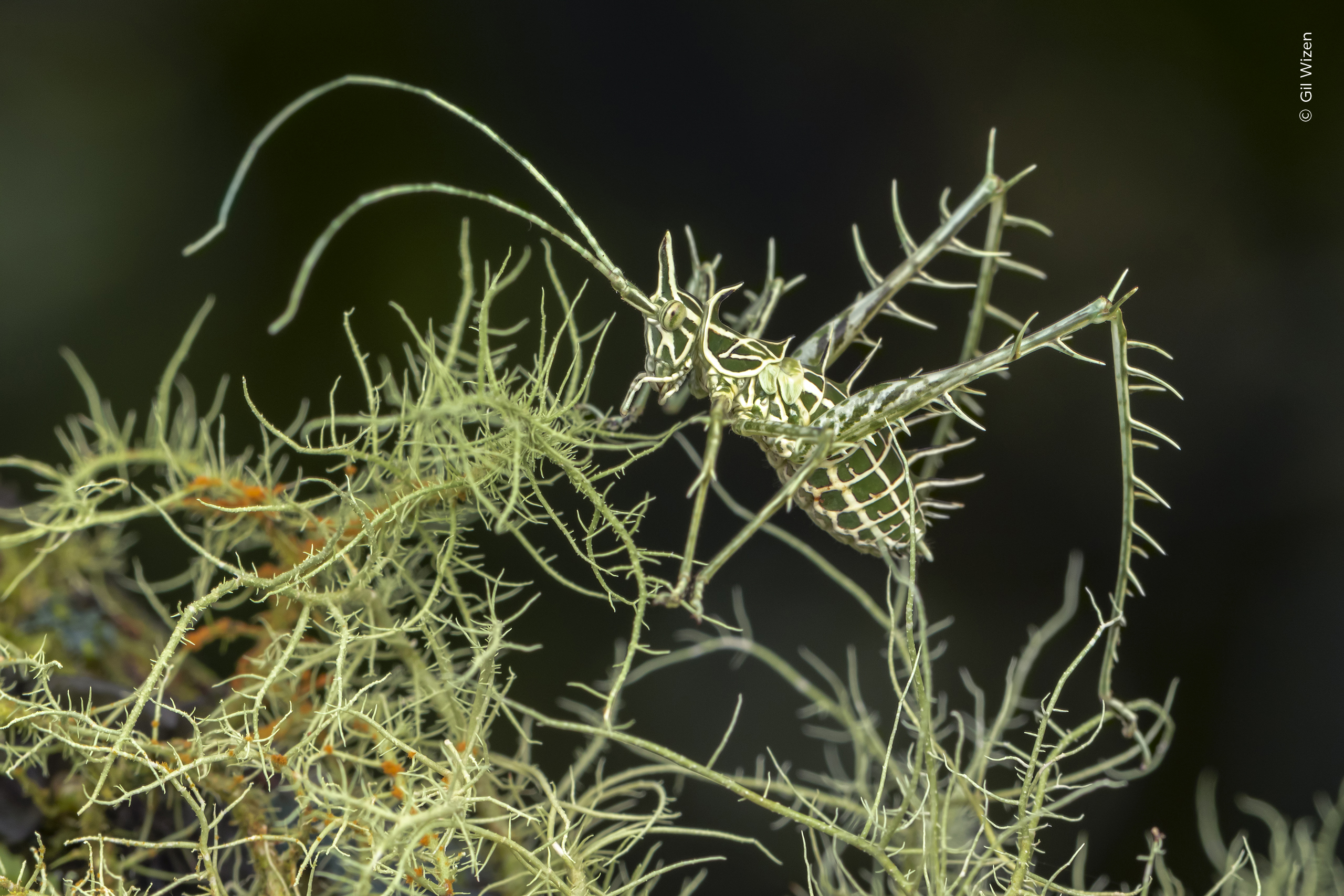
Highly Commended
Hidden Dragon by Gil Wizen, Israel/Canada
Technical details
Canon EOS 7D Mark II + Canon EF 100mm f/2.8L Macro IS USM; 1/100 at f/11; ISO 400; Canon Speedlite Macro Twin Lite flash + customised diffuser
At only 15 millimetres (3/5 of an inch) long, this little lichen dragon katydid was not easy to find. Luckily, Gil was able to spot it when it moved slightly, though distinguishing between the katydid and the lichen in the camera’s viewfinder made it challenging to photograph.
Behaviour: Birds
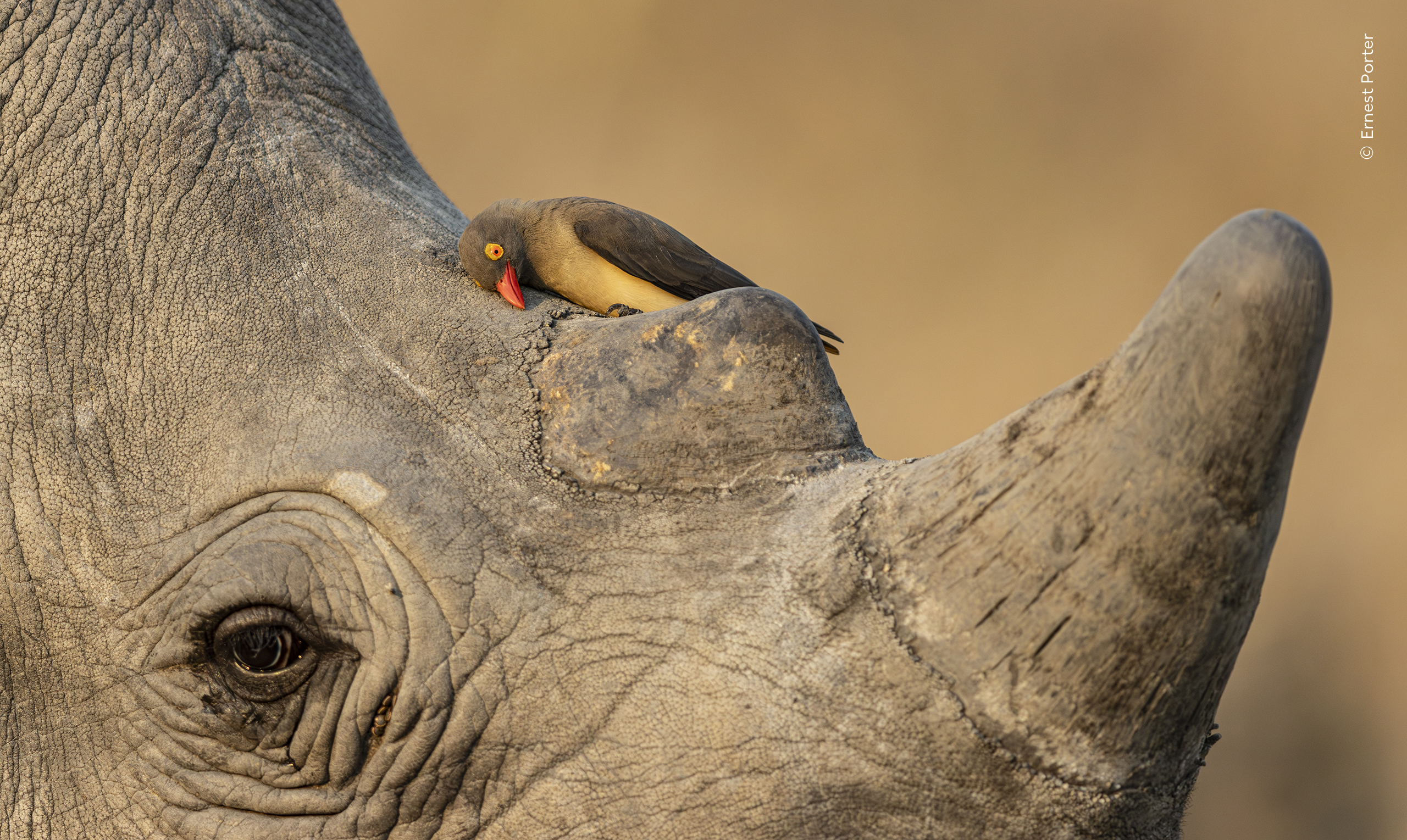
Highly Commended
Mutual Friends by Ernest Porter, South Africa
Technical details
Canon EOS R7 + Canon EF 400mm f/2.8L IS II USM; 1/5000 at f/2.8; ISO 800
While searching for wildlife in the reserve, Ernest witnessed a group of white rhinos with red-billed oxpeckers feeding on the insects that infest their skin. He noticed one rhino with a subtle blue ring in his eye, which immediately became his unique muse.
Author: Kim Bunermann
Source: DigitalCameraWorld
Reviewed By: Editorial Team