


Almost two weeks since WABetainfo was able to discover that WhatsApp’s working on reactions to its messenger app, we now have a closer look at it.
As for now, reactions on WhatsApp are still under development so not even public beta testers can try it out for now. According to WABetaInfo, different from how iMessage’s reaction works, the approach here is similar to what Instagram’s been doing, so it’s possible to use any emoji to react to a message.
Another important piece of information is that reactions aren’t anonymous so in a group chat, people will know who reacted with what emoji.
In the picture below, you can see there are seven reactions, and, probably, the most recent or the most used reactions appear first.
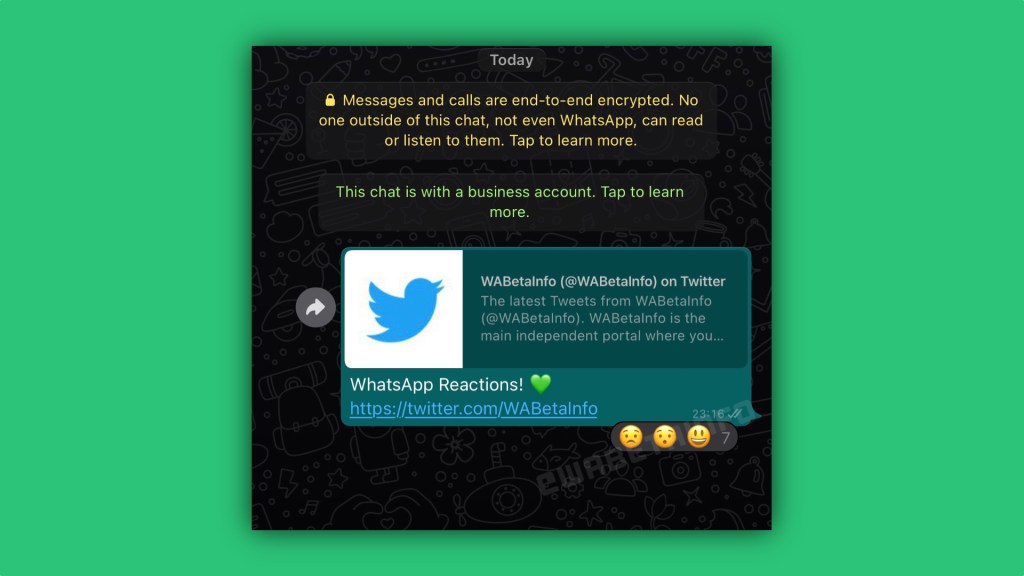
WABetaInfo says this feature is being tested for iOS and Android devices. In a Twitter post, the blog also clarifies that a message can have an infinite amount of reactions but if you have more than 999 reactions, you will read 999+.
The last time we reported this feature, WhatsApp had only implemented a message when someone reacts to one of your messages and you were running a previous version of WhatsApp.
“You received a reaction. Update your version of WhatsApp to see reactions.”
Not only that, over the past few weeks, WhatsApp has been working on multi-device support 2.0, which will bring an iPad app and let users connect to the app even without an internet connection with their phones or with it off.
The company also launched its public beta test for WhatsApp for Desktop. As for now, the latest update brings a redesigned voice message experience, in which you can see the waveforms as you speak and then listen to the message before sending it.
Author: José Adorno
Source: 9TO5Google