

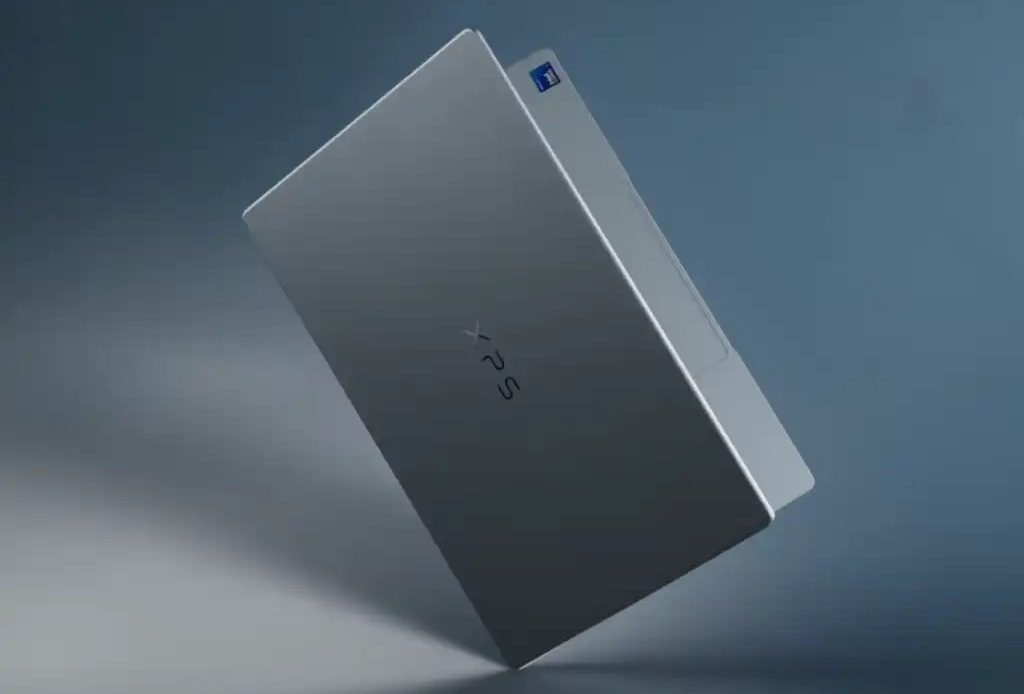
Dell’s latest XPS 13 might not have set out to specifically challenge Apple’s MacBook Neo, but it arrives at the right time. Its $599 price for students directly challenges the MacBook Neo’s own $599 price, with either Intel’s latest “Wildcat Lake” or the more powerful “Panther Lake” processors under the hood. Better yet, the new XPS 13 sports an OLED display and a 17-hour battery life despite its modest sticker price.
Dell is continuing its redemption arc with this budget head-turner. After killing the XPS brand in 2025, Dell brought back the Dell XPS 14 and XPS 16 at CES 2026, tipping the reveal of a less expensive XPS 13 later in the year. That gives Dell a little street cred, as it had already planned a less expensive XPS before Apple made low-cost laptops a talking point again.
The productivity story here is slightly unusual. Though we recommend the best laptops for college students, it’s rare that a PC maker explicitly markets their product in that direction. That’s the case here, where students will be able to buy the XPS 13 for $599, but everyone else will have to pay $699 and up.
“We’re not trying to be the cheapest option with the XPS 13; we’re not racing to the bottom on price,” Jeff Clarke, chief operating officer of Dell Technologies, said in advance of the show. “What we set out to do was to build something that gives students and consumers a little more of everything that matters at a price that doesn’t ask them to make a compromise, and that’s exactly what we did.”
“We have a $599 price point for the back to school season, touch screen, backlit keyboard, more storage, faster Wi-Fi, lighter weight, the full XPS experience,” Clarke said. “We’re not asking students to compromise, we’re asking them to make a much better choice.”
Microsoft has historically used a similar strategy in its online store. If it detects you logging in with a business or educational account email it will offer you lower prices. It’s rare, though, that students are explicitly called out as they are here.
Dell’s $599 price is available until Nov. 2, for high-school students 16 and over through students enrolled at a college or university that offers a degree. Dell didn’t specify exactly when the XPS 13 would be available, hoewever.
Otherwise, the marketing message here is brilliant: lightweight portability plus battery life. Students face all sorts of technical challenges moving from class to class, from dusty old lecture halls to commutes back and forth from their dorm to holing up in a cozy nook to study or write. None of these spots have guaranteed power outlets, so the weight (one kilogram / 2.2 pounds), the display (at 13.4 in, 2560 x 1600, slightly larger than the Neo), the size (slightly smaller at 11.69 x 7.9 x 0.5 in) and the battery life (17 hours, streaming) provide a compelling alternative to the new MacBook Neo. It’s a message that Acer’s new TravelMate also delivers, and why not? Who doesn’t want both all-day battery and a weight under 2.2 pounds, and with the same CNC-milled aluminum chassis that the Neo boasts?
Dell appears to be accomplishing this with some smart under-the-hood choices. Intel quietly debuted the Intel Core Series 3 (Wildcat Lake) processor earlier this year — a cheaper, less powerful version of the excellent Core Ultra Series 3 Panther Lake processor. Panther Lake has proven to enable laptops with long battery life, though laptop makers have also stuffed them full of battery cells, too.
The other technology that contributes significantly is the laptop display’s dynamic refresh rate, which scales between 30Hz and 120Hz. Think of it as you would a car: when needed, you want the engine to rev at its full RPMs for power and acceleration. At 120Hz, the display refreshes as fast as possible to enable smooth mouse scrolling and even some light gaming. If you’re simply staring at it without taking action, the frequency at which it updates drops down to 30Hz, saving power like a car idling at a stoplight.
At 13 inches, the display might be a little small, though Dell executives said that it will cover the full DCI-P3 color gamut used for digital cinema — and on an OLED screen. That might be a potential shortfall; a 15-inch screen does offer a more usable space. Remember, while the XPS can use an external display, it can’t preserve the color gamut on an external screen without that screen explicitly supporting that color gamut, too.
To be fair, that $699 price will quickly climb if a customer adds memory (up to 32GB are allowed) and additional storage (256GB/512GB/1TB), too. Still, an aggressive $599/$699 price point is extremely welcome news in an era of inflation and tariffs, and will put pressure on other PC vendors and even the new Googlebooks to hold prices down. The value here could be off the charts.
Author: Mark Hachman
Source: PCWorld
Reviewed By: Editorial Team