


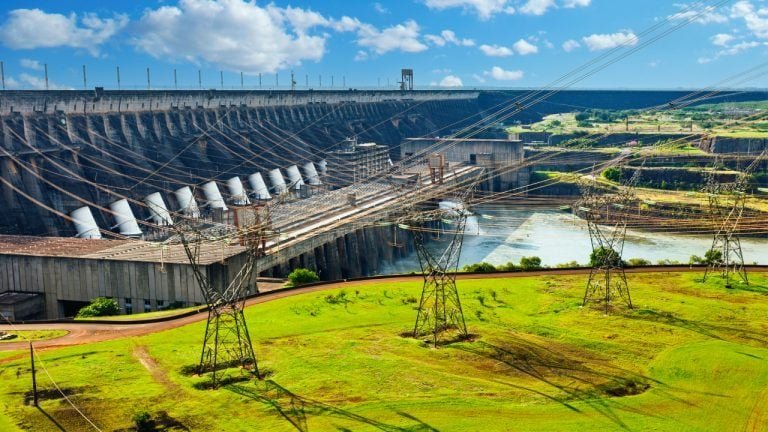
During the “Accelerating Bitcoin” conference, experts debated how current bitcoin mining operations would affect the Paraguayan grid, warning of a possible generation crisis by 2029 if bitcoin mining energy consumption grows moderately, as it currently accounts for 30% of the country’s energy production.
Key Takeaways
- Bitcoin mining uses 30% of Paraguay’s power, sparking warnings of a major energy crisis by 2029.
- Stagnant power generation and a $15B funding gap threaten the nation’s long-term energy independence.
- Though mining demand is flexible during peak hours, officials are cracking down on illegal power theft.
Paraguayan Grid Could Face Crisis By 2029 Due To Bitcoin Mining Operations
The state of bitcoin mining in Paraguay and its effect on the Paraguayan energy grid worries analysts, who fear that the rise of these activities can put the country’s energy independence in jeopardy.
During the “Accelerating Bitcoin” conference earlier this month, experts discussed the future of bitcoin mining and how, if bitcoin mining keeps growing, a crisis could develop by 2029.
Victorio Oxilia, an energy researcher, stressed that bitcoin mining activities consume the generation of a turbine and a half of the Itaipu dam, one of the largest in the world. Paraguay is popular as a bitcoin mining haven due to its 100% renewable energy blueprint from hydroelectric sources.
Oxilia also revealed that bitcoin mining consumed 30% of all the energy consumption of Paraguay, and that this could develop into a crisis in 2029 if hydrological conditions remain favourable. Nonetheless, energy contracts inked with mining companies in Paraguay expire in 2027, and their extension is still uncertain.
Julio Fernández, head of the Center for Economic Studies of the Paraguayan Industrial Union (UIP), issued a similar warning last year, alerting that if nothing was done, a blackout was coming.
While energy demand still grows, generation has become stagnant, as the only large infrastructure work being done is Aña Cuá, and it would render only 135 megawatts, insufficient to placate the growing consumption. Cecilia Llamosas, another analyst, stressed that Paraguay would have to spend between $11 and $15 billion in the next 13 years to satisfy upcoming demand, as there have been virtually no energy investments in the last 50 years.
Even so, Llamosas stressed that bitcoin mining demand was controllable, as operators can switch demand on and off depending on grid load, something that cannot be said about residential demand, which is cyclical and follows a certain periodicity.
Paraguayan authorities have been intensifying their fight against energy theft for bitcoin mining, even registering convictions for these crimes.
Author: Sergio Goschenko
Source: Bitcoin
Reviewed By: Editorial Team
