

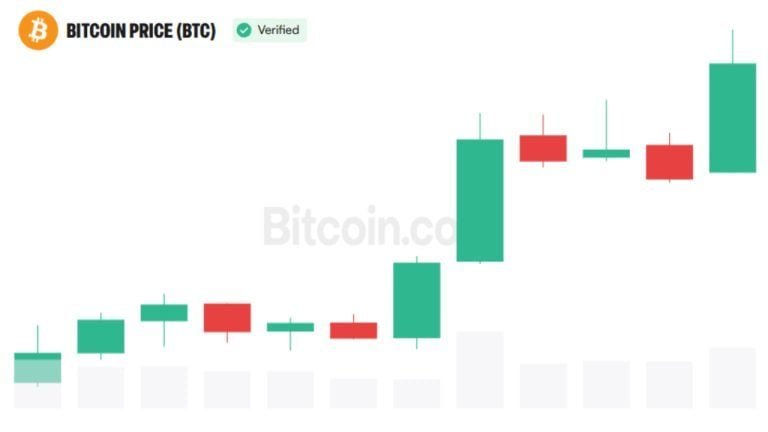
Bitcoin’s rebound has raised the prospect that the broader crypto market has passed its bear-market low. A Sept. 28 analyst report puts the probability of a cycle turn at 75%, while acknowledging that earlier recoveries have failed.
Key Takeaways
- The previous three bitcoin bear markets fell about 82% on average.
- Bitcoin’s June low came after a shorter, shallower decline than past bear markets.
- A renewed drop remains possible despite the recovery.
Why the Analyst Thinks the Crypto Cycle Has Turned
Crypto investors may have seen the worst of the current downturn, according to a Sept. 28 report by investment bank Keefe, Bruyette & Woods analyst Stephen Glagola. He assigns a 75% probability to a turn in the digital asset cycle, using bitcoin as a proxy for the wider market. The assessment accompanied the firm’s resumption of coverage of crypto exchange Coinbase (Nasdaq: COIN).
Bitcoin fell 53% from its October 2025 peak to a June 30 closing low, the report estimates. That low arrived about 8.8 months after the peak, compared with an average of roughly 12 months for the previous three bear markets. Those earlier declines averaged about 82% from peak to trough. Glagola wrote:
“We assign a 75% probability to the turn.”
The figure expresses his assessment of the cycle, not a forecast of bitcoin’s next price.
The comparison rests on an observed pattern in which bitcoin’s major advances have been followed by prolonged declines. Those past bitcoin market cycles offer a reference point, though their timing and depth have varied. Glagola notes that earlier bear markets included rallies exceeding 30% that later failed, leaving room for another reversal in the current recovery. He also found that onchain indicators have yet to show the deep capitulation seen near previous bottoms.
Bitcoin’s Recovery Meets a Divided Market
The rebound has carried bitcoin well above its summer lows, adding a price-based argument to the analyst’s view. Bitcoin closed near $84,400 on Sept. 26, up about 44% from its June 30 close near $58,500, according to the report. Bitcoin slipped to about $83,100 on Sept. 28, down roughly 1.6% from the previous session. Its recovery from the June sell-off has still included pullbacks, making the path of the advance relevant to claims that the cycle has changed.
Another analyst has pointed to a change in bitcoin holders’ average purchase prices as a bullish signal. A Sept. 24 holder cost-basis analysis identified a crossover that its author interpreted as confirmation of a bull market. That measure and Glagola’s historical cycle comparison use different methods; neither establishes where future prices will go.
Fidelity has offered a more cautious reading of the same broad question. Its Sept. 1 crypto market outlook said the low could already have occurred, but also described the possibility of a fresh decline later this year. Fidelity noted that bitcoin’s changing market structure could make the timing of earlier four-year cycles less reliable.
What a Cycle Turn Would Mean for Coinbase
The market call forms part of Glagola’s case for Coinbase stock. The firm resumed coverage with an Outperform rating and a $237 price target, compared with the $195.11 market price cited in its report. Glagola expects stronger crypto trading activity to lift earnings, while stablecoin revenue, derivatives, and prediction markets, where users trade contracts tied to event outcomes, could broaden the exchange’s business beyond spot trades.
Coinbase reported a record 10.3% share of crypto trading volume in the second quarter, up from 9.1% in the first. Its second-quarter results also showed average USDC holdings of $20 billion across its products. USDC is a stablecoin designed to maintain a value of $1. Glagola estimates that Coinbase’s 2027 adjusted earnings before interest, taxes, depreciation, and amortization will exceed the analyst consensus by 24%, assuming a moderate recovery in trading.
Coinbase CEO Brian Armstrong separately expressed confidence that bitcoin had reached a cycle low in a Sept. 10 interview. His view that bitcoin had bottomed is distinct from Glagola’s probability estimate. The KBW report identifies weaker stock markets and renewed Federal Reserve tightening as risks to its outlook.
Author: Kevin Helms
Source: Bitcoin
Reviewed By: Editorial Team