
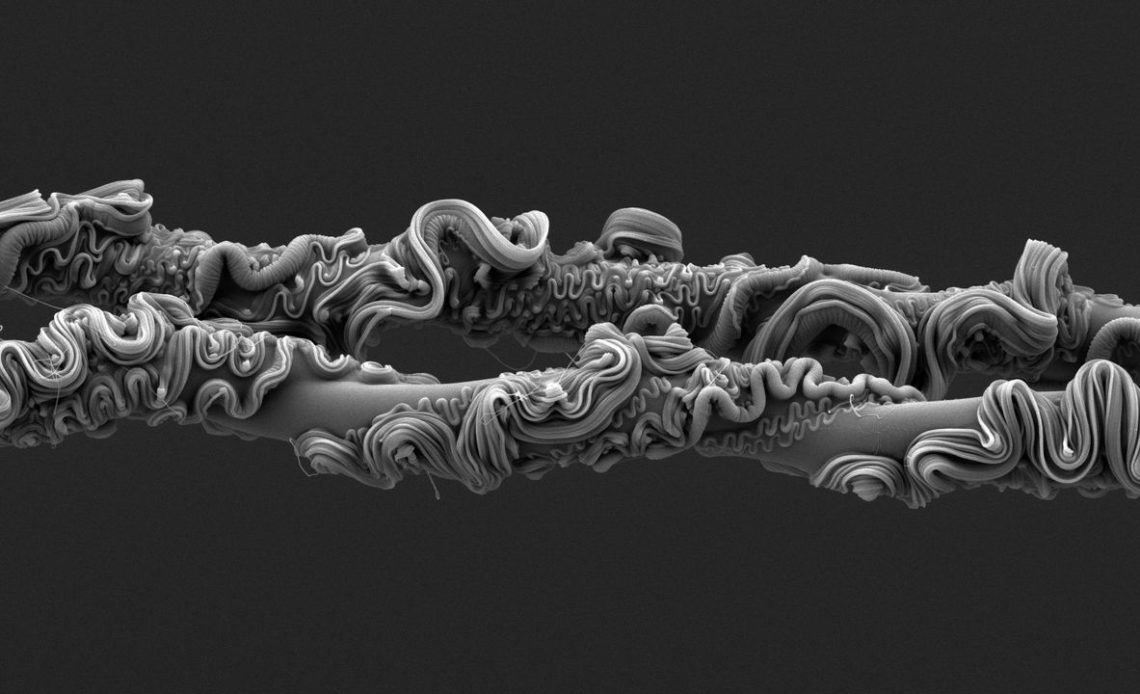
It looks like a scene from deep space – twisting structures, symmetry, and textures so intricate they barely seem real. But this astonishing vision isn’t sci-fi or AI at all. It’s the newly crowned overall winner of the Royal Society Publishing Photography competition.
The winning photograph, a microscope image of two threads of silk from the Australian net-caster spider, has just been announced as the top honor in this year’s competition, run in association with the Royal Photographic Society (RPS) – a global celebration of images that reveal the beauty of science.
This year’s overall winner, titled Mesmerizing spider threads, comes from Dr Martin Ramirez, a research scientist at scientist for CONICET (National Scientific and Technical Research Council – Argentina) at the Argentinian Museum of Natural Sciences.
He studies the systematics, evolutionary morphology, and biogeography of spiders. Captured using a scanning electron microscope (SEM), the image unveils details impossible to see with the naked eye.
The subject itself is as fascinating as the image. These spiders are ambush predators that hold their web between their forelegs and launch it outward to snare passing insects – a behavior that demands uniquely engineered silk.
Its strength, elasticity, and ability to snap back into place drew Dr Martin Ramirez and collaborator Dr Jonas Wolff from Greifswald University to investigate them more closely.
In Germany, the pair analyzed the silk’s tension using specialized instruments and delicate fibre-by-fibre dissections, measuring just how far the strands could stretch. But the defining image came later, when samples were taken back to Buenos Aires and placed under an electron microscope – a tool that uses a beam of electrons rather than light to capture astonishingly high-resolution detail.
Hugh Turvey, Science Committee Chair at the Royal Photographic Society and a member of the judging panel, said: “(…) This bold, graphic SEM of inconceivable rope-like structures — with their remarkable twists and complex undulations — evokes a sense of wonder, perfectly demonstrating the intersection of artistic form and scientific function.”
Let’s also discover the striking category winners… For more information about the awarded images, runner-ups, and all details, visit the RPS website.
Category winners
Astronomy
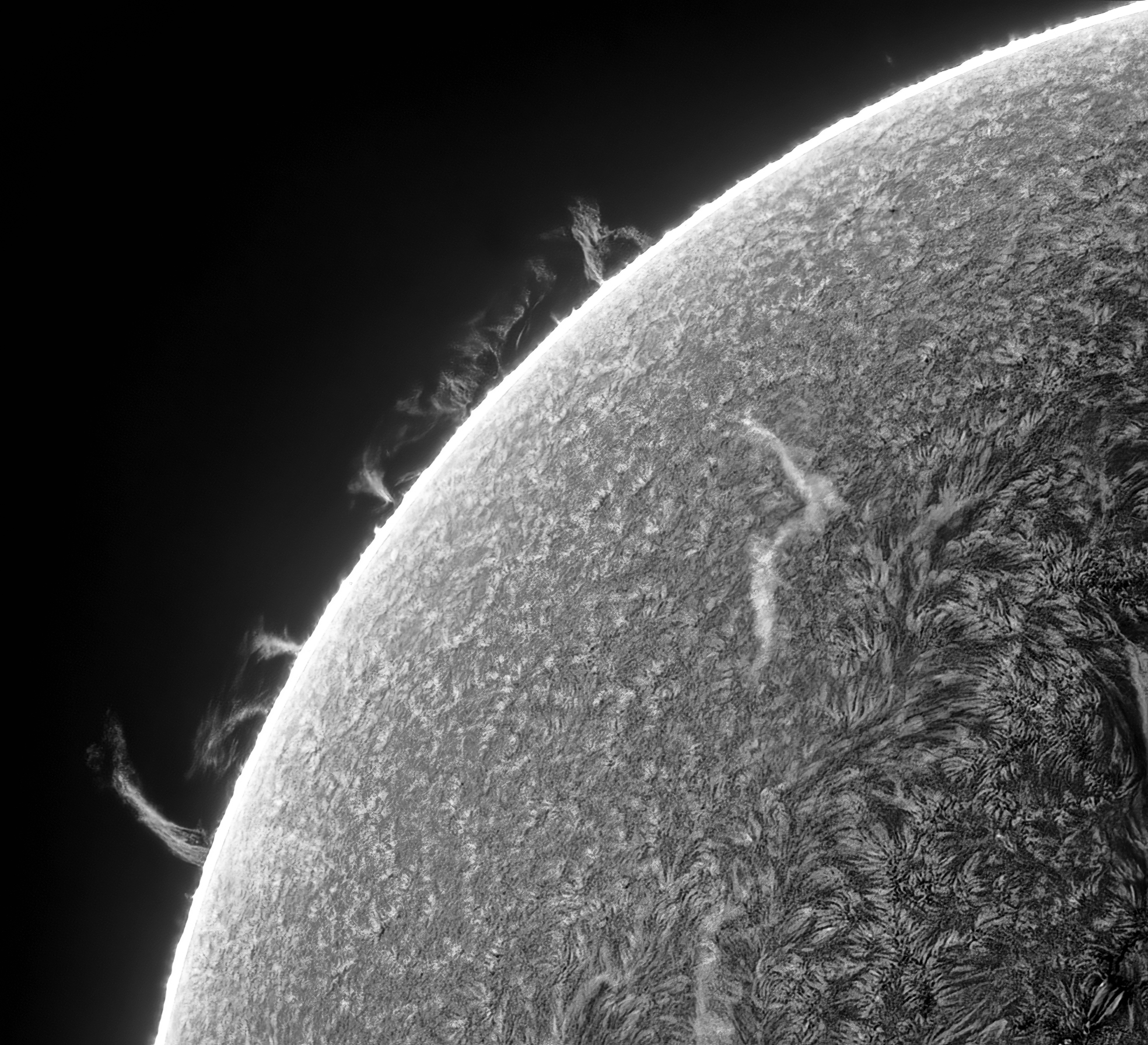
Dancing on the Edge of Fire by Imran Sultan
Institution: Center for Interdisciplinary Exploration and Research in Astrophysics (CIERA), Northwestern University
Tech details: Svbony SV503 80ED 80mm refractor with focal reducer and UV/IR cut filter, Daystar Quark H-Alpha Solar Filter, Star Adventurer GTi mount, ZWO ASI533MC Pro (1720 30ms frames captured with FireCapture and stacked with AutoStakkert). Processing: ImPPG: deconvolution; Adobe Photoshop: levels, curves.
“With the Sun near the peak of its 11-year solar cycle, 2024 offered breathtaking views of solar activity, from sunspots to towering prominences several times the size of the Earth. On July 26, I observed the Sun in Hydrogen-alpha light, revealing the dynamic solar chromosphere and intricate prominences dancing along the limb.
“In order to see the rich details of the chromosphere, imaging in a narrow band of red hydrogen-alpha light (0.3-0.5 angstroms) while rejecting all other sunlight is crucial. The image represents about one minute of frames that have been stacked to maximize the signal-to-noise ratio. To bring out the features of the chromosphere, I inverted the image.”
Behaviour
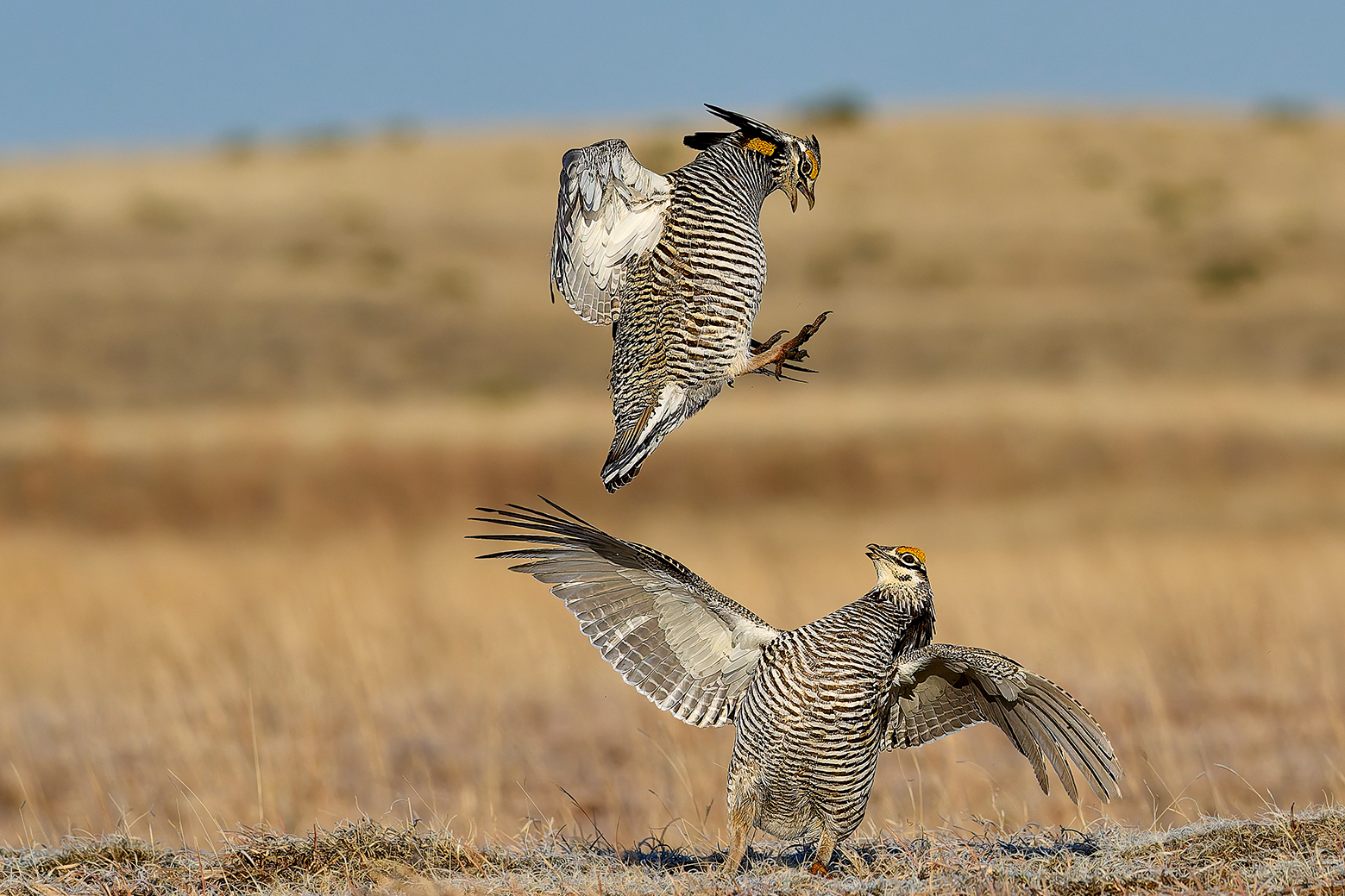
Prairie Chicken Jump Off by Peter Hudson
Institution: Penn State University
Tech details: Sony A1, 1/8000sec, f/4, ISO 800
“The majority of grouse species exhibit lekking behavior, where males compete in communal arenas for females. These male Greater Prairie Chickens (Tympanuchus cupido) demonstrate the characteristic aerial combat of the smaller grouse species – one bird launches into the air attempting to strike its opponent before landing and triggering a reciprocal jump attack.
“Early biologists interpreted this as straight male-male competition somewhat resembling medieval tournaments, where the winning male claims the female. However, it is now apparent that this is really female choice and the females evaluate males across multiple behavioral and morphological traits.
“Younger males tend to be on the edge of the lek and as they age so they tend to move into the central locations and these older males are often the individuals the female select. Interestingly if a female selects a male for copulation then the other females nearby will also select the same male.”
Earth Sciences & Climatology
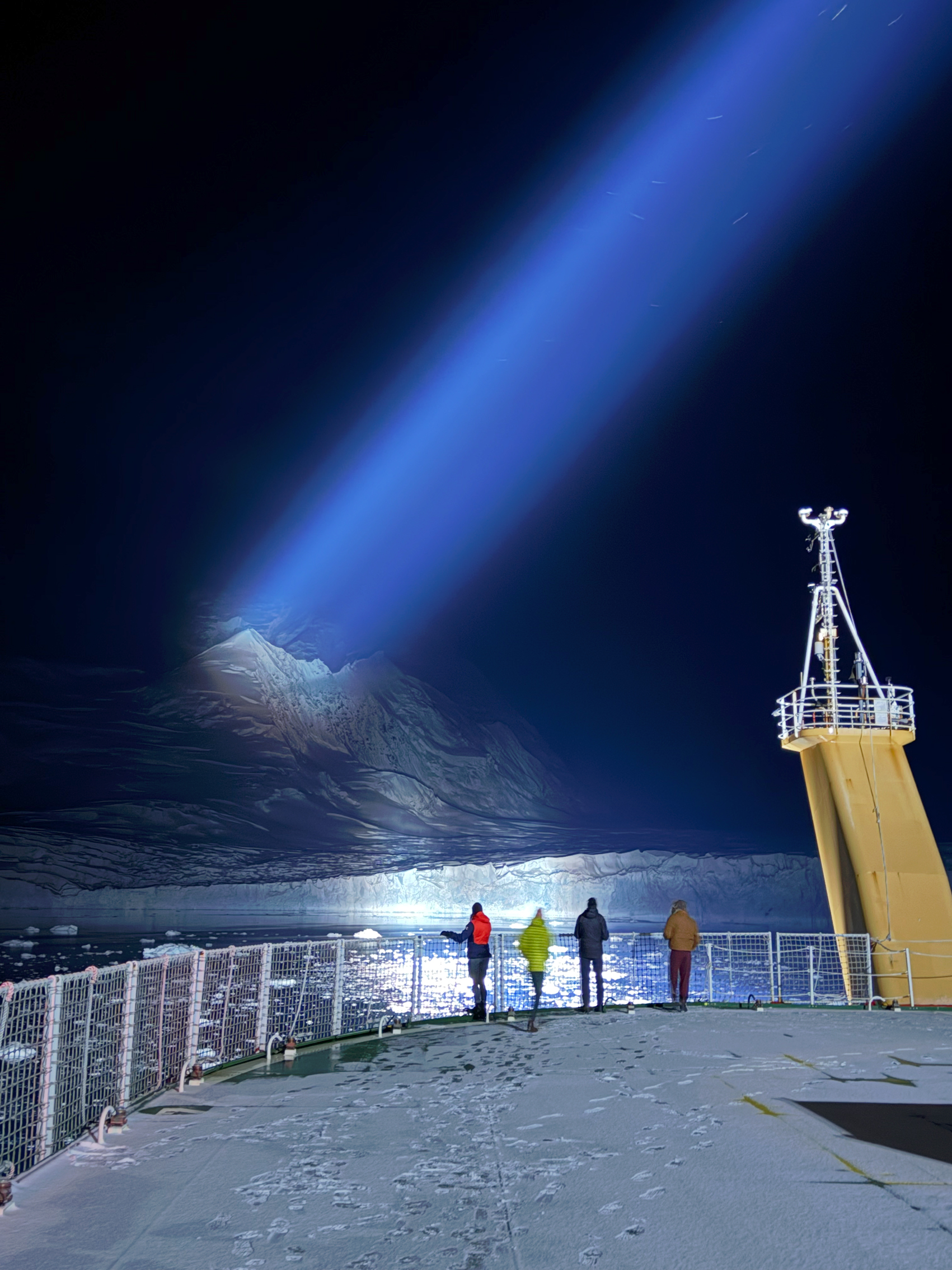
Scanning glaciers in the Antarctic winter by Michael Meredith
Institution: British Antarctic Survey
Tech details: iPhone 16 Pro Max on standard Photo setting, no post-processing applied
“Antarctic glaciers strongly influence the ocean, providing freshwater and nutrients to the sea when they melt, and pushing up sea levels globally. They are also vulnerable to ocean warming, becoming more unstable and calving more frequently.
“To understand better how these key processes work, and what are their implications for climate, sea level rise and ocean ecosystems, we ventured to the Antarctic on the UK polar research vessel RRS Sir David Attenborough. This was a rare wintertime expedition, during which we surveyed a number of glaciers and measured the ocean adjacent to them, often in darkness and in frigid temperatures.”
Ecology and Environmental Science
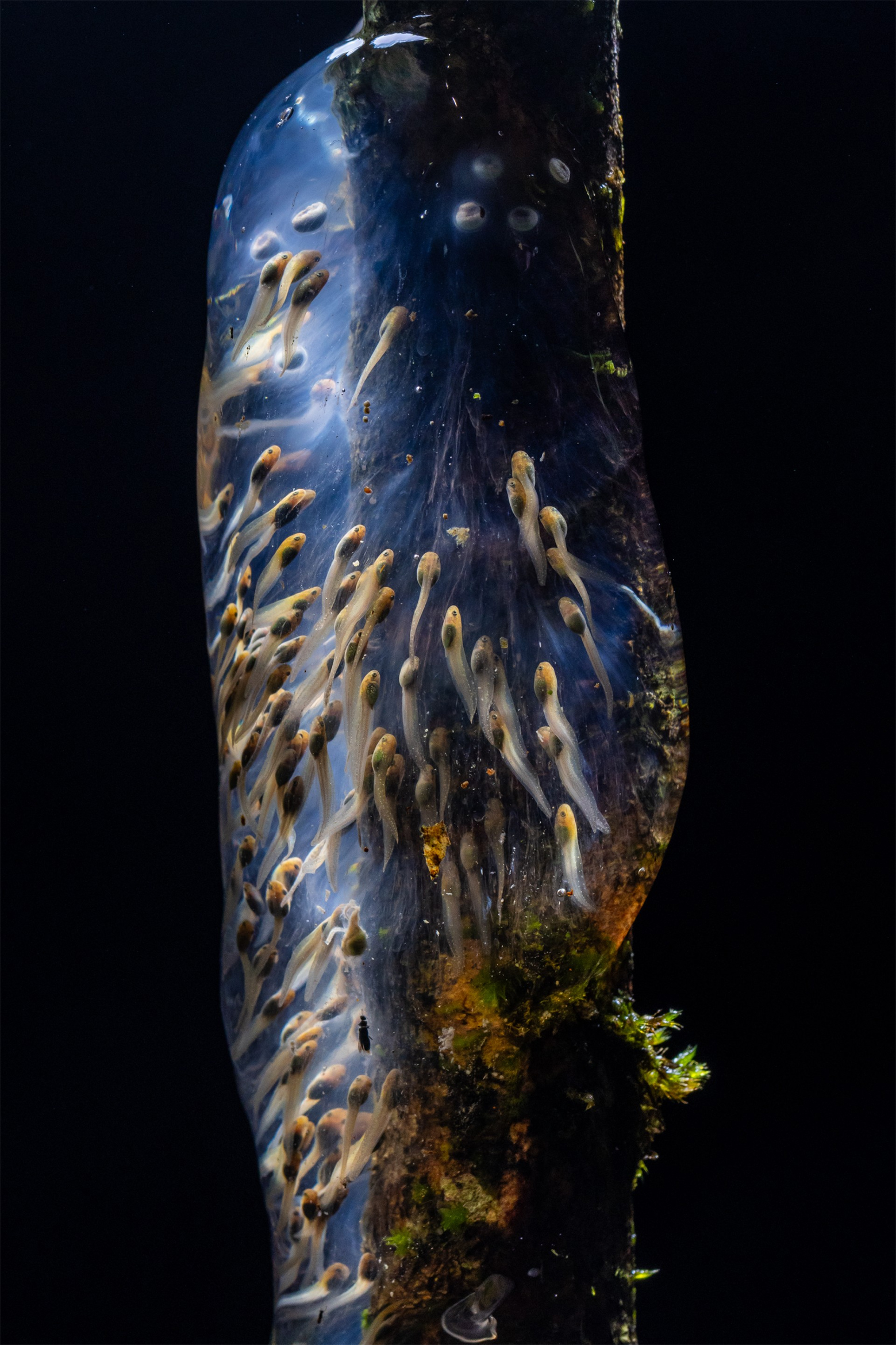
Category Winner: Amphibian galaxy by Filippo Carugati
Institution: University of Turin
Tech details: Softbox used, slight levels adjustment in post-production
“Conducting fieldwork during cyclone season gave me the opportunity to witness a wonderful natural spectacle: Malagasy frogs’ mass reproduction. The Maromizaha rainforest (Madagascar), where I spent six months collecting data for my Ph.D. thesis, hosts an outstanding richness of amphibians, with at least 74 endemic species. For many Malagasy frogs, reproduction peaks correspond with Winter months, a period characterized by higher temperatures and intense rainfalls.
“During my nocturnal explorations of rivers and wet areas, I had the chance to observe a wide range of reproductive behaviours that characterized each frog species. In particular, I was deeply impressed by the variability in shapes, colours, and sizes of the numerous egg clutches deposited on leaves, branches, and even trunks. In this shot, I documented in situ one of these stunning encounters: a large egg clatch (20-30 cm), probably deposed by a Guibemantis liber frog, hanging to a small trunk next to a little pond.
“Inside this egg aggregation, several tadpoles were swimming peacefully through the gelatinous substance that mainly composed this structure. Using an external remote-controlled flash, I light the subject from behind, enhancing the shapes of the group of tadpoles converging and, at the same time, the colourful mixture within the gelatine, which suggest a cosmic appearance.”
Author: Kim Bunermann
Source: DigitalCameraWorld
Reviewed By: Editorial Team