

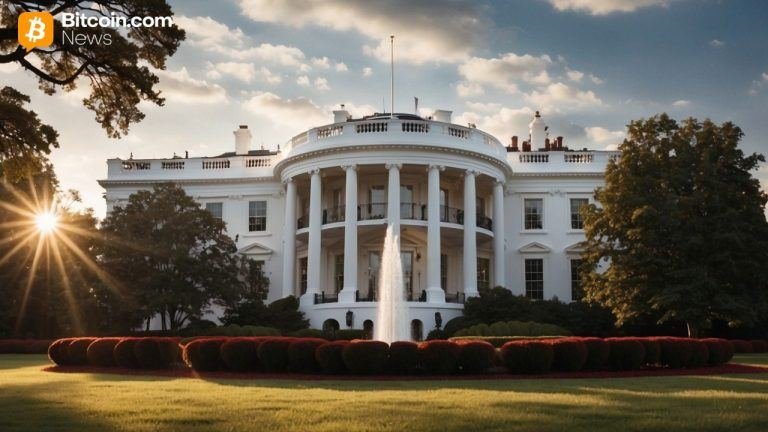
White House officials and crypto leaders are closing in on a pivotal stablecoin and market structure deal as high-stakes negotiations over yield restrictions intensify, signaling potential clarity that could redefine U.S. digital asset regulation.
White House Pushes Toward Stablecoin Deal Amid Yield Dispute
The White House convened another meeting on crypto market structure as negotiations between digital asset firms and banking representatives intensified. The session aimed to narrow disagreements over stablecoin yield restrictions and rewards frameworks, marking the third such meeting this month.
White House Crypto Council Executive Director Patrick Witt shared on social media platform X on Feb. 20:
“Yesterday’s meeting was a big step forward. We’re close. Provided we continue to have good faith engagement from both sides on this issue, I fully expect we will meet our deadline.”
The comments refer to an end-of-month deadline set by officials to finalize agreed language on market structure provisions. Ripple Chief Legal Officer Stuart Alderoty posted on Feb. 19: “Many thanks to Patrick Witt for today’s meeting and for his continued commitment to get CLARITY across the finish line. We rolled up our sleeves and went through specific language today. Work will continue in the coming days. Let’s get this right and make the US the crypto capital of the world!”
Coinbase Chief Legal Officer Paul Grewal wrote the same day: “More progress today with Patrick Witt at the White House. The dialogue was constructive and the tone cooperative.”
The initial stakeholder meeting on Feb. 2 resulted in the White House directing both traditional finance and crypto representatives to propose specific language changes to the bill. A subsequent session on Feb. 10 ended without agreement after banks introduced strict “Yield and Interest Prohibition Principles.” By Feb. 19, negotiations stretched beyond two hours, with officials reportedly collecting participants’ phones to encourage more focused discussions.
Coinbase CEO Brian Armstrong opined on Feb. 18:
“Market structure is making great progress, and I believe we’re going to reach a win-win-win outcome. A win for the crypto industry. A win for the banks. And, most importantly, a win for the American consumer.”
At the center of the talks is whether stablecoin issuers may offer rewards tied to certain activities. Proposed anti-evasion provisions could authorize the U.S. Securities and Exchange Commission (SEC), the Treasury Department, and the Commodity Futures Trading Commission (CFTC) to enforce limits on paying yield on idle balances, including civil monetary penalties of $500,000 per violation, per day. Participants indicated that discussions will continue in the coming days as negotiators work toward a potential agreement.
FAQ ⏰
- What is the focus of the White House crypto meeting? Negotiators are working to finalize stablecoin legislation and broader crypto market structure rules.
- Why are yield restrictions central to the stablecoin debate? Banks and firms disagree over whether issuers can offer rewards or yield on idle balances.
- Which agencies could enforce stablecoin yield limits? The SEC, Treasury, and the CFTC may gain authority to penalize violations under proposed anti-evasion provisions.
- What penalties are proposed for violating stablecoin yield rules? Draft provisions include civil monetary penalties of $500,000 per violation, per day.
Author: Kevin Helms
Source: Bitcoin
Reviewed By: Editorial Team