

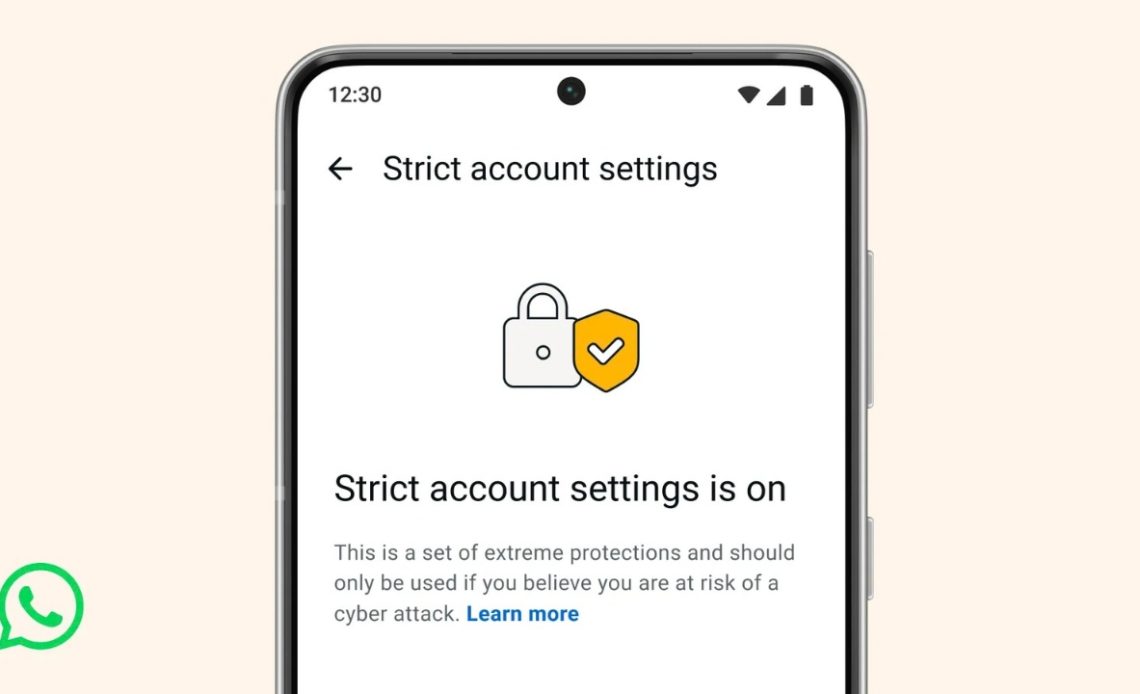
WhatsApp Strict Account Settings feature has been announced by the Messaging platform which adds to the existing set of privacy features like end-to-end encryption. “A few of our users – like journalists or public-facing figures – may need extreme safeguards against rare and highly-sophisticated cyber attacks,” said WhatsApp while stating one of the reasons behind introducing the feature.
The new lockdown-style feature called Strict Account Settings, when turned on, will lock certain account settings to the most restrictive settings, and it will limit how your WhatsApp works in some ways, like blocking attachments and media from people not in your contacts. You can enable Strict Account Settings – which is rolling out gradually over the coming weeks – by going to Settings > Privacy > Advanced.
WhatsApp notes that it has also rolled out a programming language called Rust behind the scenes to help keep your photos, videos, and messages safe from things like spyware.
The rollout of these features comes at a time when WhatsApp is facing a lawsuit that makes a bold claim, suggesting that the platform does not have end-to-end Encryption (which WhatsApp consistently boasts of) and that Meta can easily read messages of any user through a simple process.
Also Read: WhatsApp Group Member Tags, Text Stickers, and Even Reminders Introduced for Group Chats
According to the complaint, a staff member could submit a request through Meta’s internal task system, stating that they needed access to WhatsApp messages for work purposes. The lawsuit claims that engineers would then grant that access, sometimes without detailed checks. Once approved, the employee’s workstation would reportedly display an internal tool or widget capable of retrieving messages tied to a specific user ID – an identifier that remains consistent across Meta’s platforms.
The filing further alleges that once access was granted, employees could view messages directly through this tool, without needing an additional decryption step. Messages from WhatsApp were allegedly shown alongside content from non-encrypted sources within the same interface. The complaint claims the messages could appear nearly in real time and that access was not limited by date, potentially allowing historical messages to be viewed, including ones users believed had been deleted.
These claims come from a 51-page legal complaint and represent allegations that have not yet been proven in court. However, WhatsApp has responded on X that any claims made regarding people’s WhatsApp messages being not encrypted are “categorically false.”
It also posted separately and said, “Your WhatsApp messages are private. We use the open-source Signal protocol to encrypt them. Encryption happens on your device. Messages are encrypted before leaving your device. Only the intended recipient has the keys to decrypt messages. The message encryption keys are not accessible to WhatsApp or Meta. Any claims to the contrary are false.”
Author: Abhishek Malhotra
Source: The Mobile Indian
Reviewed By: Editorial Team