

Commercial fleets have been adopting electric vehicles for their long-term fuel and maintenance savings, but Benore Logistics has found another big benefit to making the switch: going electric is helping the company attract younger drivers – and keep them.
Benore Logistics operates a fleet of more than 700 trucks. While most of those trucks are still fueled by diesel, the company is diving headlong into decarbonizing its fleet, investing big money in new, alternative fuel trucks that are helping Benore reduce its fleet’s harmful carbon emissions, total cost of ownership (TCO), and – crucially – employee turnover.
What’s more, Benore says younger drivers are more interested in sustainability, and are more comfortable interacting with the technology that’s baked into newer trucks than their older peers.
“It’s a very difficult type of job driving a truck,” Joan Benore, vice president of the Michigan-based 3PL, told CCJ. “You have a lot of responsibility, and so for us as a company, one of the number one things that we focus on when we’re screening and looking for drivers is the driver’s safety commitment, but the technology is bringing that to us as well. If you’re changing lanes, it’s going to notify you. It will stop the truck if something stops abruptly in front of you.”
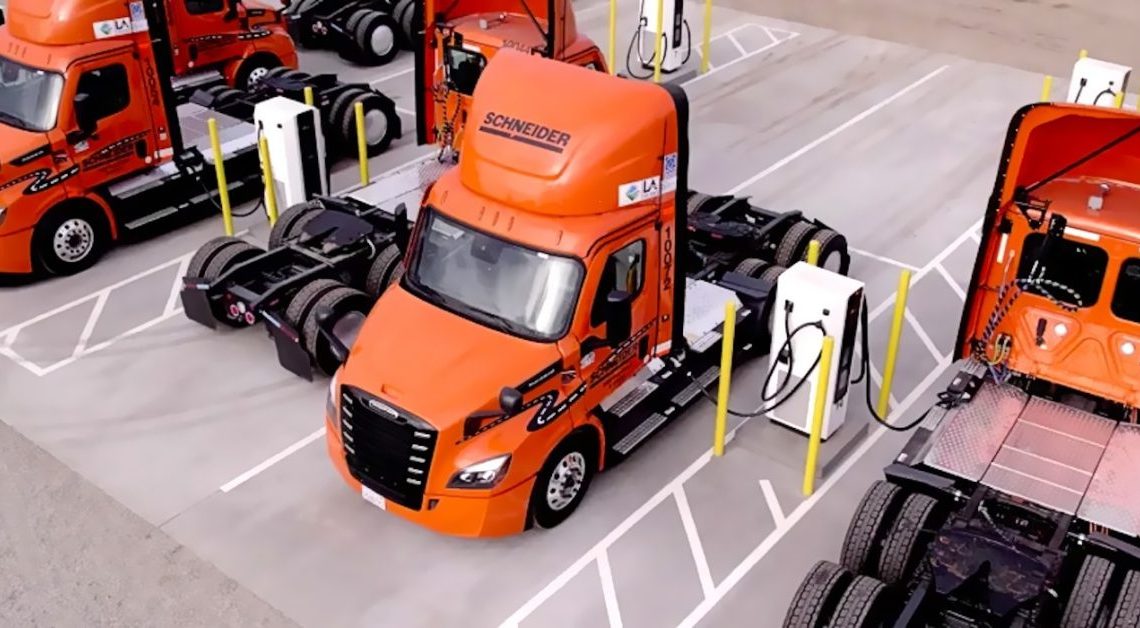
Benore isn’t alone. Fleets like Schneider and Martin Brower have also noticed that their drivers prefer electric trucks for their quieter operation, smoother ride, and lower fatigue – all factors that make an already tough job tougher than it needs to be.
Even major operators like Estes and PepsiCo have seen strong driver interest in electric models like the Tesla Semi, reinforcing the idea that newer, tech-forward trucks can double as recruiting tools.
“You press the pedal and it just goes. There’s no shifting, no rough transition between gears – even going up hills,” explains Eric Bettencourt, a driver and trainer on Pepsi/Frito-Lay’s Tesla Semi fleet. “Once I train people [on electric], they don’t want to drive anything else.”
Renewable, recruitable

“We’ve seen a clear shift,” explaines Benore. “Candidates are asking about our battery electric and hydrogen trucks during the hiring process. The sustainable fleet has become a point of interest and, in some cases, a reason they apply … drivers are curious, motivated to learn the new equipment, and see it as a sign that Benore is investing in the future. While most of our fleet remains diesel, we’re actively expanding our green operations as part of a long-term strategy.”
For fleets still on the fence, the takeaway is simple: going green isn’t just about reducing air pollution and saving money on fuel, it’s a real competitive advantage in the labor market. A thorough fleet assessment can help operators identify where EVs and alternative fuels make the most sense for the way they do business today, and help them plan for a better, more profitable tomorrow without diesel.
SOURCES: CCJ, Pepsi, etc.
Author: Jo Borrás
Source: Electrek
Reviewed By: Editorial Team