


Vivian Maier: Street Photographer, edited by John Maloof with a foreword by Geoff Dyer, stands as one of the most essential monographs of the past two decades; not only because of the photographs themselves, but because of the extraordinary story behind them.
Vivian Maier spent most of her life working as a nanny, photographing the streets of Chicago and New York with no intention of showing her work, publishing a book, or pursuing a photography career. She photographed out of pure instinct, driven by a private, almost compulsive need to observe and document the world around her.
Her archive, tens of thousands of negatives, prints, and undeveloped rolls, which was only discovered after her death, reveals a body of street photography that immediately entered conversation with the greats of the twentieth century. This monograph remains one of the most compelling entry points into that archive.
What it offers, above all, is a sense of intimacy: street scenes, portraits, and self-portraits that feel deeply attentive, grounded in observation, and full of human presence. The book’s design reflects this sensibility beautifully. Each square Rolleiflex frame sits within a generous white border that lets the image breathe, as if giving Maier’s deceptively quiet photographs the space they need to speak. Then, in the book’s closing section, the border turns black, a tonal shift that frames her self-portraits with greater emotional weight, grounding the work in the melancholy of Maier’s story.
Publisher information
|
Publisher |
powerHouse Books |
|
Publication date |
November 16, 2011 |
|
Language |
English |
|
Print length |
136 pages |
|
ISBN |
9781576875773 |
|
Format |
Hardback |
|
Dimensions |
10.13 x 0.8 x 11.13 inches |

Price and availability
Vivian Maier: Street Photographer is available in hardback from all major retailers, priced around $40 / £40; however, it is often on sale for much lower.
Review
What strikes you most, moving through these photographs, is how fully formed Maier’s visual instinct was. She wasn’t shaped by an art school or a photographic movement; her education came from the daily act of observation. That makes the sophistication of her images even more compelling. There’s an alertness to her frames. A feeling that she recognised the street as a place where the ordinary can pivot into the extraordinary at any second.
Her talent for closeness is a defining quality throughout. The Rolleiflex let her work from the chest rather than the eye, and that position created a gently disarming angle. People don’t flinch from her; they meet her. Children look at her with open curiosity, while adults regard her with a kind of guarded interest. These small exchanges give the work its emotional tension. It’s not confrontation or performance.

Visually, she had a natural feel for structure. Shadows, reflections, diagonals, frames within frames, and repeated patterns: she folds these elements into the frame with a light touch, turning simple scenes into something sharper and more layered. A reflection in a window becomes a second, ghostlike city. A long shadow becomes a self-portrait. A momentary gesture becomes the hinge on which the whole composition turns. She wasn’t trying to expose a grand theme; rather, she was attuned to daily life, and she trusted the street to provide.
What gives the work its lasting power is her way of seeing people. She didn’t sentimentalise, but noticed. A tired face, a worn coat, a look of private worry, she found dignity in these fleeting signals. There’s empathy in the images, but it isn’t announced. It’s simply there, built into the timing and the attention she brought to each moment.


Looked at together, the photographs suggest someone deeply present yet slightly apart from the world she was recording. That distance, part personality, part circumstance, becomes an essential part of the work. It allowed her to move through the city with both intimacy and detachment, seeing it as a place full of odd alignments, quick emotions, and unguarded truths. It’s a perspective that gives her pictures a freshness that hasn’t faded, even now.
Geoff Dyer’s foreword frames the book with literary elegance, setting the reader up to consider not just the images, but the act of looking itself. His reflections on Maier’s perceptive intelligence and the subtle poetry in her everyday observations encourage a slow, deliberate engagement with the work. Dyer captures the tension between her private life and public vision, highlighting the extraordinary quality of a photographer who created with instinct, curiosity, and an unshakable sense of empathy.
Final thoughts
Vivian Maier: Street Photographer is a remarkable and deeply inspiring monograph. It offers more than a collection of images; it is an immersive study in observation, empathy, and the quiet artistry of everyday life and street photography. The combination of John Maloof’s careful curation, Geoff Dyer’s insightful foreword, and Maier’s extraordinary vision transforms the book into both a historical document and a masterclass in seeing.
Her photographs feel alive, intimate, and timeless, revealing a photographer who trusted her instincts and found meaning in the overlooked details of the street. For anyone drawn to the art of looking, the poetry of human interaction, or the craft of street photography, this book is essential.

Alternatives
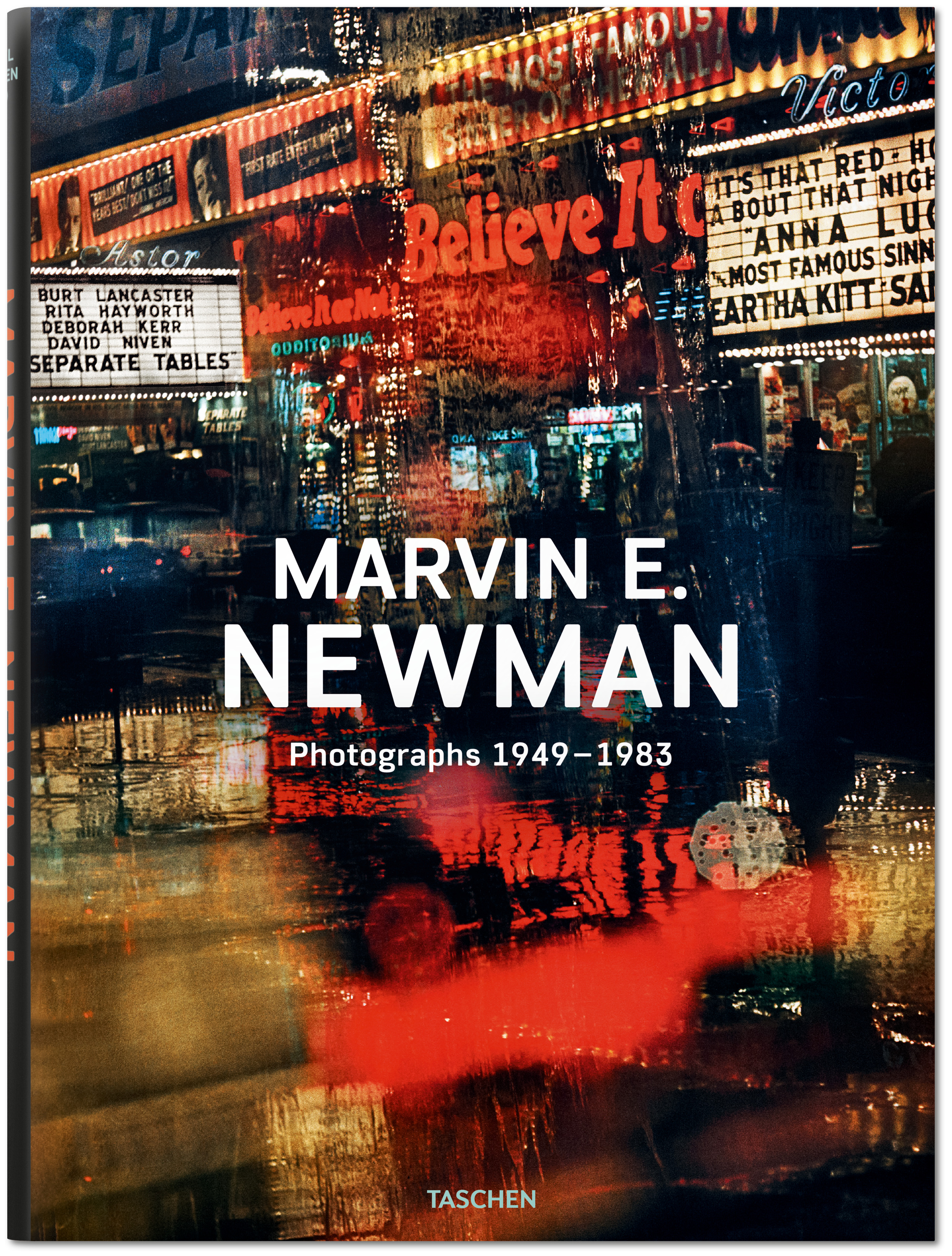
This retrospective work, produced by street photographer Marvin E. Newman, is an incredible insight into early color street photography. A name not often floated around with the greats of the time or genre, Marvin E. Newman is now getting much-deserved recognition, and Marvin E. Newman. Photographs 1949–1983 should now be a staple in every street photographer’s bookshelf.
Created in collaboration with the Saul Leiter Foundation, this definitive monograph brings together the diverse yet interconnected bodies of work of one of the best street photographers of all time.
Author: Kalum Carter
Source: DigitalCameraWorld
Reviewed By: Editorial Team