

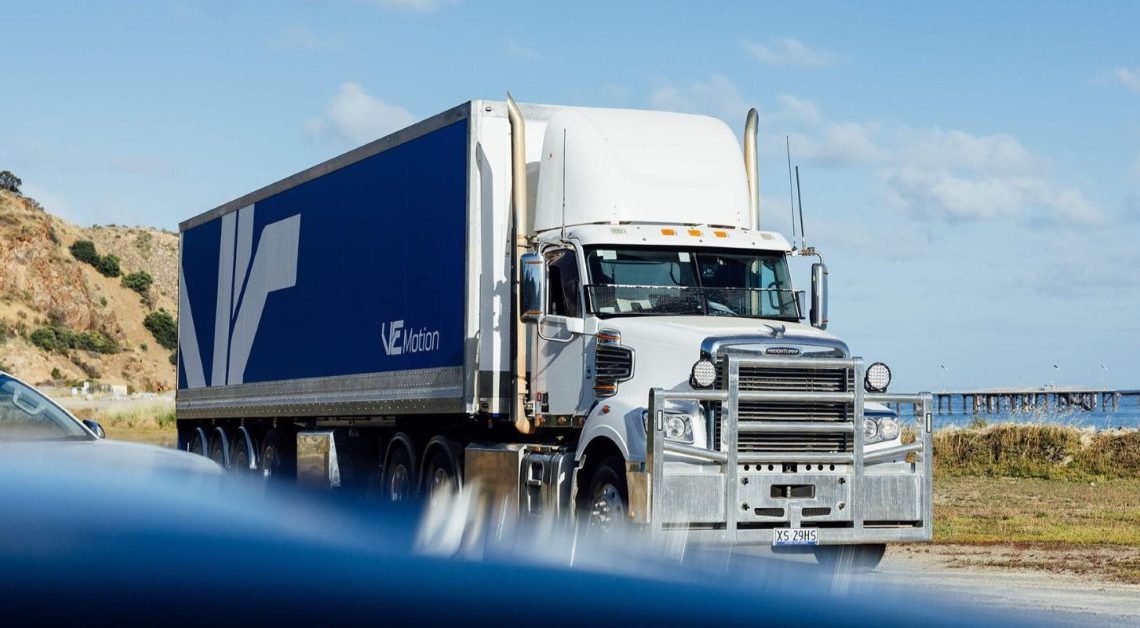
Australian company VE Motion has taken the wraps off its first commercially available battery powered trailer system for heavy trucks, offering fleets a low-cost path to electrification that can cut drivers’ fuel use by up to 50%.
First seen at TruckShowX in 2024, the VE Motion powered trailer concept is best described as a modular and self-contained e-axle solution that adds a 295 kW (~395 hp) electric motor to new or existing trailers, reducing wear and tear on diesel drivelines while ensuring stronger starts, smoother climbs, and shorter cycle times.
And, of course, dramatically reducing fuel use.
Why it works
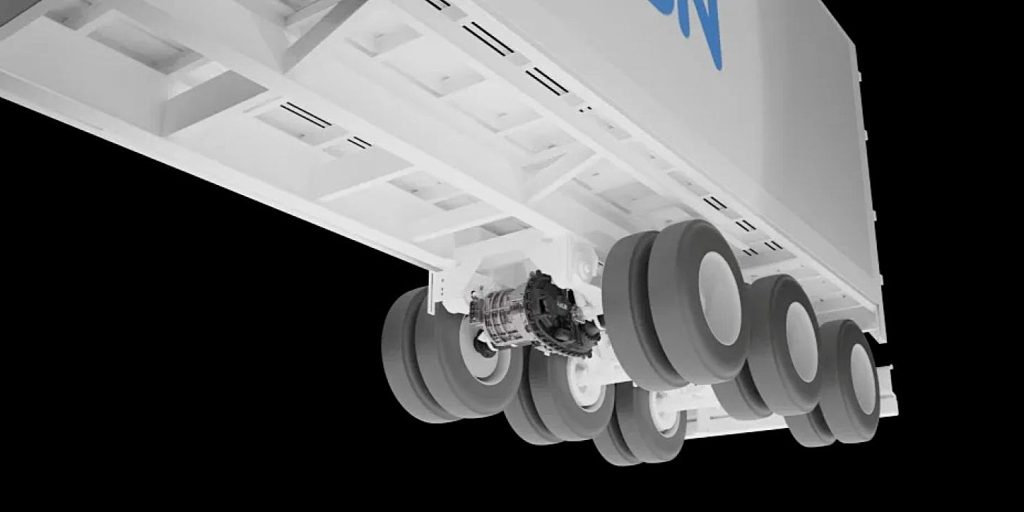
The VE Motion unit works a lot like a plug-in hybrid (PHEV), using an electric motor to boost propulsion when it’s most effective and recovering energy with regenerative braking.
That hybrid approach is especially valuable in heavy trucking, where moving heavy loads at low speeds or in stop-and-go traffic forces diesel trucks into low-gear, high-RPM operation — exactly where fuel consumption climbs and fuel efficiency drops. Electric motors, on the other hand, deliver peak torque (and, therefor, peak efficiency) from 0 RPM, making them ideally suited for the low-speed hauling and grade change scenarios where diesel struggles most. Plus, the mass of a loaded truck-and-trailer combination makes regenerative braking far more impactful than it would be in something like a Prius.
To put it simply: more mass at speed means more energy to recover as it slows down. It’s a concept we’ve seen put effectively to use by companies like Fortescue with their battery-powered locomotives and heavy haul trucks that, in some applications, may never need charging.
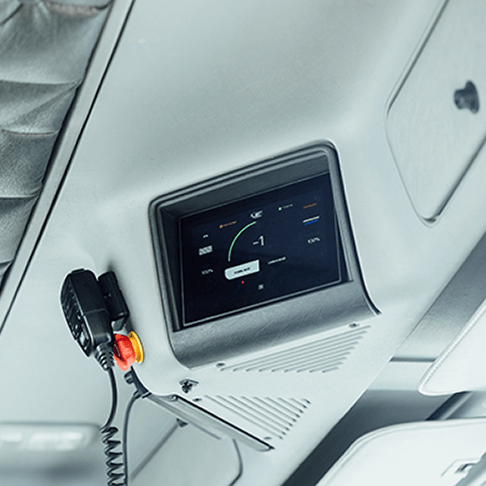
On that note, if charging or range constraints do arise, the VE Motion trailer can effectively disengage for diesel-only operation, maintaining full operational flexibility.
“Flexibility” is the key word

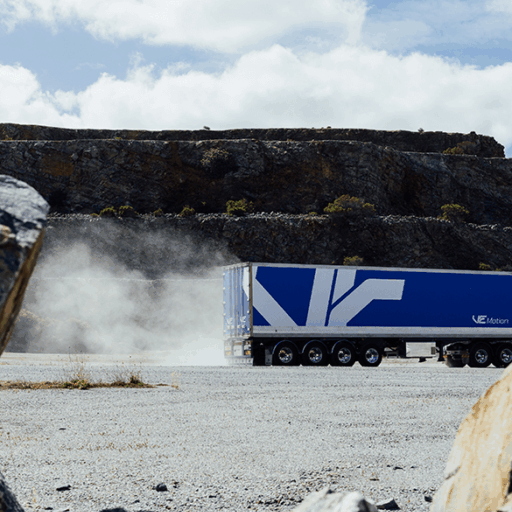
Because the VE Motion system can be attached to existing trailers and put to work behind both ICE- and battery-powered semi trucks, the system itself doesn’t ask the fleet operator to make a huge commitment in terms of trucks, trailers, or even infrastructure. What’s more, a fleet that contracts owner operators during busy seasons or for special runs can deploy this across their trailer fleets and not worry about what kind of truck shows up to haul the load — a benefit if they’re pre-negotiating shipping prices or trying to meet a customer’s ESG goals.
Because the VE Motion system can be retrofitted onto existing trailers and operate behind both diesel and fully electric semi trucks, it doesn’t require fleets make huge commitments like replacing their truck and trailer vendors or building out expensive charging infrastructure.
That flexibility matters, and fleets that rely on owner-operators during peak seasons or for dedicated contract runs can easily deploy EV Motion axles across their trailer pool without worrying about what kind of tractor shows up to pull the load. The end result is significant fuel savings without locking the fleet into a specific powertrain strategy, which can be a real advantage when negotiating freight rates or meeting customer ESG targets
A base trailer kit ships with a 200 kWh battery pack and starts from under 200,000AUD — roughly a quarter of the price of the sort of battery-electric trucks currently sold in Australia, according to VE Motion co-founder and CTO, Stephen Bussenschutt, who, apparently, hasn’t seen our coverage of the $290,000 Tesla Semi. The scalable pack is mounted on custom brackets between the trailer’s chassis rails, and can be deployed in 200, 400, or 600 kWh capacities. Charging happens through a standard CCS connector with DC charging speeds up to 180 kW available. An onboard 25 kW AC charger is also fitted, enabling up to 22 kW from a standard 3-phase outlet while also providing V2L and V2G capability.
VE Motion estimates their system would reduce a diesel truck’s fuel consumption by up to 50%, offsetting 80 to 300 tons of carbon emissions per vehicle per year and be good for a savings of between $50 and 200,000 on annual diesel fuel bills.
SOURCES | IMAGES: VE Motion, via the Driven, HVIA.
Author: Jo Borrás
Source: Electrek
Reviewed By: Editorial Team