

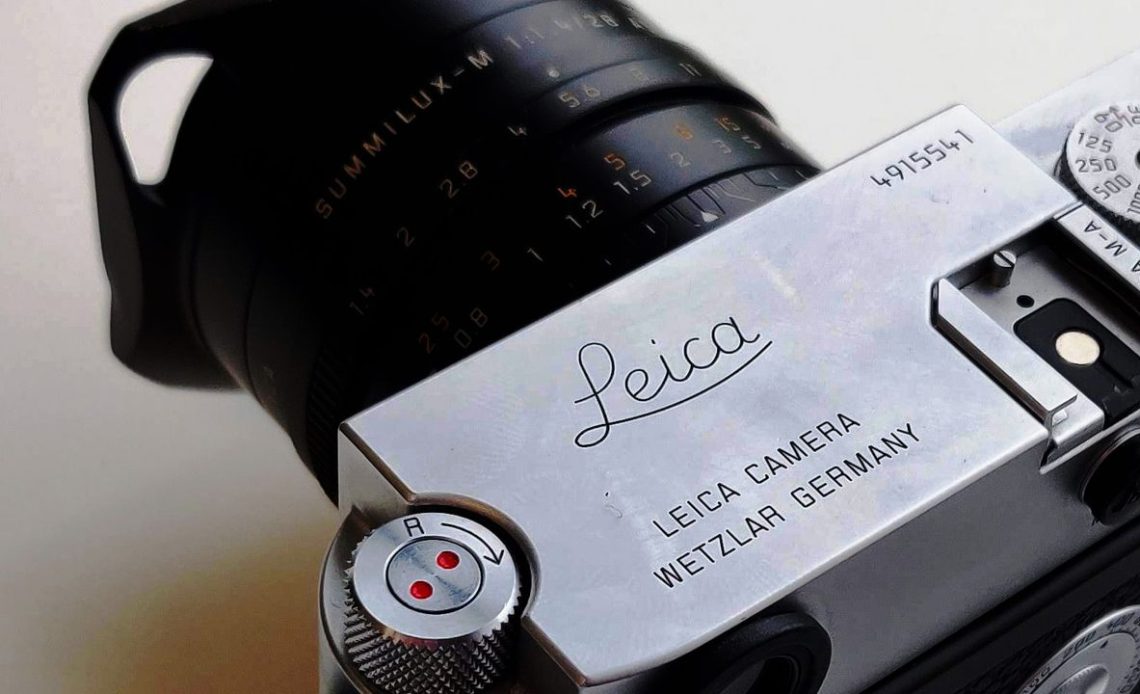
Recent reporting from Bloomberg suggests that Leica Camera AG could be heading toward one of the most significant moments in its modern history.
According to the report, the iconic German camera maker is in talks over the sale of its controlling stake, with potential buyers said to include Chinese private equity firm HSG (formerly known as Sequoia Capital China) and European investment group Altor Equity Partners.
The valuation being discussed is rumored to be around $1.2 billion / £878 million / AU$1.7 billion, a figure that would mark a dramatic shift for a brand long associated with independence, heritage and careful stewardship.
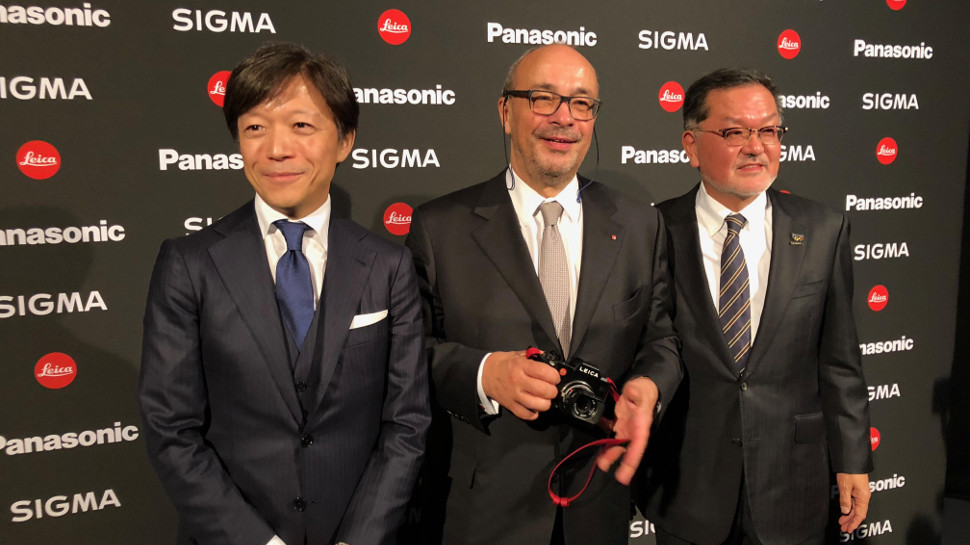
If those figures are accurate, the implications for Leica’s ownership structure are substantial. The Kaufmann family currently controls 56% of the company, with private equity firm Blackstone holding the remaining 44% – a stake that it is reportedly looking to sell, with Kaufmann being involved in discussions.
Any sale of the controlling stake would almost certainly signal the departure of Andreas Kaufmann from his long-held position of influence. That alone would mark the end of an era, given how closely Kaufmann has been associated with Leica’s revival and expansion since he first acquired the majority of the company back in 2004.
Financially, the numbers involved are staggering. Kaufmann reportedly bought 97% of Leica for around $85 million just over two decades ago. A sale anywhere near the rumored valuation would represent a profit north of $1.1 billion for the Kaufmann family, making it one of the most extraordinary success stories in the modern camera industry.
Cynics may argue that this was always the endgame, but that reading ignores how deeply involved Kaufmann has been in shaping Leica’s direction over the past 20 years.
As a loyal Leica user, what makes this situation so compelling is that Kaufmann has never felt like a distant or purely financial owner.
His leadership has been notably hands-on, and his belief in the brand’s long-term value has been reflected in Leica’s expanded product range, its renewed confidence in both digital and film, and its willingness to invest in niche, high-risk projects that few other manufacturers would entertain.
Yes, he is a businessman, but one who appeared to genuinely believe in Leica’s cultural and photographic importance, not just its balance sheet.
The most unsettling question, however, is what Leica might look like under a new controlling shareholder based in China. Ownership alone does not automatically dictate manufacturing standards or brand philosophy, but it would inevitably raise concerns around authenticity, long-term strategy, and the preservation of Leica’s hand-built ethos.
Would Wetzlar remain the heart of the company in more than name? Would certain product lines become redundant? These are uncomfortable questions even if they remain, for now, entirely hypothetical.
There is some suggestion that Kaufmann could reinvest in Leica following any deal, potentially retaining a minority position. Even so, it is difficult to imagine him continuing as chairman of the supervisory board under new controlling ownership.
Whether that would ultimately be good or bad for Leica is open to debate, but personally I would find it genuinely sad to see Kaufmann step away. His tenure has coincided with one of the most confident and creatively fertile periods in Leica’s modern history.
For now, it is important to stress that all this remains rumor and negotiation – and Blackstone, which paid $179 million for its stake back in 2011, previously floated the idea of a sale in 2017 (with Zeiss being among the interested parties).
No deal has been finalized and Leica itself has not made any public statement confirming a sale. Still, the mere possibility is enough to prompt reflection. Leica has survived wars, bankruptcies, digital disruption and seismic shifts in photography itself.
The question now is whether a change in ownership would simply mark another chapter in that long story – or the beginning of something fundamentally different.
Author: Sebastian Oakley
Source: DigitalCameraWorld
Reviewed By: Editorial Team