
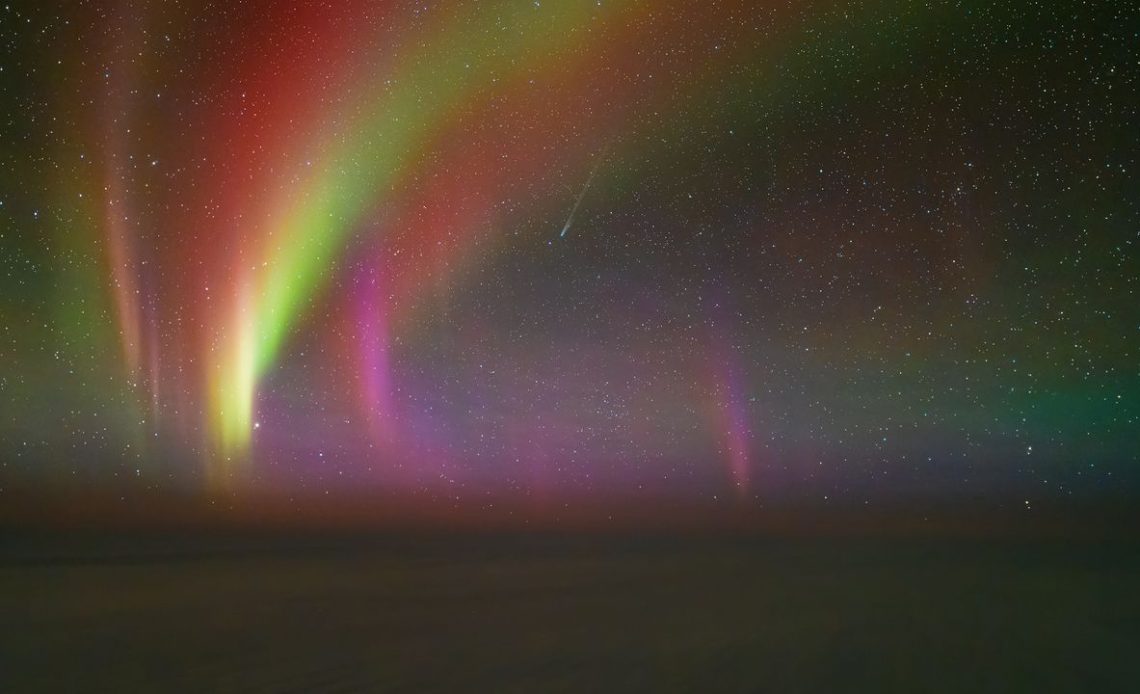
Nothing quite dampens my excitement over an aurora forecast quite like an overcast sky. Perhaps that’s why when I spotted photographer Ralf Rohner’s astrophotography, I was so mesmerized. See, Rohner is both a photographer and a pilot – and he captures award-winning images from above the clouds.
Rohner (@skypointer2000) has worked as a commercial pilot with Swissair and Swiss for more than 30 years, but he’s been an astrophotographer for nearly as long. He started with a film SLR and a telescope, capturing deep space photography. Now, he captures a wide variety of astrophotography and night landscapes – both from the ground and from the sky.
“Seeing the aurora or the Milky Way from above the clouds is a powerful reminder of how fragile our atmosphere really is and how rare truly dark skies have become,” Rohner said. “If anything, I hope my work encourages people to look up more often and to make them realize the need to protect the night sky and our beautiful planet.”
Rohner’s work as a pilot allows him to travel to more locations for landscape photography on the ground, but, when it’s safe to do so, his camera allows him to share what the night sky looks like from a pilot’s perspective.
But, while photographing the night sky from the air means that clouds are less likely to ruin the shot, the unusual vantage point comes with a number of challenges. Rohner says that night shots from the plane are typically limited to exposures of only around five to eight seconds long.
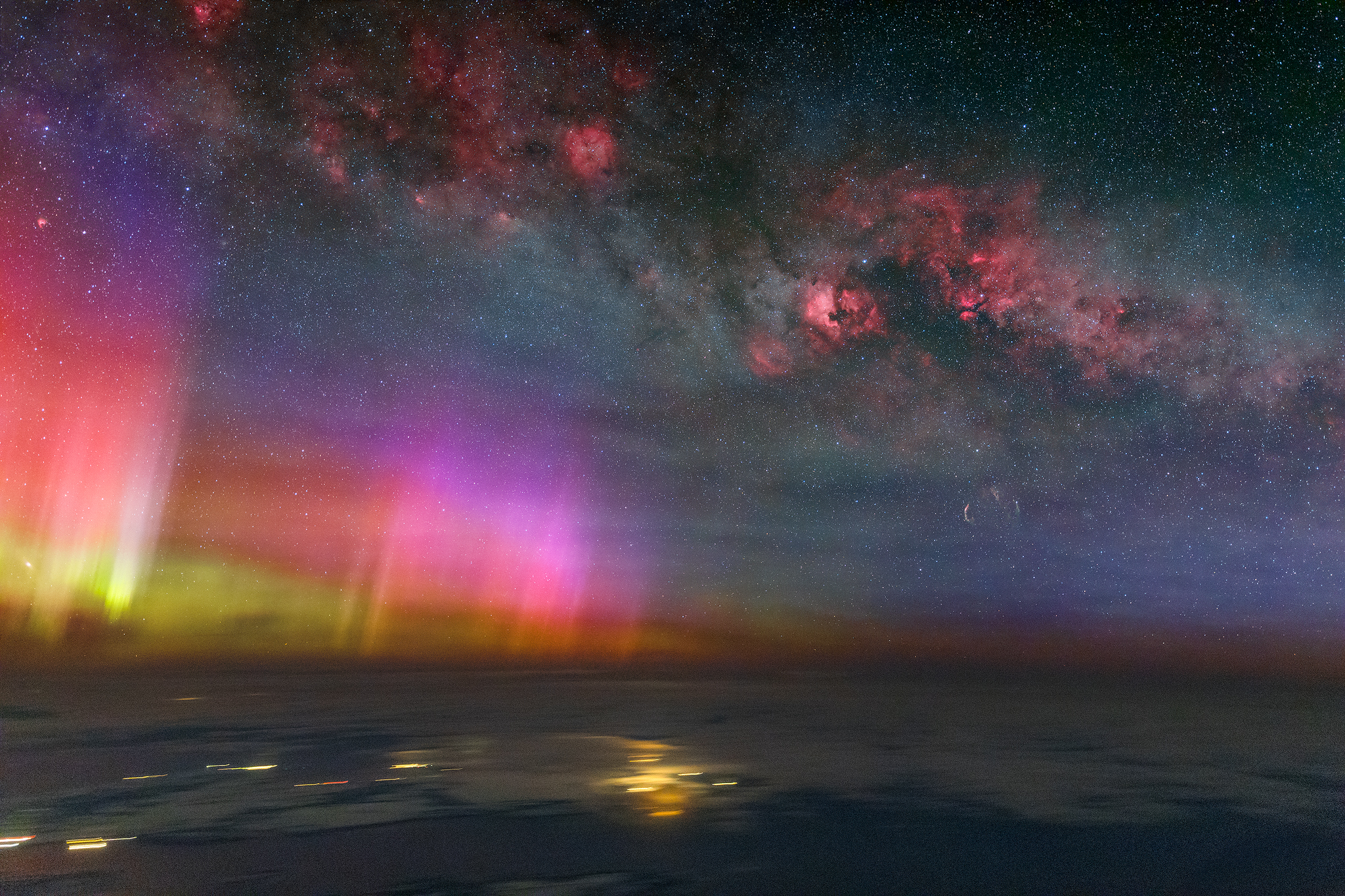
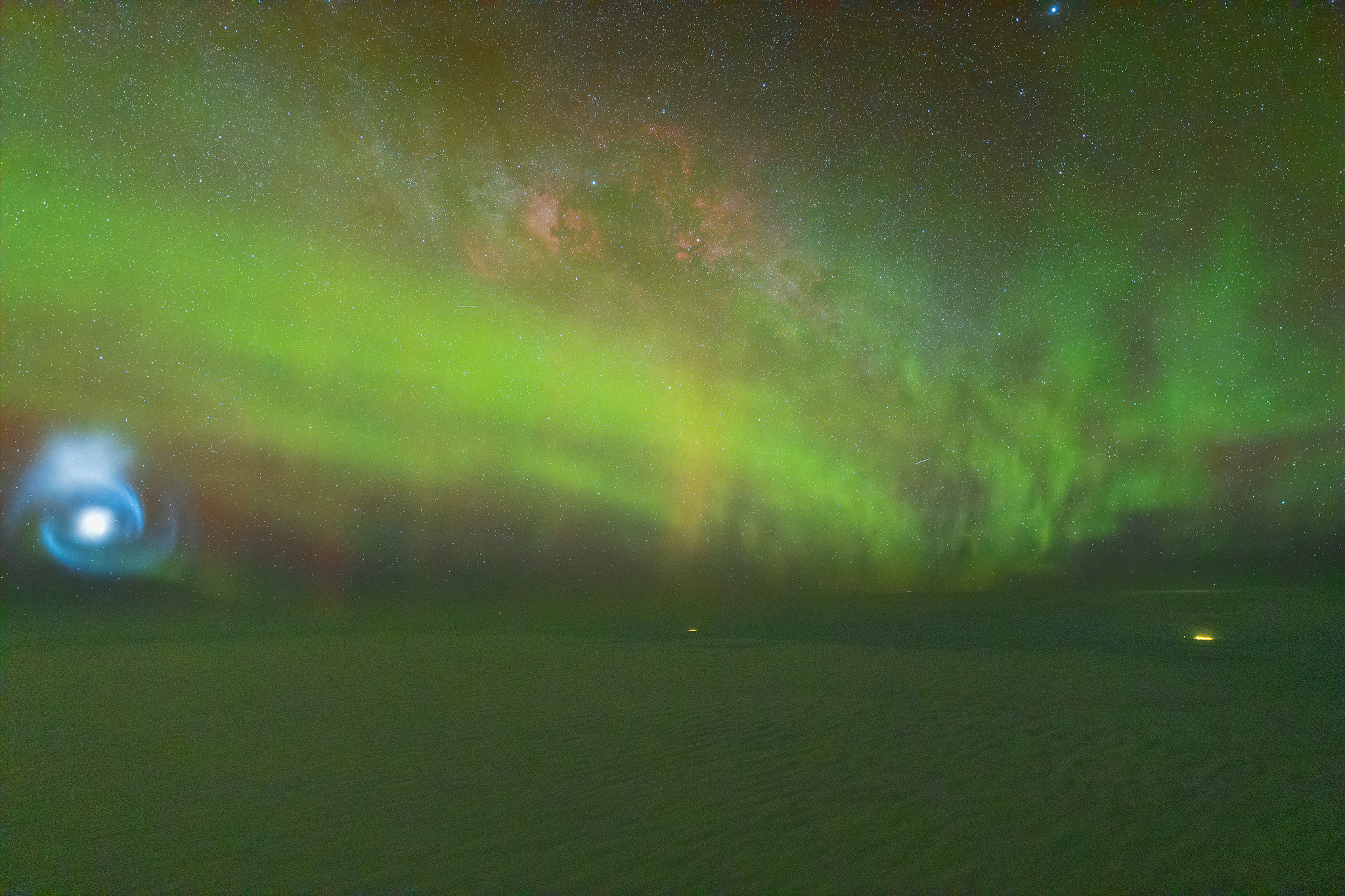
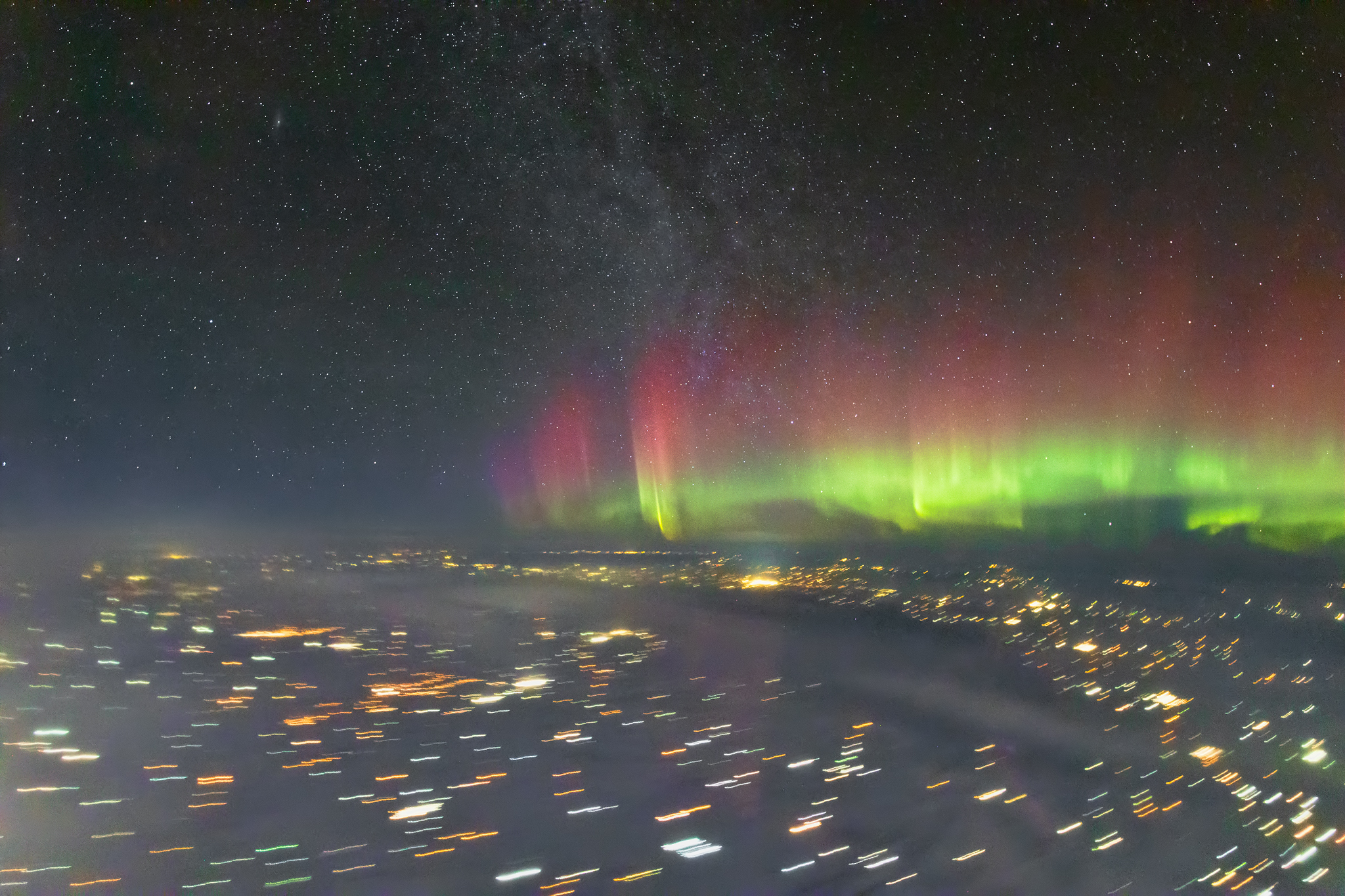
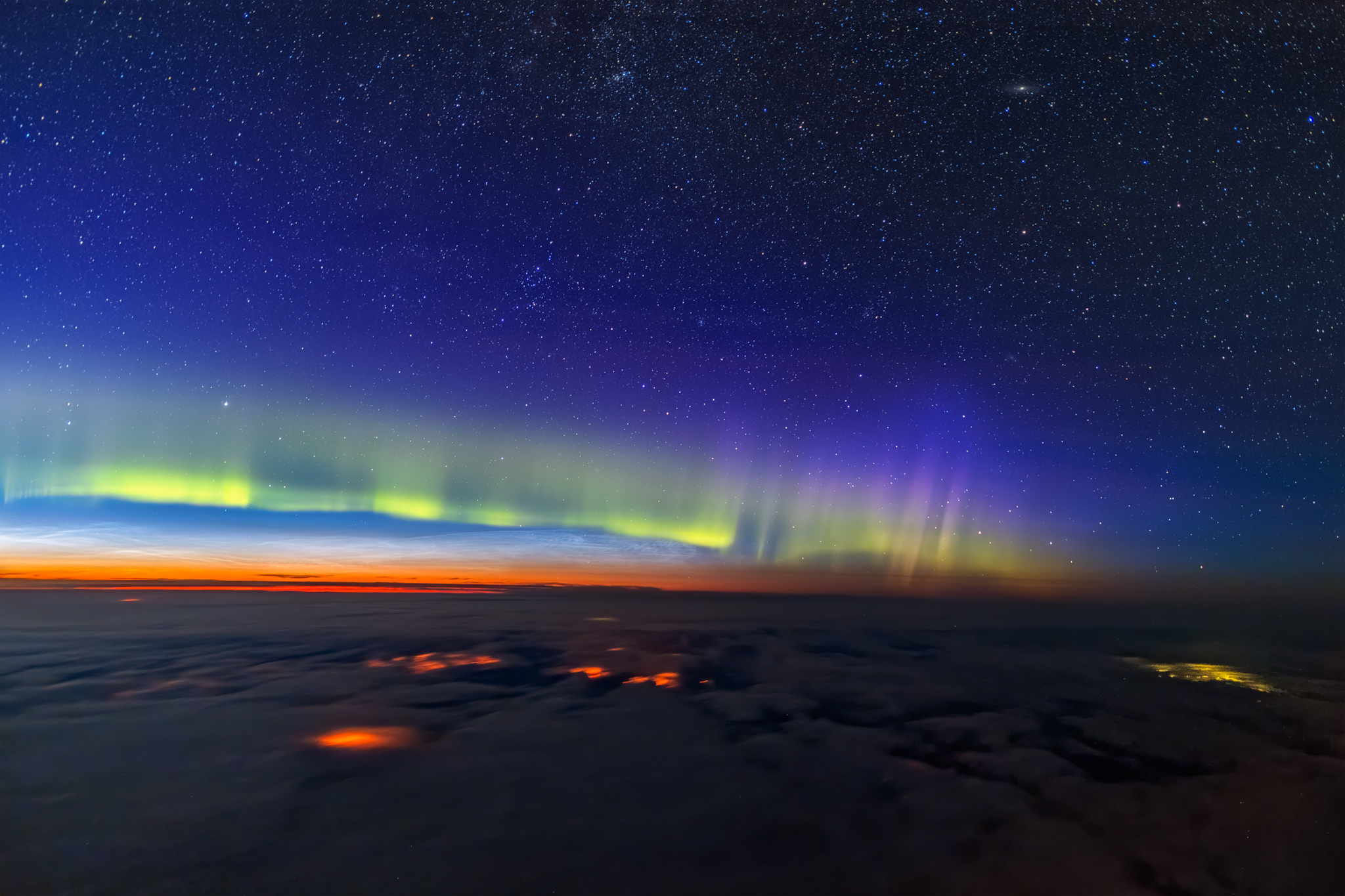
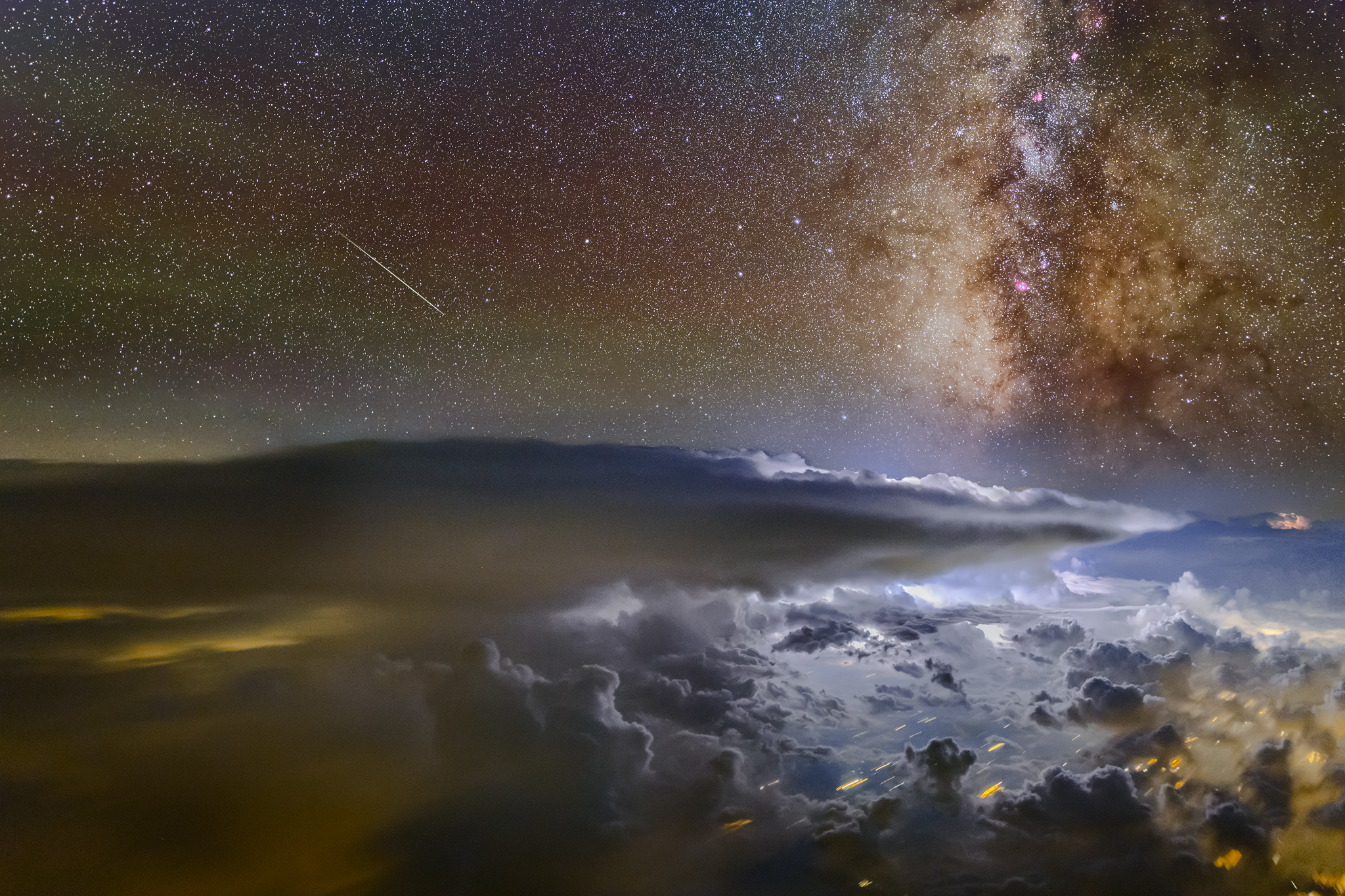
The stars are distant enough not to be blurred by the Boeing 777-300ER’s forward motion. “This limitation isn’t caused by the aircraft’s forward speed, but by subtle aerodynamic oscillations known as Dutch roll, which are inherent in all jet aircraft,” Rohner explained. “Although these motions are damped to the point of being imperceptible to passengers, they become clearly visible in long-exposure photography. Turbulence, of course, can further contribute to image blur. Even under optimal conditions, roughly 85% of exposures are slightly blurred by Dutch roll. That’s why I often shoot long sequences, allowing me to stitch them into a time-lapse movie and to select the sharpest frames for processing as still images.”
Another challenge to capturing photos from the cockpit is that Rohner is shooting through thick aircraft glass. That can introduce more aberrations and banding, along with reflections from the interior lights.
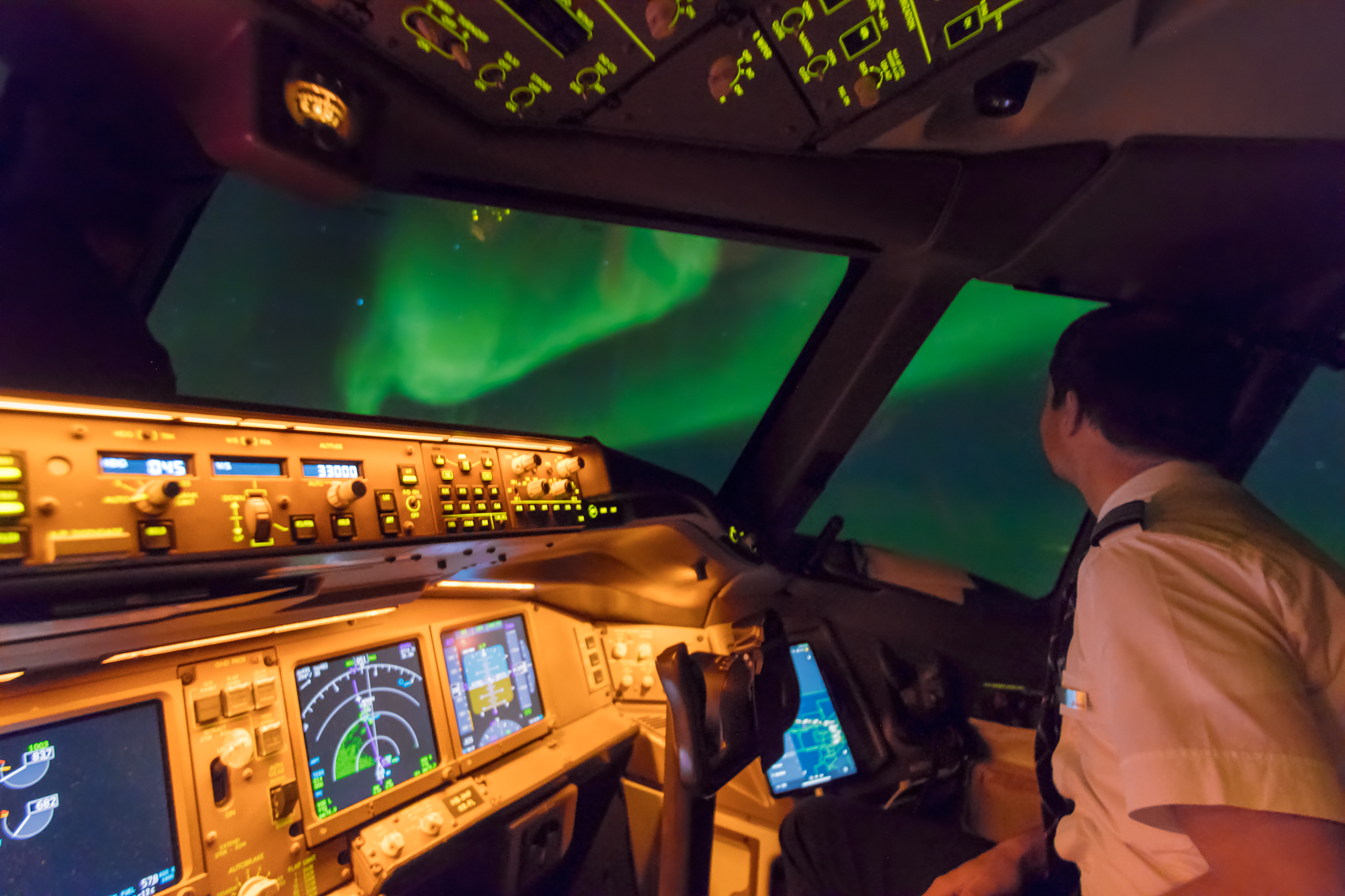
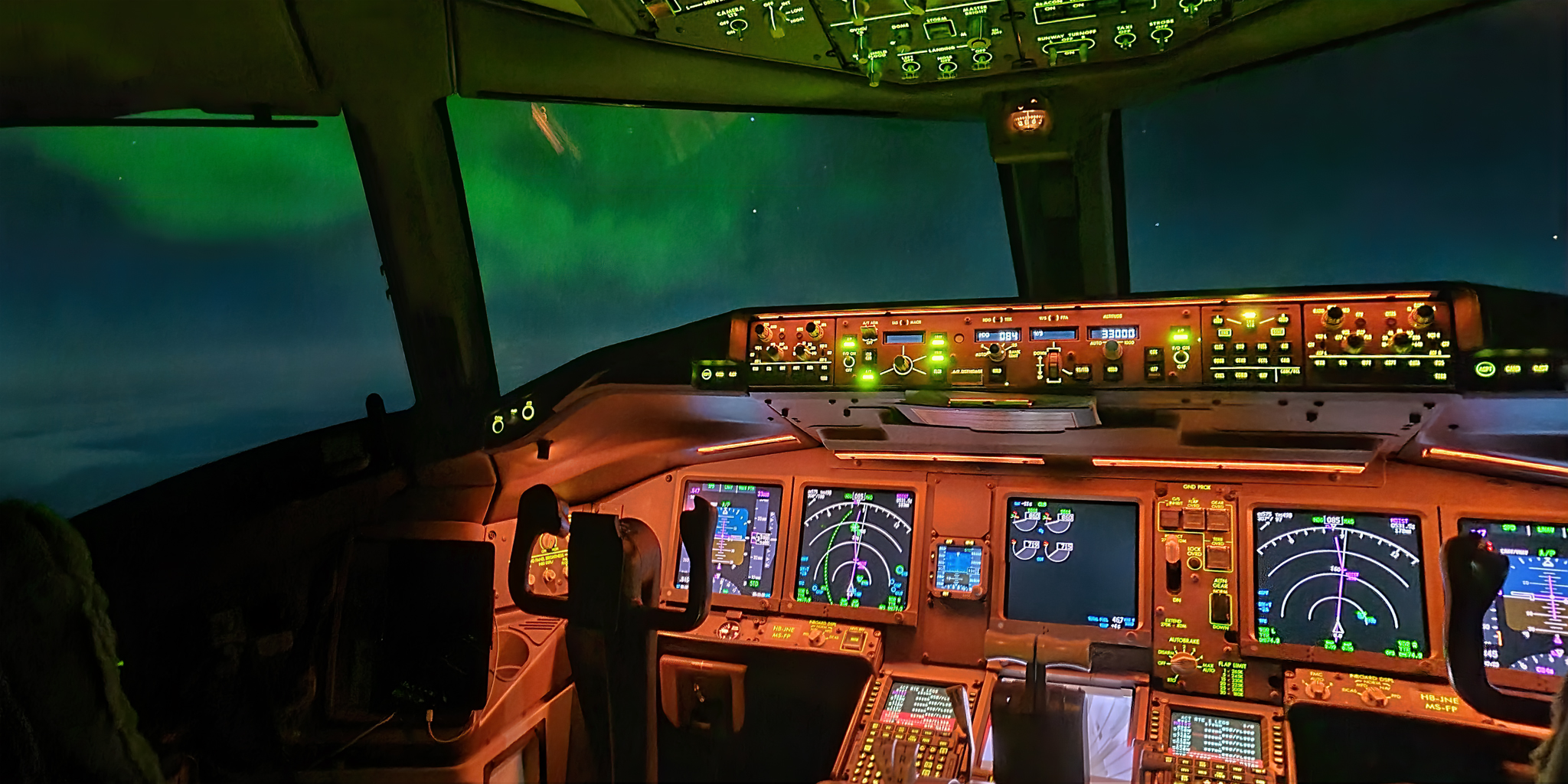
Space inside the cockpit is limited, and while he’s occasionally able to use a small tripod to shoot out the side windows, that’s an impossible accessory to use when shooting straight out the front of the aircraft. Instead, Rohner creates a portable workaround by affixing a ball head to plywood, resting the setup on the dashboard – which is how he captured the shot that earned him honors as a Northern Light Photographer of the Year.
“In-flight photography also comes with limitations, as it is difficult to plan specific shots,” he said. “Flight routes depend primarily on high-altitude winds, as we fly the fastest and most economical route rather than the most scenic one. As a result, I may completely miss an aurora display if our route is too far south of the auroral zone. In addition, cloud cover changes constantly, and even when there is an aurora, we may not see it if we are flying within layers of high-altitude clouds.”
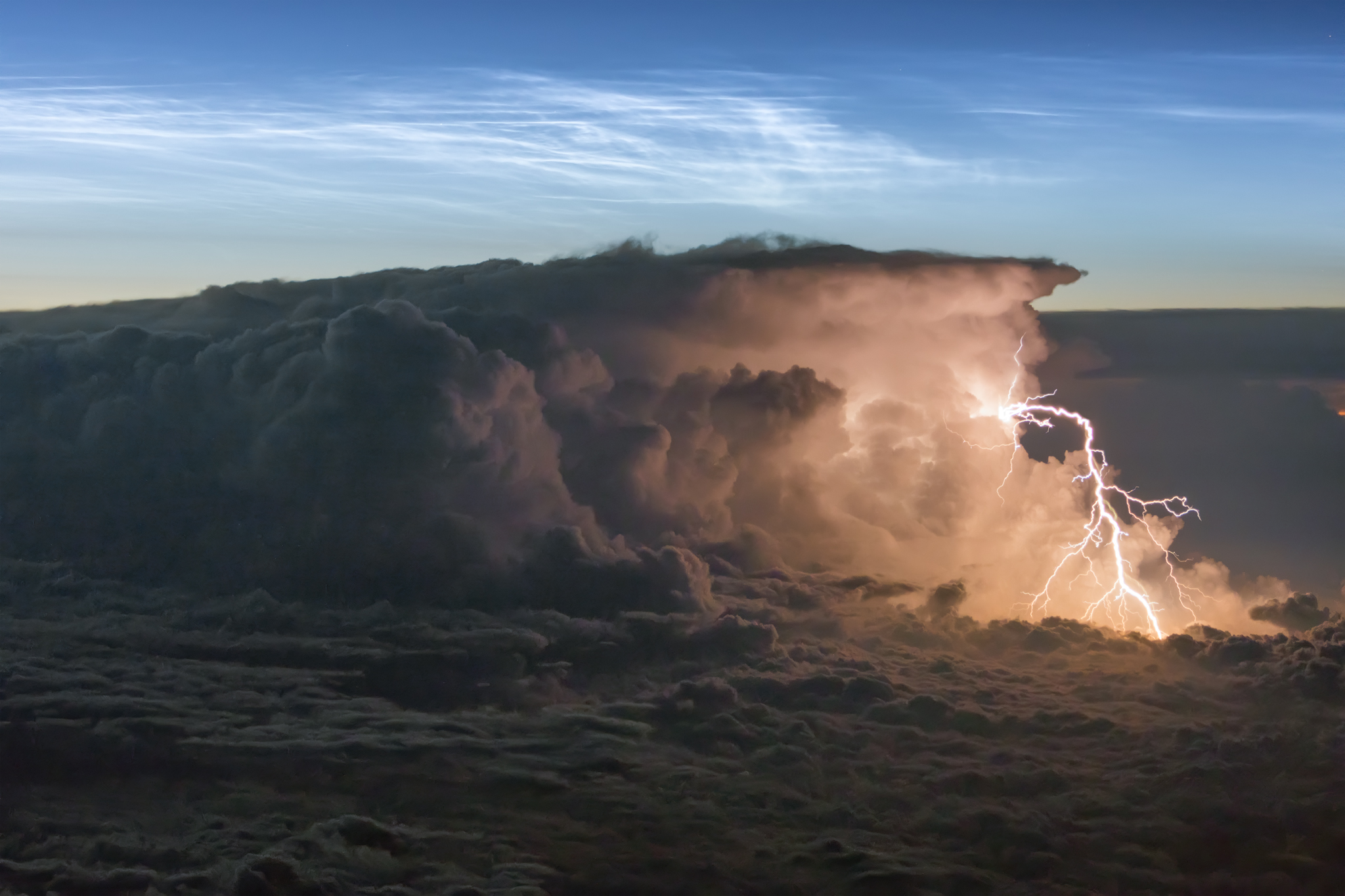
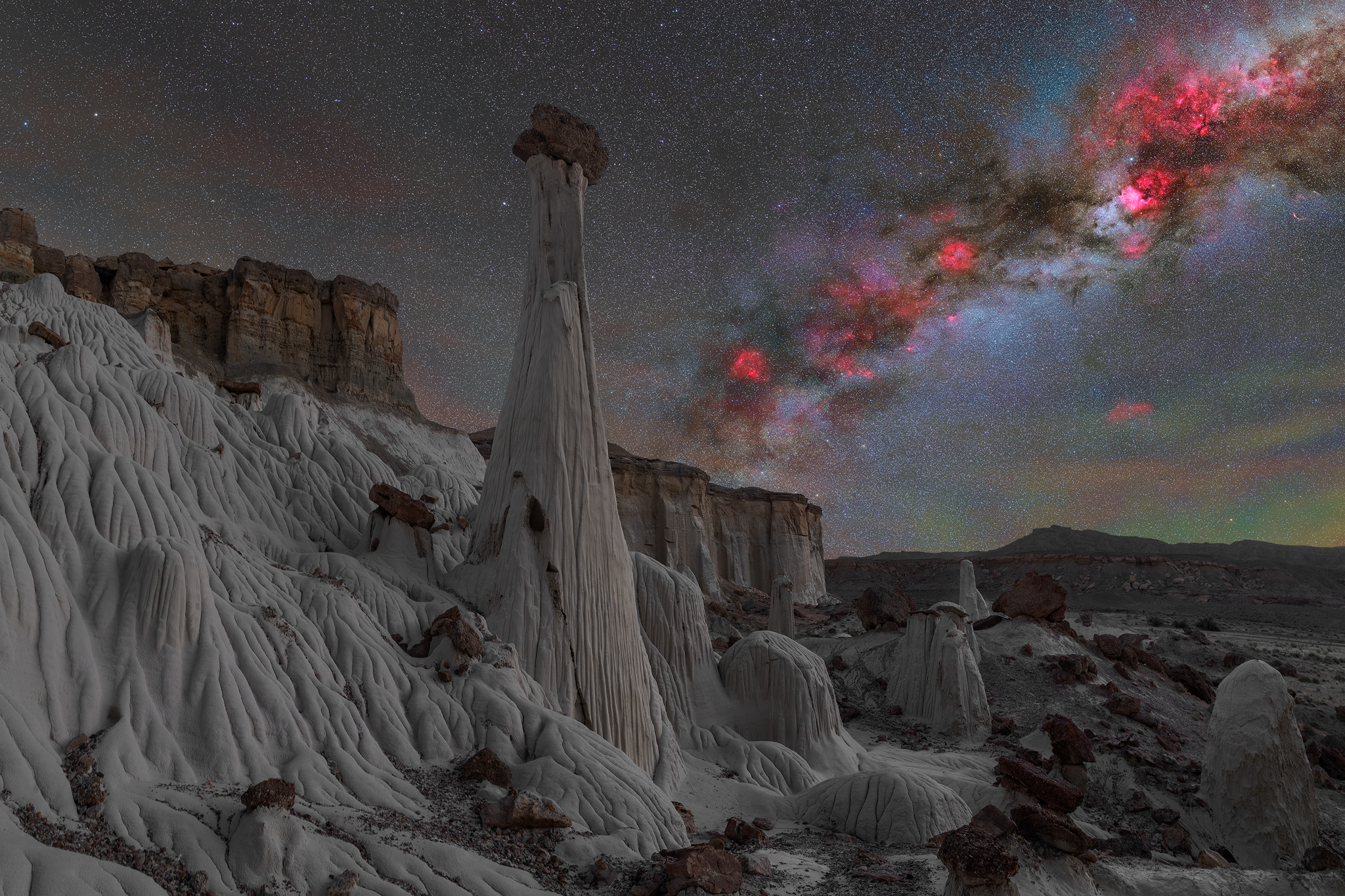
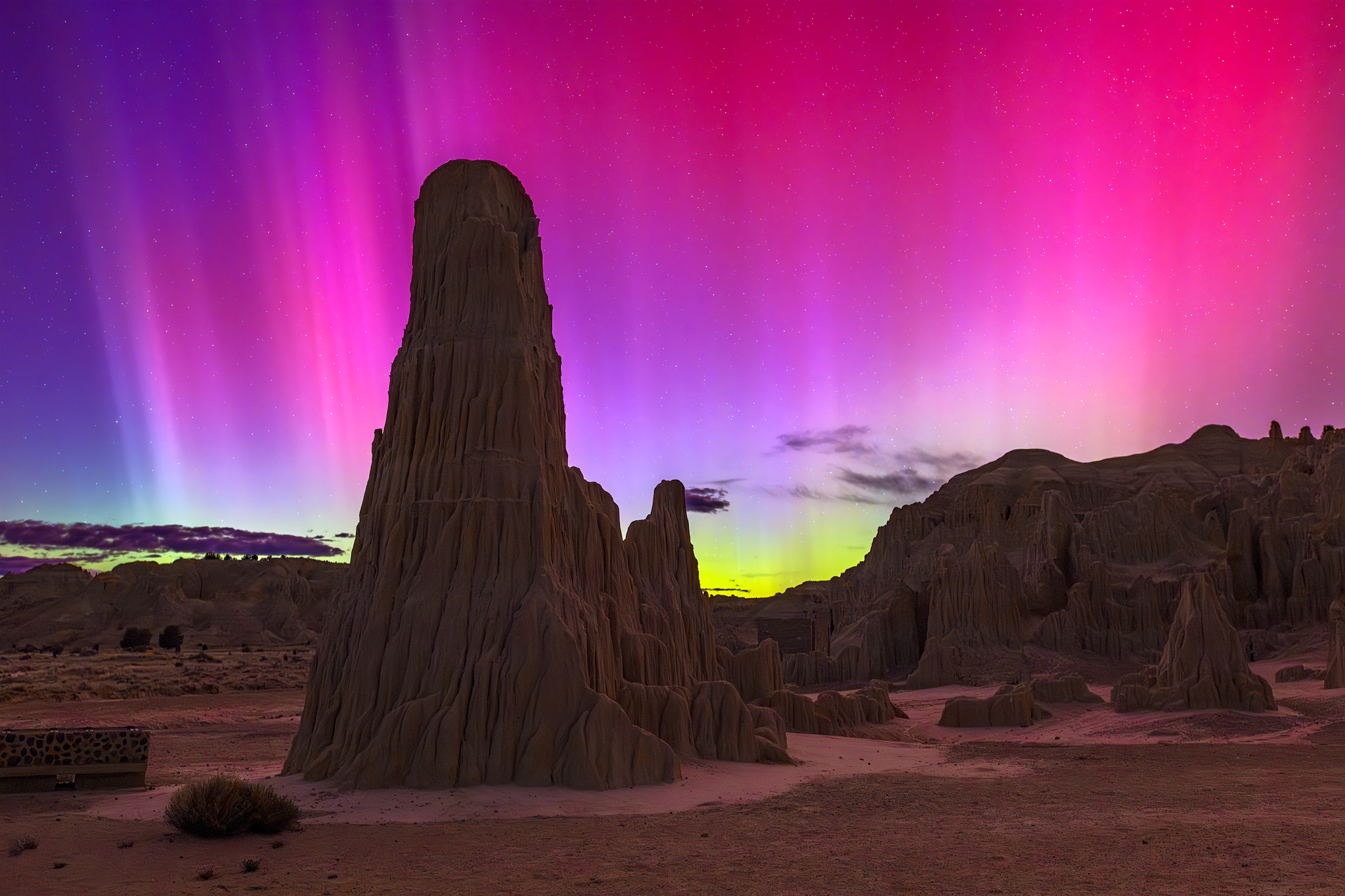
While Rohner is able to capture a view from the cockpit that few can experience themselves, he often spends some of his layovers taking landscape astrophotography from the ground.
“One of the main challenges, especially as an astrophotographer, is that many of my destinations are large cities,” Rohner added. “While this is ideal for street or architectural photography, astrophotography requires getting away from light pollution, which is not always feasible during a short layover.”
Rohner’s favorite gear includes an astro-modified Canon EOS R and the Sigma 28mm f/1.4 Art. But, his kit ranges from 15mm to 500mm lenses, telescopes, and narrowband filters to show the colors of nebulae. When shooting from the ground, he’ll also use a iOptron SkyTracker Pro tracking mount, along with a Sky-Watcher Wave 150i equatorial mount for his telescopes.
“Astrophotography has taught me a lot of patience and humility,” Rohner said. “You’re working with forces you can’t control, like weather, light, and celestial mechanics. Success often comes down to preparation combined with a bit of luck. When everything aligns, though, it’s incredibly rewarding.”
4 Astrophotography tips from Ralf Rohner
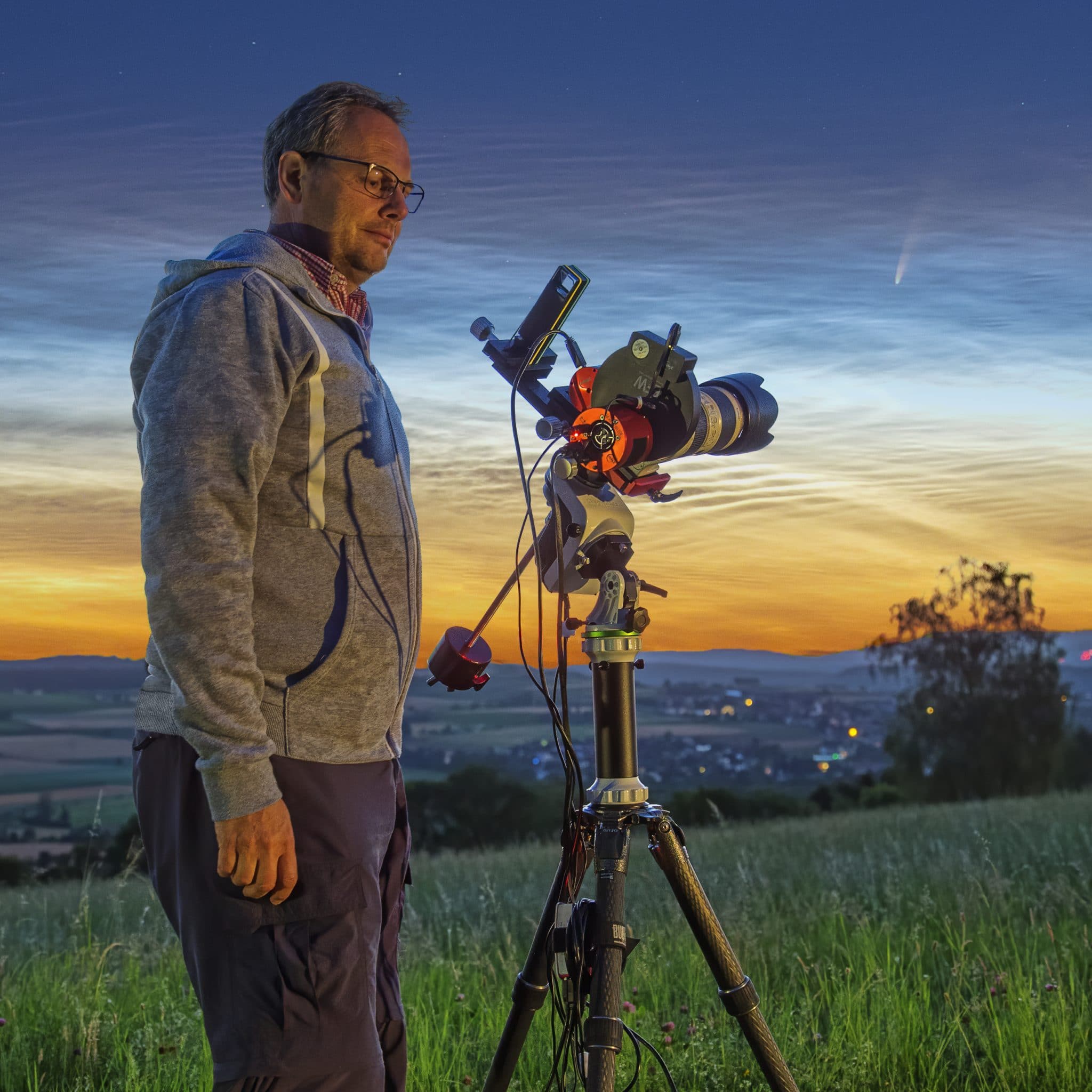
Find a spot away from light pollution. “Light pollution or a bright Moon can completely wash out colors and overwhelm fine details in the night sky. For that reason, it’s important to shoot from a reasonably dark location and, ideally, when the Moon is not in the sky. A light-pollution map can help you find a dark site near you, and a planetarium app is invaluable for calculating the Moon’s rise and set times, as well as determining when and where the Milky Way will be visible.”
Find safety in numbers. “Spending time alone in the wilderness at night can be intimidating for beginners, so I recommend going out with a group of like-minded photographers or friends who enjoy stargazing. Be sure to check the weather forecast and dress warmly enough for long periods of standing still. Bringing hot drinks and snacks can make a big difference, and don’t forget insect repellent – I once had to abandon a photo shoot and retreat because I’d forgotten bug spray and was overwhelmed by mosquitoes.”
Use a sturdy tripod. “A stable tripod is the single most important piece of equipment. Even the best camera and lens won’t produce usable results if your exposures are blurred by a shaky mount. A cable release or remote trigger is also very helpful for minimizing camera shake.”
Try a fast, wide-angle lens. “Finally, use a fast, wide-angle lens. You may have heard of the ‘500 rule,’ but it’s no longer good advice given the higher pixel counts of modern cameras. Instead, set your exposure time to 300 divided by the focal length and shoot wide open. Then raise the ISO until the peak of the histogram sits about one-third from the left edge. Don’t be afraid of high ISO. Modern cameras handle it very well. This approach results in a properly exposed image with minimal star trailing and noise levels that can still be managed in post-processing.”
Find more of Ralf Rohner’s work on his website, or follow him on Instagram, Facebook, or YouTube.
Author: Hillary K. Grigonis
Source: DigitalCameraWorld
Reviewed By: Editorial Team