

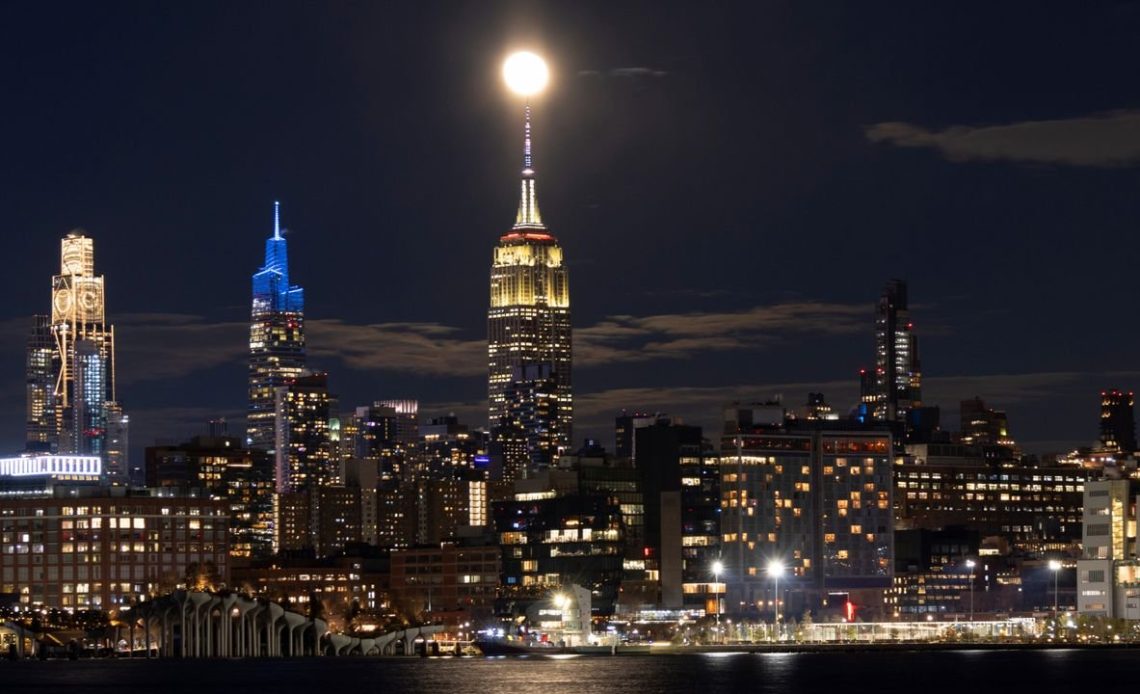
Light pollution has become an unavoidable facet of modern life. Artificial light shines from homes, streetlamps and countless other sources, illuminating our cities and towns before inevitably bleeding into the skies above, where it dramatically reduces our ability to observe fainter stars and the deep-space wonders that populate the night sky.
The issue has intensified in recent years and is only set to get worse, as the relentless expansion of urban centres brings artificial light further into the countryside, permeating and degrading our view of the heavens.
However, that doesn’t mean that those of us living under city skies can’t partake in the wonder of the night sky. Read on to discover which astronomical targets can be seen and enjoyed from urban locales and how binoculars can be an invaluable tool in your skywatching arsenal.
A quick reminder: It’s handy to use the Bortle Scale when determining the level of light pollution in your night sky. Pristine dark sky sites completely untouched by artificial light are given a Bortle “class” of 1, while city skies — where pollution is the worst — sit on the opposite end of the scale, occupying classes 8 & 9.
The “limiting magnitude”, meanwhile, is the faintest star that can be seen by a stargazer on a given night. The higher magnitude numbers correspond to fainter objects. For context, the full moon has a magnitude of approximately -12.6, while Polaris, the North Star”, has a magnitude of roughly +2.00.
What can you see in city skies?
The brightest stars and asterisms
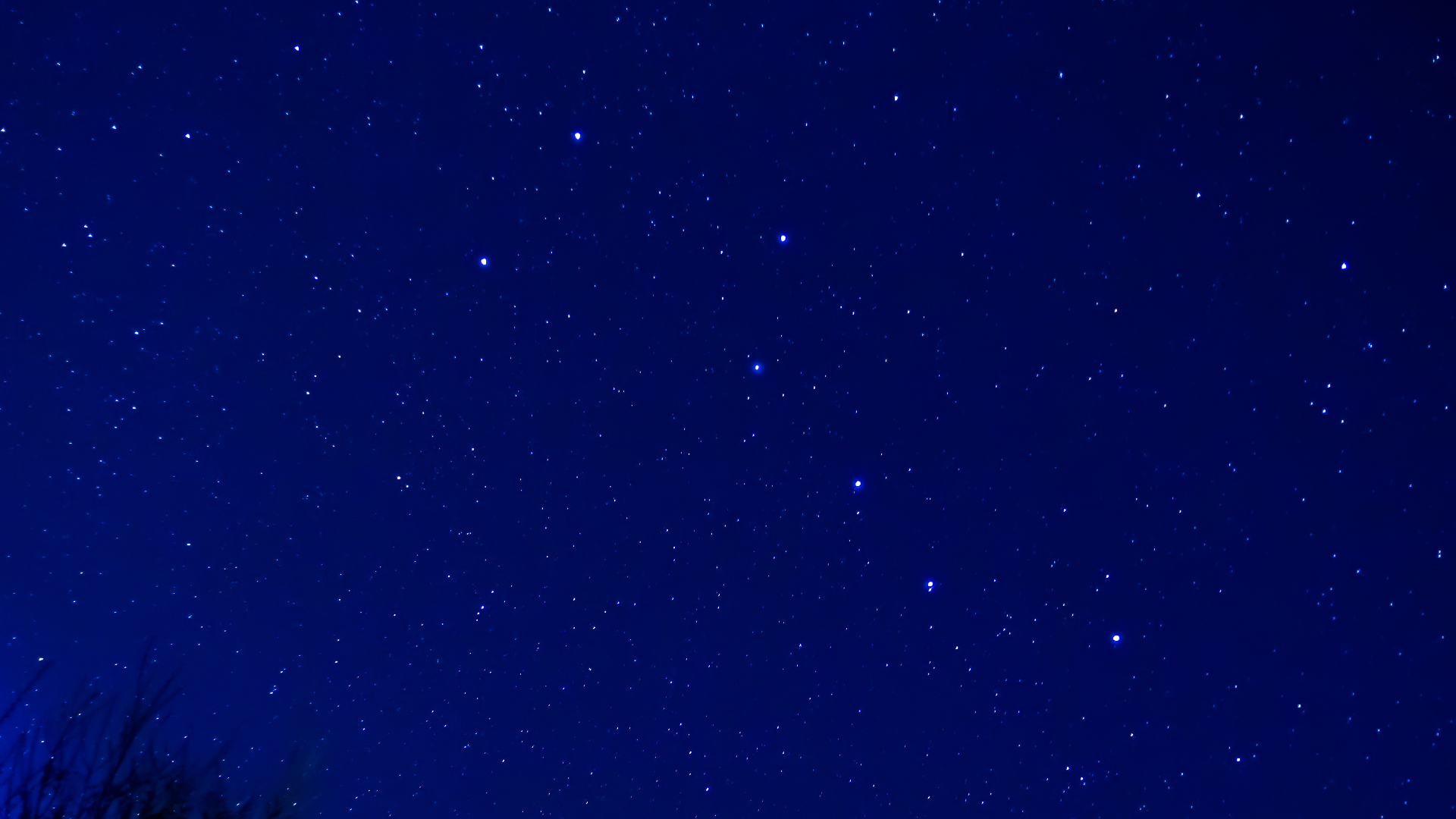
While most constellations are impossible to make out in their entirety from light-polluted city skies, their brightest stars will always be visible to provide a naked eye treat — on clear nights
The constellation Orion makes for a rich target during the winter months, as the iconic stellar formation — or asterism — of Orion’s belt shines between the red light of Betelgeuse and the blue supergiant star Rigel.
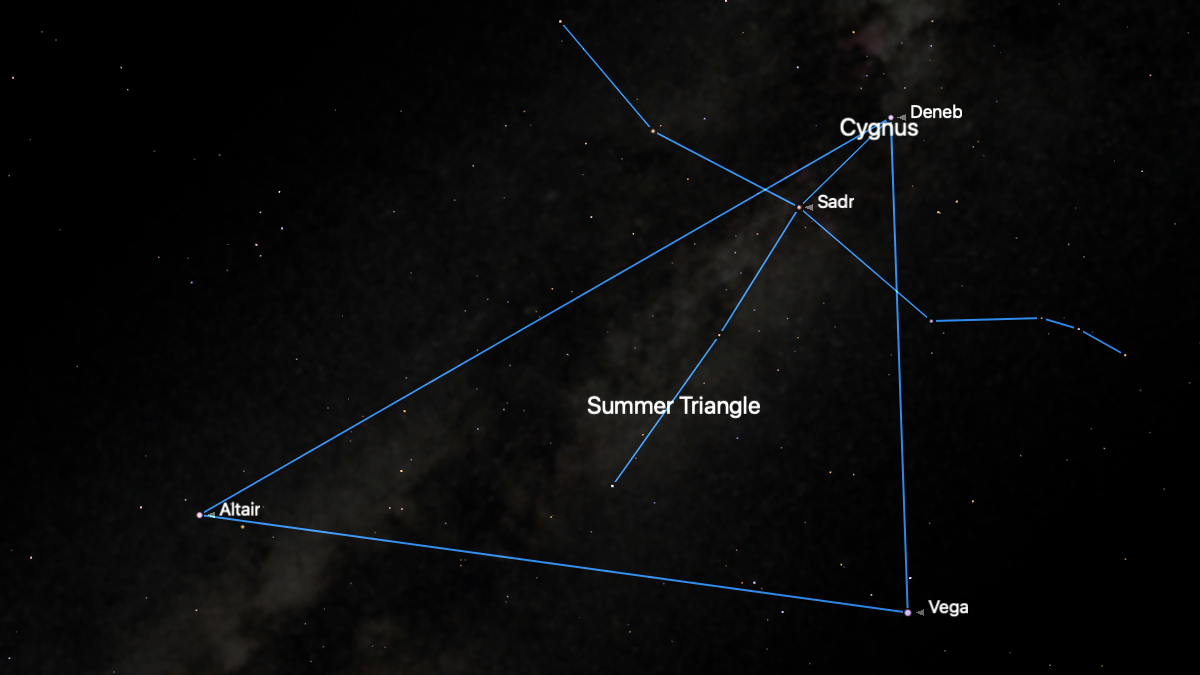
As summer comes around, three brilliant stars, Vega, Deneb and Altair rise to form the Summer Triangle, which dominates the night sky in the warmer months and is easily visible in light-polluted skies.
Then there are the “circumpolar” stars that simply never set for viewers in the northern hemisphere. Look out for Polaris, the star which marks Earth’s north celestial pole, shining above the northern horizon. Nearby will be the familiar points of light that form the “Big Dipper”, which will appear to wheel around Polaris each night, as dusk flows towards dawn.
Try to find a location devoid of tall trees or buildings to give yourself the widest view of the sky and when you can, be sure to observe objects as far from the horizon as possible, where the atmosphere is at its thickest and sky glow is at its worst. We recommend using a trusted stargazing app such as Stellarium or SkySafari 7 Pro to help you identify when stargazing targets will be at their most visible.
Planets
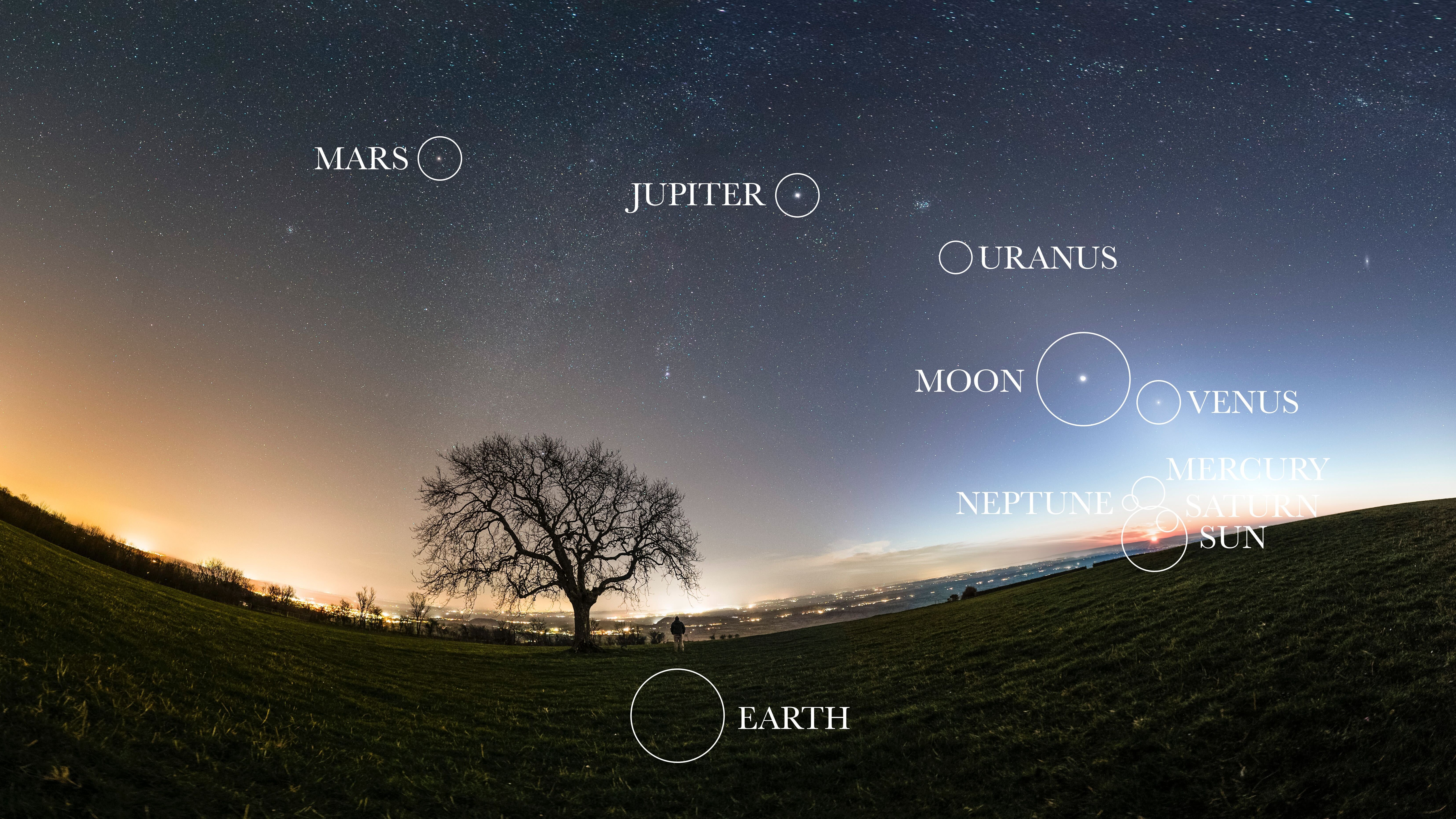
The brightness of solar system planets is influenced by their distance from Earth, their position relative to the sun, and how effectively they reflect sunlight. Jupiter, Saturn, Venus, Mercury and Mars all appear as steady points of light to the naked eye in even the most light-polluted city sky, with Mars often displaying a subtle reddish hue.
Planetary visibility isn’t only dictated by their brightness, but also by their orbital position relative to the sun and Earth. Some planets — like Venus and Mercury — are inherently difficult to spot due to their tight orbit around our parent star, which keeps them low on the horizon around dawn or dusk. Other planets can disappear from view for months as they pass behind the sun from Earth’s perspective.
Be sure to check our monthly guide to discover which planets will be visible in the night sky, along with our roundup of major planetary events to look forward to throughout 2026.
The moon
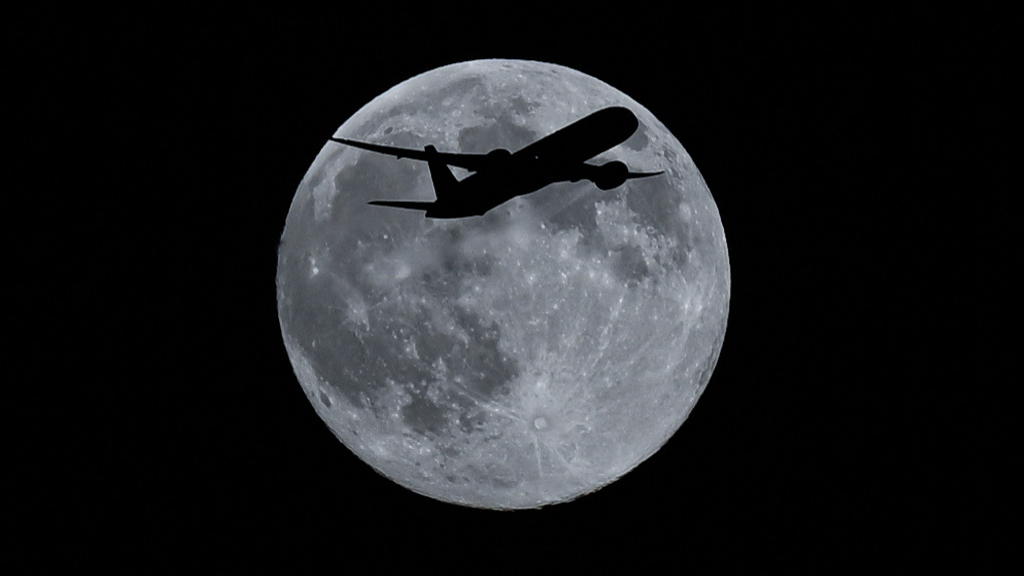
Earth’s moon is both the brightest and the largest object in the night sky, in terms of apparent size, making it a spectacular naked eye target for inner city stargazers. Its silvery surface is scarred by dark regions known as lunar maria, where molten lava once flooded enormous impact basins before hardening to create enormous basaltic plains.
The moon’s appearance constantly changes as its angle relative to the sun, which causes the line separating night from day — called the terminator — to sweep across its surface, transforming it from a delicate crescent to a spectacular full moon, and back again.
Be sure to keep an eye on our daily moon phase article to keep up to date with the latest on Earth’s natural satellite and to use a trusted website like TimeandDate to discover exact moonrise and set times for your location.
The International Space Station
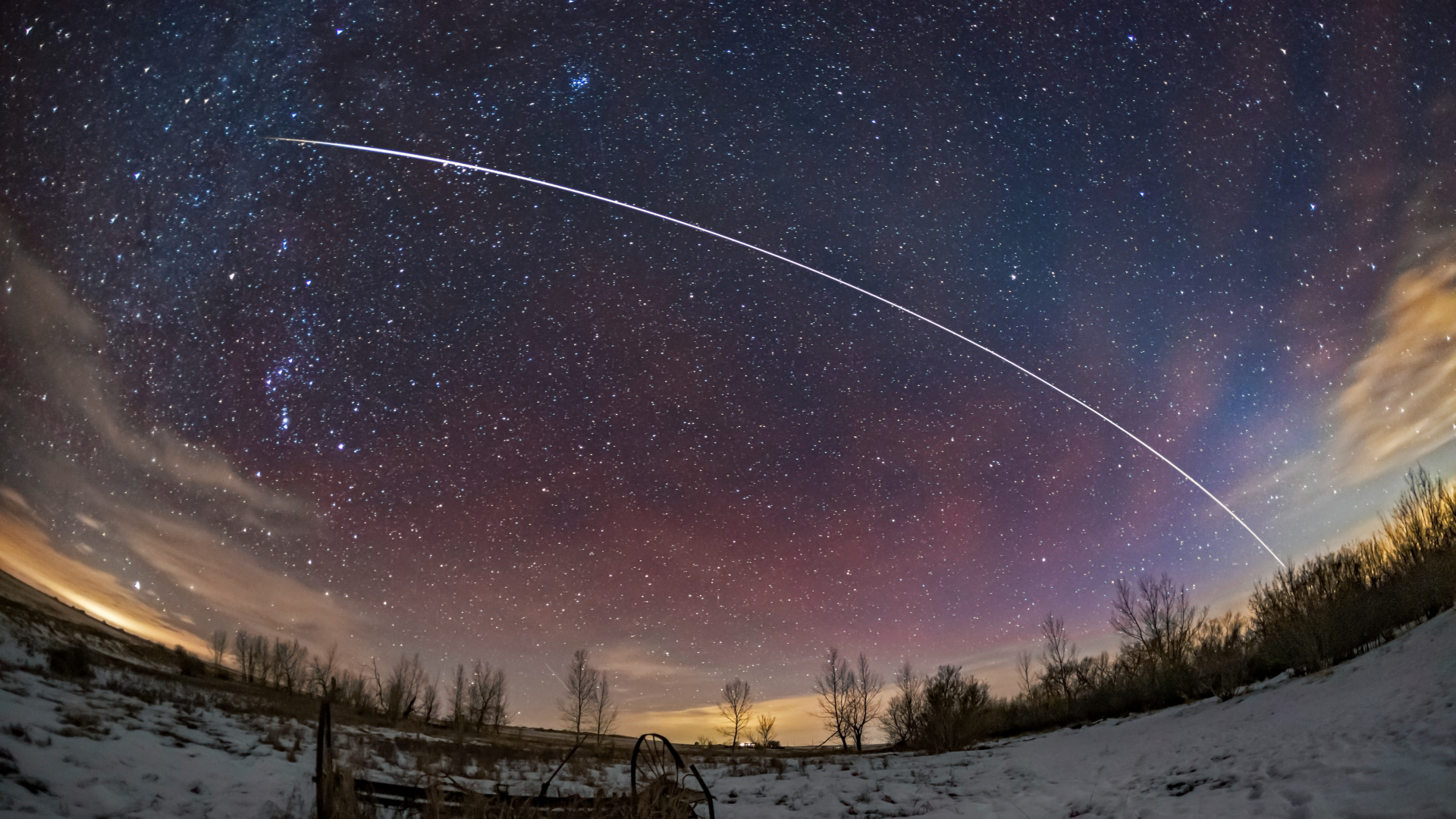
The International Space Station is a vast 94-meter-wide (310 feet-wide) orbital outpost, which can be spotted streaking across the night sky as it orbits Earth at an average height of 248 miles (400 kilometers).
We see the ISS when its enormous superstructure and wing-like solar panels reflect the sun’s light, making it appear as a bright wandering star as it passes west to east overhead.
The frequency of ISS passes varies depending on your location and can vary from one sighting in a month to several in a single week! The best passes occur shortly before dawn and after dusk, as the observer is in the dark while the space station is harshly illuminated in sunlight.
You can track the position of the orbital outpost using the European Space Agency’s ISS Tracker and by downloading NASA’s Spot the Station smartphone app for IOS and Android, which alerts you when the space station is visible from your location.
Transitional skies
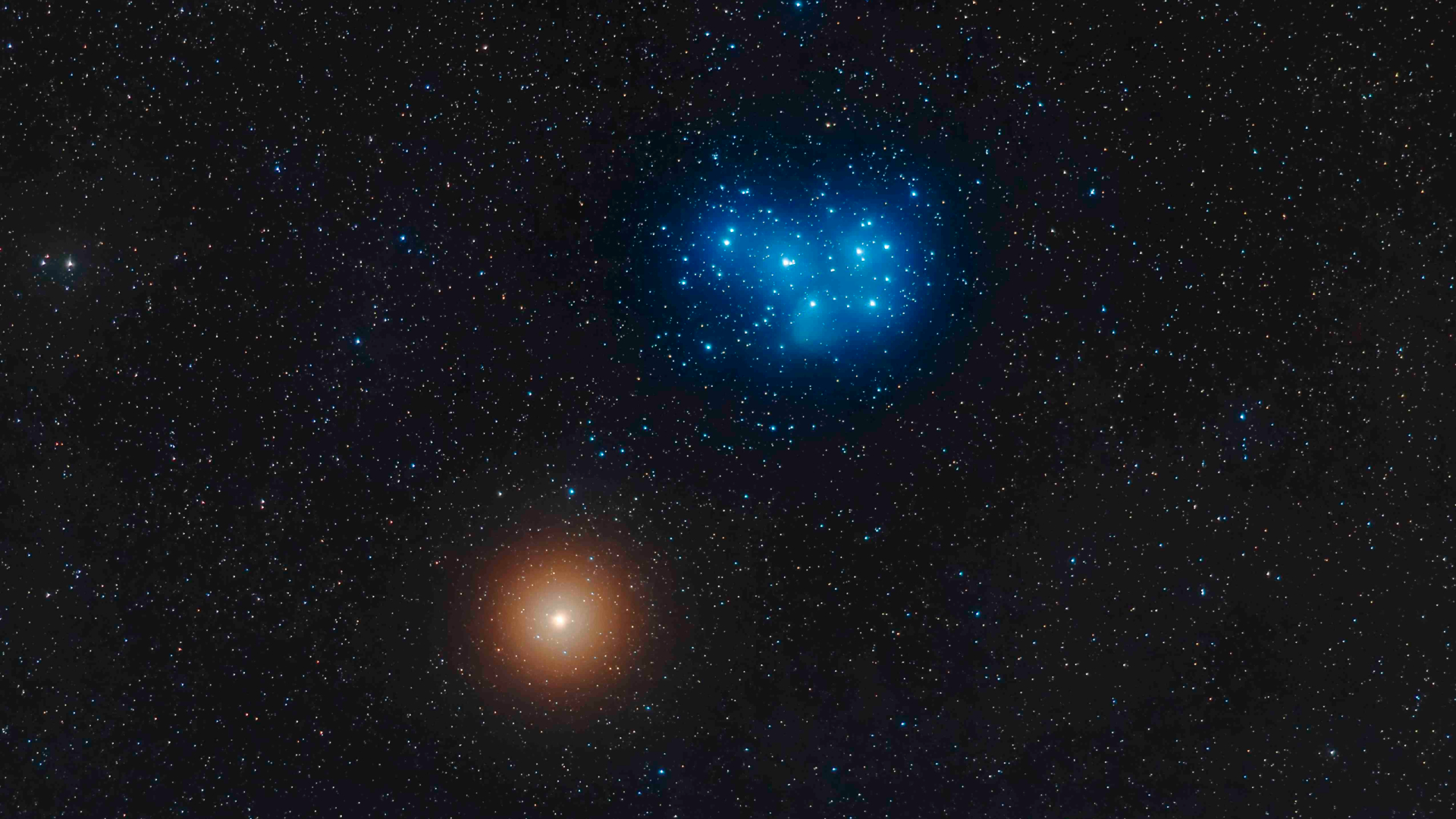
As you move away from heavily light-polluted city centers into suburban areas (around Bortle class 7), the quality and quantity of visible stars improves.
From here, countless more stars burst into view and you may even be able to spot the diffuse glow emanating from some of the brightest star clusters, such as the Beehive Cluster (M44), located in the heart of the constellation Cancer and the Pleiades. While only a handful of the Pleiades’ brightest stars are visible from city centres, more of the cluster’s 1,000-strong population become visible as skies darken.
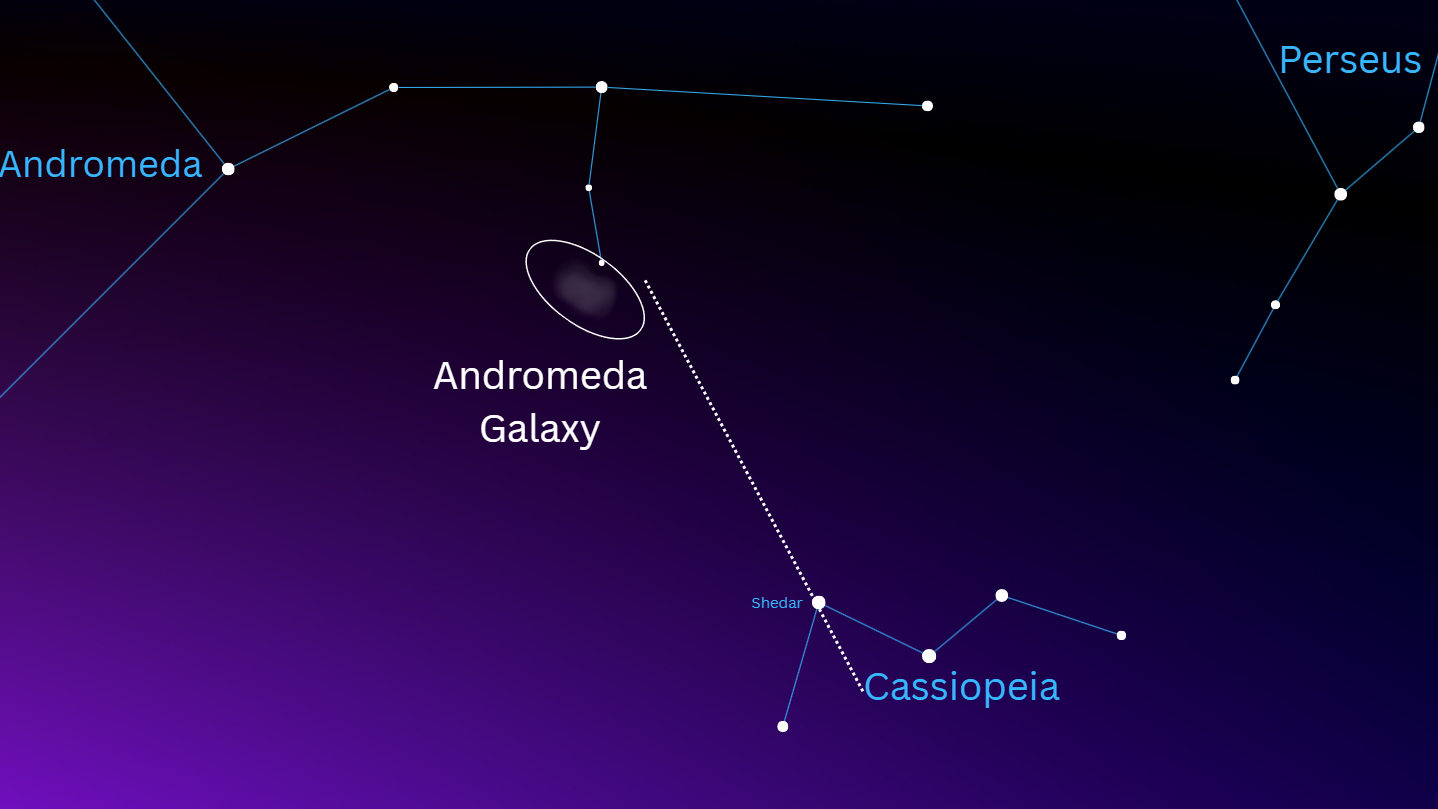
The glowing band of the Milky Way is still too dim to spot from the city’s edge, though it may be possible to glimpse our neighboring Andromeda Galaxy (M31) as a subtle patch of light by using the constellation Cassiopeia as a guide. First, you’ll need to locate the ‘M’ formation of Cassiopeia’s stars, which shines high above the northwestern horizon in the hours following sunset in late January. The bottom three stars can then be used to point the way to the Andromeda galaxy, by following an imaginary line from the ‘base’ of the stellar triangle up through the bright star Shedar and beyond, as shown in the finder map above.
Back in Orion, look for the line of t, three stars representing the sword that appears to “hang” below the more famous stellar formation of Orion’s belt. You may notice a hazy glow surrounding the middle star. That’s the Orion Nebula (M42) — a colossal complex made up of interstellar dust and gas, where generations of energetic young stars are in the process of being born. As the closest large star-forming region to Earth, the Orion Nebula shines with an apparent magnitude of +4, making it visible to the naked eye from light-polluted locales, despite being 1,500 light-years from Earth.
The beauty of binoculars
Of course, city stargazers have a not-so-secret weapon in their war against light pollution — the light-gathering power and magnification of binoculars. A pair of 10X50 binoculars will reveal a myriad of fainter stars, filling out the constellations and providing a richer view of the night sky, albeit at the expense of a reduced field of view.
The portability makes binoculars an ideal entry point for skywatching, while their light-gathering ability helps tease out the faint glow of star clusters, nebulas and even some galaxies. When trained on a star cluster, binoculars help reveal the true majesty of these sparkling stellar hives, bringing many dimmer stars into view.
Binoculars also allow you to track the shifting phases of the moon in gorgeous detail, with the added magnification allowing you to explore the complex, intertwining topography of lunar maria, vast impact craters and mountain ranges. You could also take aim at the gas giant Jupiter and its four large Galilean moons — Io, Ganymede, Europa and Callisto — which may be visible as bright points of light flanking the planet.
Not sure which binoculars are best for you? We’ve got a roundup of the best binoculars in 2026 for stargazing and explainers on why binoculars are best for beginner astronomers to help you get started.
Author: Anthony Wood
Source: Space.com
Reviewed By: Editorial Team