

Solana Company unveiled plans for the “Pacific Backbone,” a high-speed infrastructure expansion across Asia-Pacific aimed at strengthening staking, validation, and institutional access within the Solana ecosystem.
Solana Company Bets on Seoul, Tokyo, Singapore and Hong Kong
The digital asset treasury (DAT) firm, Solana Company, (Nasdaq: ), announced Monday that it intends to build what it calls the “Pacific Backbone,” a new low-latency infrastructure cluster spanning key Asia-Pacific financial centers, including Seoul, Tokyo, Singapore, and .
The Newtown, Pennsylvania-based firm that the initiative is designed to improve staking and validation performance across the region while diversifying revenue streams. The roadmap outlines immediate infrastructure deployment, with performance optimization and new technology adoption planned for the second half of 2026.
The DAT company argues that Asia-Pacific represents a major opportunity, citing the region’s concentration of crypto users, cross-border financial activity, and wealth accumulation. Despite that footprint, it sees what it describes as a network gap in Solana’s regional infrastructure. Solana Company is the second-largest publicly listed firm in terms of SOL holdings, with under the hood.
Cosmo Jiang, general partner at Capital Management, said the latest effort reflects strong demand for improved staking and validation services in Asia. “There is so much excitement and commitment to crypto across the region,” Jiang remarked, adding that the roadmap is expected to diversify revenue.
Joseph Chee, CEO of Solana Company, framed the move as preparation for Solana’s next growth cycle. The company’s CEO added:
“By establishing the Pacific Backbone, we better support our existing ecosystem of developers and partners while accelerating the onboarding of new participants—particularly financial institutions and tech companies in the region.”
The DAT’s strategy begins with activating smaller nodes to bolster security and efficiency before scaling further. The company also plans to implement upgraded hardware and expand its staking-related capabilities, potentially capturing more value internally rather than relying on third parties.
Beyond infrastructure, Solana Company signaled ambitions in , liquid staking, automated market makers ( AMMs), remote procedure call (RPC) services and execution services tailored for traditional finance partners in APAC.
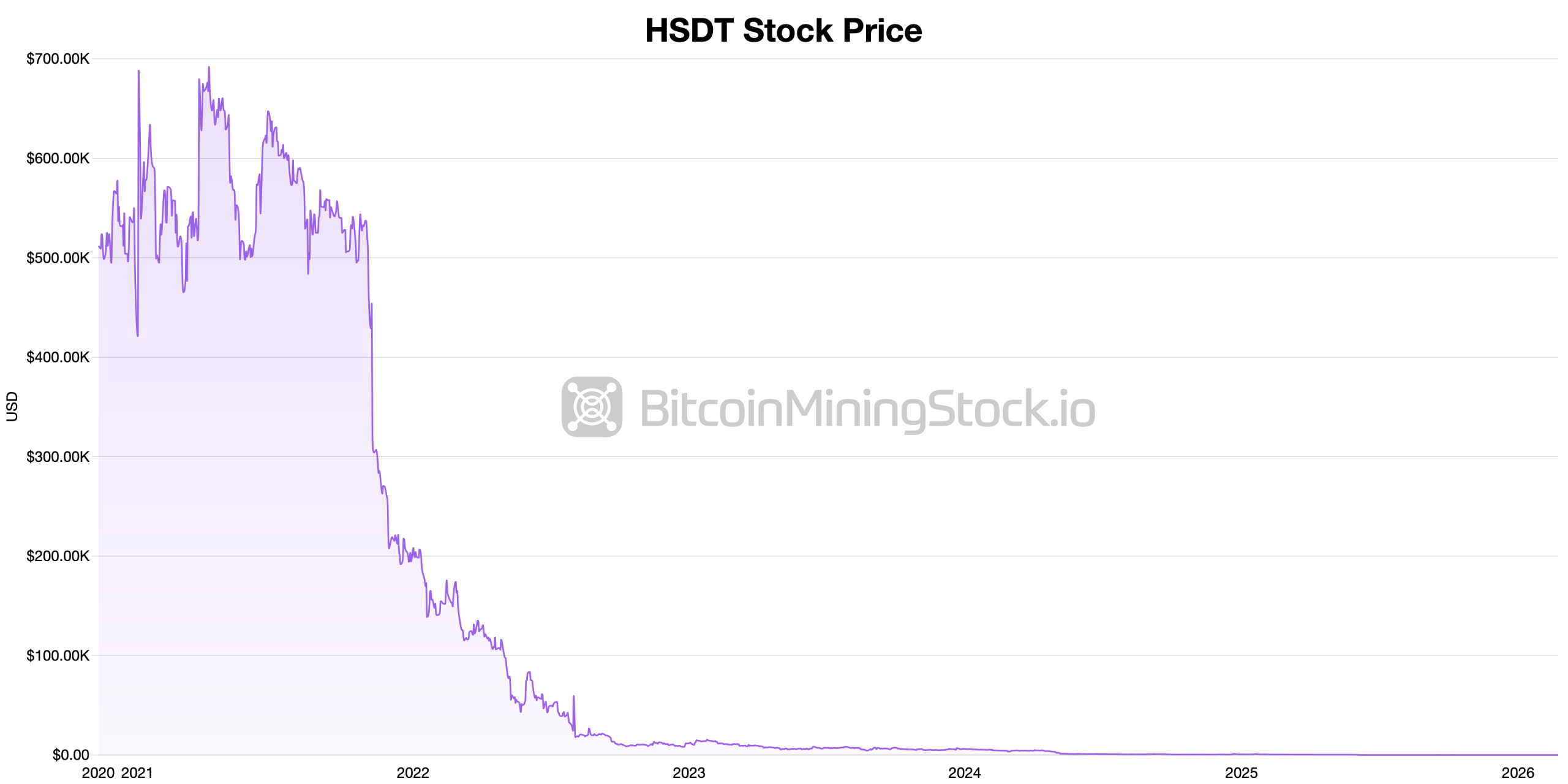
Solana Company’s shares, HSDT, haven’t exactly dazzled as the broader crypto economy pulled back. On Monday, during the day’s trading session, HSDT had slipped more than 13% against the greenback. Over the past 30 days, the stock has shed of its value. Moreover, 12-month figures reveal a decline of more than 99%. itself is trading 73.4% below its January 2025 all-time high, a long fall from its peak perch.
Still, Solana’s wider performance stats also made an appearance in Solana Company’s release, touting throughput north of 3,500 transactions per second, about 3.7 million daily active wallets, and more than 23 billion transactions logged year-to-date. The network provides a native staking yield for SOL holders, a perk the publicly listed company contrasts with non-yield-bearing assets such as .
FAQ 🔎
- What is the Pacific Backbone? It is Company’s planned high-speed infrastructure cluster across major Asia-Pacific financial hubs.
- Which cities are included in the initial rollout? Seoul, Tokyo, Singapore and Hong Kong are slated for the first phase.
- What is the goal of the buildout? To improve , validation performance and institutional access within the ecosystem.
- When will new services launch? Liquidity-related products and services are expected within 12 to 18 months.
Author: Jamie Redman
Source: Bitcoin
Reviewed By: Editorial Team